

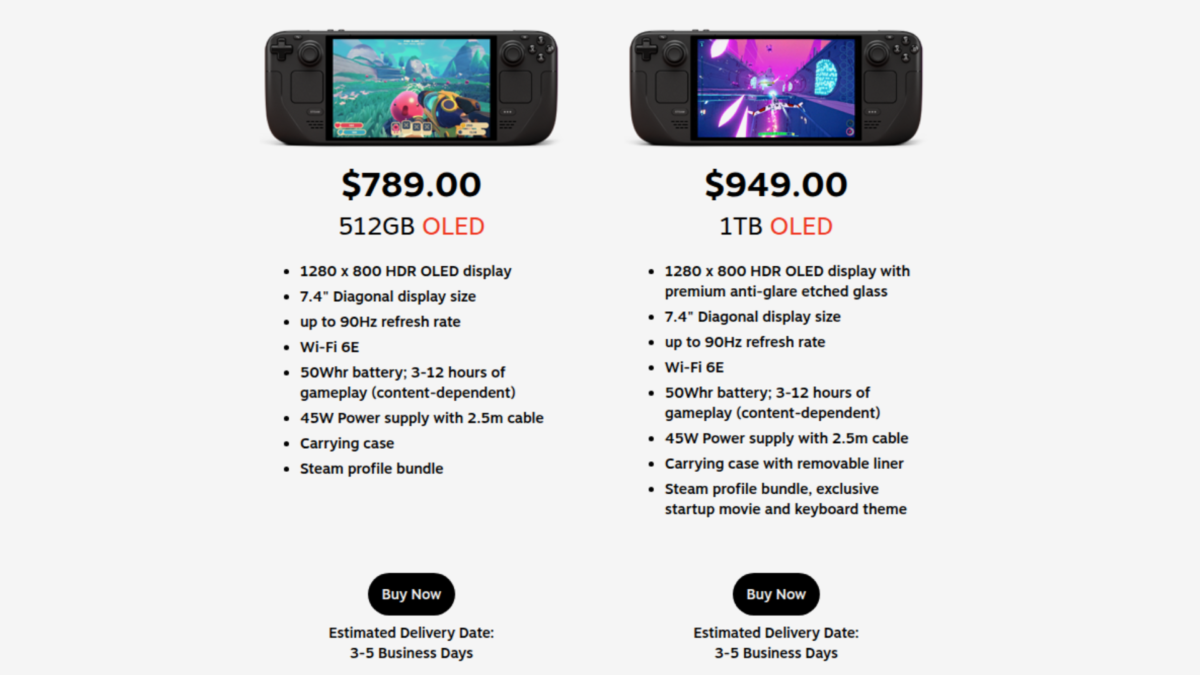
A Steam Deck OLED price increase is officially live, with Valve citing rising global costs for memory and storage components. Standard retail inventory is back in stock at these new prices.
Factory-certified refurbished units, including remaining LCD models, are still available at lower price points depending on regional stock.
Updated Global Pricing
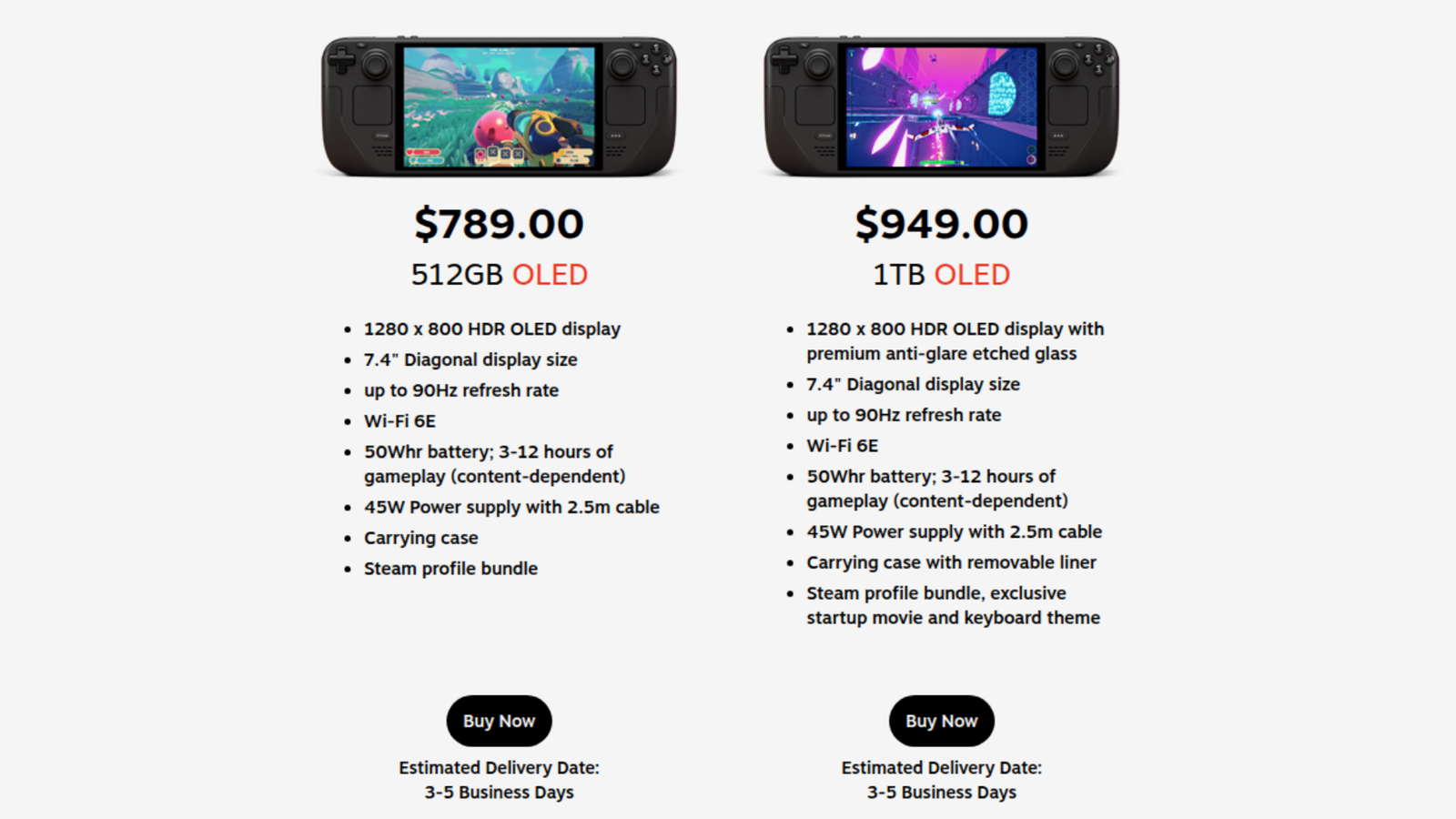
- OLED Model (512GB)
- New Price: $789 USD / CAD 1,129 / EUR 779 / GBP 649 / AUD 1,199 / PLN 3,279
- Previous Price: $549 USD
- Increase: +$240
- OLED Model (1TB)
- New Price: $949 USD / CAD 1,349 / EUR 919 / GBP 779 / AUD 1,429 / PLN 3,879
- Previous Price: $649 USD / CAD 819 / EUR 679 / GBP 569
- Increase: +$300 USD
Price Context Across the Industry
This Steam Deck OLED price increase stands out when compared to recent console adjustments:
- Nintendo Switch 2: $50 increase ($449.99 to $499.99 in the US).
- PlayStation 5 and Xbox Series X/S: Multiple rounds of smaller increases totaling $50 to $150 in some regions over the past year.
Valve’s adjustment is significantly larger in both absolute dollars and percentage terms than Nintendo’s retail hike.
Steam Deck OLED Price Increase | Editor’s Take
Valve originally positioned the Steam Deck OLED as a premium yet accessible PC handheld. Strong upgrades in screen quality, battery life, Wi-Fi, and efficiency, combined with aggressive launch pricing, helped it build strong momentum in the handheld market.
This $240 to $300 increase fundamentally weakens that value proposition. At $789 to $949, the OLED models now sit firmly in luxury territory. They are much closer to high-end Windows handhelds than the affordable PC gaming experience that defined their early success.
While component cost pressures are real and industry-wide, the scale of Valve’s hike (significantly larger than Nintendo’s recent $50 Switch 2 increase) will test consumer patience.
The competition has shifted as well. Windows-based alternatives from ASUS, Lenovo, and others often deliver more raw power and broader game compatibility at similar prices. Valve retains key strengths with tight SteamOS integration, its massive verified library, consistent updates, and an active modding community. However, the higher entry price makes refurbished LCD units and the used market far more attractive for value-conscious buyers.
Rising hardware costs are affecting the entire industry. This pricing shift makes one thing clear: the window for sub-$600 premium PC handhelds is closing, at least for new retail units.