
Disclosure: KonNetwork is reader-supported. We use affiliate links to keep ads and tracking scripts off the site. As an Amazon Associate, we earn from qualifying purchases.
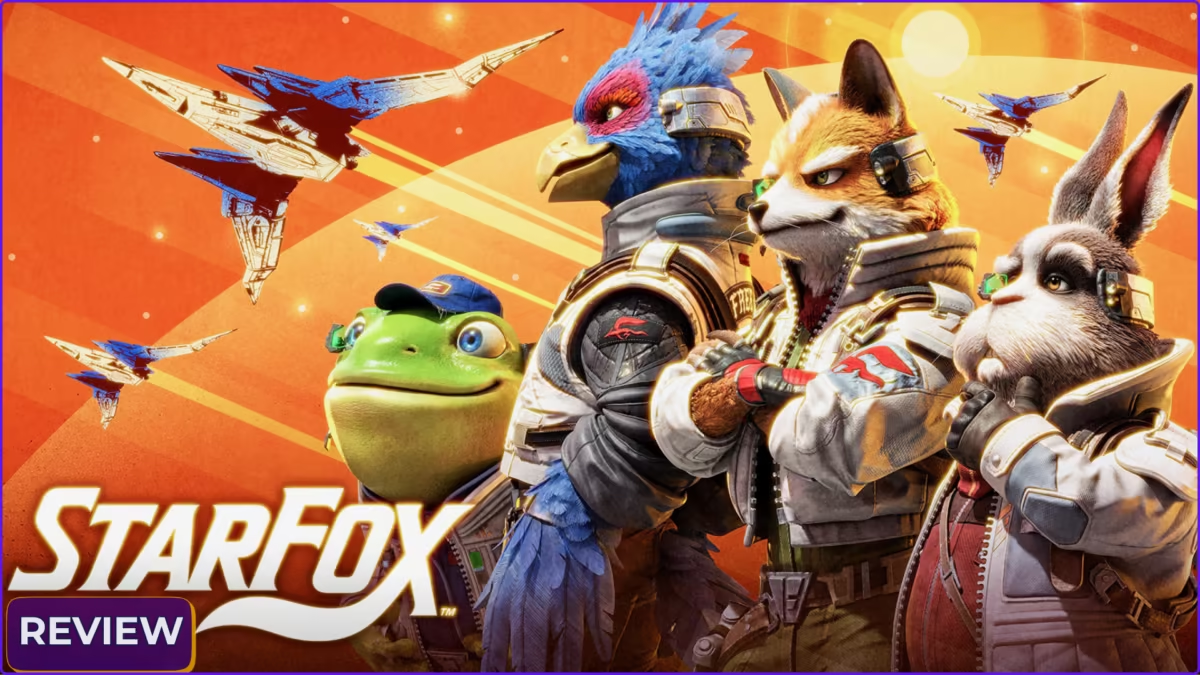
This Star Fox Switch 2 performance review explores how Velan Studios faithfully modernizes the Nintendo 64 classic. With sharper visuals, expanded character moments, refined controls, and consistently smooth performance, the remake builds on the original without sacrificing the fast arcade action and branching campaign that made Star Fox 64 so memorable.
Star Fox (2026) At a Glance
Release Date
Jun 26, 2026
Price
$49.99 MSRP (Digital)
$59.99 MSRP (Physical)
Completed on
Switch 2 (Docked)
/ Normal
HLTB
2 Hours (Main Story)
/ My Clear Time: 5hrs 56min
Before You Fly
For years, Star Fox fans have wondered what a modern return to the series’ arcade roots might look like. Rather than reinventing Nintendo’s space shooter, Velan Studios looked back to Star Fox 64 and asked a simpler question: what if the original finally had the hardware it deserved? The answer is a remake that sharpens the visuals, smooths out the controls, and expands the presentation without losing sight of what made those frantic Arwing missions memorable in the first place.
That philosophy becomes obvious almost immediately. The branching campaign, score chasing, and fast arcade pacing that defined Star Fox 64 are all still here. Rather than replacing them with modern open-world trends or lengthy progression systems, Velan Studios focuses on making the original ideas feel sharper and more responsive.
The development team for Star Fox (2026) includes:
- Director — Daniel Doptis
Previous work: Mario Kart Live: Home Circuit, Hot Wheels: Rift Rally, Marvel Ultimate Alliance 2 - Lead Programmer — Joe Morton
Previous work: Marvel Ultimate Alliance 2, Skylanders: Swap Force, Mario Kart Live: Home Circuit - Art Director — William Pitzer
Previous work: Mario Kart Live: Home Circuit, Hot Wheels: Rift Rally, Knockout City - Lead Character Artist — Chris Cleve
Previous work: I Expect You to Die, Until You Fall, Hot Wheels: Rift Rally - Music Director — Matt Pirog
Previous work: Skylanders, Mario Kart Live: Home Circuit, Hot Wheels: Rift Rally - Composer — Stephen Barton
Previous work: Titanfall, Titanfall 2, Call of Duty 4: Modern Warfare, Star Wars Jedi: Fallen Order
Reviewer’s Perspective
Before jumping into Star Fox (2026), I had already played every major Star Fox release, including the original Star Fox (1993), Star Fox 64, Star Fox Adventures, and Star Fox 64 3D. Before starting Star Fox (2026), I replayed the original Star Fox and Star Fox 64 so their controls, pacing, and level design were still fresh in my mind.
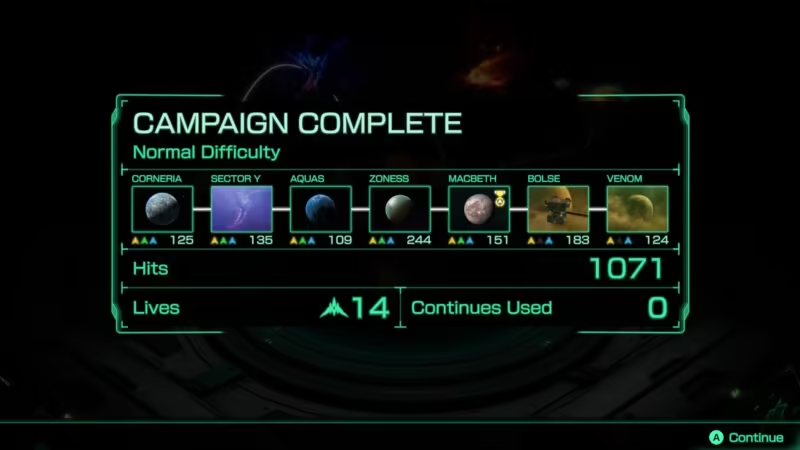
Going back to those games immediately beforehand gave me a much clearer point of comparison. It made it easier to separate deliberate design choices from modern improvements and see exactly where Velan Studios expanded the experience without losing what made Star Fox 64 memorable.
Review Impressions
Opening Mission
Star Fox (2026) makes its intentions clear before you ever climb into an Arwing.
What was once a brief text crawl in Star Fox 64 has been expanded into a fully animated opening that introduces James McCloud, Peppy, and the events that shaped the Lylat System before Andross became its greatest threat. The added scenes provide additional context without sacrificing the brisk pacing that defined the original.
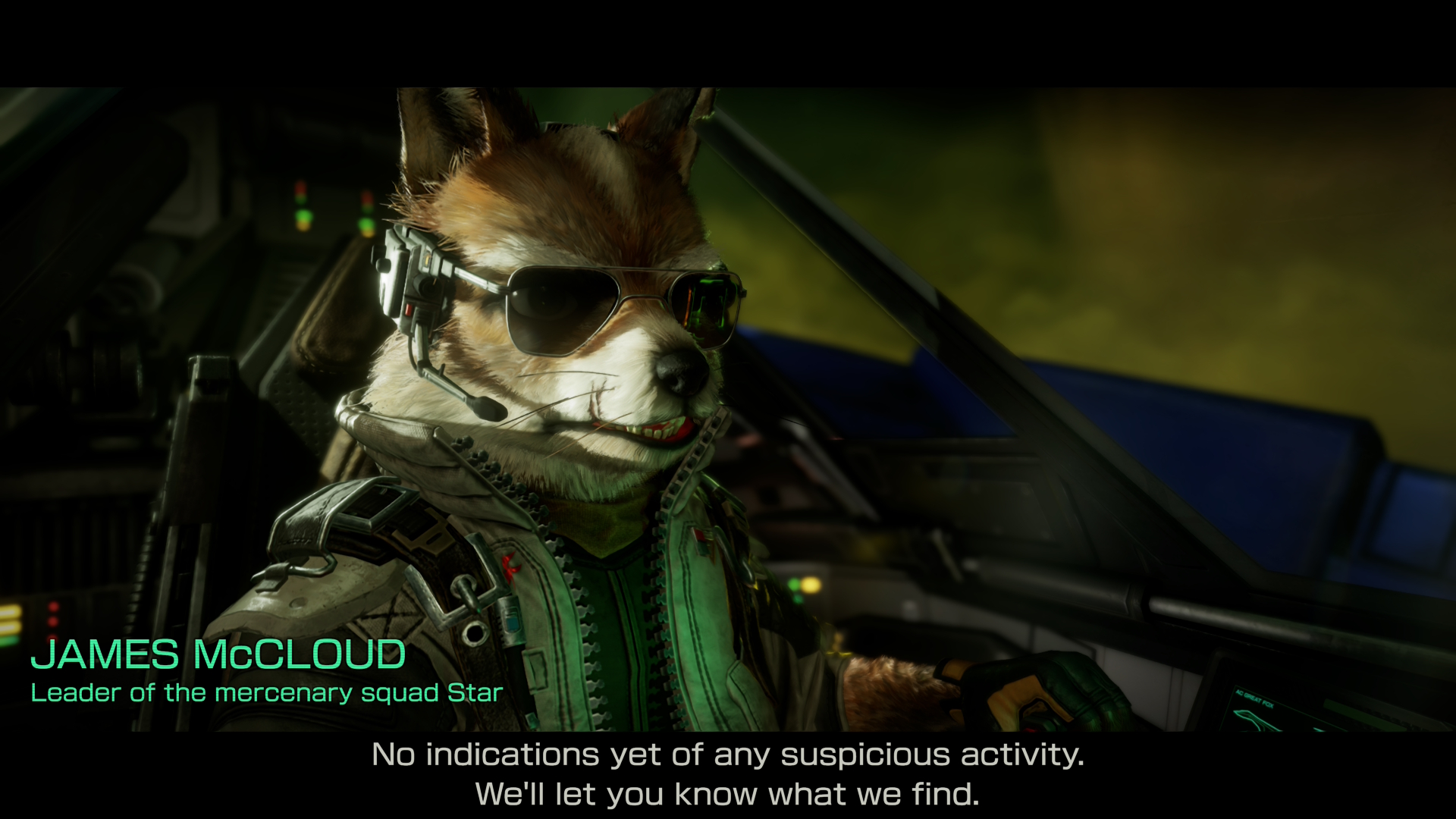
That opening quietly establishes the remake’s philosophy. Rather than replacing what worked, Velan Studios builds around it, expanding the story where it adds value while keeping the arcade momentum that made Star Fox 64 so memorable.
Flight & Combat
Flight Controls
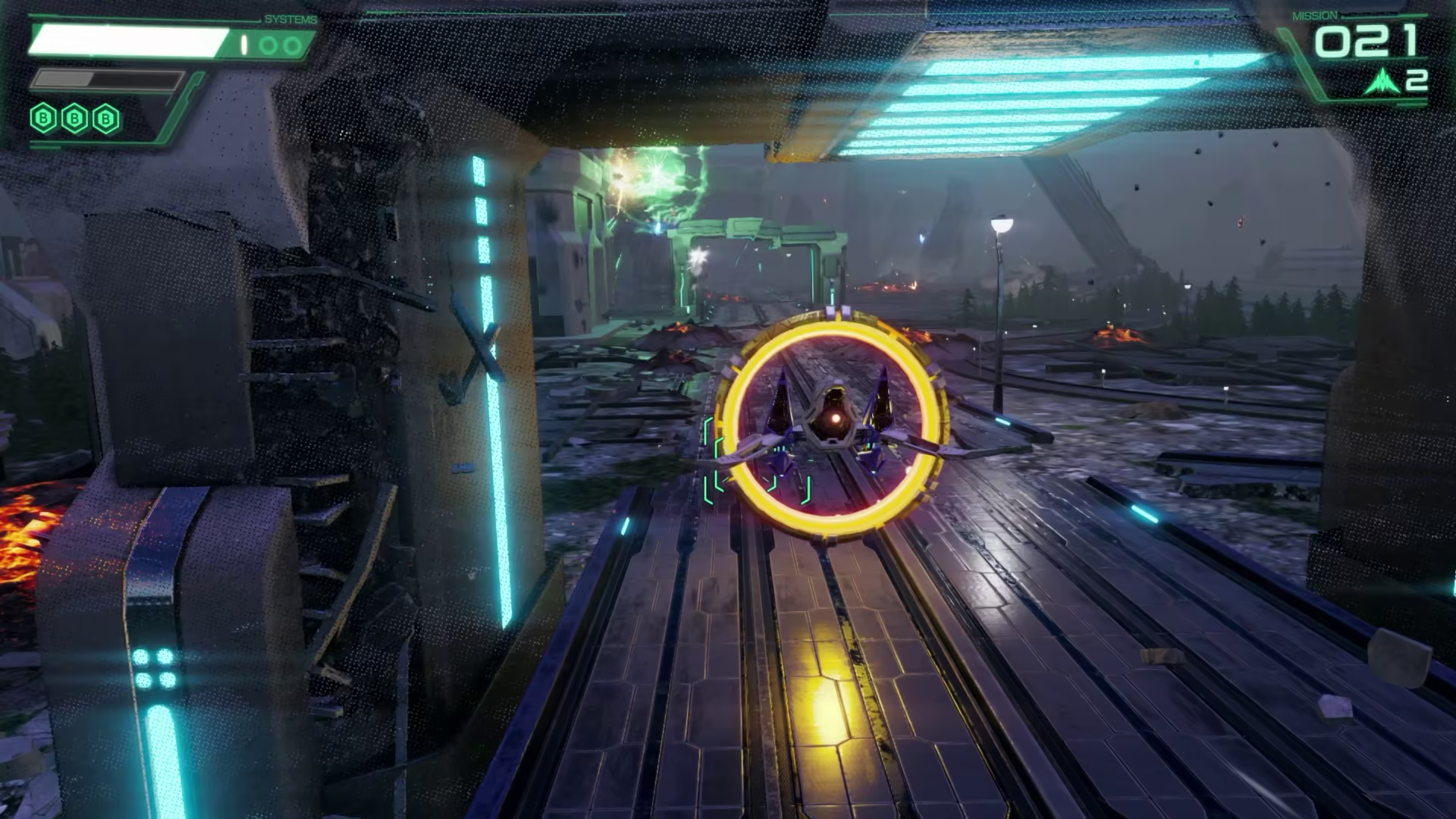
The core gameplay hasn’t changed. You’re still flying along a fixed path while dodging obstacles and enemy fire, but the larger environments give you noticeably more room to maneuver than the Nintendo 64 original.
Precision Flying
The Arwing still feels bigger than it looks. Your wings can clip obstacles if you’re careless, which means tight sections require planning instead of waiting until the last second to react.
Speed management plays a bigger role than you might expect. Braking gives you more time to line up shots or avoid incoming attacks, while boosting helps you clear hazards and catch enemies before they escape. Learning when to slow down is just as important as knowing when to fly flat out, especially on later routes where the environments become more demanding.
Control Improvements
Some of the best changes come from the control updates inspired by Star Fox 64 3D.
Somersaults and U-turns are mapped directly to the D-pad, so you don’t have to wrestle with awkward button combinations during All-Range Mode. It’s a small change that makes dogfights feel much smoother without changing how they work.
Barrel Roll
The barrel roll remains one of your most important defensive tools. Timing it correctly lets you deflect incoming fire while keeping yourself in position to counterattack. It remains just as satisfying to use because successful timing rewards precision rather than button mashing.
Wing Damage
Wing damage returns, and it is just as punishing as fans remember. A collision or missile hit can remove one of your wings, making your Arwing harder to control and reducing your firepower.
It changes the way you approach a mission. A mistake early in a stage can turn a comfortable run into a fight to stay alive until you find a repair ring.
Squadmates
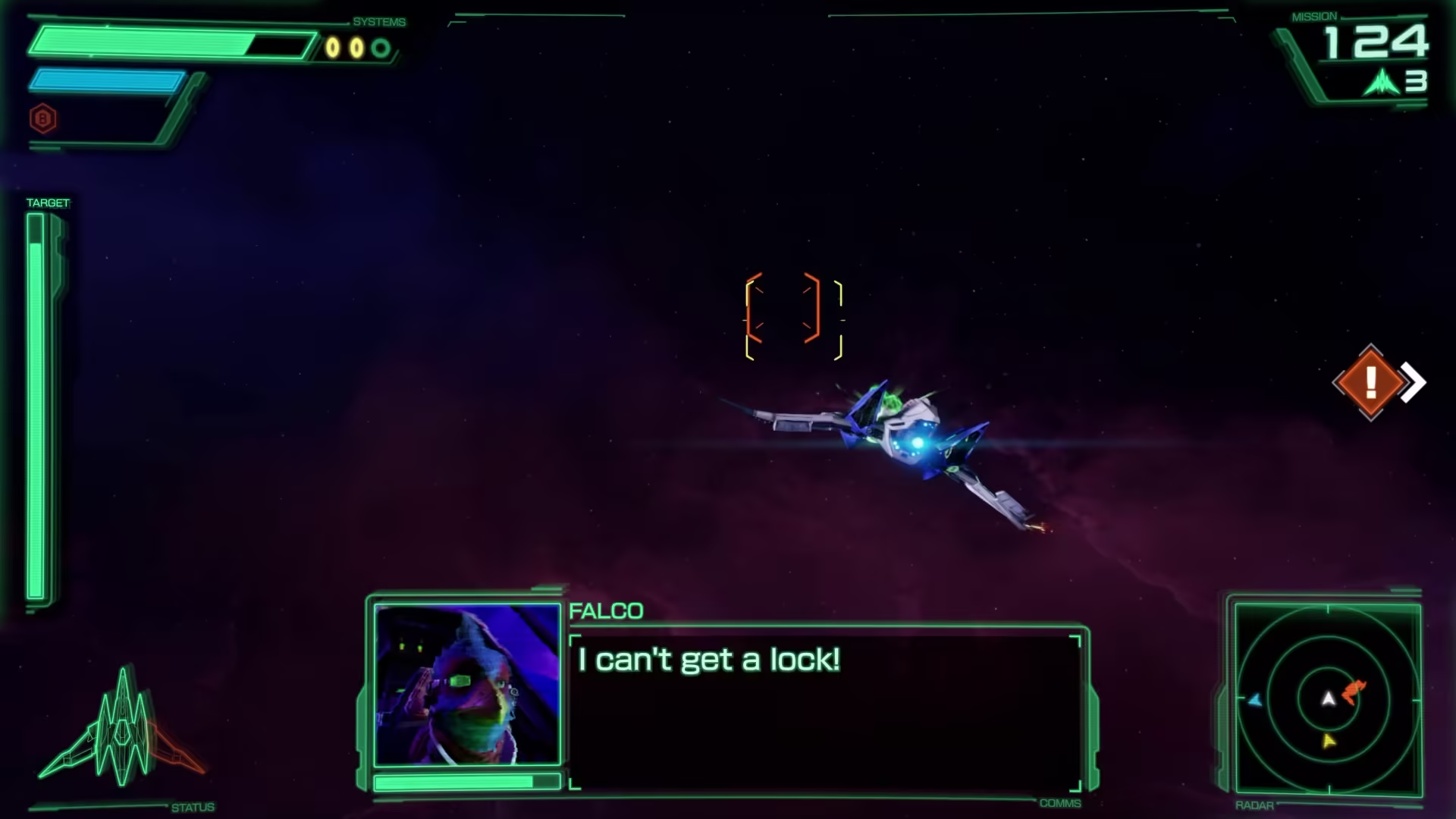
Your teammates are more important than simple AI companions. Keeping them alive matters because losing one permanently changes how you approach the rest of the campaign.
Their support during missions can make difficult encounters more manageable, so protecting them becomes another objective alongside chasing high scores.
Branching Paths
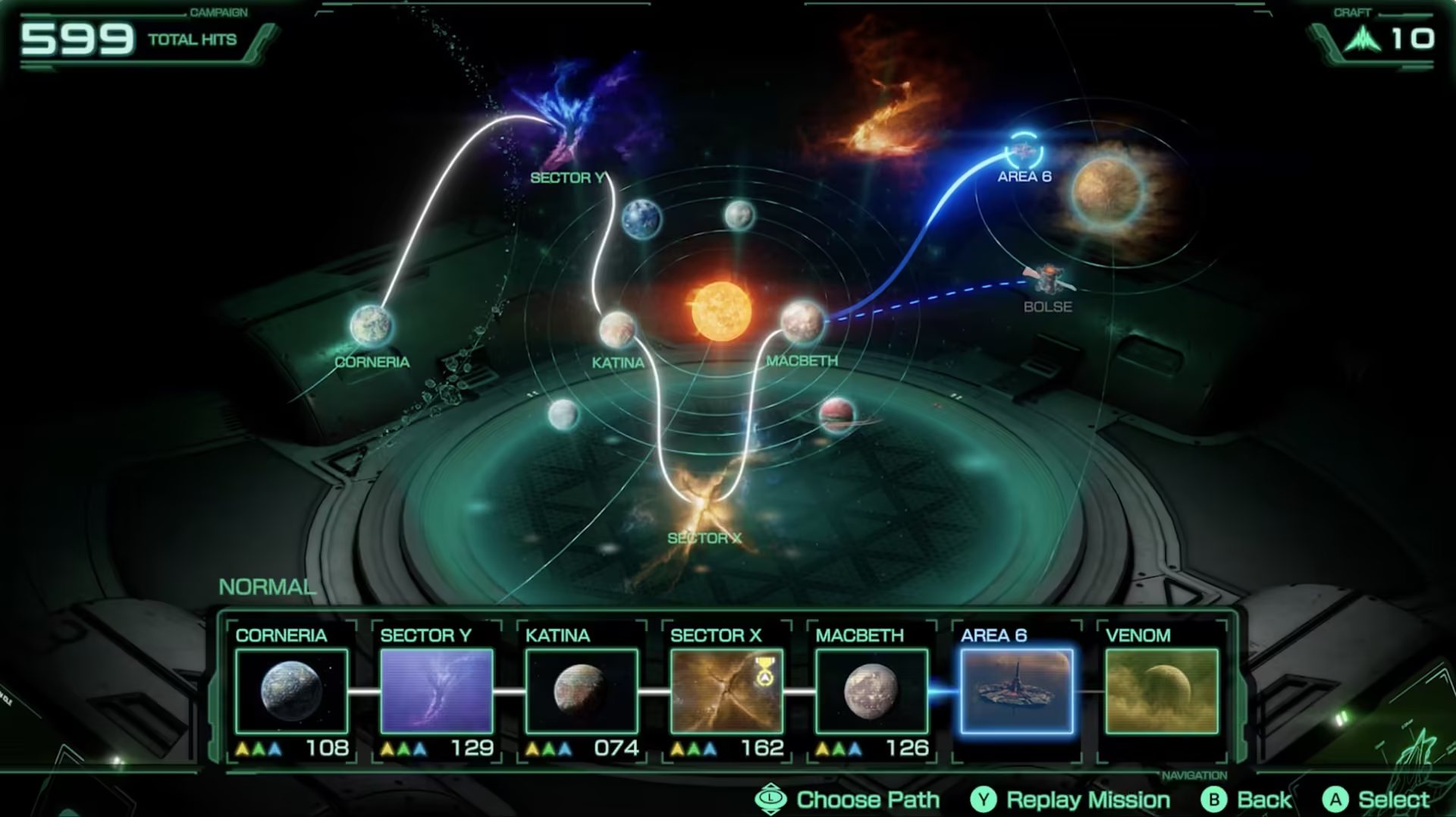
The branching route system remains one of the best parts of Star Fox. Your performance still affects where you go, but the remake does a better job communicating how to reach different paths. As a result, experimenting with alternate routes feels less like guesswork and more like a reward for mastering each mission.
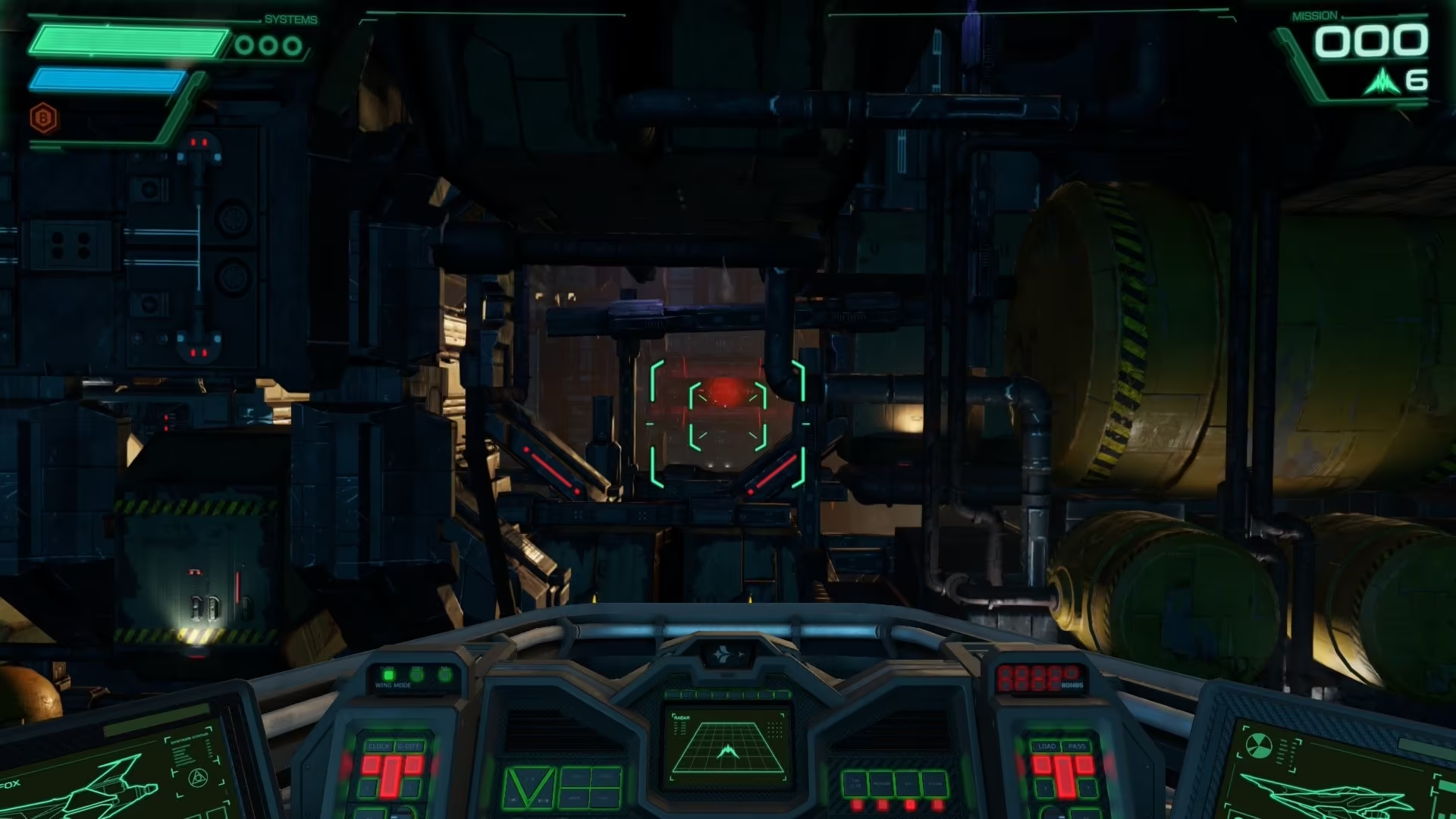
Cockpit View
The cockpit perspective returns from the original game and gives you another way to experience missions. It feels more immersive, but the reduced visibility makes it harder to track enemies during chaotic fights.
It is a fun alternative for repeat playthroughs, but I generally preferred the standard chase camera because it provides a much clearer view of incoming threats.
Challenge Mode
Challenge Mode gives you a reason to return after finishing the campaign. It lets you replay missions, chase better scores, and focus on improving specific stages.
Local Co-op
Local co-op is a surprisingly fun addition. Splitting flight control and aiming between two players creates a surprisingly entertaining twist on the traditional Star Fox formula.
Story & Characters
Beyond its visual overhaul, one of the remake’s most meaningful additions is how it expands the story. Rather than rewriting the original narrative, Velan Studios uses new cinematics before and after missions to give the Star Fox team more room to interact, allowing their personalities to emerge naturally between missions. An early example comes during the team’s training exercise, where Falco cranks up the difficulty of a virtual reality simulation to push Fox harder. Peppy quickly steps in before anyone gets hurt, establishing Falco’s competitive streak while showing Peppy’s instinct to keep the team safe.
These quieter conversations continue throughout the campaign, giving each member of Star Fox a stronger individual voice while reinforcing the team’s chemistry. Rather than relying solely on radio chatter during missions, the remake uses downtime between operations to show how these characters bounce off one another, making the squad feel like a group of longtime comrades instead of mission-givers waiting for the next objective.
The result is a campaign that remains faithful to the Nintendo 64 original while feeling noticeably more complete. The central conflict is still straightforward, but the added character interactions provide stronger emotional context for the missions ahead without sacrificing the fast pace that has always defined Star Fox.
Presentation
Character models have a lot more detail than before, with improved fur, feathers, and facial animations that make the cast feel more expressive during cutscenes. The Arwing also receives a noticeable visual upgrade, especially during larger battles where lasers, explosions, and smoke fill the screen without making the action difficult to follow.
Corneria is one of the best examples of the remake’s visual improvements. The city feels alive as buildings collapse around you, military vehicles fight back against Andross’s forces, and smoke fills the skyline. It captures the chaos of a planet under attack while still keeping the action clear.
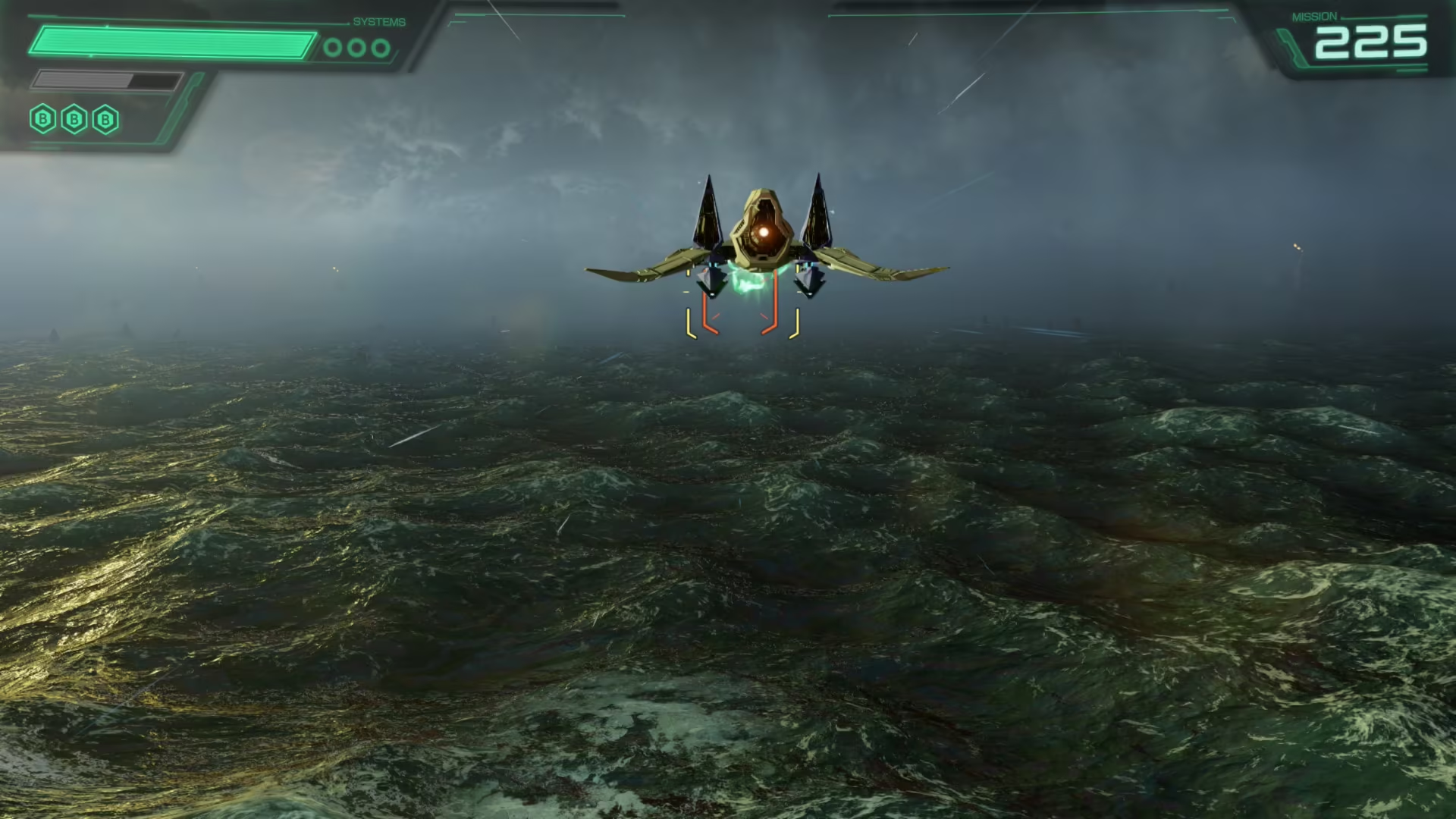
Zoness ended up being my favorite stage from a visual standpoint. The rough seas, dark clouds, and fading daylight give the entire level a much heavier atmosphere than the original. It reminded me of Kamino from Star Wars without ever feeling derivative.
That same cinematic quality carries through into the game’s audio direction. The soundtrack was recorded at Abbey Road Studios with a full orchestra, giving the score a wider dynamic range and a more film-like presence that complements the on-screen action. It reinforces both scale and tension in a way that feels closer to live orchestral scoring than traditional game composition, especially during large-scale encounters where the music and gameplay escalate together.
The orchestration also evokes a familiar cinematic language often associated with John Williams’ approach to thematic scoring, where clarity, momentum, and emotional contrast work in tandem rather than competing for attention.
The remake doesn’t try to make Star Fox look realistic just for the sake of realism. Instead, it takes the colorful style of the Nintendo 64 original and adds enough detail to make the world feel more alive without losing its identity.
Standout Tracks
The soundtrack does an excellent job of respecting the original while giving each track a fuller sound.
Corneria Theme
The familiar military march returns with a larger orchestra behind it. Brass and percussion push the track forward, making the opening mission feel just as exciting as it did in Star Fox 64.
Aquas
Aquas takes the opposite approach. Its slower tempo and restrained orchestration create a brief moment of calm, allowing the mysterious underwater setting to stand apart from the campaign’s more bombastic set pieces.
Star Wolf’s Theme
Star Wolf’s theme remains one of the soundtrack’s standout pieces. Its sweeping orchestral arrangement continuously builds in intensity, maintaining a sense of urgency that crescendos throughout the encounter. The result is a track that perfectly complements the rivalry, making every dogfight feel more dramatic without overpowering the action.
Voice Acting & Seiyuu Performances
The biggest surprise for me was how much I preferred the Japanese voice track.
I played through the game using both language options, and the Japanese performances stood out because they approach the script with greater restraint. Fox, Peppy, Falco, and the rest of the cast make the Lylat conflict feel more like a real military operation rather than simply a backdrop for the action.
The English cast isn’t bad, but it leans further into the lighter side of Star Fox. That works for the series’ humor, but some of the more dramatic moments lose a little impact because of that tone.
If you don’t mind subtitles, I recommend giving the Japanese voices a try.
- Fox McCloud — Eiji Takeuchi
Notable roles: Izanagi (Inazuma Eleven), Hide (Nioh 2), Baldir (Granblue Fantasy) - James McCloud — Masato Kokubun
Notable roles: Kato (Shin Megami Tensei: Strange Journey Redux), Yoshikazu Aihara (Space Battleship Yamato 2199) - Peppy Hare — Kunpei Sakamoto
Notable roles: Peppy Hare (Star Fox), James McCloud (Star Fox 64 3D), Hatono (Muramasa: The Demon Blade) - Falco Lombardi — Daiki Hamano
Notable roles: Magellan (Unicorn Overlord), Gauma (SSSS.Dynazenon), Leaky-Eye Luca (JoJo’s Bizarre Adventure) - Slippy Toad — Shiori Matsuda
Notable roles: Kasane’s Mother (Scarlet Nexus), Bridget (Trolls), Guy Cecil (Young) (Tales of the Abyss)
Technical Performance
Performance is one of the remake’s strongest technical achievements.
Throughout my playthrough the game maintained a steady frame rate, even during larger battles with dozens of enemies, explosions, and particle effects on screen. Controls stayed responsive from beginning to end, which is exactly what you’d want from a fast-paced arcade shooter.
Docked mode renders at a native 1080p before using upscaling to produce a sharp 4K image. The result is a clean presentation that holds up well on a large display without sacrificing performance. Whether I was flying through Corneria’s city streets or weaving around Solar’s hazards, the game consistently felt smooth and responsive.
Final Verdict
Star Fox (2026) feels like it was made by people who understood why Star Fox 64 became a classic.
The fast arcade gameplay is still the focus. Learning stage layouts, chasing higher scores, protecting your squad, and unlocking alternate routes are just as rewarding today as they were on the Nintendo 64. The remake improves the experience with better controls, expanded story scenes, and modern visuals that never get in the way of the action.
What I appreciate most is that Velan Studios didn’t try to reinvent Star Fox into something completely different. The branching campaign, demanding flight controls, and punishing wing damage are all still here. If you’ve played Star Fox 64 before, the remake feels immediately familiar without ever feeling trapped by the past.
The expanded cutscenes and voice acting also give the characters more room to breathe. Instead of replacing the original story, they build on it. The approach reminded me of the 2002 Resident Evil remake, which added new details while protecting the identity of the original game.
That is what makes Star Fox (2026) work. It understands that a remake does not always need to become a completely new experience. Sometimes the best approach is taking what already worked and improving the parts that needed attention.
Players looking for a radical reinvention of Star Fox may come away disappointed. This remake is unapologetically built for fans of the original, refining its arcade action with modern presentation, smoother controls, and expanded character moments rather than replacing its core identity.
Star Fox (2026) is not a perfect remake, but it is a thoughtful one. It preserves what made the original special while removing many of the limitations that came with its age.
Star Fox (2026) TLDR
Star Fox (2026) (Switch 2)
Star Fox (2026) faithfully rebuilds the Nintendo 64 classic with a striking visual overhaul while staying true to its arcade roots. Rather than reinventing the original, it thoughtfully expands its story, characters, and presentation in much the same way the 2002 Resident Evil remake did. The result is a modern remake that respects its source material while refining it for a new generation.
Star Fox Switch 2 References
Trailer
Post
- Abbey Road Studios [@AbbeyRoad]. (2026, June 25). Star Fox is out today on @Nintendo Switch 2! With an incredible score from @ComposerBarton and Matt Pirog recorded in Studio One [Post]. X. [Live | Archived]