

Our Echo Isle review breaks down a tight, padding-free homage to classic 2D adventure design that beautifully condenses traditional handheld exploration into a satisfying 60-minute lunch break.
Echo Isle At a Glance
Release Date
May 20, 2026
Price
$4.99
Completed on
Linux (Nobara)
Time
HLTB 1½ Hours (Main Story)
/ My Clear Time: 1hr 6mins
Proton
Steam Linux Runtime 1.0 (Scout)
Transparency Notice
A review key was provided by Josh Koenig Games
Echo Isle Background
Echo Isle is a compact action-adventure developed by solo creator Josh Koenig. The project originated from an experimental asset pack sourced on itch.io, which influenced both its visual identity and its decision to remain tightly scoped.
Development gradually shifted toward a short-form structure centered around a complete, self-contained play session. This scope directly defines the final game, shaping its dungeon count, pacing, and mechanical simplicity.
Koenig’s prior work includes smaller indie releases such as Firefly Village, reflecting a continued focus on constrained, systems-driven design rather than large-scale structural expansion.
The development team for Echo Isle includes:
- Josh Koenig
- Ember Kaboom, Super Ember Kaboom, Firefly Village
Echo Isle Experience
Prior experience with 2D action-adventure titles, particularly the Capcom-developed entries in the Zelda series such as The Legend of Zelda: Oracle of Seasons, The Legend of Zelda: Oracle of Ages, and The Legend of Zelda: The Minish Cap, provides useful context for Echo Isle’s mechanical framework. The game operates within a familiar design language centered on spatial combat, item gating, and dungeon progression.

Echo Isle Impressions
Introduction
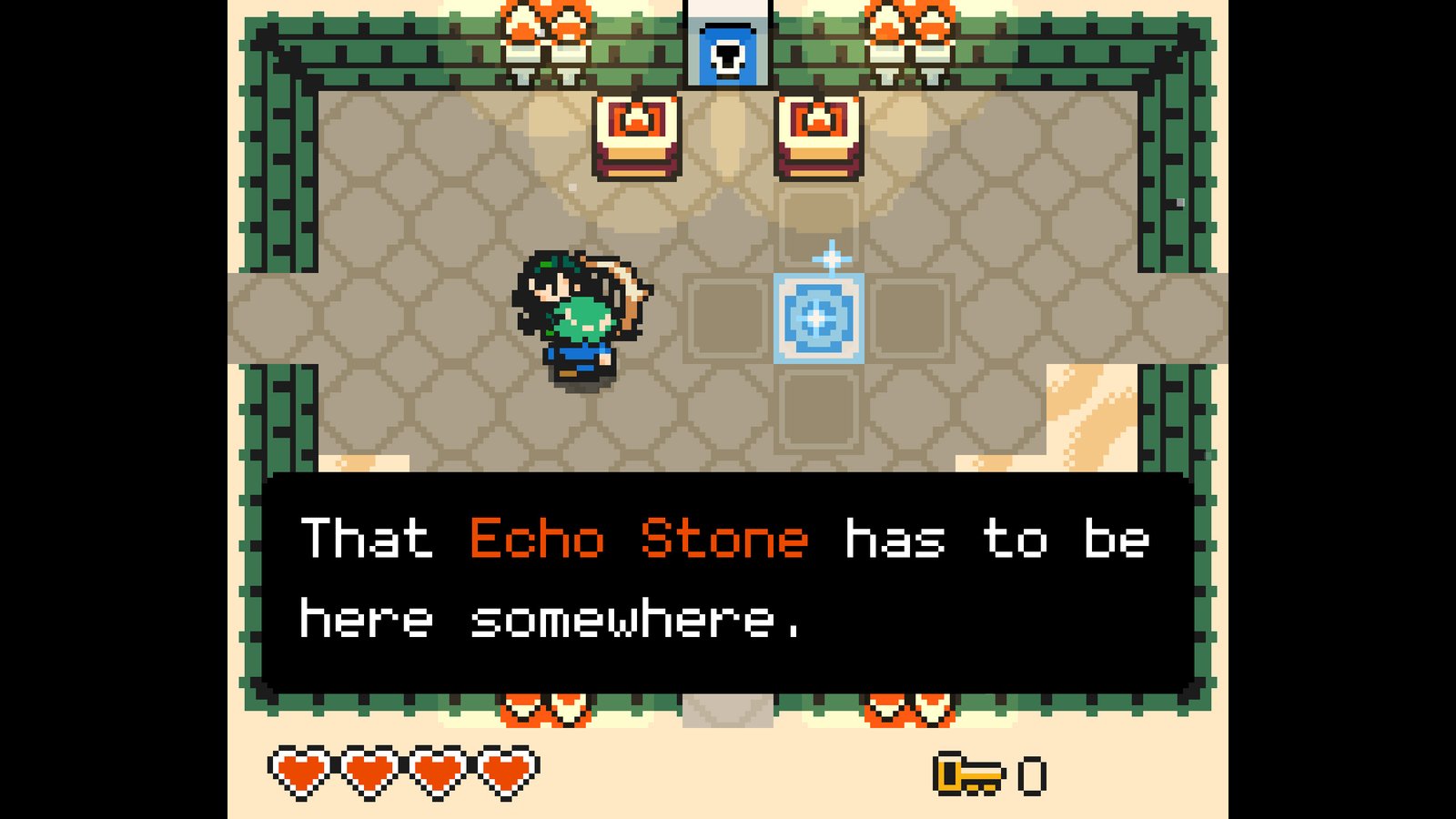
Echo Isle establishes its premise quickly. A once-protected island has fallen into darkness after its lighthouse goes out, and monsters now inhabit the land. The player arrives via crash landing and is immediately tasked with restoring the lighthouse by collecting Echo Stones.
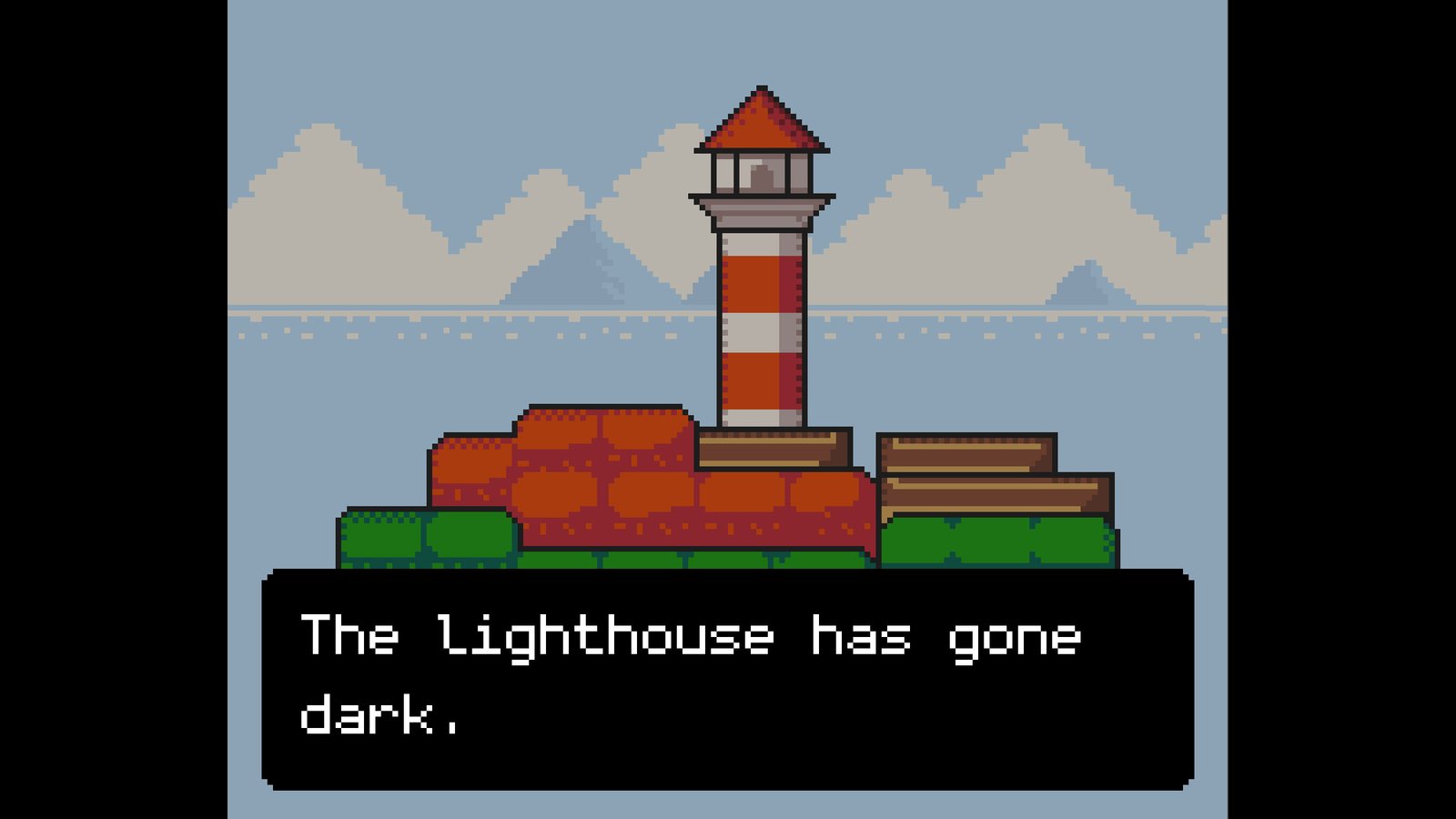
Peace has already collapsed, with the island’s central beacon extinguished before the player gains control. The objective is presented immediately, with no extended narrative setup.
Gameplay & Mechanics
Combat & Item Swapping
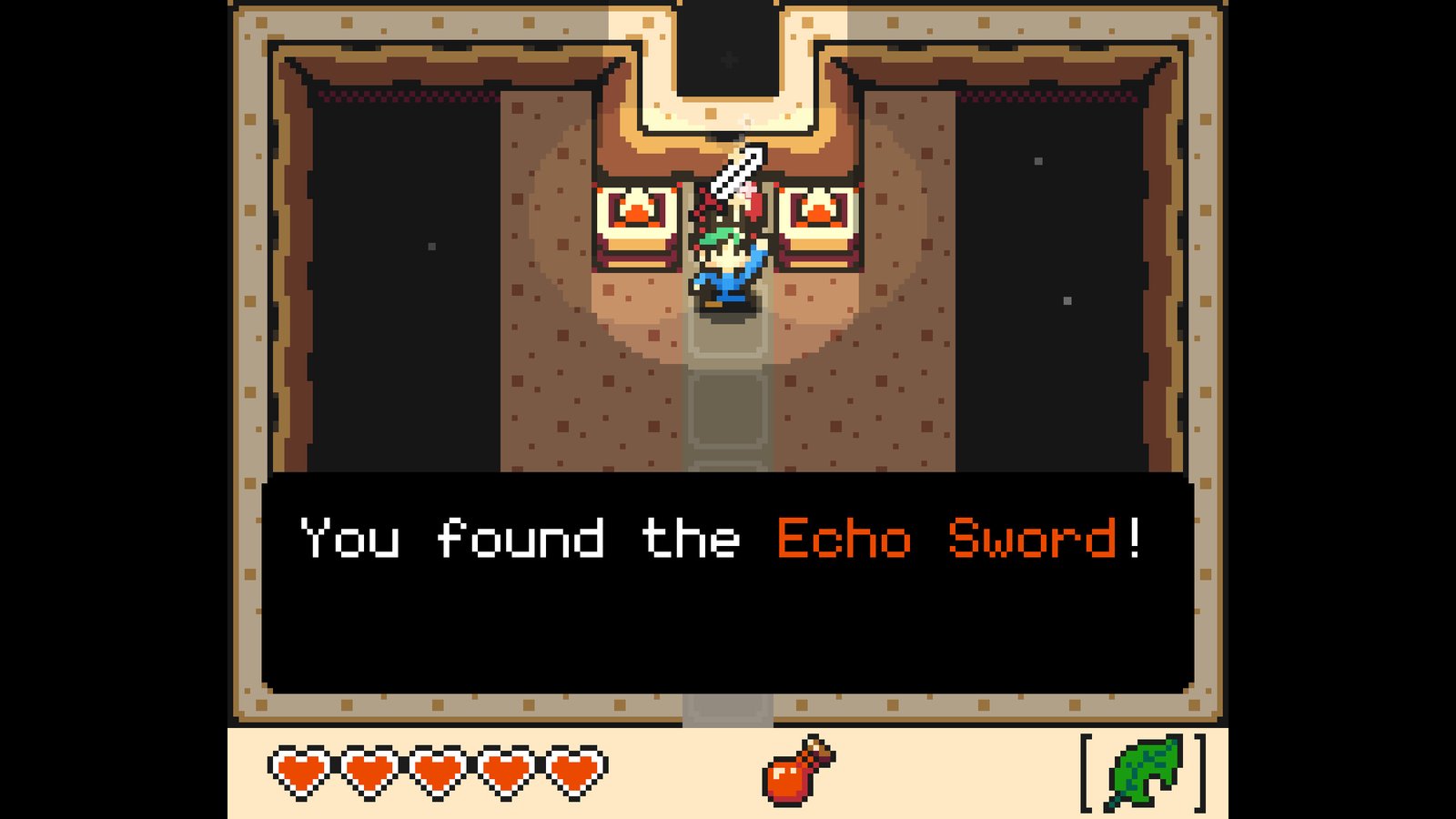
Combat follows a traditional top-down format based on spacing, timing, and enemy positioning. The sword serves as the primary constant tool, while secondary items provide situational utility.
The active toolset includes a Spring Leaf, bombs, and a bow. Each item has unlimited use but is constrained by startup and recovery timing, which effectively replaces consumable management with execution timing.
Item swapping is immediate, preserving combat flow. However, the inability to combine the Spring Leaf with sword usage removes aerial attack options, reinforcing grounded positional combat as the default design state.
The result is a combat system focused on rhythm and timing consistency rather than build variation or resource optimization.
Map & Progression
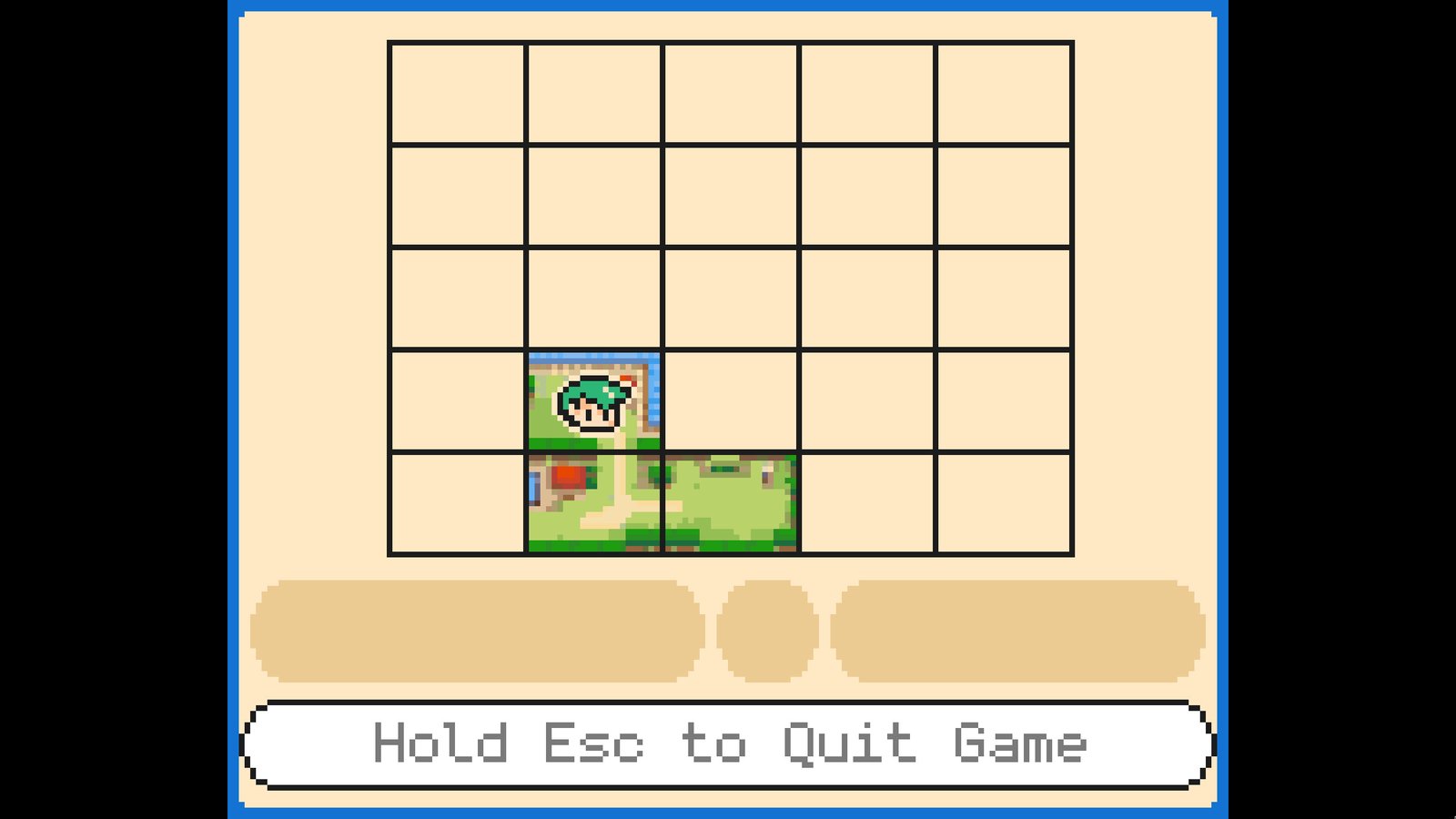
The overworld uses a simple grid-based map system that tracks player position. Dungeon interiors are not mapped, requiring manual navigation once inside.
Progression is driven by exploration-based collectibles that function as upgrade currency for increasing sword damage. This creates a lightweight incentive loop tied to map completion rather than repeated combat engagement.
Dungeons & Hazards
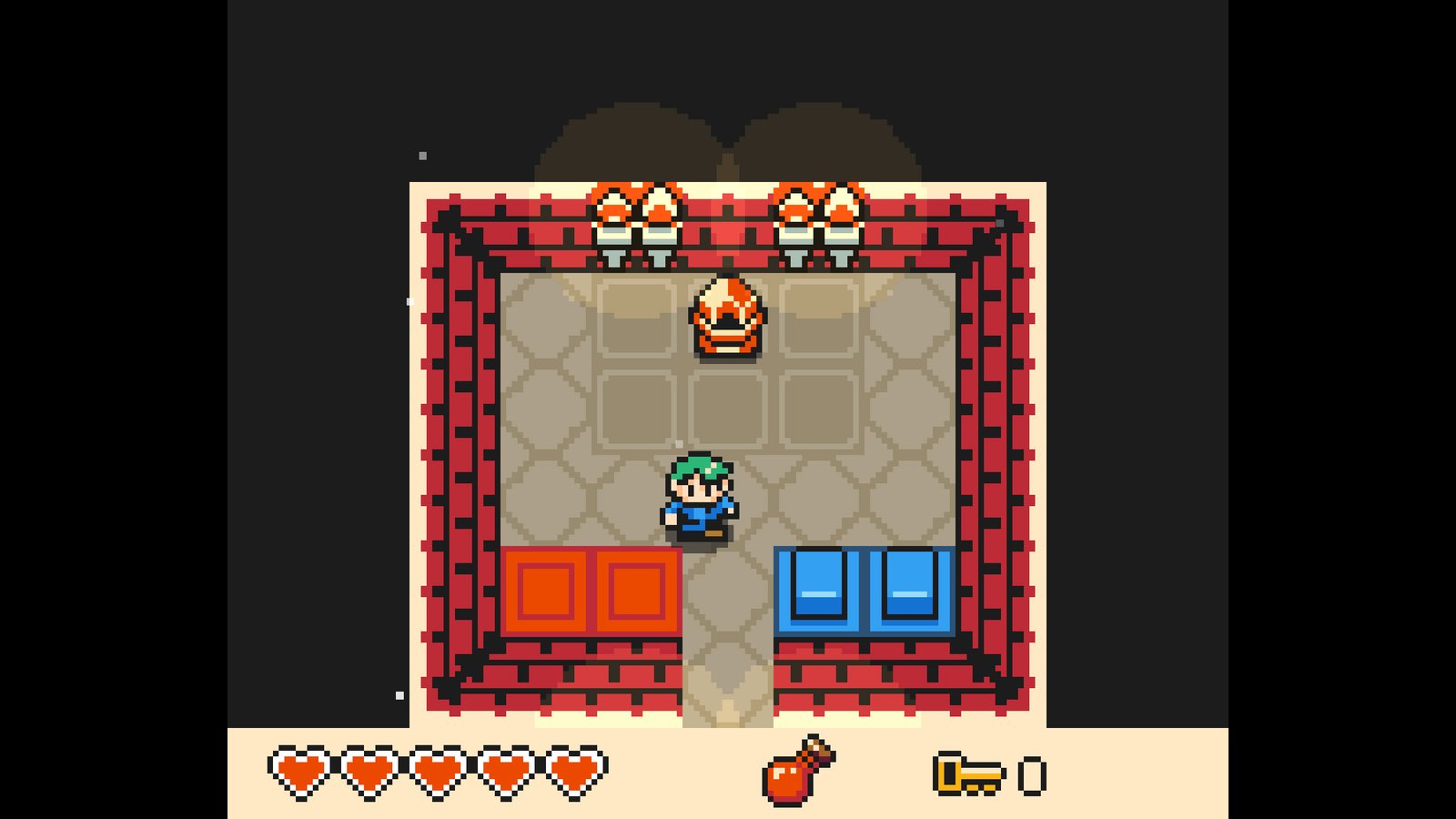
The game contains four main dungeons, each centered around a single objective item.
Each dungeon introduces a new mechanical element alongside standard enemy variation and key-based progression. Puzzle design remains consistent across environments, relying on spatial navigation, switch interactions, and environmental hazards.
Hazards such as collapsing floors, spike traps, and ice movement sections provide mechanical variation without significantly altering the core gameplay loop. Difficulty progression is primarily structural rather than systemic.
Save Points & Potions
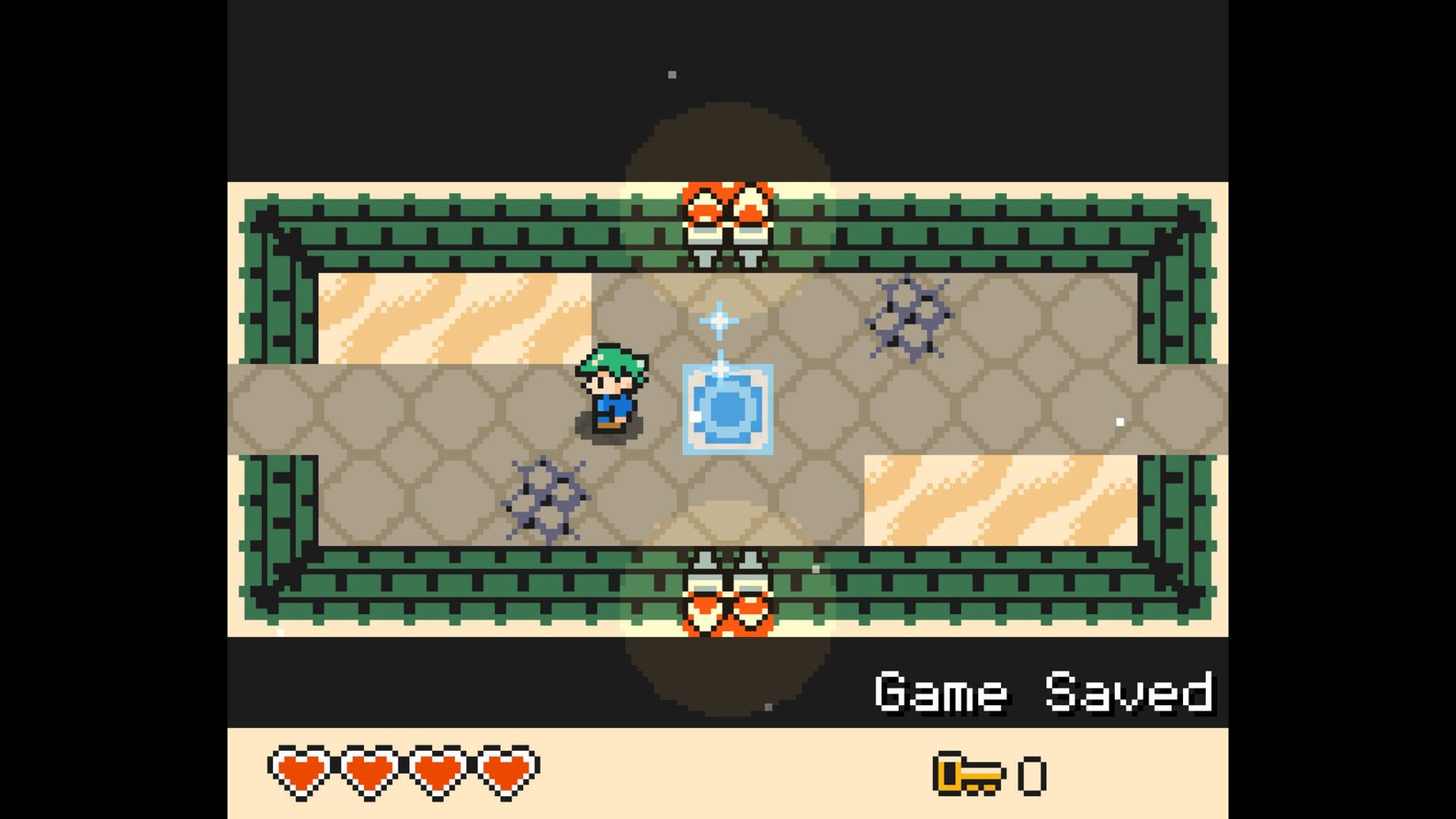
Save points are frequent and activate immediately on contact, reducing friction during short sessions.
The potion system functions as a passive recovery mechanic, restoring health automatically upon defeat. Combined with free refill access, this significantly reduces punishment severity and supports uninterrupted progression through dungeons.
Art & Audio
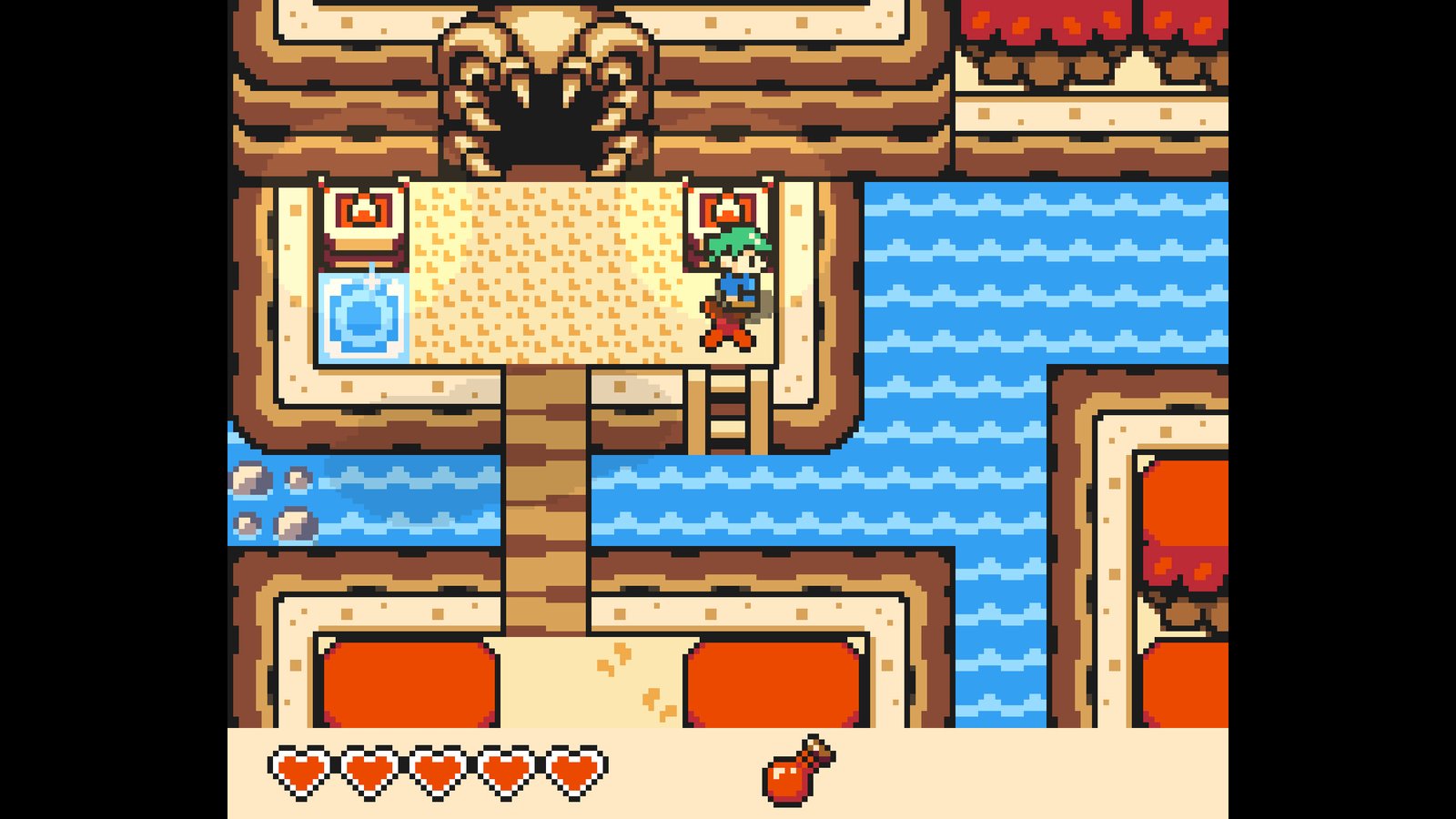
Visually, Echo Isle draws from Game Boy Color era action-adventure design, particularly The Legend of Zelda: Link’s Awakening and the Oracle series. Rather than strict hardware emulation, it uses expanded color ranges and clearer environmental contrast.
This produces a presentation that is referential in structure but modernized in readability. Each area is visually distinct, with strong separation between overworld regions and dungeon spaces.
Audio design supports mechanical feedback through clear combat sounds and consistent timing cues. The soundtrack is understated, with the final boss theme standing out as the most distinct composition.
Echo Isle Linux Performance
On Nobara Linux, Echo Isle runs reliably using the default Steam Linux Runtime. Attempts to force Proton result in missing dependency issues related to Webview2, making native runtime the practical configuration.
Performance remains stable throughout play. A minor issue occasionally causes the game to exit fullscreen mode into borderless windowed presentation, but this does not affect functionality or completion.
The title meets KonNetwork’s Linux verification standard and is fully playable under tested conditions.
Echo Isle Review Verdict
Echo Isle is a tightly scoped action-adventure designed around clarity, readability, and short-form structural cohesion. Its systems are consistent across combat, exploration, and dungeon progression, with a clear emphasis on accessibility and mechanical restraint.
Combat is responsive and well-tuned within its limited framework, but it does not expand into deeper systemic layering or build differentiation. Dungeon structure maintains steady pacing and mechanical consistency without introducing significant escalation across its runtime.
This consistency defines both its strength and its limitation. Echo Isle executes its design goals effectively, but it does not introduce mechanical or systemic developments that would elevate it beyond a tightly executed interpretation of established handheld action-adventure design.
As a result, it fits securely within the 8.0 range. It is a well-crafted and enjoyable experience that lacks the additional mechanical or structural ambition required to approach the 8.5 tier and above.
For players seeking a compact, readable, handheld-style adventure, it is an easy recommendation at its price point.
Echo Isle TLDR
Echo Isle (Linux)
Echo Isle is a cohesive, tightly scoped action-adventure that executes its intended design with consistency and clarity.
Its limitations stem directly from its constrained scope, which prevents meaningful escalation beyond its core systems.
Tested On
CPU: Ryzen 7 5900X | GPU: AMD RX 9070XT 16GB | RAM: 64GB DDR4 | Storage: Crucial P5 Plus NVMe SSD
OS: Nobara Linux | Resolution: 1440p
Echo Isle Review References
Interviews
- Controller Club, We Interviewed the Solo Dev Behind Echo Isle! | 16 February 2026
[Live]