
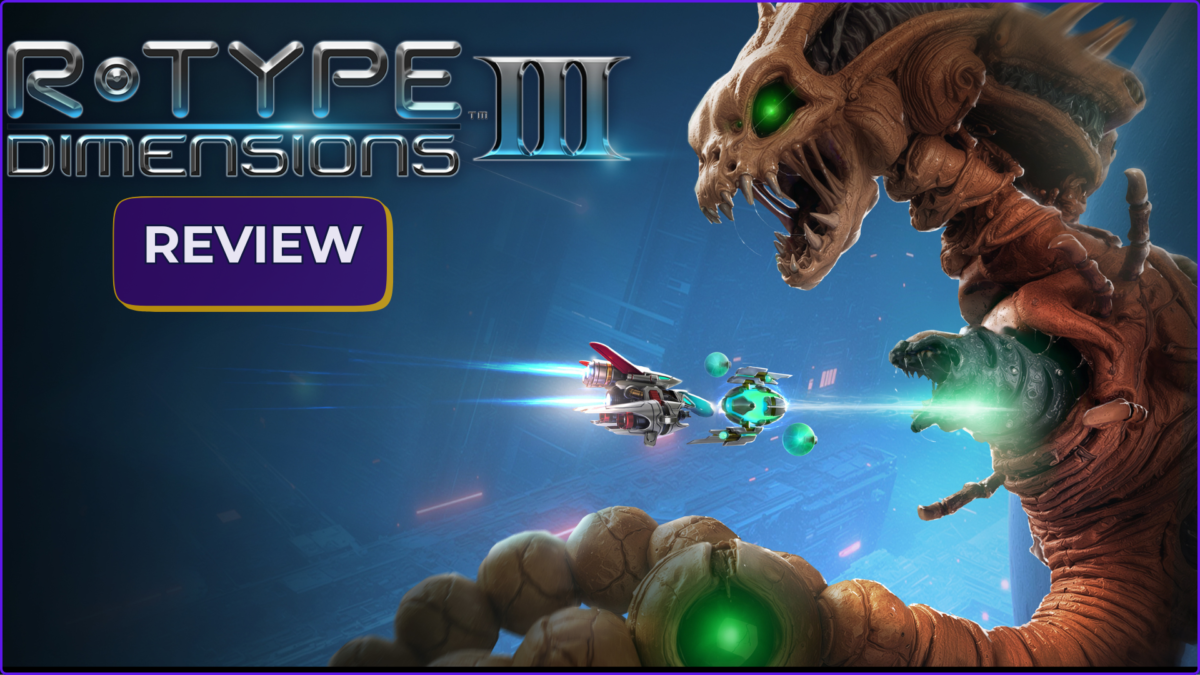
Our R-Type Dimensions III review revisits the 1993 shoot ’em up classic through a modern remake that faithfully preserves its demanding gameplay. While excellent Linux performance and thoughtful quality-of-life features impress, audio and collision issues keep it from becoming the definitive version.
R-Type Dimensions III At a Glance
Release Date
May 18, 2026
Full Disclosure
A review key was provided via PR Hound
Rebuilding a Shoot ‘Em Up Classic
R-Type Dimensions III brings R-Type III: The Third Lightning to modern platforms with a fully rebuilt 2.5D presentation. Rather than simply emulating the original Super Nintendo release, the developers reverse-engineered its code and recreated the game in Unity, allowing the classic gameplay to run beneath an entirely new visual layer.
One of the remake’s standout features is the ability to switch instantly between the original 16-bit graphics and the new 3D presentation at any point during gameplay. Players can also customize the retro experience with scanline, CRT, and pixel filters, making it easy to play the game however they prefer.
The original challenge remains intact through Classic Mode, while new options make the game more approachable for newcomers. Infinite Mode removes the frustration of limited lives with instant respawns and a manual power-up option, while Advanced Mode offers an even tougher challenge for experienced pilots right from the main menu.
The development team for R-Type Dimensions III includes:
- Andreas Scholl (Project Lead)
- X-Out: Resurfaced, Mahjong DS, Rainbow Cotton
- Nico Faltermeier (Programmer)
- X-Out: Resurfaced, Rainbow Cotton
- Simon Koch (Programmer)
- X-Out: Resurfaced, Rainbow Cotton
- Felix Wagner (Publishing Producer)
- X-Out: Resurfaced, Rainbow Cotton, G-Darius HD
- Florian Wunsch (Composer)
- Aron’s Adventure
- Eric Krause (Composer)
- Aron’s Adventure
- Michael A. Müller (Lead Artist)
- X-Out: Resurfaced, Rainbow Cotton, Mahjong DS
Reviewer’s Perspective
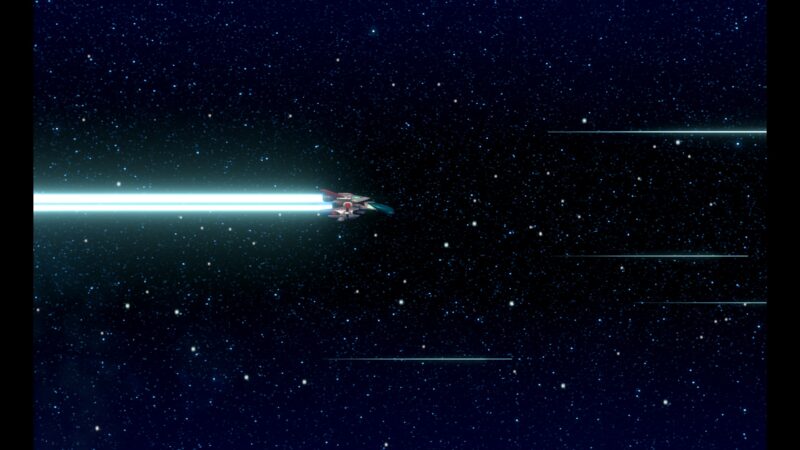
I’ve always wanted to spend more time with the R-Type series, but my experience has been surprisingly limited. Aside from playing R-Type III on the Super Nintendo back in fifth grade, most of my exposure to shoot ’em ups has come from games like Galaga, Space Harrier, and, more recently, Danmaku Unlimited 2. Reviewing R-Type Dimensions III gave me the perfect excuse to revisit one of the genre’s defining franchises while expanding both my own backlog and KonNetwork’s shoot ’em up coverage.
Into the Bydo Empire
Launch Sequence
The first thing R-Type Dimensions III does well is get you into the action quickly. The main menu is clean and easy to navigate, letting you choose between Classic, Infinite, and Advanced modes before adjusting your controls, audio, or visual presentation. Once everything is set, you simply select your Force configuration and launch into the first stage.
That straightforward approach mirrors the game itself. There are no lengthy tutorials or elaborate story sequences standing between you and the Bydo Empire. From the moment your R-90 Arrowhead leaves the hangar, survival depends entirely on learning enemy patterns, managing your Force pod, and knowing exactly when to unleash the Wave Cannon.
Mastering the Force
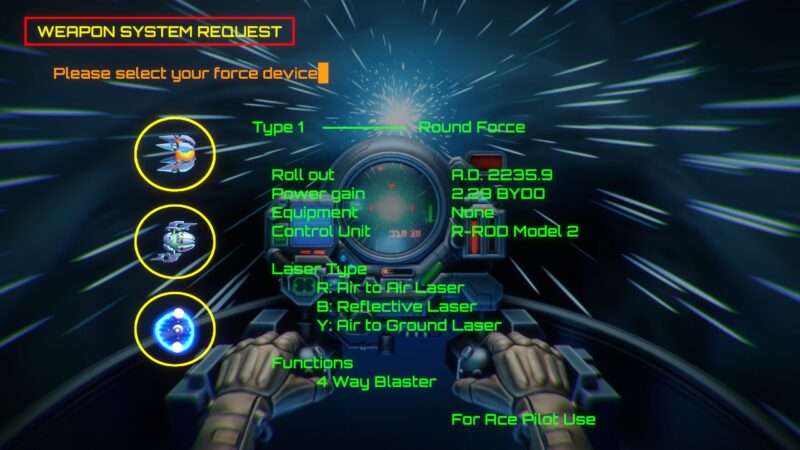
Each device alters your firing patterns to change how you clear oncoming enemy waves.
Force Pod Selection
Before each run, you choose between the Standard, Shadow, and Cyclone Force pods. Each one changes your shot patterns and encourages a different approach to the stage, giving the game surprising variety despite its straightforward controls.
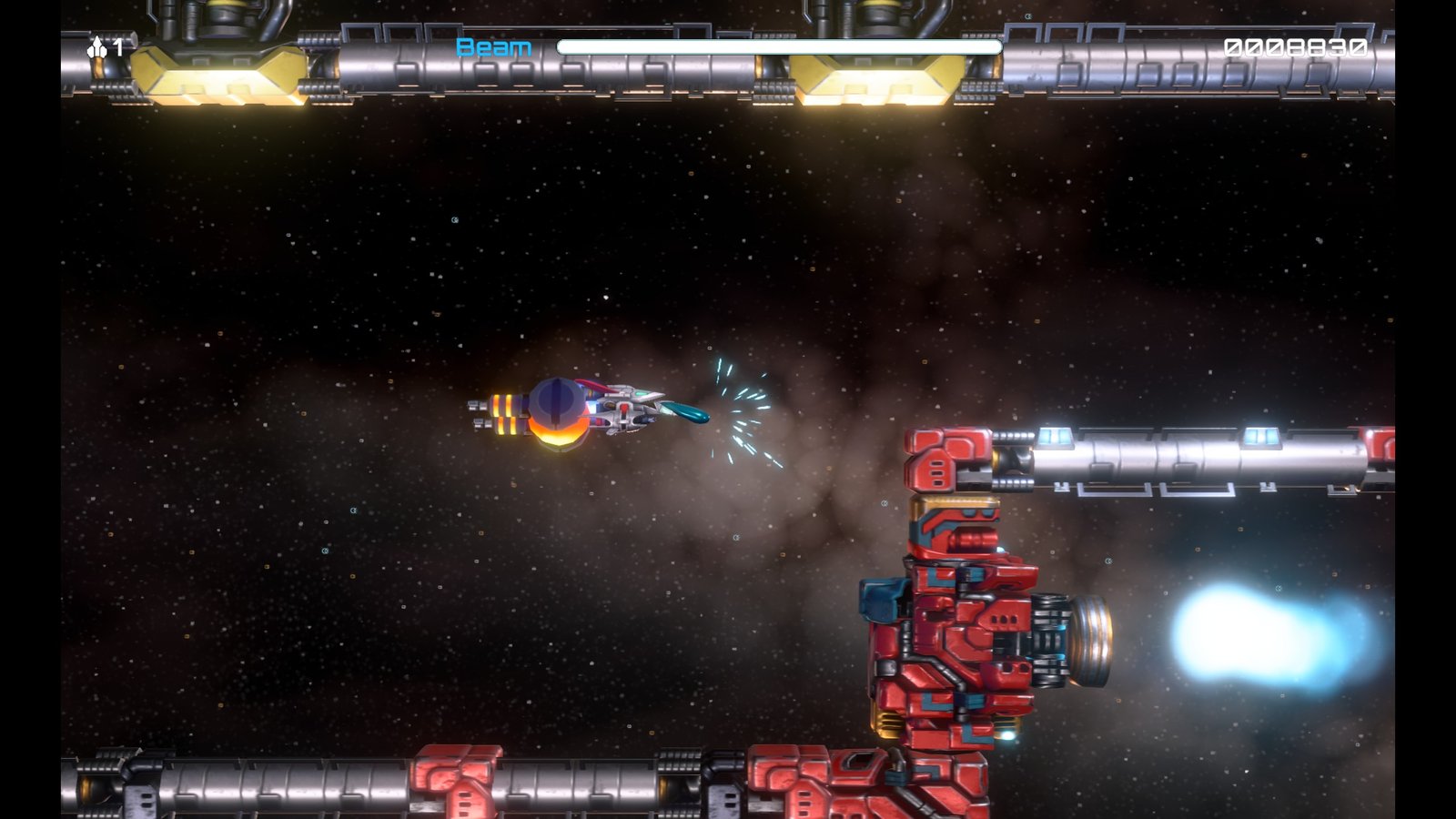
This placement lets you clear narrow corridors while buffering threats from behind.
Force Detachment
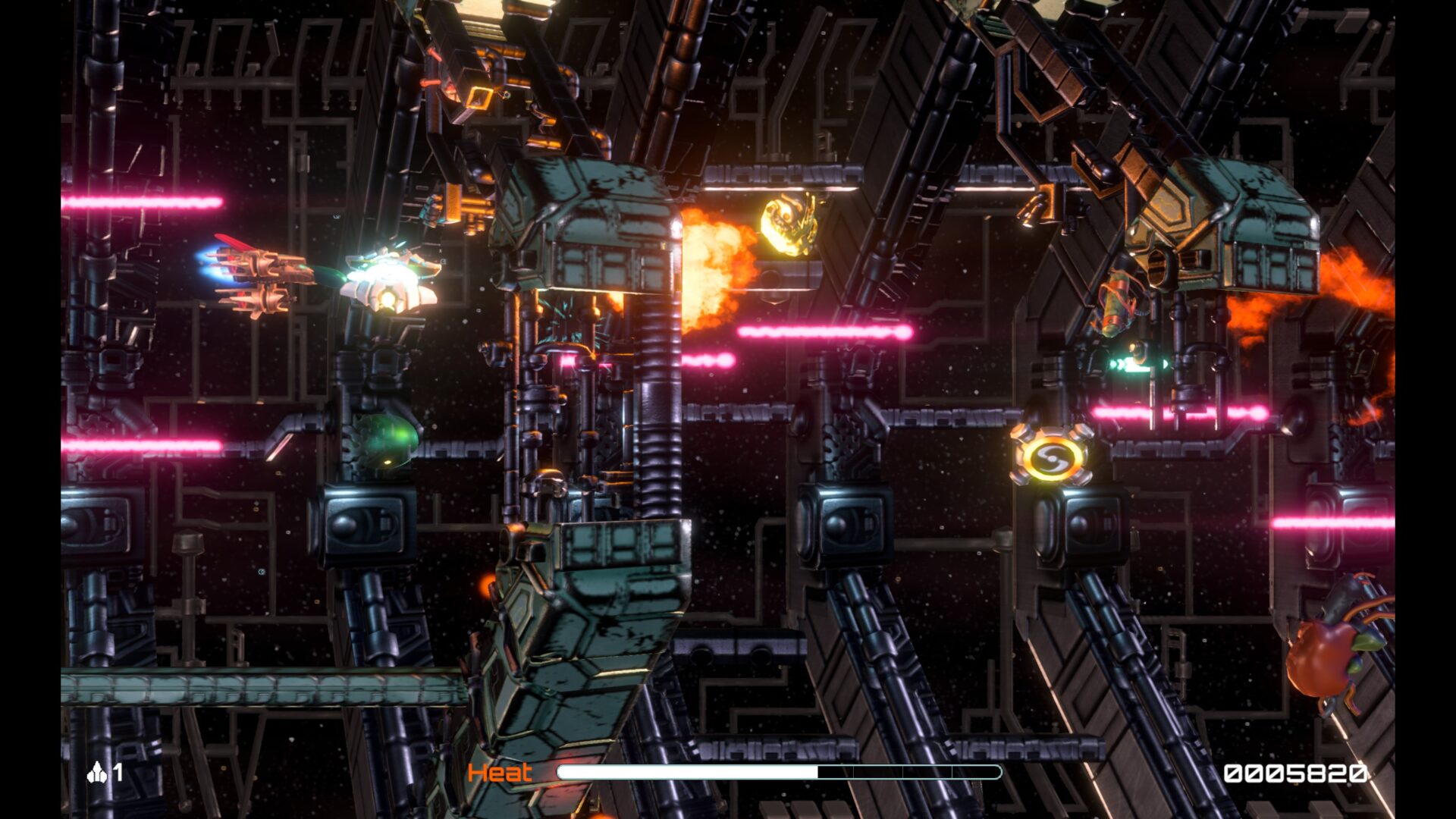
The Force pod is the heart of R-Type. You can attach it to the front or rear of your ship for protection or launch it forward as an independent weapon. Learning when to reposition it becomes just as important as dodging enemy fire, especially in stages packed with narrow corridors and environmental hazards.
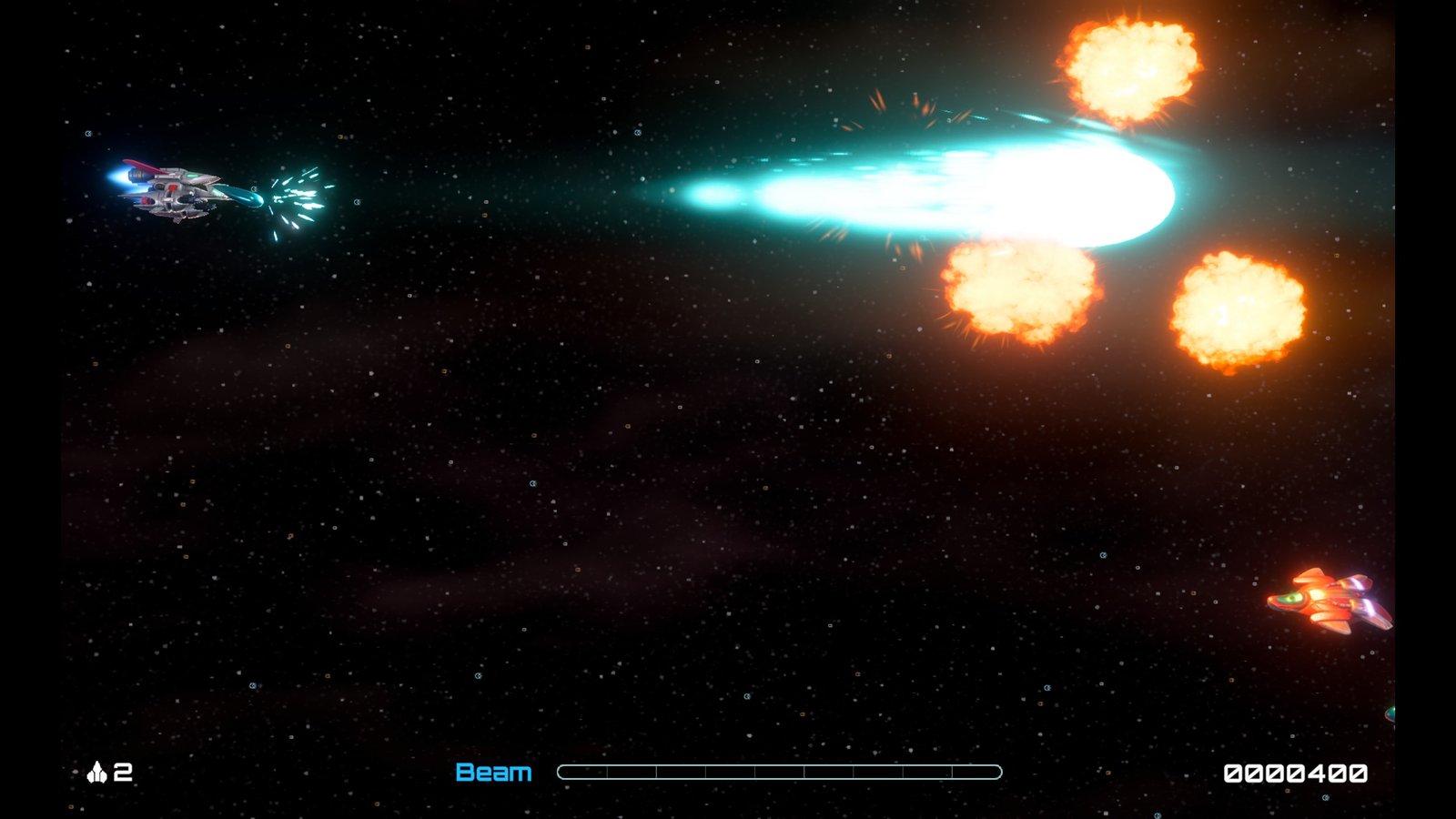
Monitoring the lower blue tracking line allows players to time their primary discharges perfectly.
Mega Wave Cannon
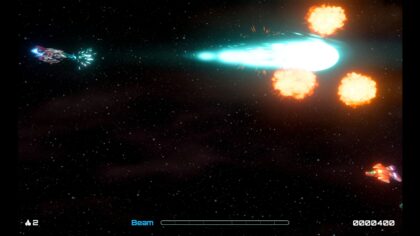
Holding the fire button charges the Wave Cannon into a devastating beam capable of piercing entire enemy formations. Timing your shots is crucial, as releasing the charge too early wastes valuable damage while waiting too long can leave you exposed.
Hyper Drive
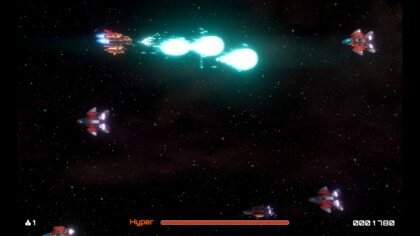
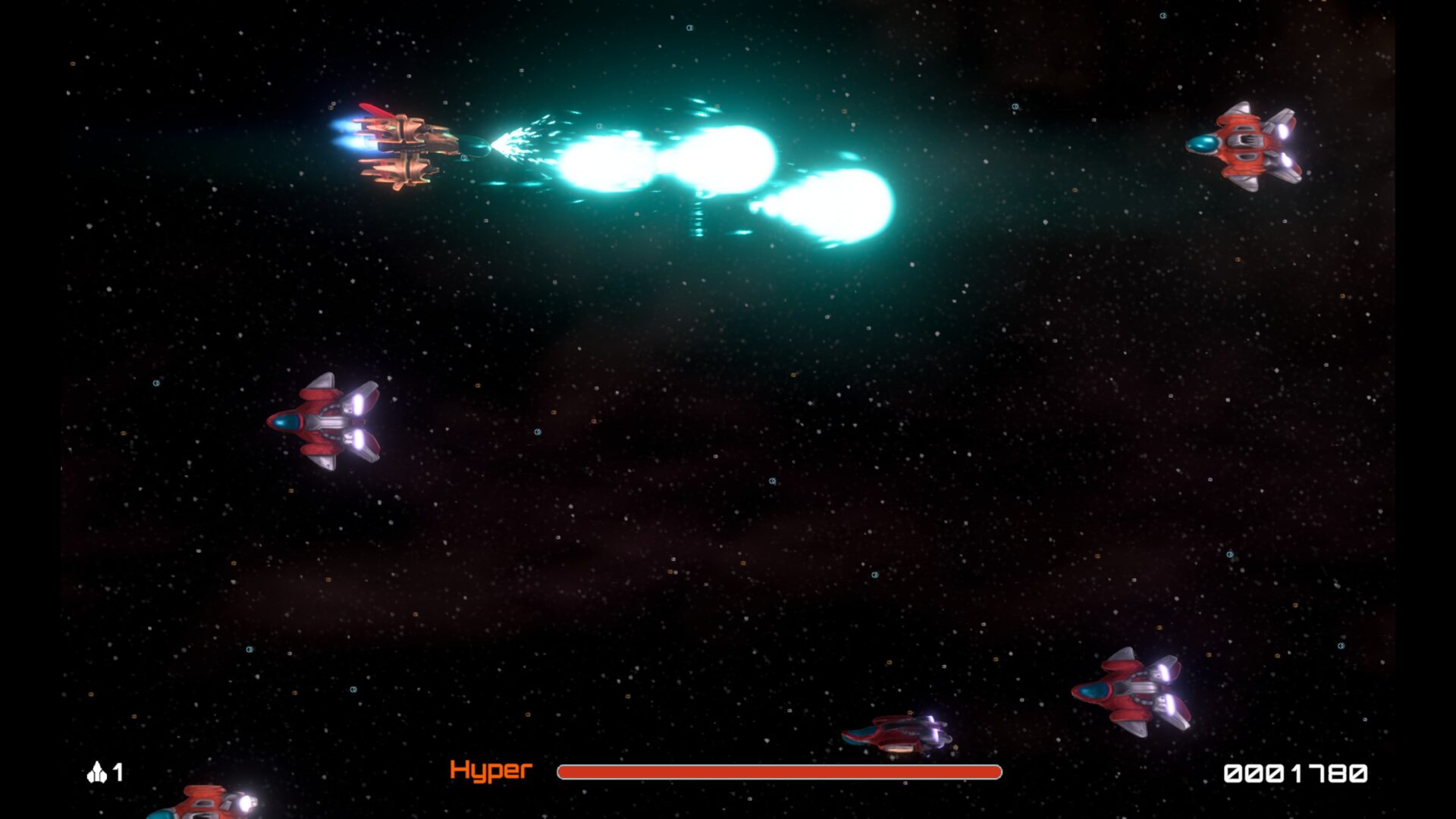
Charging beyond the Wave Cannon’s normal limit temporarily overclocks your ship, allowing you to unleash rapid-fire charged blasts. The resulting cooldown forces you to think carefully about when to trigger it, turning it into a powerful but situational tool rather than an instant win button.

Memorizing how the corridors rotate prevents sudden collision deaths during intense waves.
Stage Memorization
Like the original R-Type III, success depends as much on learning the stages as it does on quick reflexes. Rotating corridors, crushing walls, and shifting hazards demand careful positioning, rewarding repeated runs as you gradually memorize each encounter.
Presentation
One of R-Type Dimensions III’s biggest strengths is how effortlessly it lets you appreciate both the original game and its remake. At any point during gameplay, you can instantly switch between the classic 16-bit visuals and the new 3D presentation with no noticeable delay. Classic display filters, including scanlines and CRT effects, further let you tailor the experience to your preferences.
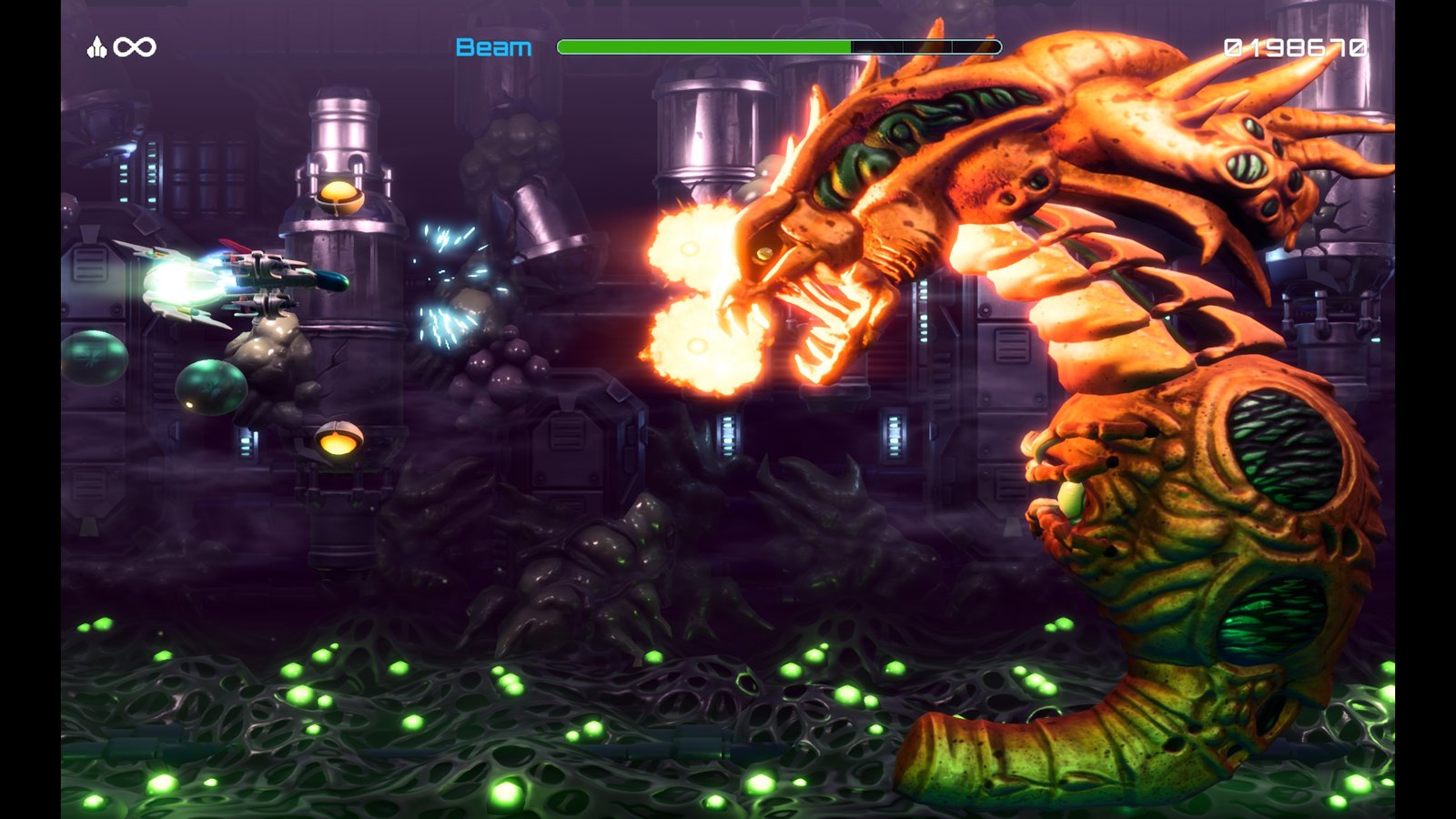
Shifting background geometry regularly obscures projectile tracking to cause unfair mechanical deaths.
The new 3D visuals add impressive lighting and depth to the original stages without changing their layouts. Unfortunately, that extra detail can occasionally work against the gameplay. During some boss encounters and effects-heavy sequences, foreground elements and environmental geometry make it harder to track incoming projectiles than in the original pixel art.
The soundtrack receives the same careful treatment. IMAscore re-recorded every track while preserving the original compositions, allowing the music to transition seamlessly alongside the visual style whenever you swap between classic and remastered modes.
Standout Tracks:
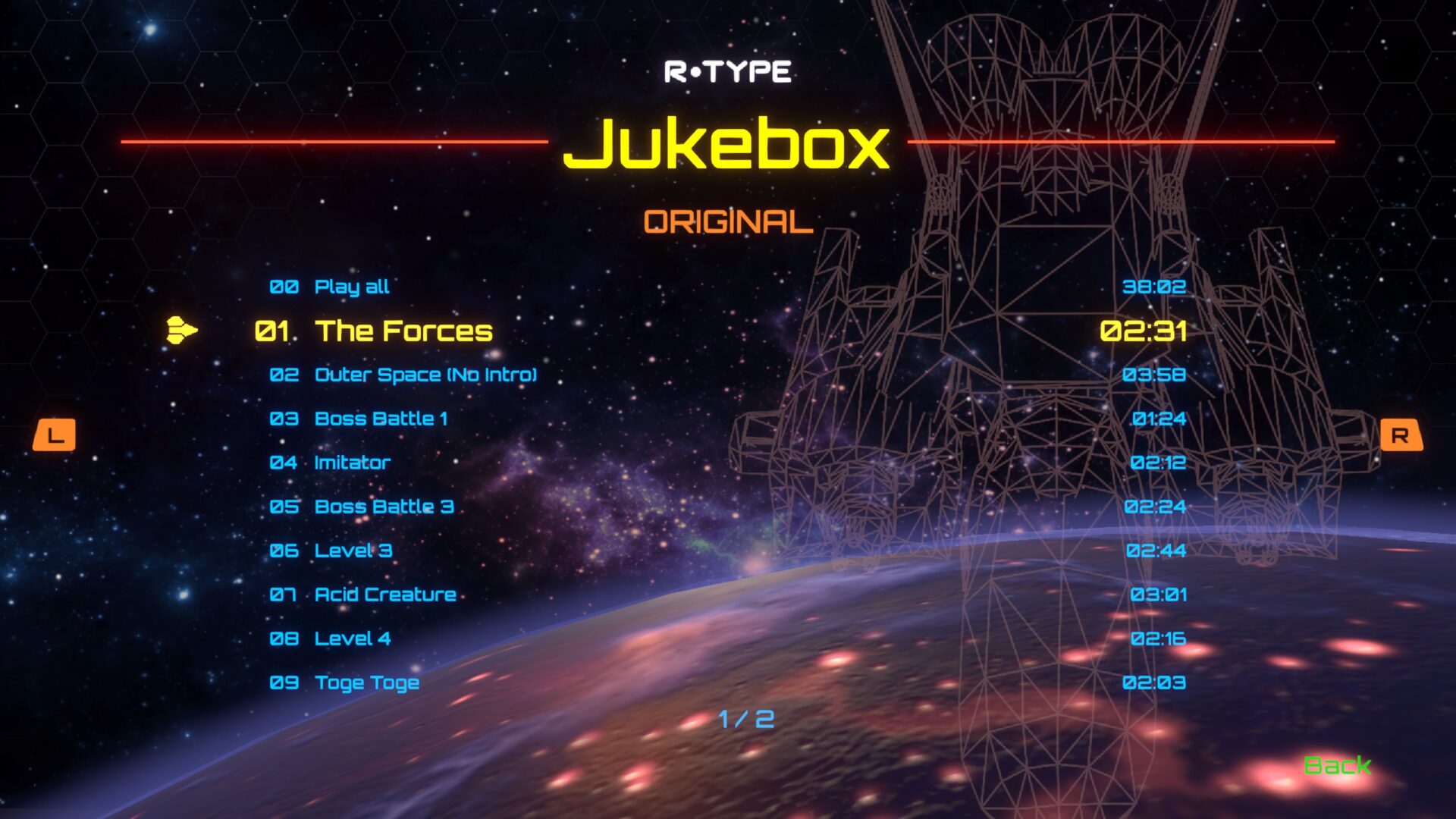
The Forces
A faithful modern arrangement that layers driving percussion and electronic synths over the original melody. It captures the excitement of launching into your first sortie while preserving the energy that made the Super Nintendo version so memorable.
Imitator
Industrial synth textures and a heavy bassline reinforce the tense atmosphere of the game’s tighter stages. The modern arrangement complements the escalating action without overpowering the gameplay.
Toge Toge
Fast-paced electronic rhythms perfectly match one of the game’s most demanding stages. Even during chaotic enemy waves, the arrangement remains clear and energetic, keeping the momentum high from start to finish.
Modern Features
Infinite Mode
Infinite Mode is the best addition for newcomers. Instead of sending you back to a checkpoint after every mistake, your ship immediately respawns where it was destroyed. It removes much of the frustration while still letting you learn enemy patterns and stage layouts at your own pace.
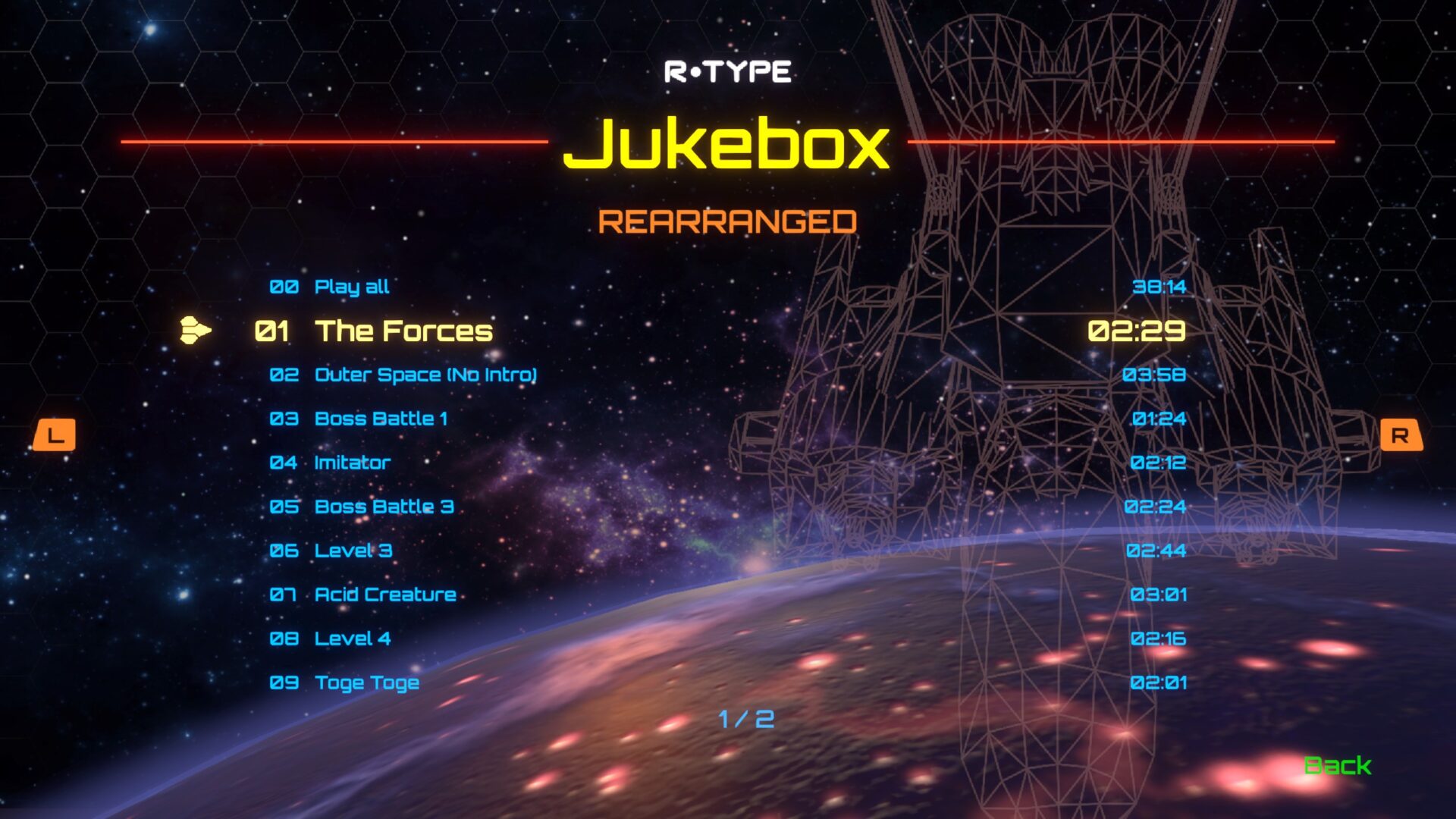
Jukebox
The built-in Jukebox lets you listen to the complete soundtrack in both its original and newly arranged forms. It’s a simple but welcome bonus for longtime fans who want to compare IMAscore’s remastered recordings with the Super Nintendo originals outside of gameplay.
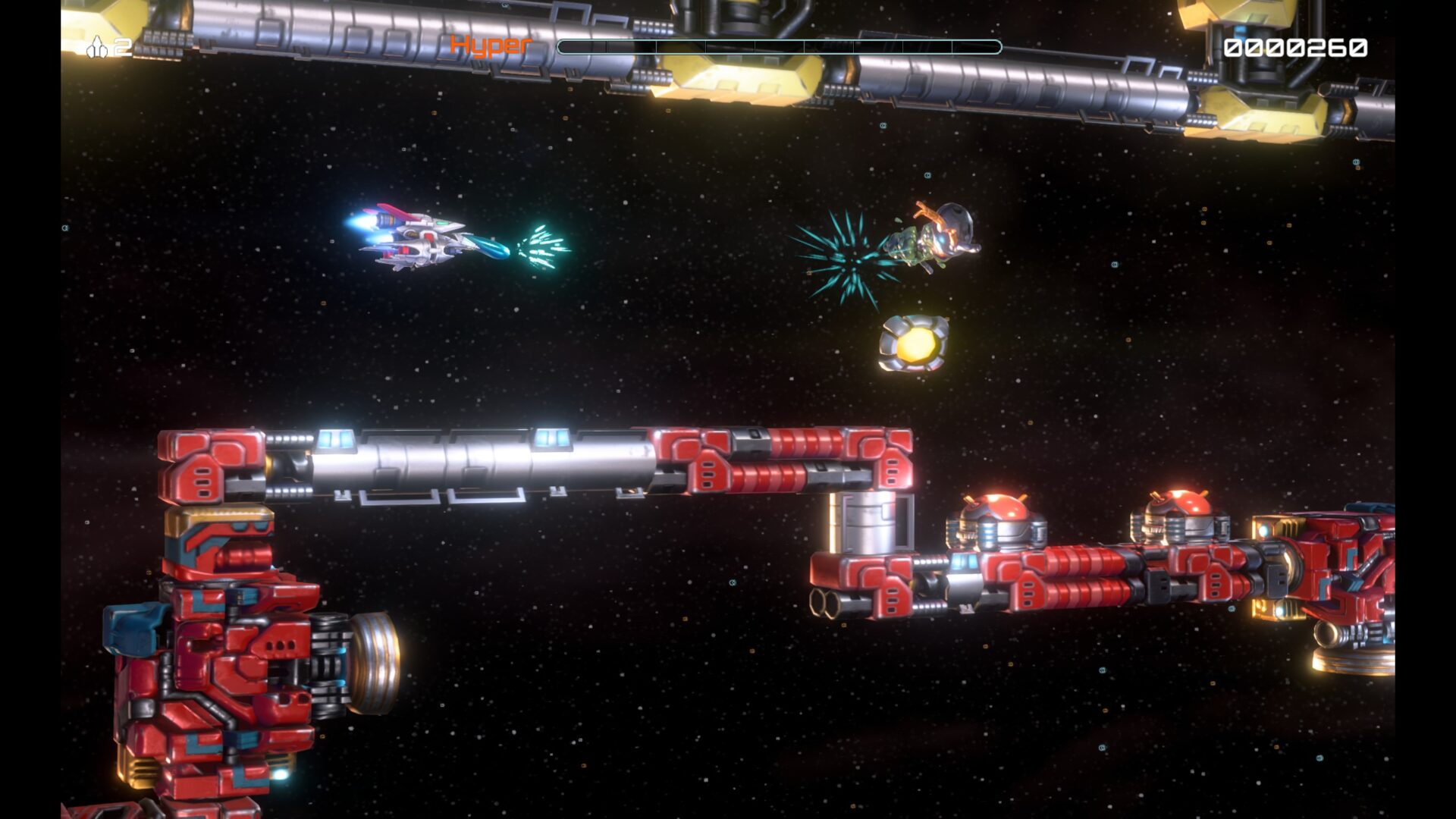
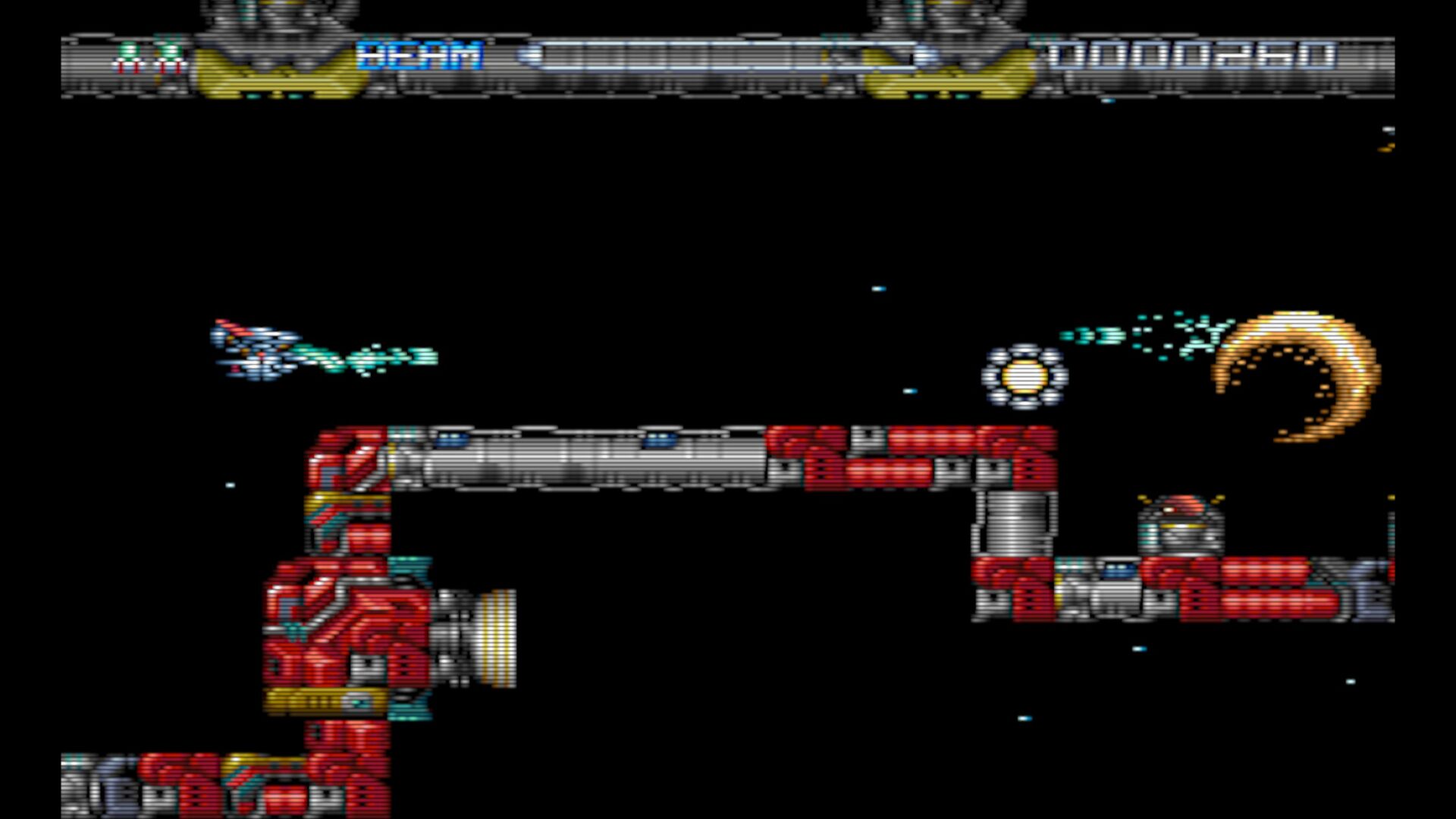
Instant Graphics Toggle
Switching between the original 16-bit sprites and the new 3D visuals isn’t just a novelty. During some of the remake’s busier stages, the cleaner pixel presentation actually makes incoming projectiles easier to read, giving players a practical reason to alternate between both visual styles.
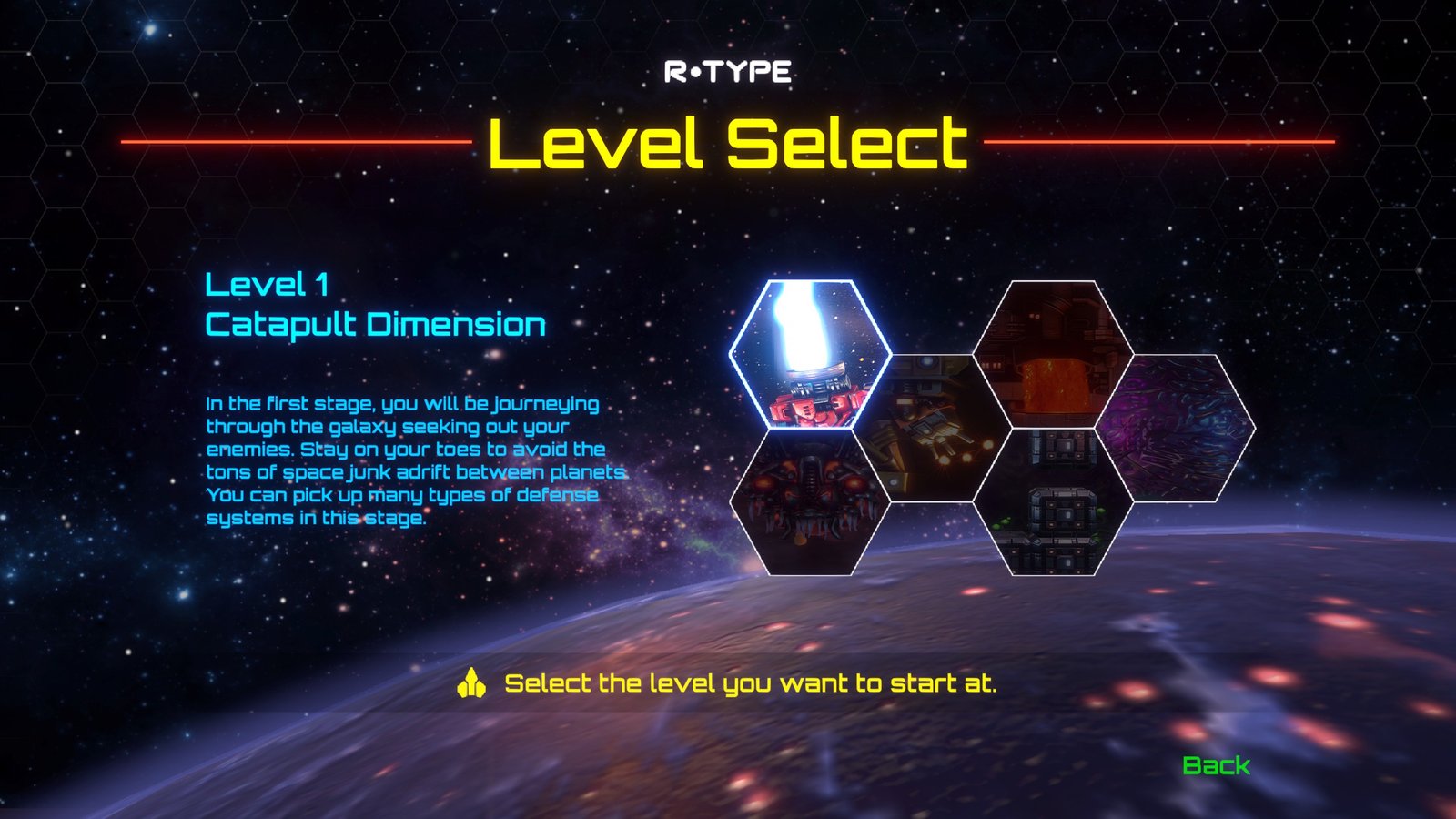
It works well for practicing the specific areas that give you the most trouble.
Level Select
Unlike the original Super Nintendo release, which hid stage select behind a Japanese-exclusive cheat code, R-Type Dimensions III unlocks completed stages directly through the main menu. It’s a welcome quality-of-life improvement that makes practicing difficult sections far more convenient
Linux Performance
R-Type Dimensions III runs exceptionally well on Linux. Using Proton Experimental, I didn’t need to adjust a single compatibility setting or launch option before playing. Performance remained smooth throughout the campaign, with no noticeable stuttering, hitching, or compatibility issues.
During the busiest stages, packed with enemy waves and screen-filling projectiles, the game averaged 120 FPS at native 1440p. Frame pacing remained consistently smooth, with 1% lows of 111 FPS and 0.1% lows of 108 FPS. These results were achieved without upscaling or frame generation, making this an excellent experience on modern Linux hardware.
Final Verdict
R-Type Dimensions III gets one of the hardest parts right: the foundation. The original R-Type III remains an outstanding shoot ’em up, and the remake preserves its demanding stage design, memorable boss encounters, and iconic Force pod mechanics.Combined with excellent Linux performance and thoughtful quality-of-life additions, it’s clear the developers wanted to celebrate a genuine classic.
Unfortunately, the remake’s modern presentation doesn’t always serve that goal. The new 3D visuals occasionally make enemy projectiles and environmental hazards harder to read than they were in the original game, while missing audio cues and inconsistent sound mixing weaken important gameplay feedback. Those issues become especially frustrating in a genre where precision and split-second reactions are everything.
With additional patches to improve collision accuracy, restore missing audio, and refine the 3D presentation, R-Type Dimensions III could become the definitive way to experience one of the Super Nintendo’s finest shoot ’em ups. As it stands today, however, it’s easier to recommend to longtime R-Type fans than newcomers looking for the best possible first impression.
Actionable Patch Suggestions
Improve 3D Collision Accuracy – Align environmental geometry and collision boundaries with the original game so visual feedback consistently matches gameplay.
Restore Missing Audio Cues – Bring back missing menu sounds and gameplay effects while improving overall audio balancing.
Expand Display Options – Add native resolution and refresh rate controls directly to the graphics menu.
Rebalance Weapon Damage – Review Hyper Charge damage output and boss health scaling to preserve the original game’s challenge.
Review Summary
R-Type Dimensions III (Linux)
R-Type Dimensions III faithfully modernizes a legendary 16-bit shoot ’em up with thoughtful quality-of-life features and excellent Linux performance. Unfortunately, inconsistent collision, audio bugs, and balance issues prevent it from becoming the definitive version of R-Type III.
Tested On
CPU: Ryzen 7 5900X | GPU: AMD RX 9070XT 16GB | RAM: 64GB DDR4 | Storage: Crucial P5 Plus NVMe SSD
OS: Nobara Linux | Resolution: 1440p
References
Interviews
- United Games, Building a Business Around Classic Niche Game Preservation | 19 May 2026
[Live | Archive]