

Our Star Fox (1993) review revisits the pioneering Super Nintendo shooter that brought real-time 3D graphics to home consoles. Argonaut Games’ ambitious use of the Super FX chip delivered a technical breakthrough, but decades later it’s easier than ever to appreciate both the engineering achievement and the hardware compromises that shaped the experience.
Star Fox (1993) At a Glance
Release Date
Feb 21, 1993 (JP)
Mar 23, 1993 (NA)
Engineering Ambition
Star Fox first appeared publicly at the Consumer Electronics Show in Las Vegas in January 1993, introducing players to something console games had never attempted before: a fully polygonal 3D shooter running on Nintendo’s 16-bit hardware. The game launched for the Super Famicom on February 21, 1993, before arriving in North America on March 26 and Europe on June 3 later that year.
Speaking with Time Extension, Argonaut Games founder Jez San reflected on the challenge of making that vision a reality. Without official documentation for the Super Nintendo, the team reverse-engineered the console to understand its capabilities before building the technology that would eventually become the Super FX chip.
Rather than relying solely on the SNES CPU, the cartridge included its own co-processor to handle the complex polygon calculations the console couldn’t perform on its own. That breakthrough made Star Fox possible, but it also came with unavoidable compromises. As Argonaut pushed the hardware further, performance became increasingly dependent on how much was happening on screen at any given moment. Throughout development, Shigeru Miyamoto continued refining the game’s feel, ensuring that despite its technical limitations, flying the Arwing remained the priority.
The development team for Star Fox (1993) includes:
- Dylan Cuthbert (Programming)
- Star Fox 2, X, Star Fox 64 3D
- Katsuya Eguchi (Director)
- Wave Race 64, Animal Crossing, Star Fox 2
- Takaya Imamura (Graphic Designer)
- F-Zero – F-Zero GX, Star Fox – Star Fox Zero, The Legend of Zelda: Majora’s Mask
- Hajime Hirasawa (Composer)
- Star Fox, Wave Rave
- Shigeru Miyamoto (Producer)
- The Legend of Zelda series, F-Zero series, Mario series
- Hiroshi Yamauchi (Executive Producer)
- Sin & Punishment series, F-Zero – F-Zero X, Star Fox – Star Fox Adventures
Reviewer’s Perspective
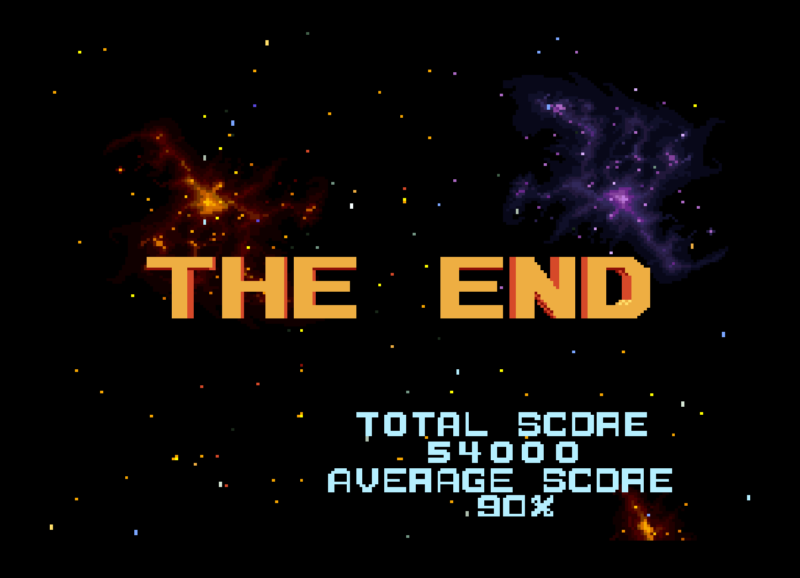
I first played Star Fox back in 1999, but I never saw the ending because the cartridge belonged to someone else and eventually had to be returned. Coming back to it decades later felt very different, especially after replaying Star Fox 64 and experiencing the series’ later refinements.
For this review, I revisited the original using RetroArch with the SNES9x core on Nobara Linux. That allowed me to experience the game as originally designed while evaluating how its pioneering technology and hardware limitations hold up on modern systems.
First Flight
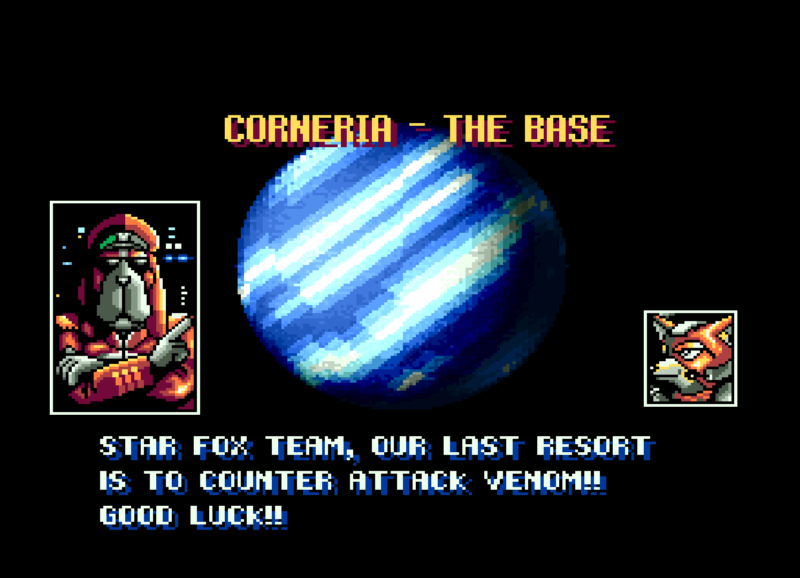
The second you climb into the Arwing’s cockpit, it’s obvious you’re playing something the Super Nintendo wasn’t really built to do. Instead of colorful sprites and layered backgrounds, Star Fox presents a world built almost entirely from flat-shaded polygons. Even today, it looks unlike anything else on the system.
That visual leap comes with a learning curve. Traditional 16-bit instincts don’t always apply here because judging distance through simple geometric shapes takes time. Before long, I found myself relying less on visual detail and more on movement and spacing to line up shots and avoid incoming obstacles. It feels strange at first, but once it clicks, you begin to appreciate just how ambitious the game really was.
Learning to Fly
Corridor Rail Shooter Structure
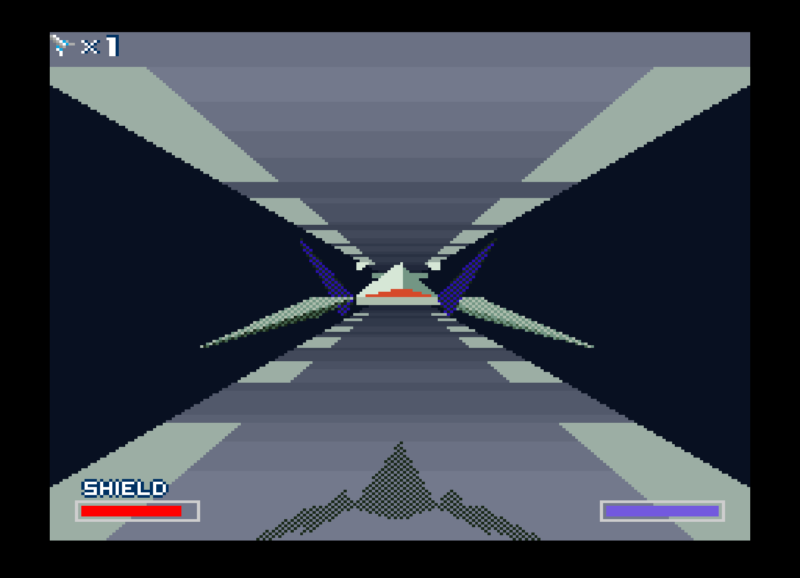
The first surprise is just how focused Star Fox is. Rather than giving you complete freedom to fly wherever you want, the game locks your Arwing onto a predetermined route and asks you to master everything happening within it. Enemy formations, environmental hazards, and tight corridors constantly demand your attention, turning every stage into a test of positioning rather than exploration. It sounds restrictive on paper, but that narrow focus is exactly what gives the combat its intensity. You’re constantly making small adjustments instead of simply pointing the ship toward the horizon.
Branching Difficulty Paths
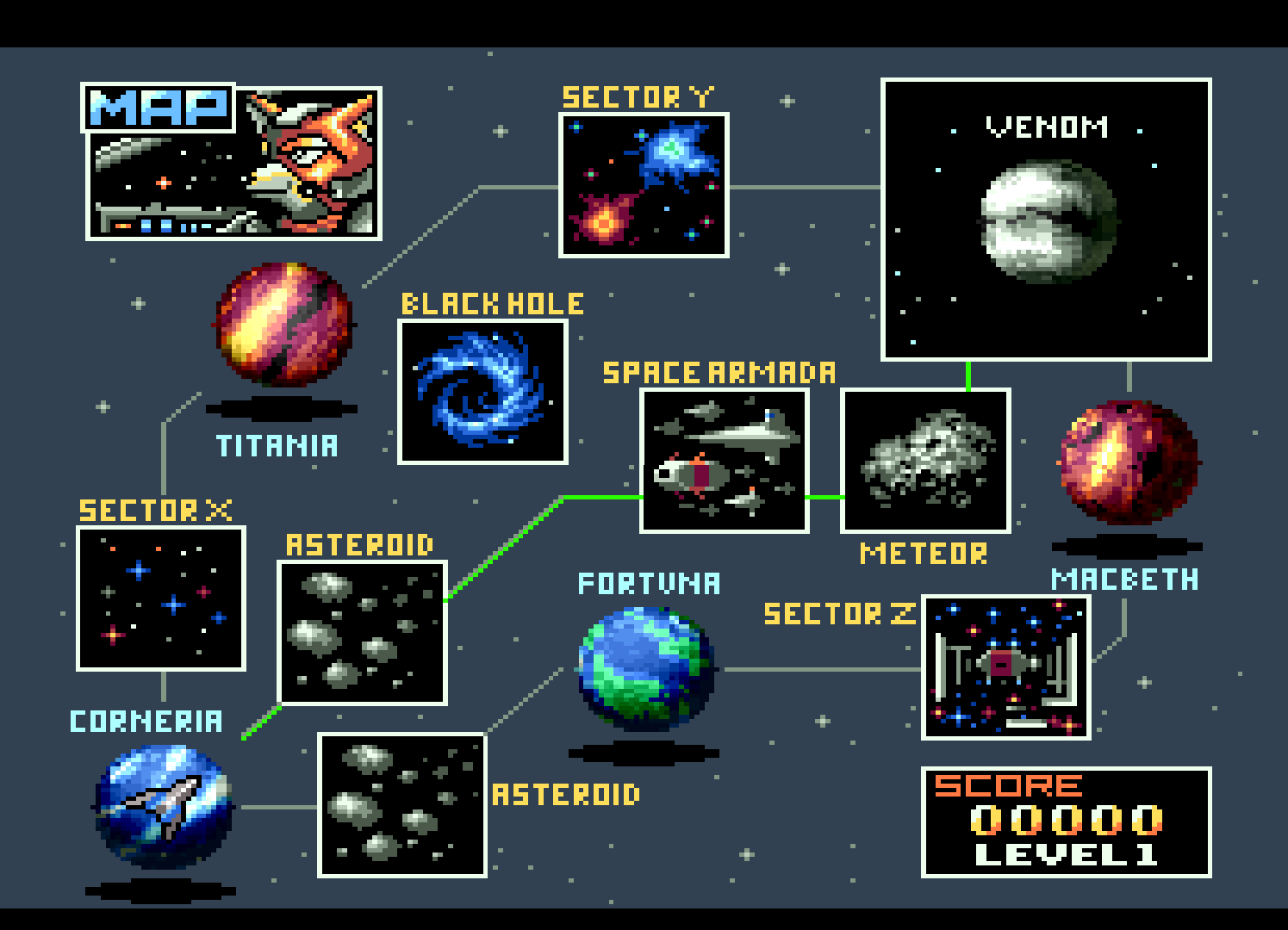
One of Star Fox‘s smartest ideas is that your route through the Lylat System isn’t fixed. The campaign branches into three distinct paths, with each route increasing the challenge through denser obstacles, tougher enemy formations, and more demanding encounters. It encourages repeat playthroughs naturally because mastering one route simply opens the door to a harder one.
Arwing Hitbox
The Arwing is larger than it first appears, and the game isn’t shy about reminding you. More than once I clipped an obstacle I was convinced I’d cleared, especially through asteroid fields and narrow interior corridors. Before long, I found myself giving every wall and obstacle a little more room than my instincts suggested, making precision just as important as quick reflexes.
Speed Management
Speed management ends up being far more important than I expected. Braking gives you precious extra time to line up difficult shots or avoid incoming enemies, while boosting lets you slip through closing blast doors and catch enemy formations before they disappear. It transforms what initially feels like a simple rail shooter into a constant balancing act between caution and momentum.
Deflective Barrel Roll
The barrel roll quickly became my most reliable defensive tool. Timing it correctly lets you reflect incoming plasma without sacrificing your position, rewarding anticipation instead of frantic button mashing. Even by modern standards, it’s one of the game’s smartest mechanics because it turns defense into an active part of combat rather than simply avoiding damage.
Wing Damage
Wing damage gives every collision real consequences. A heavy impact or missile strike can shear one of the Arwing’s wings clean off, making the ship noticeably harder to control while reducing your firepower until you find a repair ring. A single mistake early in a mission can completely change how the rest of that stage plays out.
Nova Bombs & Squadmates
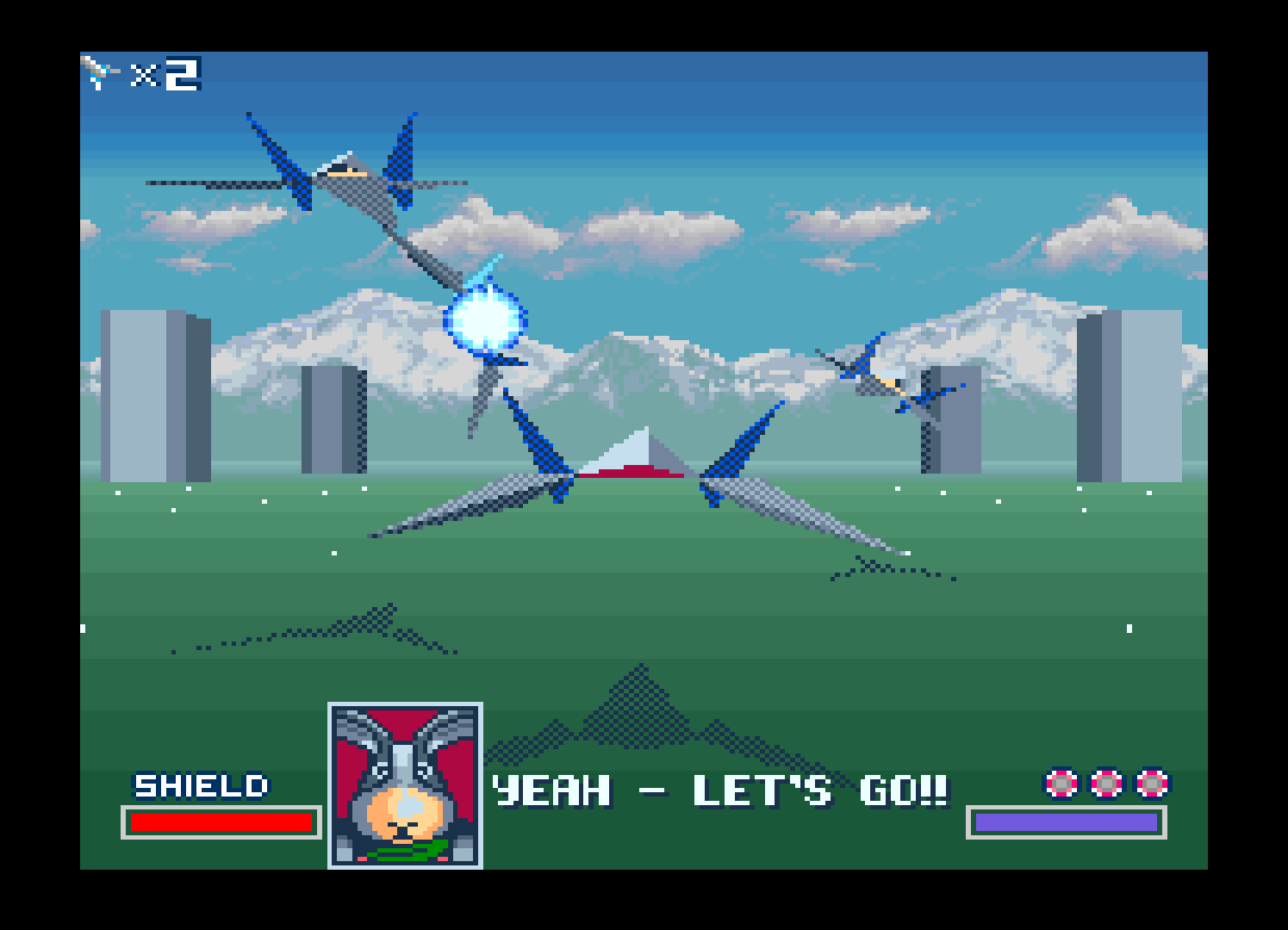
Nova Bombs are best treated as an emergency resource rather than something to use the moment you pick one up. They instantly clear smaller enemies from the screen and can create valuable breathing room during the game’s busiest encounters.
Your squadmates also play a much bigger role than simple background support. Falco, Slippy, and Peppy constantly engage enemy fighters alongside you, and keeping them alive becomes another objective during each mission. Losing one doesn’t just change the radio chatter. It leaves you with less support for the rest of the campaign, giving every rescue a little more weight than I expected.
Cockpit View
The optional cockpit camera is more than a novelty. Switching to first-person removes much of the visual clutter and can make busy encounters slightly easier to read, even if I still preferred the traditional chase camera for most of my playthrough.
It’s another reminder that Argonaut wasn’t just experimenting with 3D graphics, but also with how players experienced them.
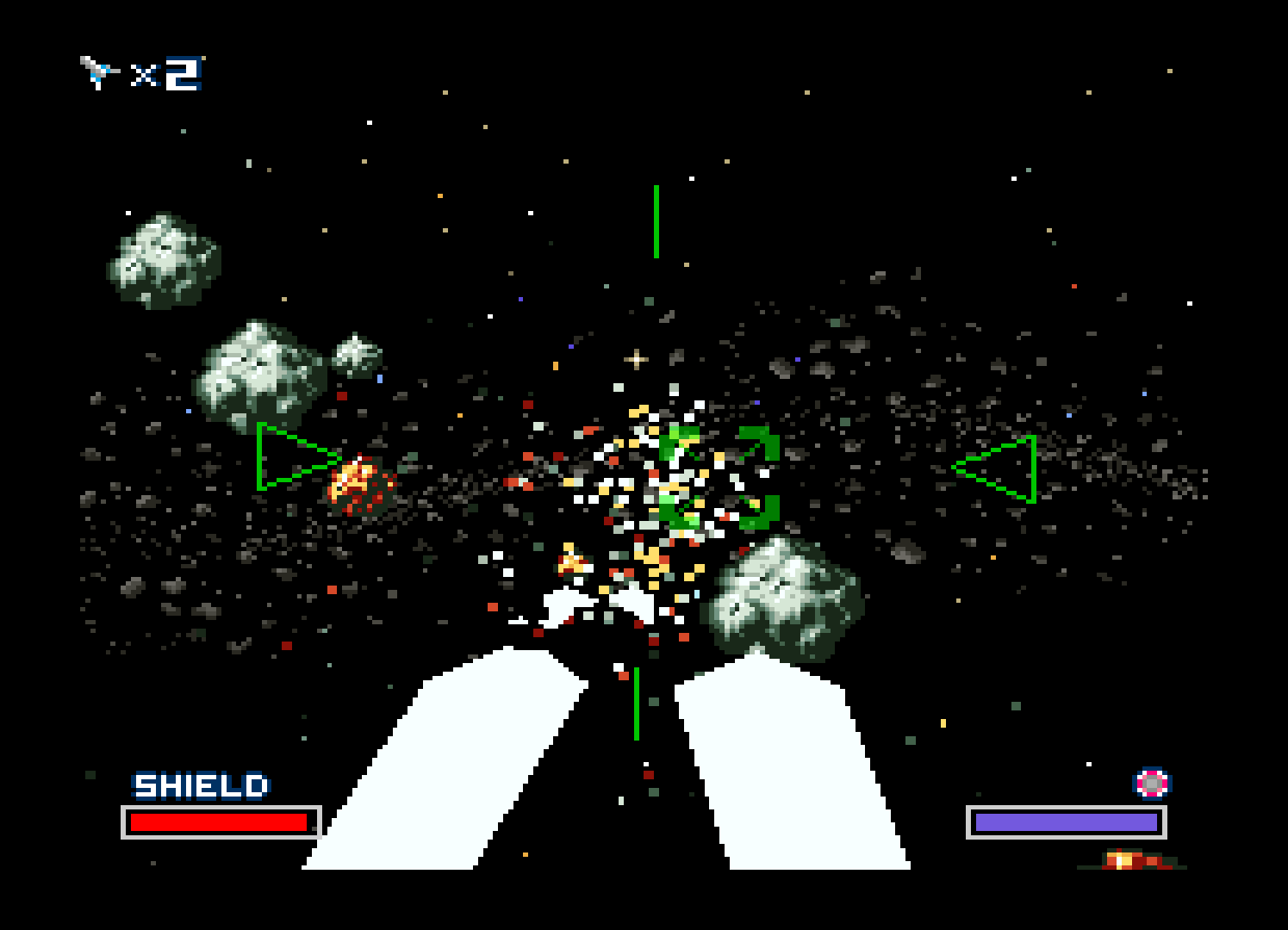
Presentation
The first thing that stands out about Star Fox is its presentation. Instead of colorful sprites and detailed backgrounds, Argonaut built an entire world out of flat-shaded polygons. Even more than thirty years later, it still looks unlike anything else on the Super Nintendo.
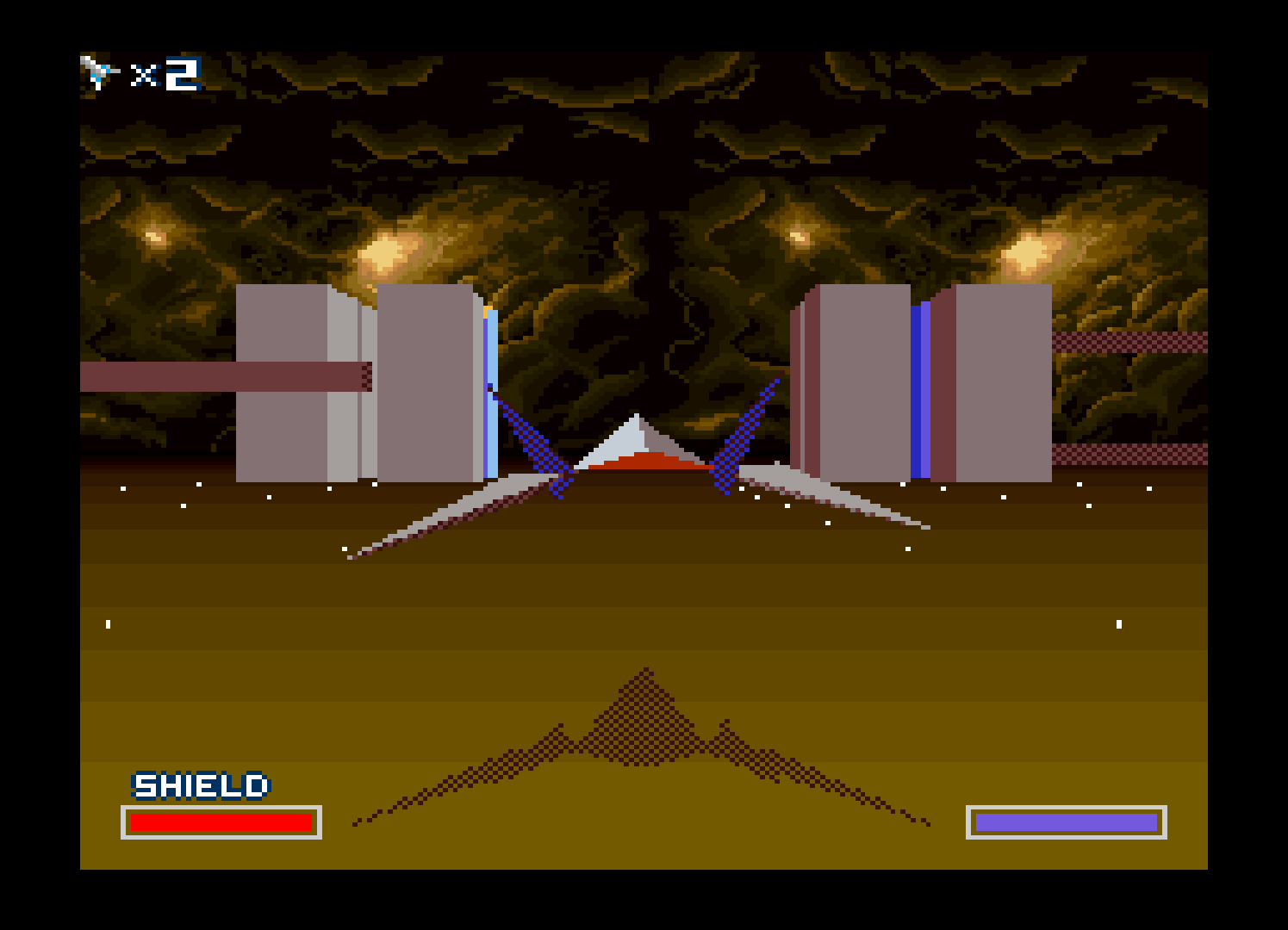
That minimalist approach forces the game to rely on shape, scale, and color rather than texture. The Arwing is little more than a handful of polygons cutting through empty space, while enemy fighters appear as simple geometric forms that are surprisingly easy to read during combat. Bright blues, deep purples, and flashes of orange provide just enough contrast to separate enemies from the darkness without overwhelming the screen. It may be primitive by modern standards, but it gives Star Fox an identity that’s immediately recognizable.
The audio complements that minimalist presentation surprisingly well. Explosions and laser fire have a satisfying mechanical crunch that gives every hit immediate feedback, even within the limitations of the Super Nintendo’s sound hardware. Every shot feels distinct enough that you rarely question whether you’ve connected with an enemy.
The famous synthesized voice clips remain just as memorable. Rather than distracting from the action, the garbled chatter from Falco, Slippy, and Peppy communicates urgency without pulling your attention away from the battlefield. When your shields reach critical levels, the repeating warning alarm cuts cleanly through the soundtrack, making it almost impossible to ignore the danger.
The soundtrack remains one of Star Fox’s greatest strengths. Even within the limitations of the Super Nintendo’s sound hardware, Hajime Hirasawa’s compositions do an excellent job of matching the pace and atmosphere of each mission.
Standout Tracks
- Corneria Theme
The opening military march immediately sets the tone for the adventure. Its driving synth melody and energetic percussion make your first flight into Corneria feel exciting while establishing the adventurous spirit that carries through the rest of the soundtrack. - Asteroid Belt
Fast percussion and sharp electronic flourishes create a constant sense of urgency as drifting asteroids and enemy fighters begin to crowd the screen. It’s one of the soundtrack’s most energetic pieces and perfectly complements the chaos unfolding around you. - Space Armada
A darker electronic track built around heavy bass and ominous melodies. It steadily builds tension before major fleet engagements, making the approach to massive enemy warships feel appropriately intimidating.
Technical Performance
Running Star Fox through RetroArch using the SNES9x core on Nobara Linux demonstrates just how faithfully modern emulation preserves the original experience.. The game’s slowdown isn’t caused by modern hardware or the emulator itself. It’s built into the original software, so performance still fluctuates dramatically whenever the Super FX chip is pushed to its limits.
The frame rate is constantly tied to what’s happening on screen. Quiet moments feel reasonably responsive, but as enemy fighters, explosions, and larger ships begin to fill the battlefield, performance can drop dramatically. During some of the busiest encounters, I estimated the game was running in the single digits, turning what should have been quick reactions into an exercise in anticipation rather than reflex.
Whether I was weaving through narrow corridors or taking on larger fleet battles, I found myself planning movements ahead of time instead of reacting instinctively. That inconsistency is ultimately part of Star Fox’s identity. Every polygon the Super FX chip pushes comes with a performance cost, making the game a fascinating snapshot of an era when developers were willing to sacrifice fluidity in pursuit of technological breakthroughs. It can be frustrating at times, but it’s also a reminder of just how ambitious this project was in 1993.
Final Verdict
Star Fox (1993) is a fascinating piece of gaming history that deserves respect for what it accomplished, even if it hasn’t aged with the same grace as some of Nintendo’s other classics. Returning to the cockpit after revisiting Star Fox 64 and playing the 2026 remake demo makes one thing immediately clear: the original is just as much a showcase of engineering ambition as it is a game.
Argonaut Games’ decision to prioritize real-time 3D polygons over frame rate changed what players thought the Super Nintendo was capable of. It’s a landmark technical achievement, but one that came with unavoidable compromises. Throughout my playthrough, performance frequently dropped into what I estimate to be the 9 to 13 FPS range during the busiest encounters, making precision feel more like an exercise in prediction than pure reflex.
Yet those compromises are also part of what makes Star Fox so important. The heavy, deliberate feel of the Arwing isn’t entirely a product of intentional design, but it gives the game a unique sense of weight that later entries refined rather than replaced. It hasn’t aged like milk, but it certainly hasn’t aged like wine either.
For players interested in the history of console graphics and the evolution of 3D game design, Star Fox remains essential. As a modern rail shooter, however, it’s easier to admire than it is to recommend without reservations.
Review Summary
Star Fox (SNES)
Star Fox remains one of the Super Nintendo’s most important technical achievements and an essential piece of Nintendo history. While its groundbreaking 3D technology still commands respect, the hardware compromises that made it possible also make it a more rewarding historical experience than a modern rail shooter.
Tested On
CPU: Ryzen 7 5900X | GPU: AMD RX 9070XT 16GB | RAM: 64GB DDR4 | Storage: Crucial P5 Plus NVMe SSD
OS: Nobara Linux | Resolution: 1080p
References
Interviews
- Damien McFerran, Jez San On Argonaut, Nintendo And Star Fox | 7th May 2026, Time Extension
[Live | Archive]