

The Nintendo Switch 2 announcement during the latest Direct presentation showcases a host of upgrades and new features designed to push the hybrid console experience forward.
From performance boosts to a fresh take on controllers, the presentation outlined the technical foundation of Nintendo’s next hardware generation. This coverage tracks the official specification baseline, including post-show data covering custom Nvidia upscale features and regional retail distribution configurations.
Hardware Enhancements and Display Scaling
The Nintendo Switch 2 features a 7.9-inch HDR-enabled LCD screen, offering 1080p resolution in handheld mode with support for up to 120 FPS. When docked, the console can output at 4K resolution, delivering a sharper, more fluid experience for home environments. The internal display architecture integrates hardware-level G-SYNC parameters to mitigate screen tearing during volatile frame rate dips.
Nvidia published a technical breakdown highlighting the platform’s architectural leap. The revised system architecture delivers up to 10 times the performance of the original Switch by utilizing per-game DLSS upscaling and specialized GPU acceleration hardware.
MicroSD Express Storage Integration
Nintendo has abandoned traditional slow flash storage standards, selecting MicroSD Express as the exclusive expansion format. While the console includes 256GB of fast onboard storage, expanding that pool requires high-speed MicroSD Express cards to handle heavy multi-gigabyte modern asset streams.

Unlike legacy cards, MicroSD Express utilizes PCIe-based technology. This architecture permits read and write speeds up to 10 times faster than old mobile storage formats. This pipeline targets reduced load screens, efficient asset streaming in open-world titles, and instantaneous deployment of high-resolution textures.
Magnetic Joy-Con Controllers and Capture Hardware
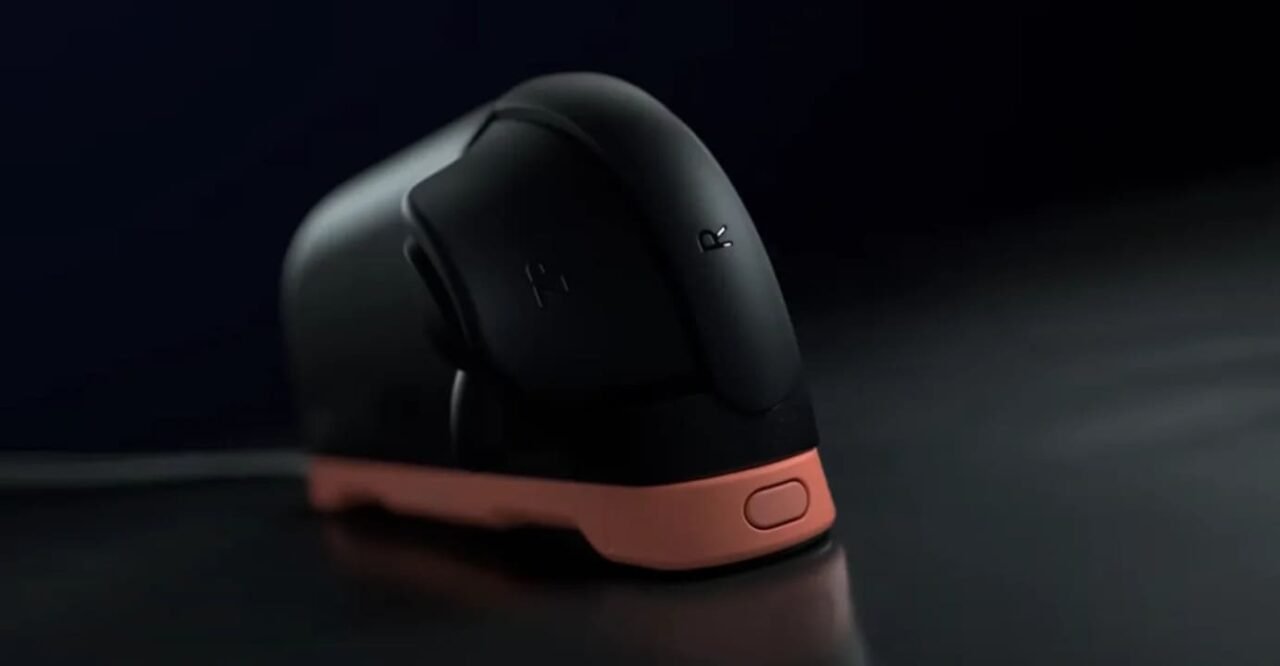
A notable structural change introduces magnetic Joy-Con controllers, completely replacing the legacy mechanical physical rail setup. These revised controllers offer wider rear ergonomics and attach to the main housing via high-strength magnetic links. Nintendo updated the internal audio layout by placing microphone arrays directly into the controller shells to facilitate native software communication pathways.
GameChat and Built-In Camera Functions
The system architecture introduces GameChat, an OS-level voice communication framework featuring algorithmic noise reduction for online matches. An integrated Switch 2 Camera expands these communication options, permitting video configuration options inside supported applications.
GameShare Local Multiplayer Protocols
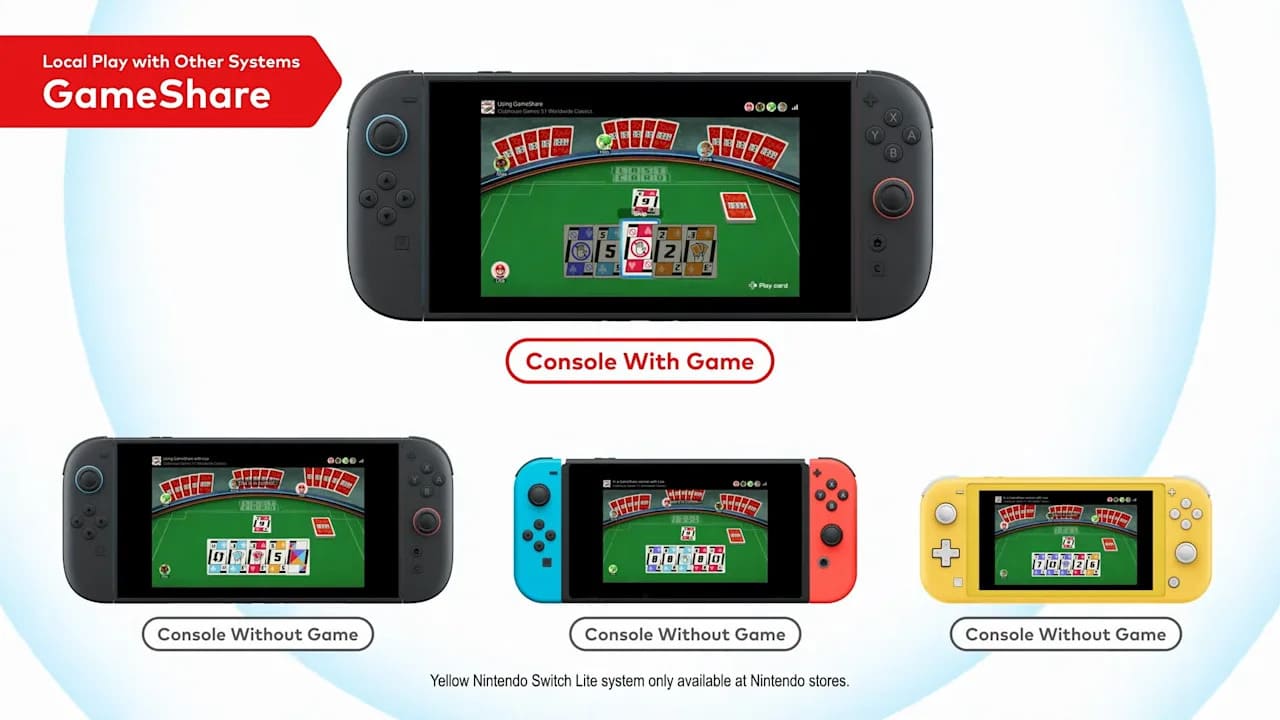
With GameShare, players can enjoy local multiplayer only one person owns the game. This feature is expected to make couch co-op and local wireless play even more accessible, and is a return of the Nintendo DS Download Play feature.
Backward Compatibility Framework
Nintendo confirmed that the hardware maintains direct backward compatibility for physical and digital software catalogs. The internal slot design physically accepts legacy media cartridges without restructuring.
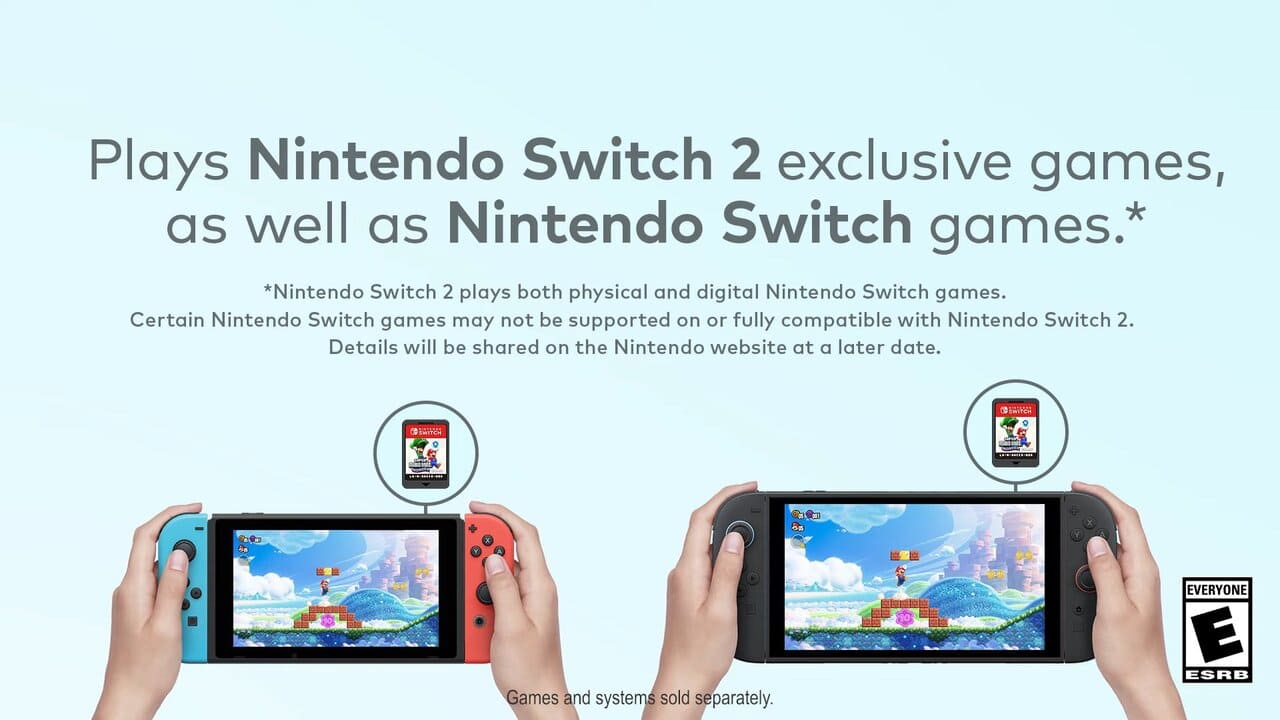
Certain legacy titles may experience structural compatibility anomalies at launch. Nintendo indicated it will publish a comprehensive verification database on its official website to track specific software exceptions and performance traits.
Software Performance Upgrades and Tiers
Selected first-party titles will receive dedicated software patch options. Minor technical optimization packs carry a $10 pricing structure, while larger upgrades cost $20. These optional add-ons scale performance assets to leverage the updated silicon, delivering higher target resolutions, unlocked frame rates, and supplementary software extensions, such as an expanded gameplay mode for Kirby.
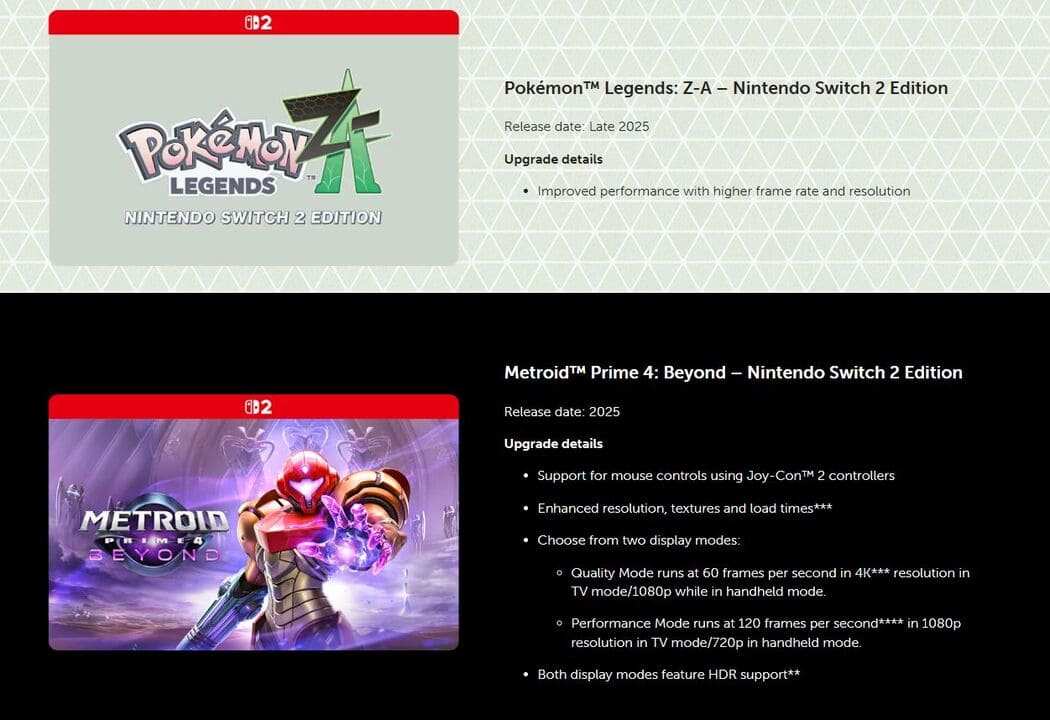
A selection of legacy titles will receive free technical upgrades. Confirmed free deployment targets include The Legend of Zelda: Link’s Awakening and Pokémon Scarlet & Violet.
GameCube Emulation Joins Nintendo Switch Online
A major surprise during the presentation confirmed the arrival of GameCube titles on the Nintendo Switch Online service. Access remains strictly gated to the new hardware generation. Initial software confirmations include Luigi’s Mansion, Metroid Prime, and F-Zero GX.
This deployment represents the first instance of official GameCube hardware emulation on modern platform architecture, serving as a significant draw for historical preservation enthusiasts.
Pricing, SKU Configurations, and Market Impact
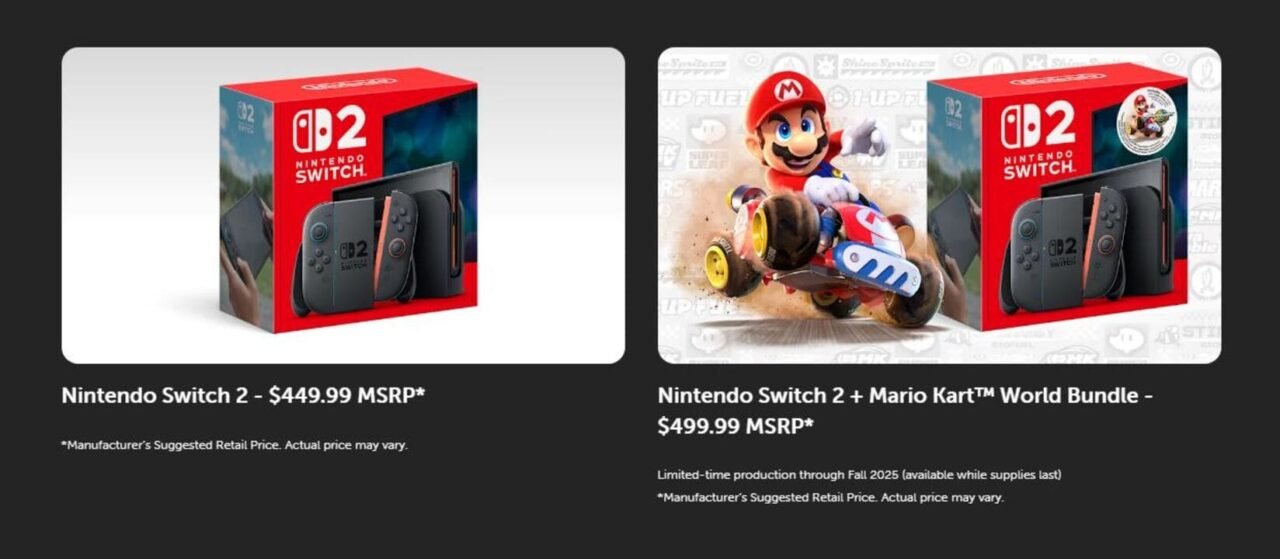
The Nintendo Switch 2 is set to launch on June 5, 2025, with two purchase options:
- Standard Edition – $449.99
- Mario Kart World Bundle – $499.99
The presentation confirmed an adjusted baseline pricing model for premium software titles. While standard releases remain anchored at $69.99, Mario Kart World debuts at a $79.99 premium retail price. This adjustment mirrors the pricing structural shifts established by competitive home consoles, introducing a higher financial entry threshold for flagship releases moving forward.
Nintendo Switch 2 Announcement | Final Thoughts
The Switch 2 establishes a substantial technical baseline. Integrating DLSS upscaling, a native 4K docked profile, G-SYNC compliance, and a massive compute acceleration pool separates the platform cleanly from its predecessor. Quick storage arrays and revised physical inputs complete a portable system engineered for flexibility. Exclusive retro virtualization layers expand the legacy library utility, while physical preservation pipelines smooth out the multi-generational transition.
With a June launch established and retail tracking pending, the market execution will define how the industry handles pricing structures and licensing models through the generation.