
Our Danganronpa 2: Goodbye Despair review see it build on the original with engaging 2D exploration and inventive murder puzzles.
Characters like Ibuki and Chiaki anchor an emotional story that benefits from a strong presentation. Kazutaka Kodaka’s work carries a clear Suda51 influence through its stylistic choices and narrative risks. Even with some polarizing character traits, the high-stakes trials and creative logic puzzles make it a must-play for adventure game fans on any platform.
Danganronpa 2: Goodbye Despair At a Glance
Release Date
Jul 26, 2012 (Original JP PSP)
Sept 02, 2014 (NA Release)
Danganronpa 2: Goodbye Despair Background
Initially, there were no plans to create a sequel to Danganronpa, and the development team had dispersed to work on various other projects. Kazutaka Kodaka, the writer and creator of the series, was hesitant to embark on a new project with a different team. However, the discussions surrounding the novel Danganronpa Zero sparked new possibilities for continuing the series. Kodaka proposed the idea of a sequel to Yoshinori Terasawa, the series producer, and was given the green light to involve the original team.
About four months into writing Danganronpa Zero, Terasawa approached Kodaka with the suggestion of developing a sequel. Kodaka agreed, proposing that the sequel be developed concurrently with the novel. This approach allowed Kodaka to address and refine aspects of the first game that he felt needed improvement. Many elements and clues from Zero were woven into Danganronpa 2: Goodbye Despair, enriching the narrative and connections within the sequel. Kodaka has even recommended reading Danganronpa Zero before playing Goodbye Despair to fully grasp the intricate links and added depth it provides (Spike Chunsoft, Inc., 2020).
Danganronpa 2: Goodbye Despair, also known as Super Danganronpa 2 in Japan the team’s fondness for Nintendo branding, was released for the PlayStation Portable on July 26, 2012. It was later included in the Reload 1.2 compilation with enhanced graphics and additional content in 2013, and eventually made its way to all platforms by May 10, 2022.
The development team for Danganronpa 2: Goodbye Despair includes:
- Kazutaka Kodaka (Writer)
- Clock Tower 3, Danganronpa: Trigger Happy Havoc, Master Detective Archives: RainCode,Dragon Ball: Raging Blast
- Tatsuya Marutani (Director)
- Danganronpa: Trigger Happy Havoc, Dragon Ball Z: Budokai Tenkaichi, Dragon Ball Z: Budokai Tenkaichi 2
- Rui Komatsuzaki (Character Designer)
- Danganronpa: Trigger Happy Havoc, Fate/Grand Order, Master Detective Archives: RainCode
- Masafumi Takada (Composer)
- The Silver Case, God Hand, No More Heroes, Killer Is Dead, Killer 7
- Yuichiro Saito, Yoshinori Terasawa (Producers)
- Yuichiro Saito: Chobits, Batman: Gotham Knight, Granblue Fantasy: Versus, Last Order: Final Fantasy VII.
- Yoshinori Terasawa: Danganronpa, Moonlight Syndrome, Zankai Zero
Danganronpa 2: Goodbye Despair Experience
Before finishing Danganronpa 2: Goodbye Despair on December 18th last year, I had already completed the first Danganronpa and other visual novels like Fate/ Extra, Spirit Hunter: Death Mark, Spirit Hunter: NG, the AI: The Somnium Files series, and both Silver Case games. I’m familiar with Rui’s art from my time playing Fate/ Grand Order and know Masafumi Takada’s music from his frequent collaborations with Shinji Mikami and Suda51, whose games I’ve extensively played.
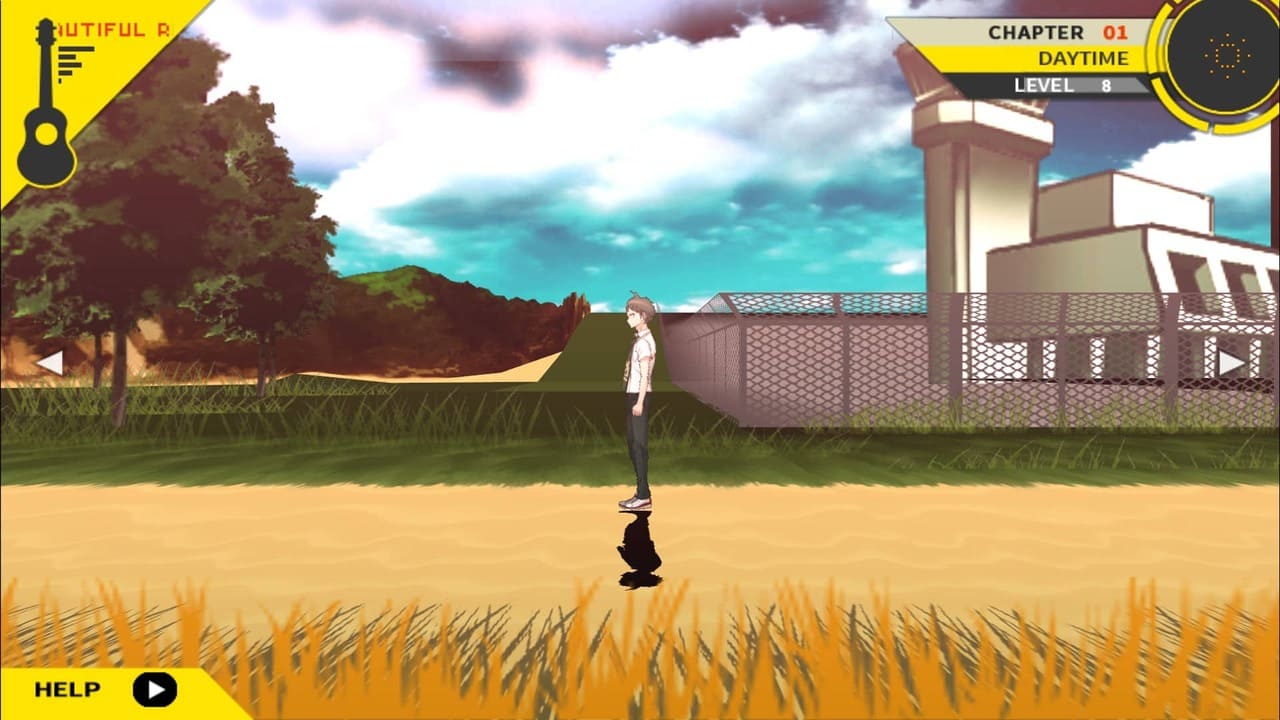
Hajime’s eager to sweep his own confusion aside and unearth the truth.
Danganronpa 2: Goodbye Despair Impressions
Introduction
Danganronpa 2: Goodbye Despair begins with a compelling and mysterious premise, as the protagonist wakes up to the sound of ocean waves. This intriguing start leads into a narrative filled with unexpected twists and turns. The game’s increased budget is evident, with noticeably improved visuals and character designs compared to its predecessor. The influence of Suda51 is apparent, particularly with the integration of his Twilight Syndrome series into the game.
Gameplay and Mechanics
The gameplay in Goodbye Despair builds upon the familiar formula of the original Danganronpa. The phases of Daily Life, Deadly Life, and Class Trials are retained, offering a consistent experience for fans of the series. Daily Life now involves exploring the islands and interacting with characters, gaining skills that aid in the Class Trials.
The Deadly Life phase focuses on gathering clues after murders, with the design ensuring all truth bullets must be collected before advancing to the trials. A significant change is the switch from first-person dungeon RPG exploration to a 2D side-scrolling navigation style, which may appeal to different player preferences.
Character and Art Design
The character designs in Goodbye Despair are refined and distinct, showcasing a more polished visual style. Characters like Ibuki Mioda and Chiaki Nanami bring unique charm and personality to the game. While some characters’ exaggerated traits might be polarizing, they contribute to the game’s memorable and engaging cast. The return of Masafumi Takada’s impactful music and Rui Komatsuzaki’s iconic art style enhances the overall aesthetic, further immersing players in the game’s world.
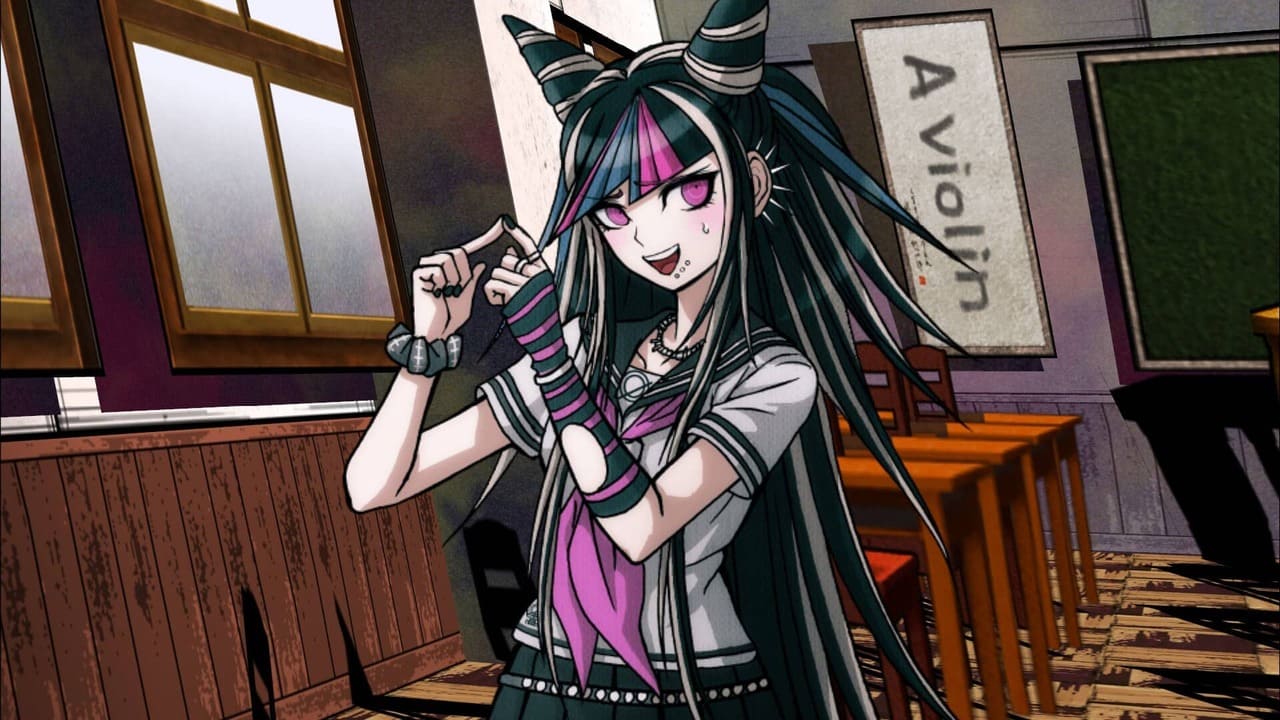
Ibuki’s nervous charm shines through in class.
Unique Features and Mechanics
Danganronpa 2 introduces several innovative elements that set it apart. The game incorporates unique tools and devices, such as optical illusions, which add complexity to the murder cases. Noteworthy Easter eggs include Peko Pekoyama’s sailor uniform, a nod to Kotono Mitsuishi, the voice of Sailor Moon, and Ibuki Mioda’s sailor-themed design, coupled with her seiyuu Ami Koshimizu, known for Sailor Jupiter. These details add depth and create additional layers of connection for fans.
Seiyuu Performances
The seiyuu performances in Danganronpa 2 are exceptional, bringing depth and nuance to the characters. The seiyuus effectively convey the emotional range and personality of their roles, enhancing the overall experience of the game. Characters like Ibuki Mioda and Chiaki Nanami benefit from particularly strong performances, contributing to the game’s charm and immersive storytelling. The game’s characters are vividly portrayed by a talented cast of seiyuus, featuring some of my personal favorites from other games and anime:
- Minami Takayama (Hajime Hinata): Conan Edogawa (Detective Conan), Pai Chan (Virtua Fighter), Mia (.hack), Kiki & Ursula (Kiki’s Delivery Service)
- Megumi Ogata (Nagito Komaeda): Ken Amada (Persona 3), Makoto Naegi (Danganronpa), Shinji Ikari (Neon Genesis Evangelion)
- Ami Koshimizu (Ibuki Mioda): Konohana Sakuya (Shin Megami Tensei V: Vengeance), Holo (Spice & Wolf), Ryuko Matoi (Kill La Kill)
- Kana Hanazawa (known) Mayuri Shiina (Steins;Gate), Plutia/Iris Heart (Neptunia), Sakyua (.hack), Ichika Nakano (Quintessential Quintuplets)
- Kotono Mitsuishi (Peko Pekoyama): fSailor Moon / Usagi Tsukino (Sailor Moon), Christe (Dead or Alive), Misato Katsuragi (Neon Genesis Evangelion)
- Tomokazu Sugita (Gundham): Joseph Joestar (JoJos), Gintoki Sakata Gintama), Shohei Yakumo (Shin Megami Tensei V: Vengeance), Yarei (Spice & Wolf)
- Romi Park (known): Edward Elric (Fullmetal Alchemist), Abdiel (Shin Megami Tensei V: Vengeance), Naoto Shirogane (Persona 4), Koichi Hirose (JoJos)
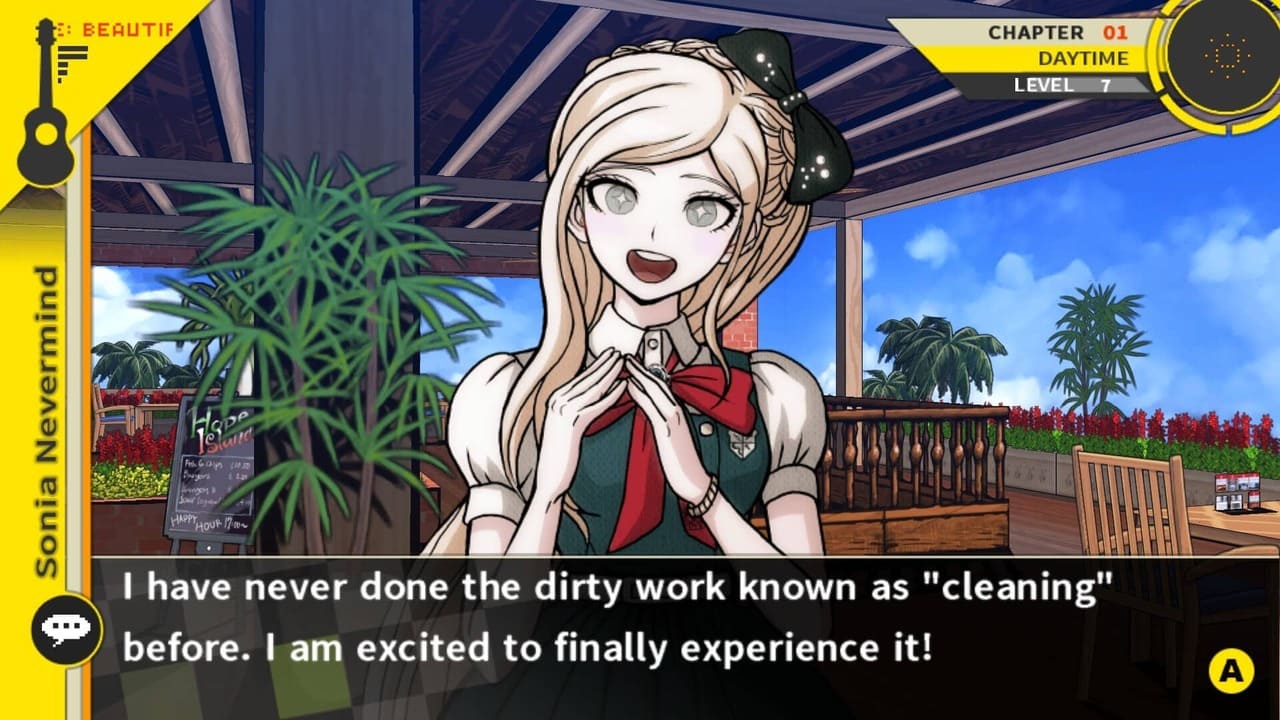
Sonia’s eager to sweep the competition with her newfound chores.
Danganronpa 2: Goodbye Despair Review Verdict
Danganronpa 2: Goodbye Despair successfully builds on the foundation laid by its predecessor, offering an enriched and more immersive experience. The game showcases a more polished and visually engaging design, thanks to an increased budget and the influence of Suda51, which brings a unique flavor to the narrative. The shift to 2D navigation and the creative use of optical illusions in the murder cases provide a fresh and intriguing gameplay experience.
The enhanced character designs, along with the returning talents of Masafumi Takada and Rui Komatsuzaki, elevate the game’s presentation and atmosphere. Although some character portrayals, including Nagito’s role, may not resonate equally with all players, the overall improvements and innovative features make Goodbye Despair a compelling and memorable sequel. It stands as a significant entry in the visual novel genre, offering both new and returning fans a captivating journey filled with mystery and drama.
Danganronpa 2: Goodbye Despair TLDR
Danganronpa 2: Goodbye Despair (PC)
Danganronpa 2: Goodbye Despair builds on the original with engaging 2D exploration and inventive murder puzzles.
Characters like Ibuki and Chiaki anchor an emotional story supported by a strong presentation. Suda51’s influence shows through the stylistic choices and narrative risks. It is a must-play for visual novel fans on PC.
Danganronpa 2: Goodbye Despair Review References
- Spike Chunsoft, Inc. (2020, August 12). Danganronpa 10th Anniversary Special – Dangan TV: Hope Keeps on Going! 2nd Period. YouTube.