
The Switch update 20.0.0 rollout introduces a complete architectural overhaul for digital rights management ahead of the platform’s upcoming hardware successor.
This deployment deprecates the traditional primary and secondary console configuration model, introducing a rigid, game-by-game licensing framework that treats digital purchases with the operational restrictions of physical software cartridges.
Virtual Game Cards: A Digital Paradigm Shift
Digital acquisitions, containing full software downloads, extra add-on files, and select marketplace applications, now populate a specialized sub-menu as Virtual Game Cards. This system limits active local use to one machine at a time, removing the license replication path that multi-console homes previously used to play a single purchase simultaneously.
Account profiles tied to a single family group can lend these virtual assets for a designated two-week window. The borrower and the owner must coordinate the initial transfer within a close wireless proximity threshold. If the owner reclaims the asset manually before the 14-day timer expires, the remote installation locks out the borrower instantly.
Security and Online Verification Presets
A newly added User-Verification profile gives players the option to lock down the Virtual Game Card directory behind a custom PIN or account login prompt. To balance this friction, Online License Settings let the purchasing account bypass the physical loading sequence when connected to a live internet connection. This validation check must verify the active user profile before launching the application, and the software will suspend if the device loses connection for an extended period.
Local GameShare Restrictions
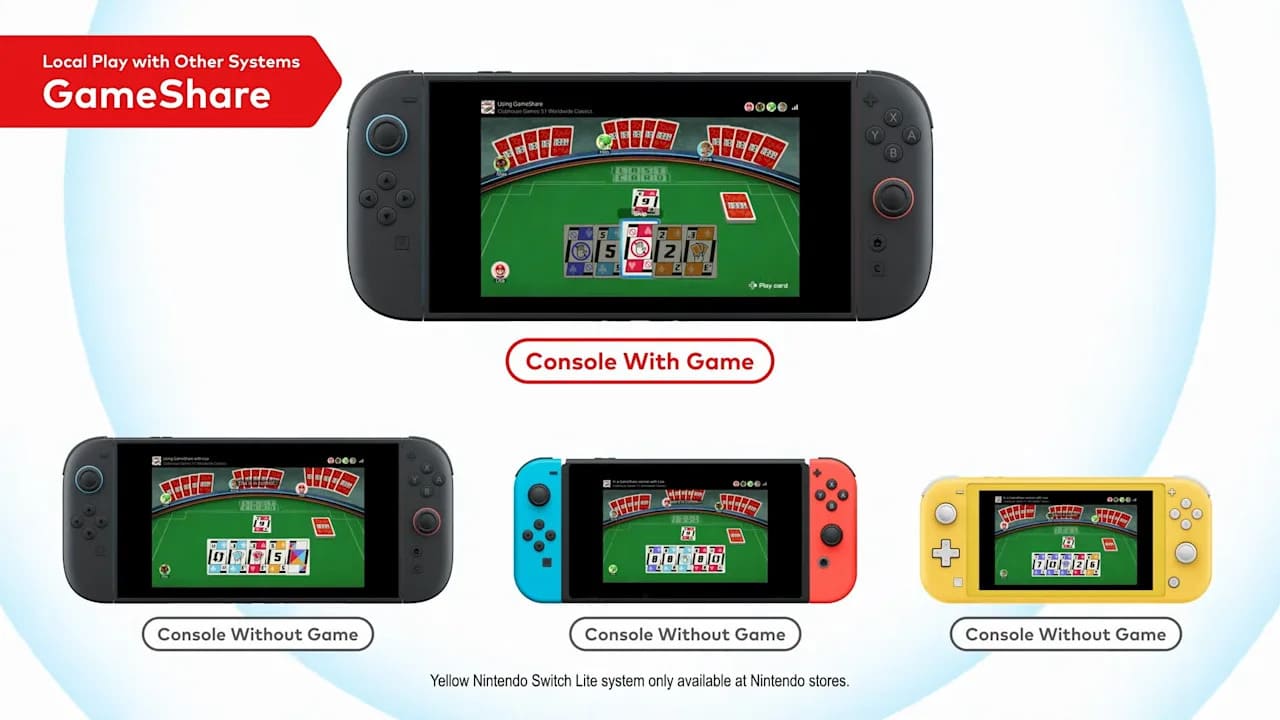
The firmware pipeline lays the system code for GameShare, a dedicated multiplayer sharing asset built solely for next-generation hardware layers. This local streaming utility echoes the design of legacy DS Download Play protocols, allowing one host to broadcast gameplay data blocks to nearby systems.
Standard Switch hardware variants can receive these incoming shared streams during local wireless play sessions, but they cannot initiate the host broadcast sequence themselves. The network layer locks out legacy consoles from launching a GameShare session, requiring the upgraded processor profiles found on the incoming hardware successor to handle the local data compilation.
Expanded Data Migration and Transfer Paths
The system updates the storage utility tools to let players clear out entire software directories simultaneously. The “Transfer Your Save Data” sub-screen now allows bulk select markers, eliminating the need to move game directories file by file.
A dedicated “System Transfer to Nintendo Switch 2” utility path sits inside the hardware sub-menu. Players can choose between two migration options depending on their retail access constraints:
Both migration methods require active internet connectivity and a linked online profile account to complete the validation loop.
Interface Tweaks and Visual Adjustments
The system dashboard receives a targeted cosmetic paint layer to unify the aesthetic palette before the hardware transition. The default application tiles for the digital store hub and the system news feed display revised, saturated color boundaries. Multiple basic player avatar designs received subtle line adjustments, updating legacy pixel layers to match modern resolution profiles.
More details on these features and the Nintendo Switch 2 are available on the official Nintendo website.