

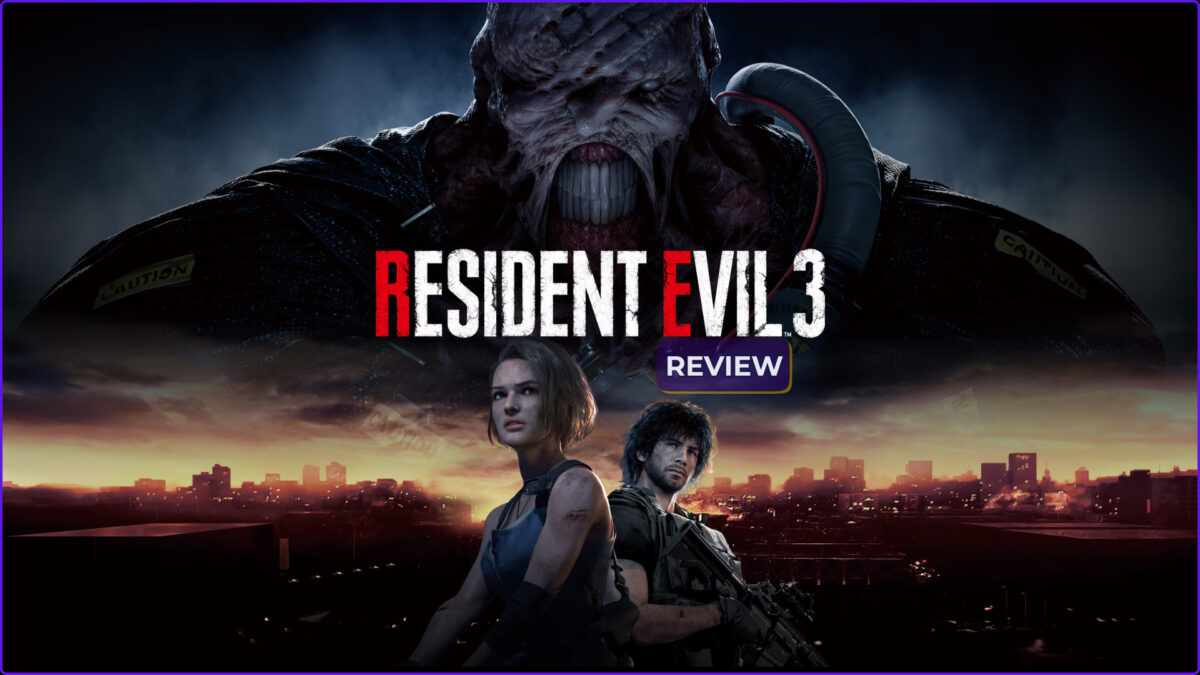
Our Resident Evil 3 (2020) review examines a polished reimagining that delivers exhilarating action and outstanding technical performance, but sacrifices the original’s scope, player agency, and relentless Nemesis to get there.
Resident Evil 3 (2020) At a Glance
Release Date
Apr 2, 2020
Escape From Raccoon City
Resident Evil 3 (2020) launched on April 2, 2020 for PlayStation 4, Xbox One, and PC before receiving next-generation updates for PlayStation 5, Xbox Series X|S, and PC in June 2022. The game later expanded to Nintendo Switch and macOS, bringing Capcom’s RE Engine reimagining to additional platforms.
Unlike Resident Evil 2 (2019), which focused on recreating the slow-burn tension of the original, Resident Evil 3 (2020) was designed as a faster, more cinematic interpretation of the 1999 classic. Development ran alongside Resident Evil 2, allowing the teams to share RE Engine technology, AI systems, and graphical tools while pursuing a different creative direction. Producer Peter Fabiano said the goal was to respect the original while delivering a fresh experience for both longtime fans and newcomers.
That philosophy extended beyond technology. Raccoon City was rebuilt using photogrammetry, while Jill Valentine received a redesigned appearance intended to better reflect her resilience and survival instincts, according to IGN’s interview with the developers. Her dialogue and characterization were also expanded, placing greater emphasis on the psychological toll of surviving the Spencer Mansion incident.
Those creative decisions came with notable structural changes. Capcom removed the original game’s Live Selection system and multiple endings in favor of a single, linear campaign centered on Jill’s partnership with Carlos Oliveira and a reworked version of Nemesis. Those choices define much of the game’s identity and ultimately shape both its greatest strengths and its biggest shortcomings.
The development team for Resident Evil 3 (2020) includes:
- Masanori Komine, Takashi Ishihara (Game Designers)
- Masanori Komine: Resident Evil 7: Biohazard, Resident Evil 3 (2020) – Resident Evil 4: Separate Ways (2023), Devil May Cry 5
- Takashi Ishihara: Rez Infinite, Resident Evil 3 (2020), Dragon’s Dogma II
- Yasuhiro Seto, Yasuhiro Anpo, Yukio Ando (Directors)
- Yashuiro Seto: Resident Evil: Survivor 2 – Code:Veronica, Resident Evil: The Umbrella Chronicles, Phoenix Wright: Ace Attorney – Dual Destinies
- Yasuhiro Anpo: Resident Evil: Revelations 2, E.X. Troopers, Resident Evil – Resident Evil 2
- Yukio Ando: Kabu Trader Shun, Steel Battalion: Heavy Armor, Breath of Fire III – IV
- Yasushi Haraguchi (Character Artist)
- Resident Evil 2 (2019) – Resident Evil 4: Separate Ways (2023), Dragon’s Dogma
- Kota Suzuki, Azusa Kato (Composers)
- Kota Suzuki: Onimusha 3: Demon Siege, Resident Evil 5 – 6, Tatsunoko vs Capcom: Ultimate All-Stars
- Azusa Kato: Resident Evil 6, Sengoku Basara 4, Legend of Zelda: Echoes of Wisdom
- Peter Fabiano, Tsuyoshi Kanda (Producers)
- Peter Fabiano: Devil May Cry 5, Ghosts ‘n Goblins: Resurrection, Resident Evil: Village
- Tsuyoshi Kanda: Umbrella Corps, Resident Evil 7 – Resident Evil Village, Devil May Cry 5
Reviewer’s Perspective
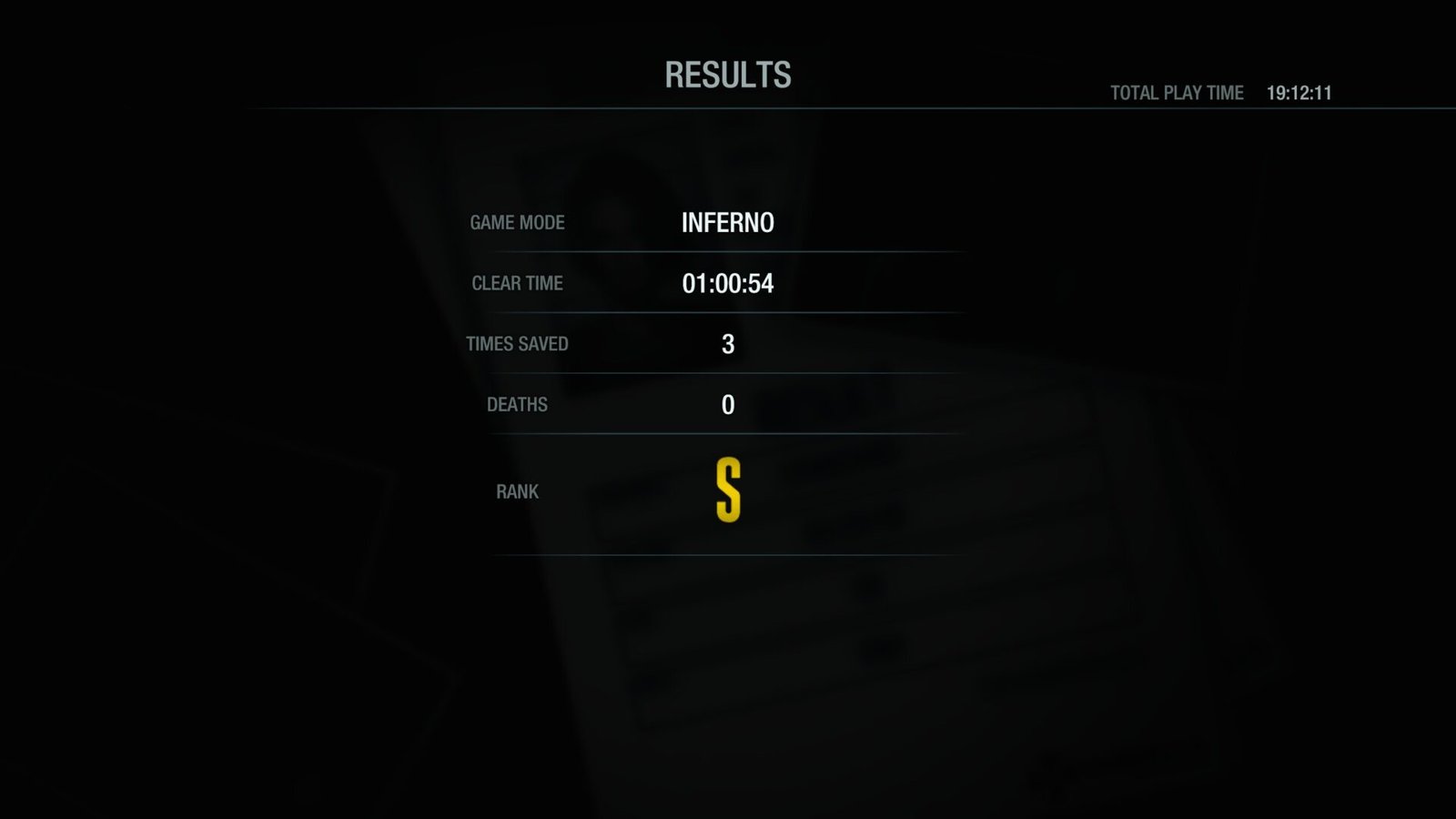
Check out that shiny S-rank for the ultimate bragging rights.
I’ve been playing the Resident Evil series since the Dreamcast era, beginning with Code: Veronica, and have completed nearly every mainline entry. I originally finished Resident Evil 3 (2020) shortly after launch, making this my first full replay since release. Revisiting it immediately after Resident Evil 2 (2019) also provided fresh context for how the two reimaginings differ in pacing, structure, and design philosophy.
The Great Escape
A City in Collapse
Set during the same 48-hour outbreak as Resident Evil 2 (2019), Resident Evil 3 (2020) follows Jill Valentine, a former S.T.A.R.S. officer still coping with the events of the Spencer Mansion incident. As Raccoon City collapses under the T-Virus outbreak, Jill becomes the primary target of Nemesis, a bio-organic weapon created to eliminate the surviving members of her team. Forced to rely on Carlos Oliveira and the Umbrella Biohazard Countermeasure Service, she must fight through the city’s streets in a desperate race to escape before both Nemesis and the outbreak consume everything around her.
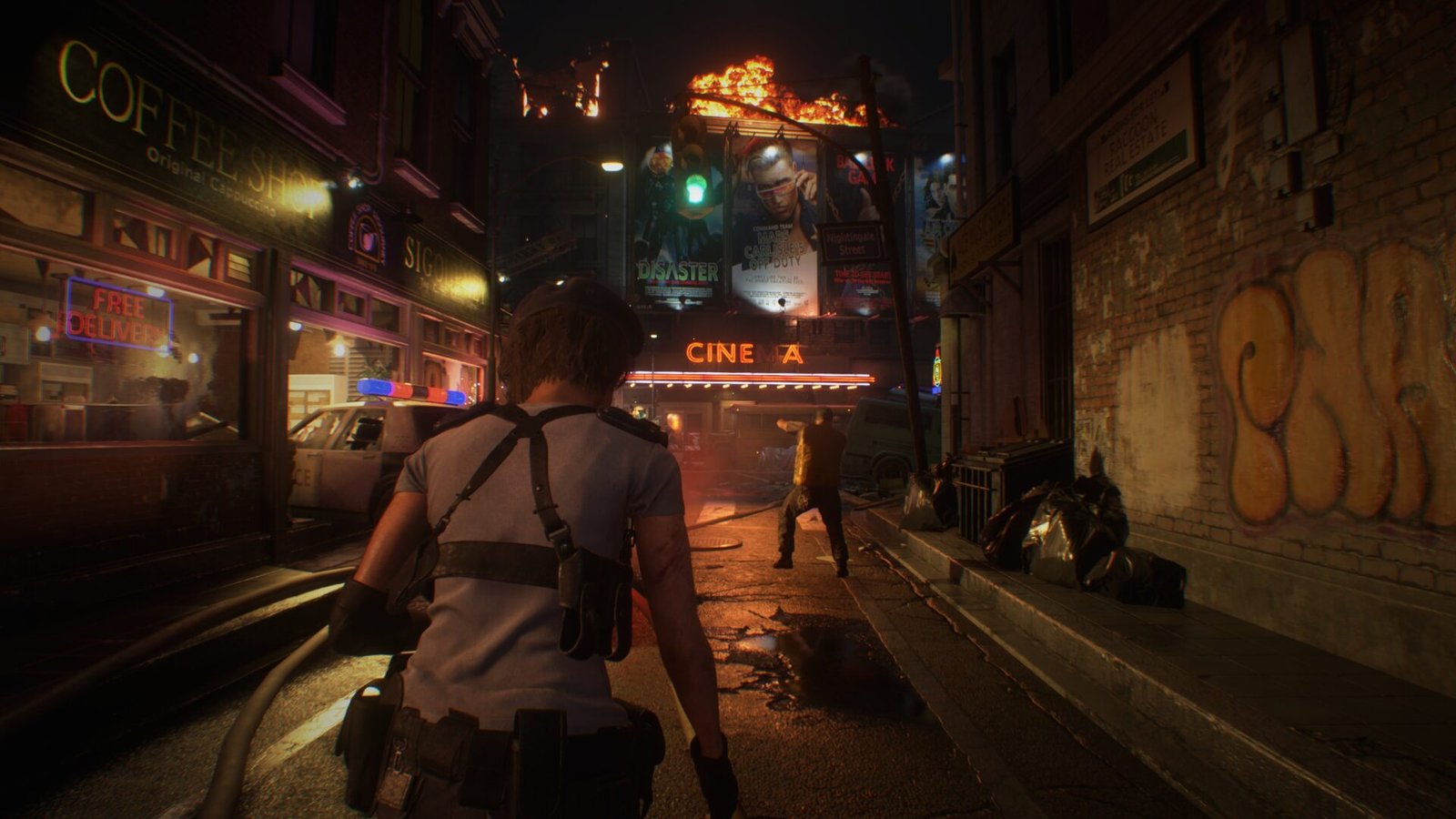
It’s just a shame about the fire and the zombies.
Running for Your Life
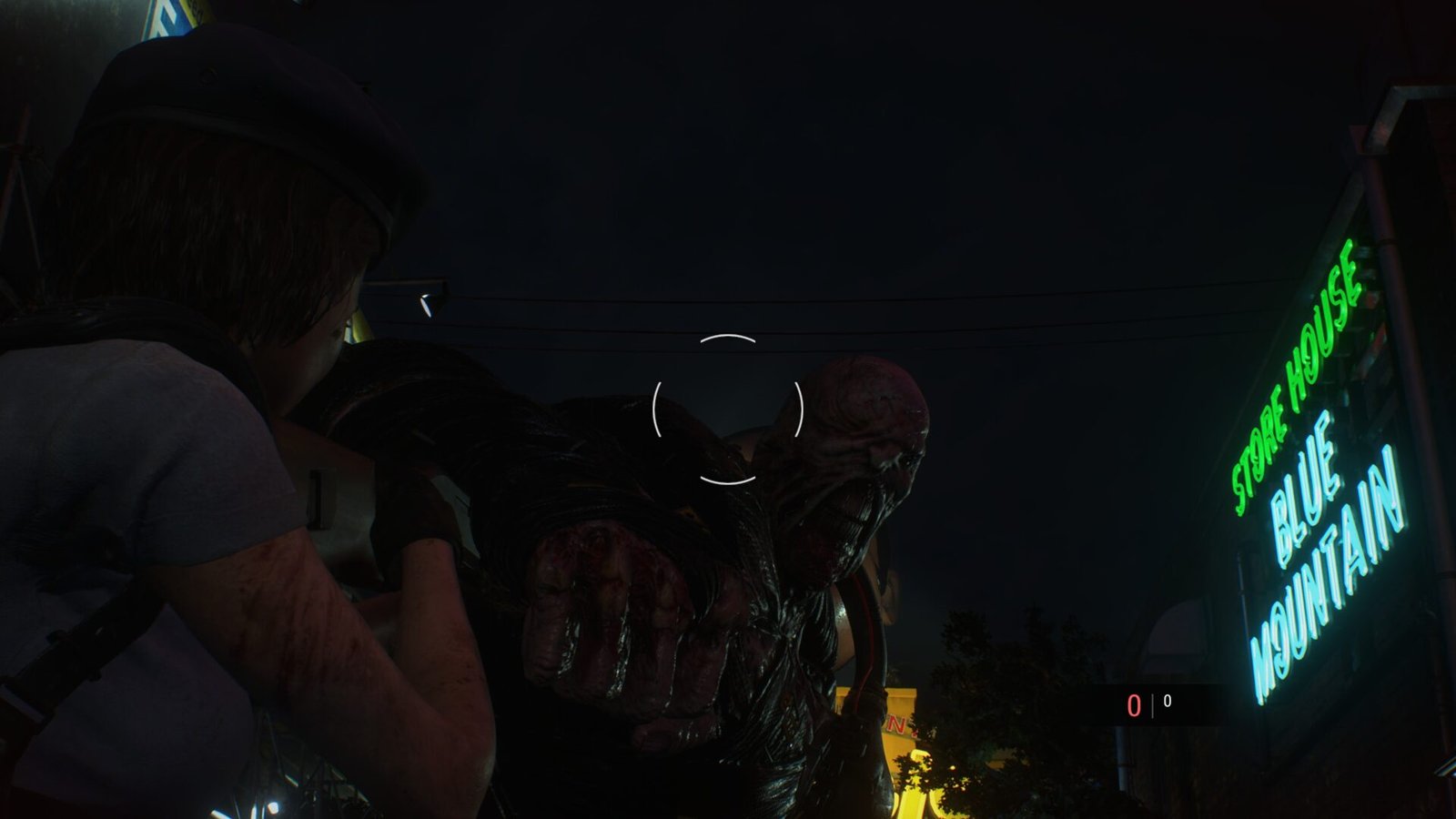
Unlike Resident Evil 2, Resident Evil 3 rarely asks you to stop and breathe. Combat is faster, enemies are more aggressive, and Jill’s expanded mobility encourages constant movement rather than carefully holding your ground. Weapons can be swapped instantly using the D-pad, self-defense items remain within quick reach, and patiently tightening the aiming reticle rewards accurate, high-damage shots. The faster pace makes every encounter feel more reactive without abandoning the survival horror foundation established by its predecessor.
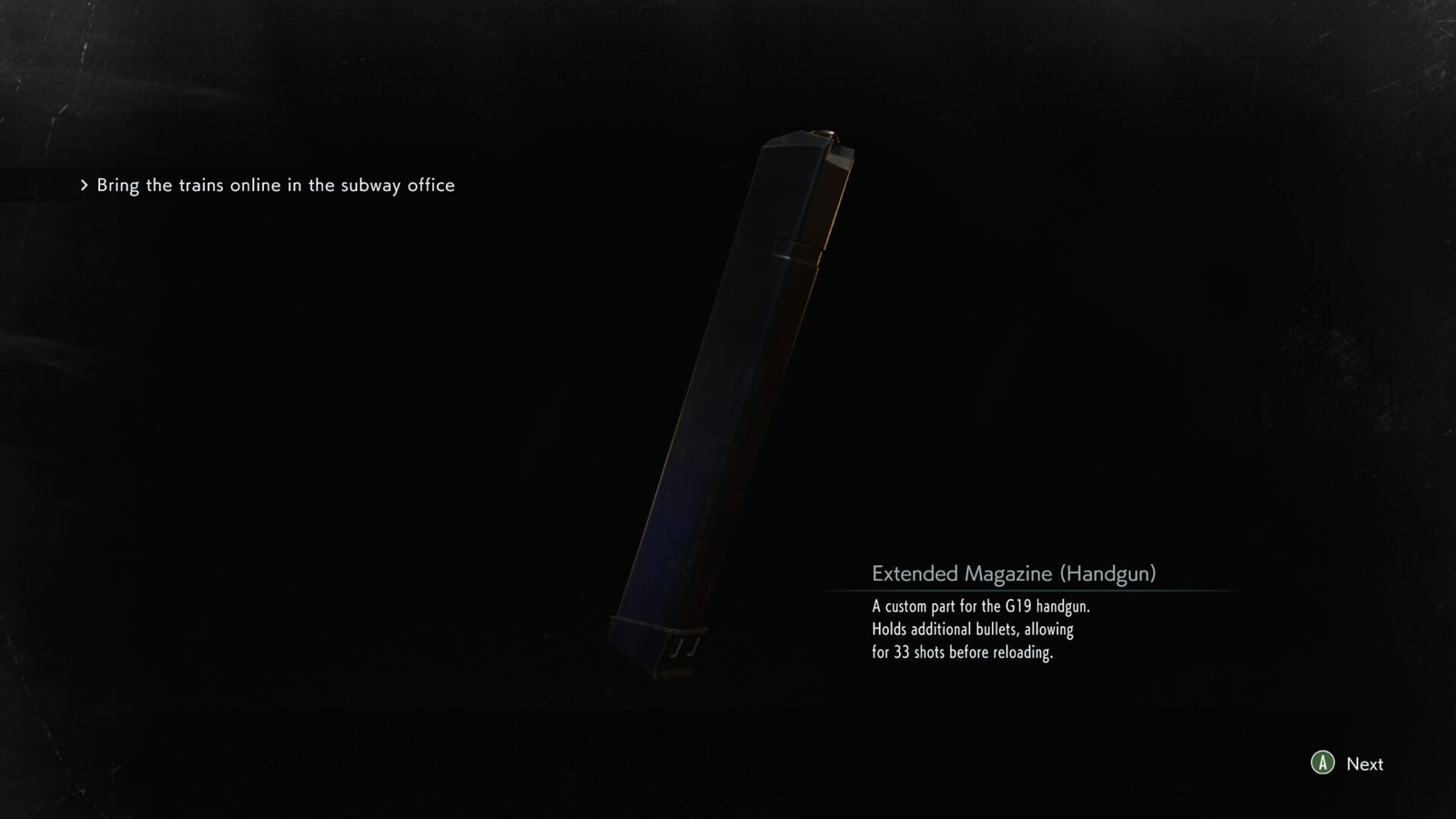
The upgrade system complements this philosophy by gradually improving your firearms through extended magazines, recoil reduction, and other weapon parts scattered throughout Raccoon City.
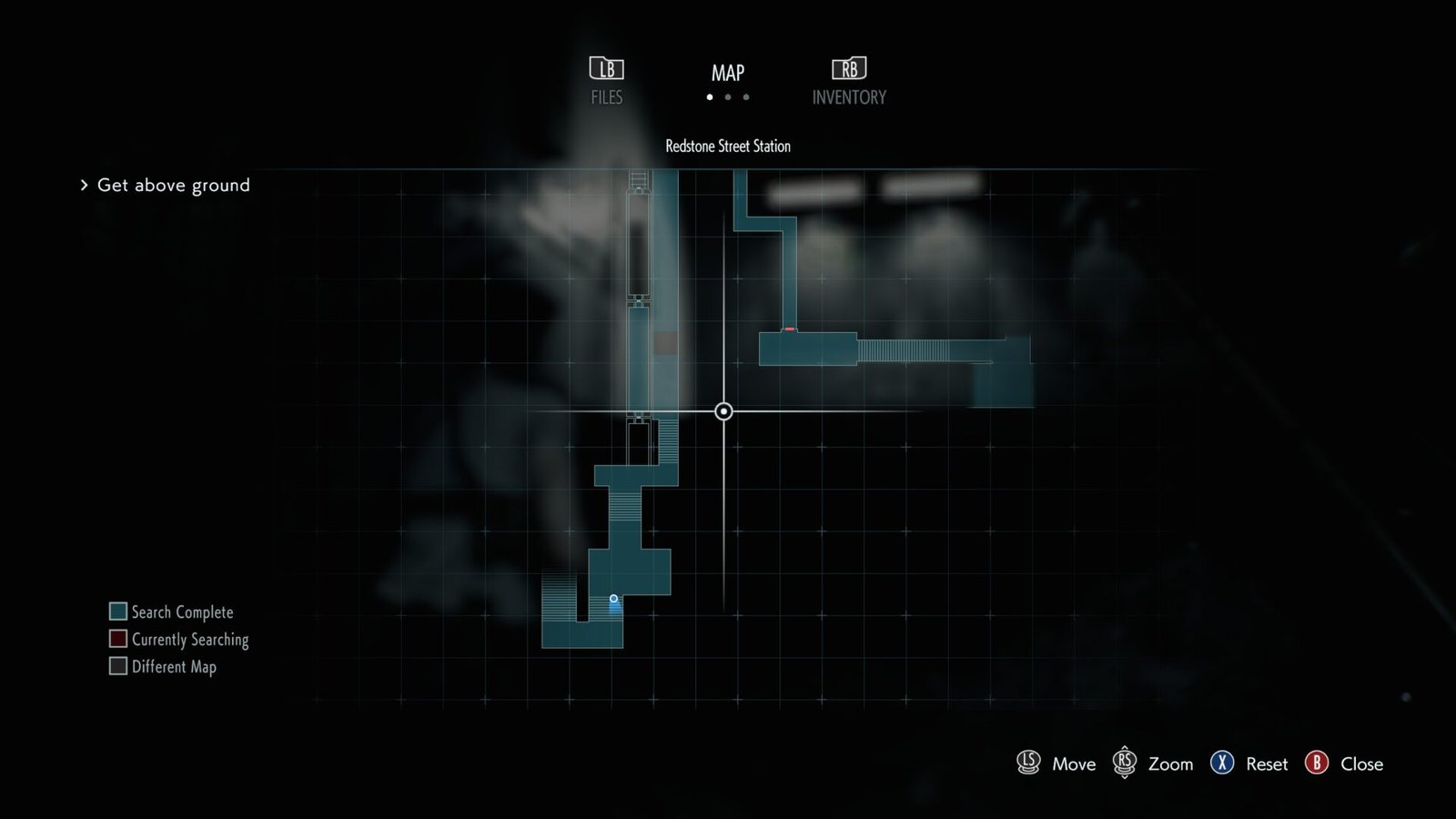
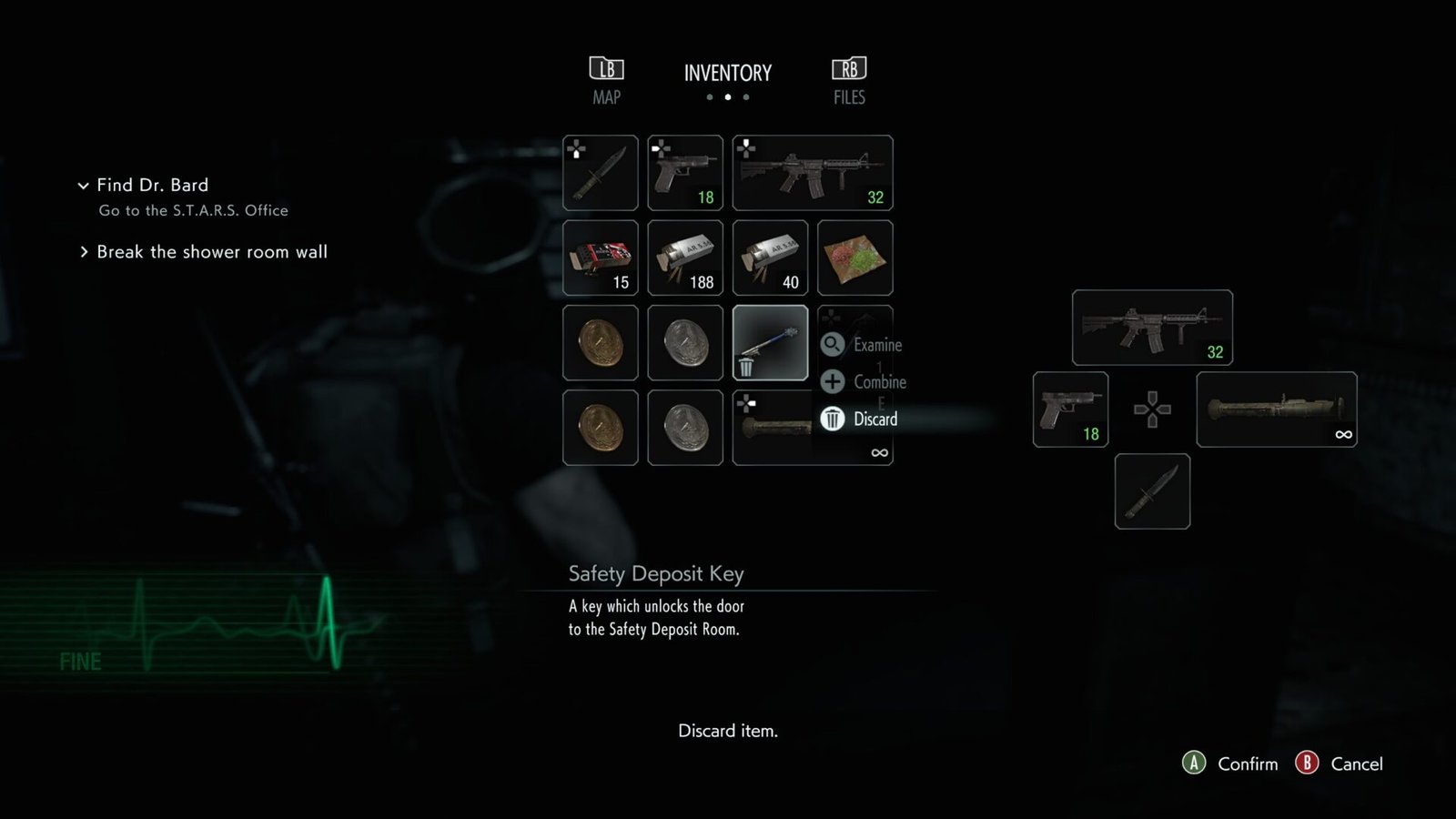
Exploration has also been streamlined. The map continues to highlight unexplored rooms and areas that still contain items, making navigation straightforward despite the city’s destruction. Key Items, ranging from keycards to electrical components, drive progression and can be discarded once they’ve fulfilled their purpose, helping conserve inventory space.
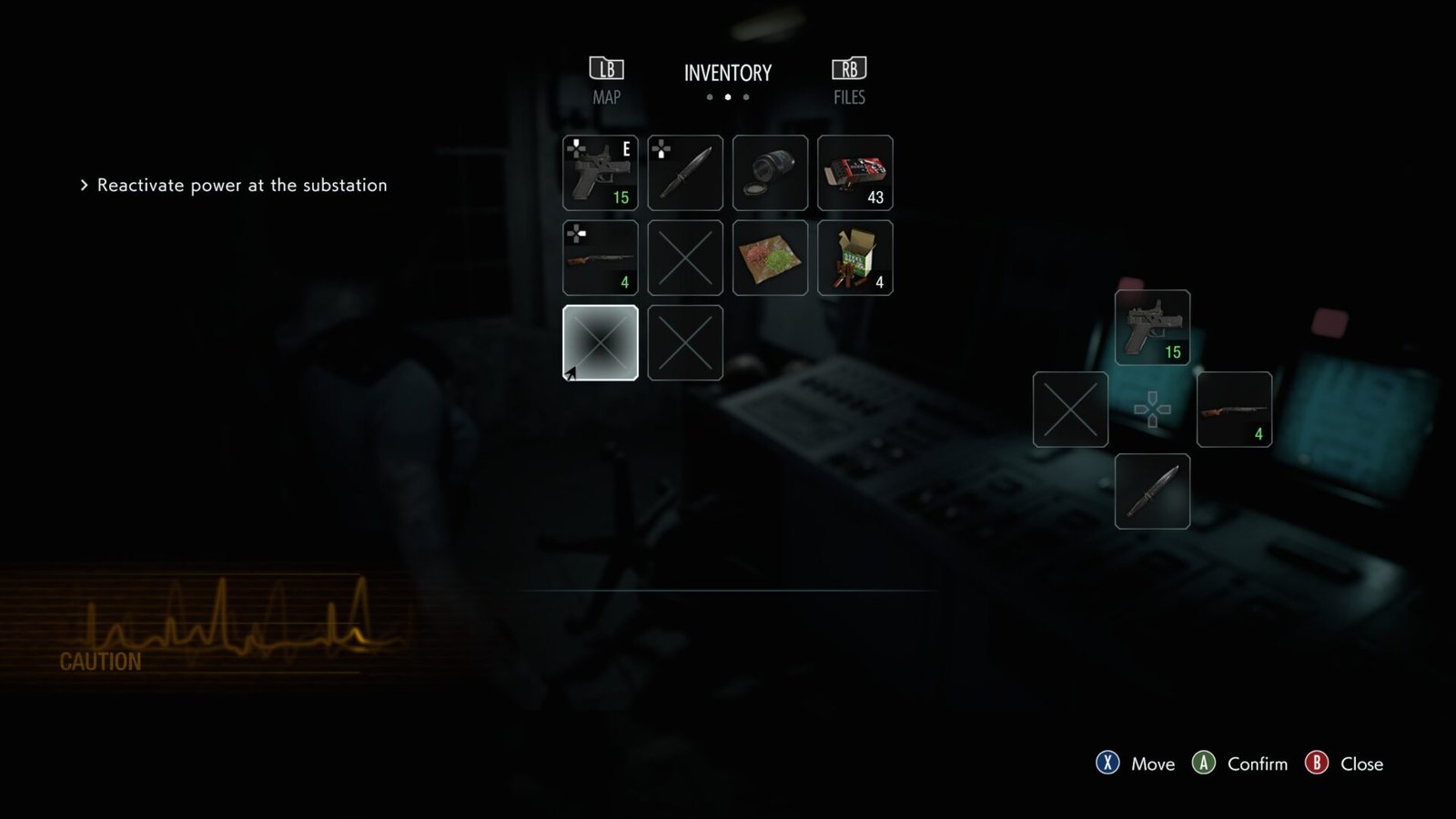
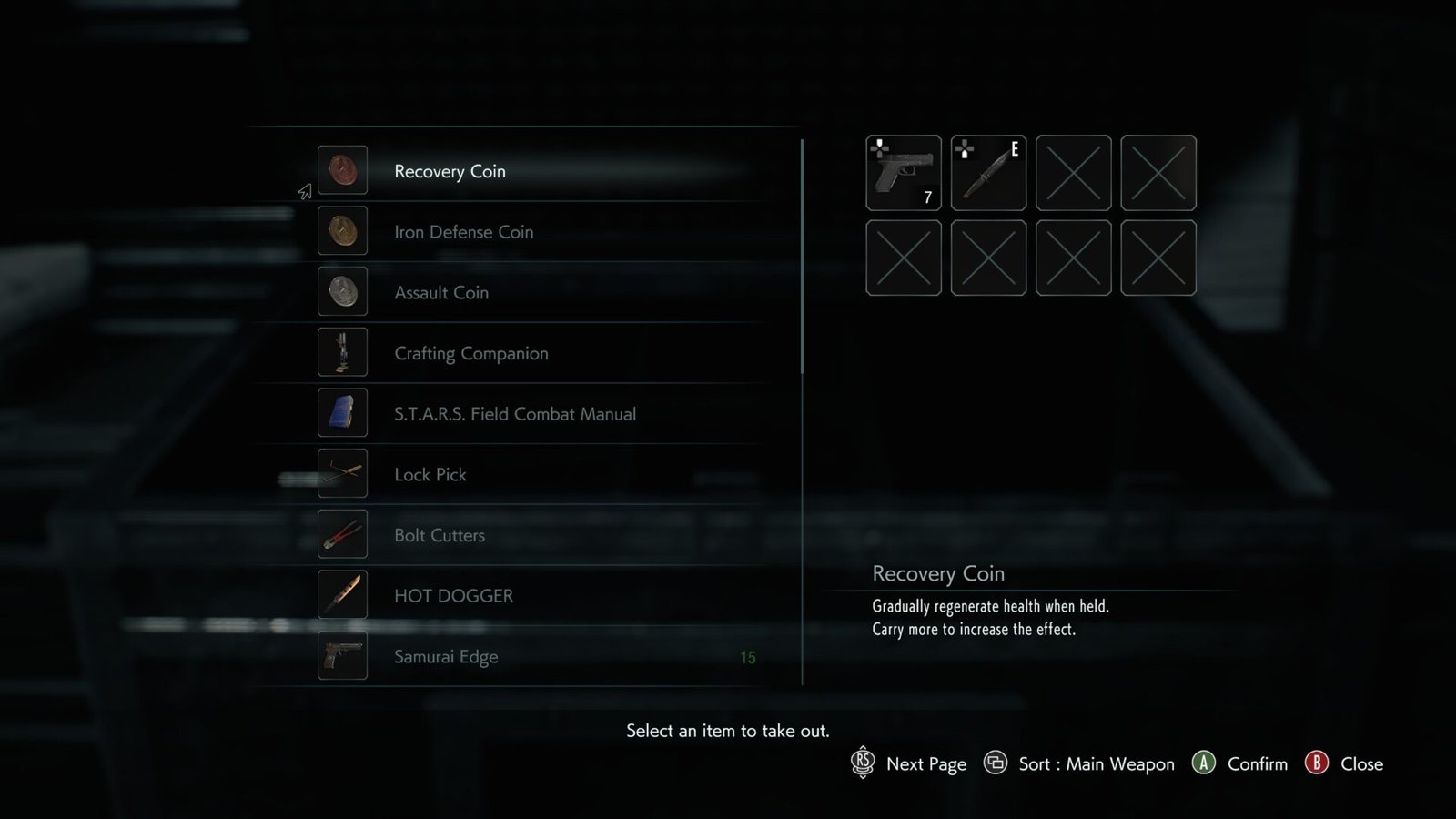
Resource management remains an important part of survival, even if the game is more action-oriented. Jill’s health is tracked through the familiar Fine, Caution, and Danger states, while Item Boxes connect every safe room and allow equipment to be shared across the campaign. Hip Pouches once again expand the starting inventory from eight to fourteen slots, making each upgrade immediately valuable.
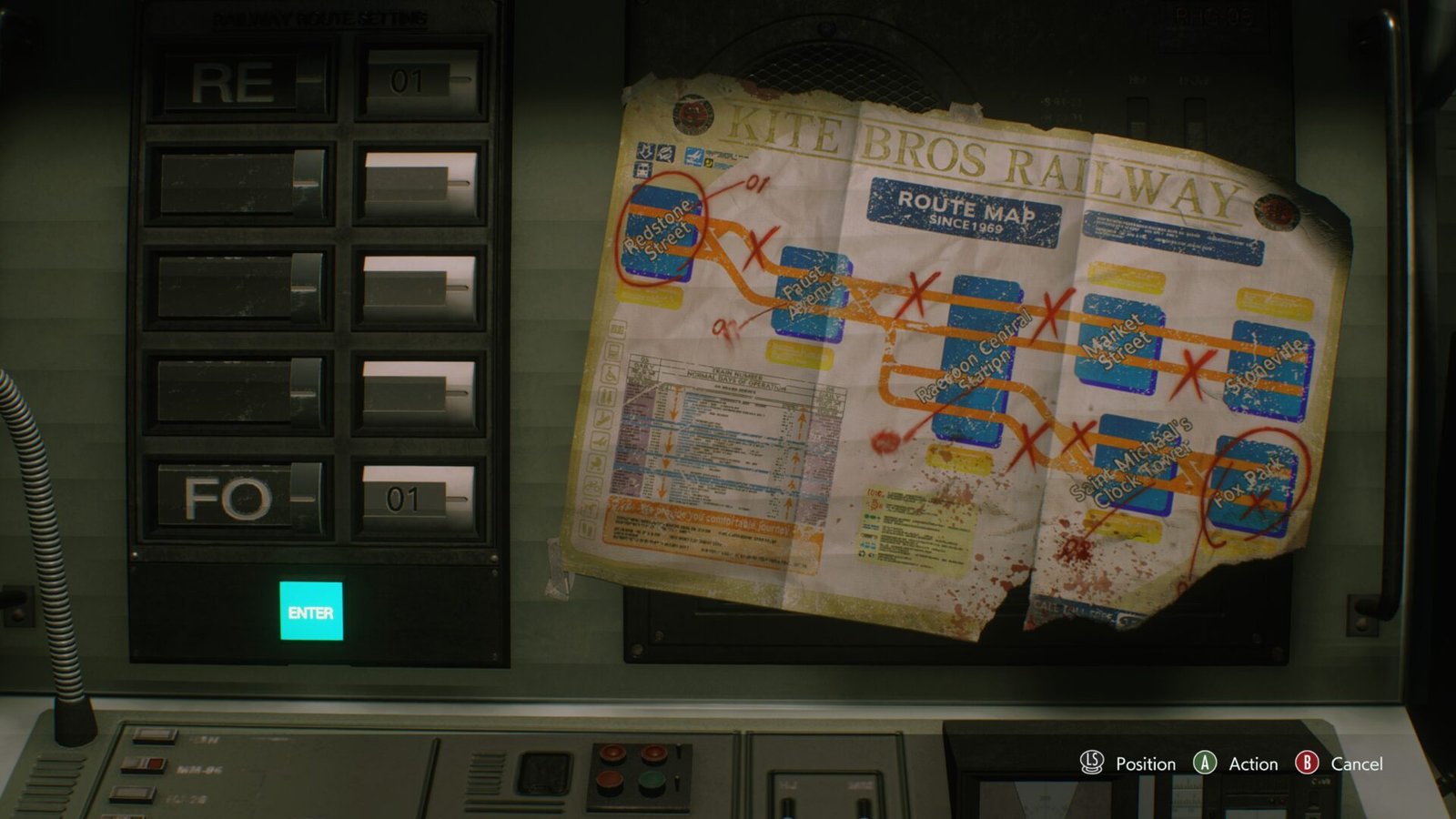
The subway won’t move until you get these station codes in order.
Although Resident Evil 3 places less emphasis on puzzle solving than earlier entries, environmental challenges still break up the action. The subway route puzzle is one of the campaign’s more memorable examples, requiring players to configure a safe escape route before the outbreak completely overruns the city.
Surviving Nemesis
Resident Evil 3 reimagines Jill Valentine’s escape from Raccoon City as a relentless race for survival. Rather than focusing solely on the outbreak, the reimagining places greater emphasis on Jill herself, exploring the lingering psychological scars left by the Spencer Mansion incident. While this gives her stronger personal motivation, her portrayal occasionally swings too far toward abrasiveness, making her feel less battle-hardened than simply frustrated.
That same streamlined philosophy extends to the campaign’s structure. The original game’s Live Selection system, which allowed split-second decisions to alter routes, encounters, and item rewards, has been removed entirely in favor of a fixed, linear progression. As a result, replaying the campaign offers far fewer surprises and significantly less player agency than the 1999 release.
The reimagining also scales back several memorable locations and encounters, including the Clock Tower, Park, Dead Factory, Cemetery, City Hall, and Gas Station, alongside Nemesis’ later transformations and the Grave Digger boss battle. While the faster pacing creates a consistently cinematic experience, it also leaves Raccoon City feeling smaller in scope and strips away much of the variety that defined the original adventure.
Presentation
Resident Evil 3 (2020) continues to demonstrate the strengths of the RE Engine through richly detailed environments, expressive character models, and dramatic lighting. Downtown Raccoon City immediately distinguishes itself with burning streets, flashing emergency vehicles, and neon-lit storefronts, creating a more vibrant and chaotic atmosphere than the series’ traditionally confined locations.
As the campaign progresses, Capcom reimagines familiar areas while giving each its own identity. The Raccoon City Police Department serves as a brief nostalgic detour, while the Hospital becomes one of the game’s visual highlights. Tight corridors, harsh fluorescent lighting, and relentless enemy encounters transform it into one of the campaign’s most memorable sequences.
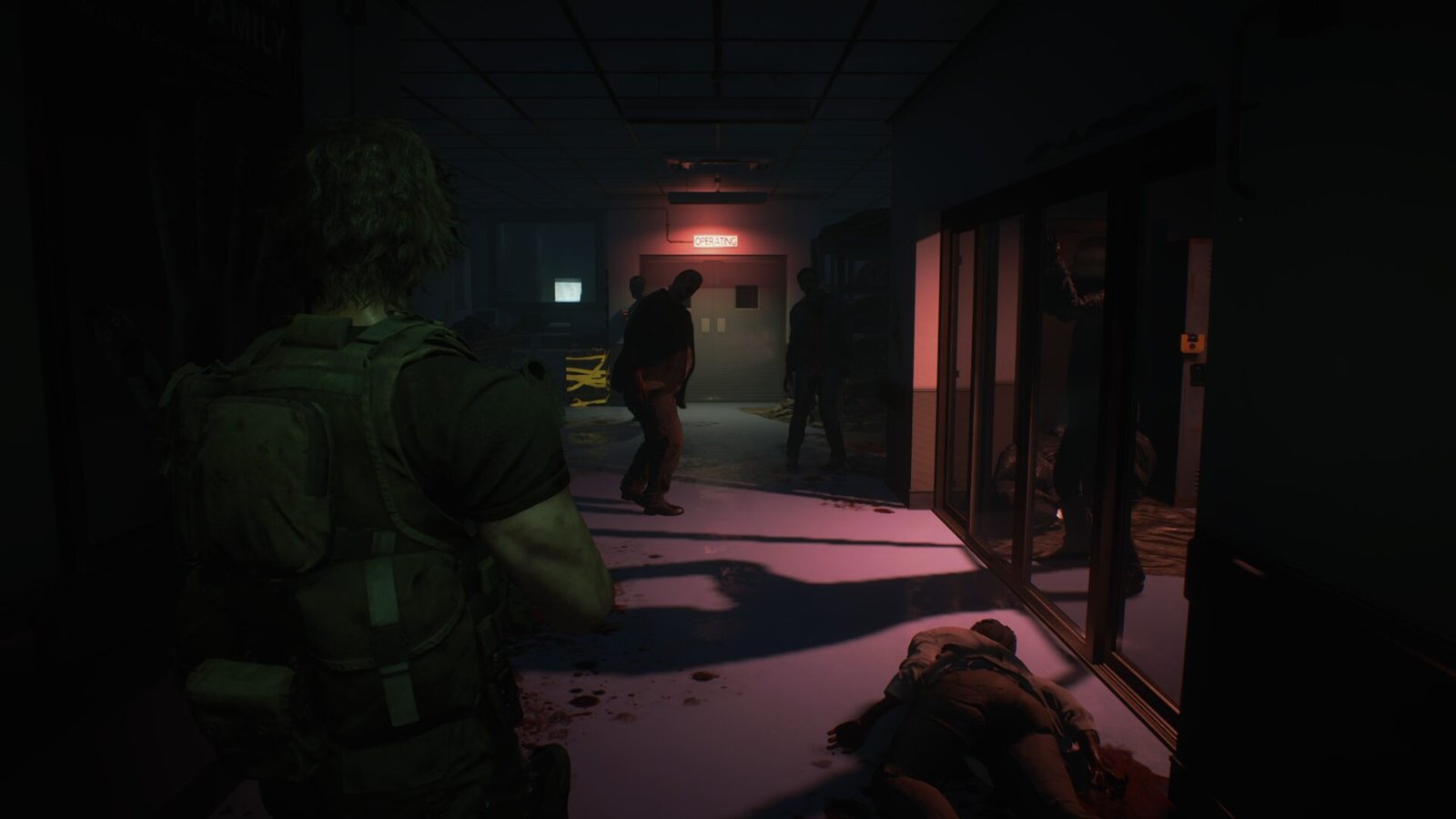
Watch your back for a toothy grin in the hospital shadows.
The audio design complements the game’s faster pace. Nemesis’ thunderous footsteps provide immediate positional awareness, while environmental effects, gunfire, and creature sounds reinforce the constant sense of urgency. The soundtrack similarly favors cinematic momentum over lingering dread, reflecting the game’s emphasis on action without abandoning its survival horror roots.
Standout Tracks:
The City of Ruin
A somber orchestral piece that captures the devastation of Raccoon City through restrained strings, distant percussion, and low-frequency ambience. It establishes the tragedy beneath the spectacle.
Save Room (Secure Place)
A melancholy reinterpretation of the series’ iconic safe room theme. Gentle piano melodies wrapped in heavy reverb create a fleeting sense of comfort before the tension inevitably returns.
Final
A sweeping orchestral finale that emphasizes scale, desperation, and spectacle. Rather than building slow-burning suspense, it underscores the game’s cinematic climax with relentless intensity.
What Sets It Apart
Nemesis is the defining mechanic of Resident Evil 3 (2020), but he serves a very different role than Mr. X in Resident Evil 2 (2019). Rather than persistently stalking the player throughout interconnected environments, Nemesis appears primarily during scripted encounters and designated trigger zones. His greater speed, mobility, and weaponry make each confrontation spectacular, but the predictability of those appearances means much of the psychological tension is replaced with cinematic chase sequences.
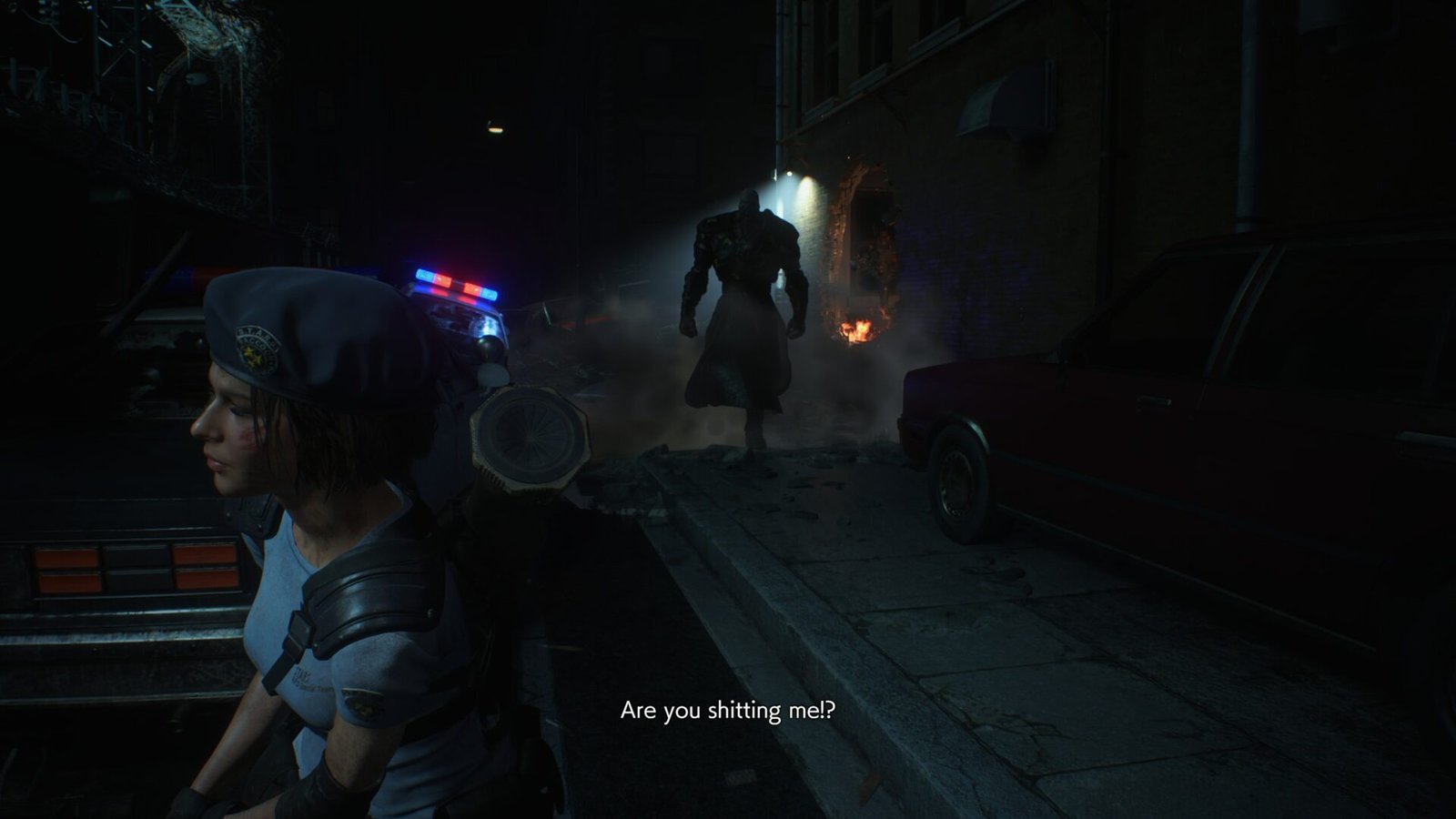
Jill realizes that urban renewal in Raccoon City involves a lot more property damage than expected.
Jill’s Emergency Dodge returns from the 1999 original and is one of the reimagining’s most significant gameplay additions. A well-timed dodge briefly slows time, creating an opportunity for an immediate counterattack. The generous timing window makes the mechanic satisfying to master, but it also pushes combat further toward action than the slower, more methodical survival horror of its predecessor.

The Hot Dogger is the ultimate way to serve up some justice.
Outside the main campaign, the Extra Shop significantly improves replay value. Completion points earned through gameplay can be exchanged for powerful weapons, modifier coins, hip pouches, and novelty items like the Hot Dogger, encouraging additional playthroughs with different loadouts and self-imposed challenges.
Like several modern Resident Evil titles, Resident Evil 3 (2020) also uses adaptive difficulty behind the scenes. A hidden Game Rank monitors player performance and dynamically adjusts enemy aggression, durability, and damage output, helping maintain a consistent level of challenge regardless of skill level.
Seiyuu Performances
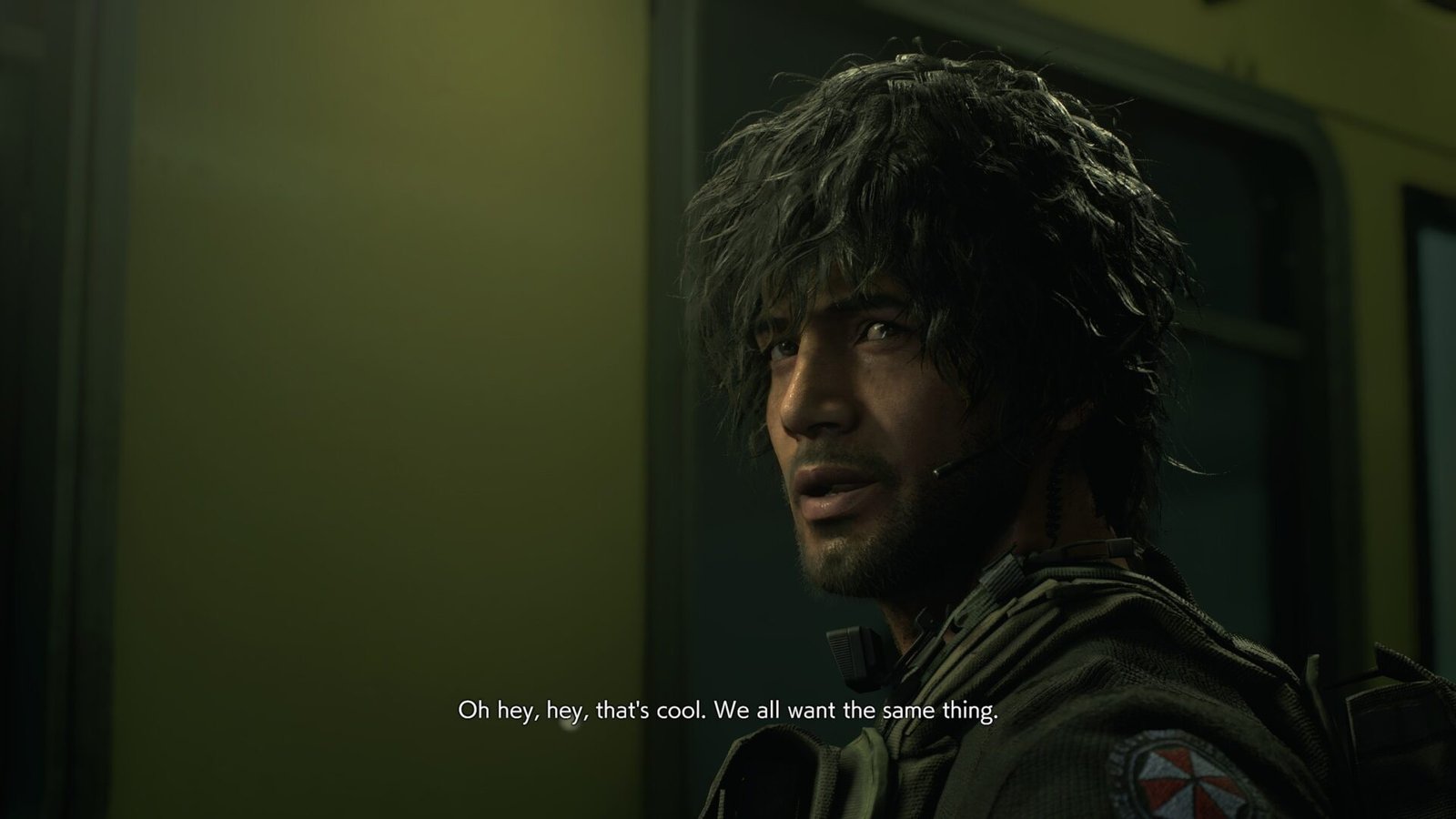
A man of many words who is just trying to survive the night with his hair intact.
The Japanese voice cast delivers strong performances that complement the game’s more cinematic direction. Atsuko Yuya convincingly portrays Jill’s exhaustion and determination, even if the script occasionally pushes her toward a more abrasive interpretation than previous appearances. Hiroki Yasumoto’s Carlos Oliveira provides a welcome contrast, balancing battlefield confidence with genuine compassion, while the supporting cast reinforces the urgency of Raccoon City’s final hours.
- Jill Valentine — Atsuko Yuya
Notable roles: Jill Valentine (Resident Evil), Detective Miwako Sato (Detective Conan), Anya Stroud (Gears of War) - Carlos Oliveira — Hiroki Yasumoto
Notable roles: Azrael (BlazBlue), Guile (Street Fighter), Victor S. Arseid (The Legend of Heroes) - Nicholai Ginovaef — Kenta Miyake
Notable roles: Mohammed Avdol (JoJo’s Bizarre Adventure), Vector (Sonic the Hedgehog), Zangief (Street Fighter) - Tyrell Patrick — Daichi Endo
Notable roles: Noble Six (Halo: Reach), Twice (My Hero Academia), Mamoru Takabe (Yakuza) - Brad Vickers — Wataru Takagi
Notable roles: Okuyasu Nijimura (JoJo’s Bizarre Adventure), Eikichi Onizuka (Great Teacher Onizuka), Hugo (Street Fighter)
Resident Evil 3 (2020) Linux Performance
Resident Evil 3 (2020) proved to be a noticeably smoother experience on Linux than Resident Evil 2 (2019). Using the DirectX 11 build, the game averaged 240 FPS, peaked at 285 FPS, and maintained 1% lows of 195 FPS at 1440p with most settings set to High, while frame generation and upscaling remained disabled.
Unlike Resident Evil 2, no Proton workarounds or compatibility tweaks were required. Throughout the entire playthrough, the game ran without crashes, visual glitches, or noticeable frame drops, delivering a consistently stable experience from start to finish. For Linux players, this is one of the more polished RE Engine titles currently available.
Final Verdict
Resident Evil 3 (2020) is a technically polished reimagining that trades the original’s deliberate survival horror for a faster, more cinematic experience. The RE Engine once again delivers excellent visuals, responsive gameplay, and a beautifully realized Raccoon City, making every encounter feel fluid and exciting. However, that momentum comes at the expense of much of the original game’s identity.
The removal of iconic locations, reduced enemy variety, and the loss of the Live Selection system leave the campaign feeling noticeably smaller in scope. Nemesis, once an unpredictable and relentless pursuer, is largely confined to scripted encounters that never capture the constant tension Mr. X delivered in Resident Evil 2 (2019). While Jill’s redesigned appearance is excellent, her characterization often mistakes constant hostility for emotional resilience, making her more difficult to connect with than her 1999 counterpart.
Even so, Resident Evil 3 (2020) remains an enjoyable action-oriented survival horror game. The Extra Shop adds meaningful replay value, and the Linux version delivers an exceptional technical experience. As a standalone title it succeeds, but as a reimagining of one of the series’ most ambitious entries, it never escapes the feeling that too much was left behind.
Review Summary
Resident Evil 3 (2020) (Linux)
Resident Evil 3 (2020) delivers fast-paced survival horror with responsive combat, excellent presentation, and outstanding Linux performance.
Its streamlined campaign, scripted Nemesis, and significant content cuts leave it feeling like a polished but smaller interpretation of one of the series’ most ambitious entries.
Tested On
CPU: Ryzen 7 5900X | GPU: AMD RX 9070XT 16GB | RAM: 64GB DDR4 | Storage: Crucial P5 Plus NVMe SSD
OS: Nobara Linux | Resolution: 1440p | Settings: High/Custom | Framerate: Uncapped
References
Interviews
- Lucas White, Resident Evil 3 Interview: Capcom’s Peter Fabiano Talks Nemesis and This Adaptation, Siliconera, June 1, 2020. [Live | Archive]
- Matt Kim, Resident Evil 3: How Capcom Redesigned Jill Valentine Into an Action Hero, IGN, Feb 25, 2020. [Live | Archive]