
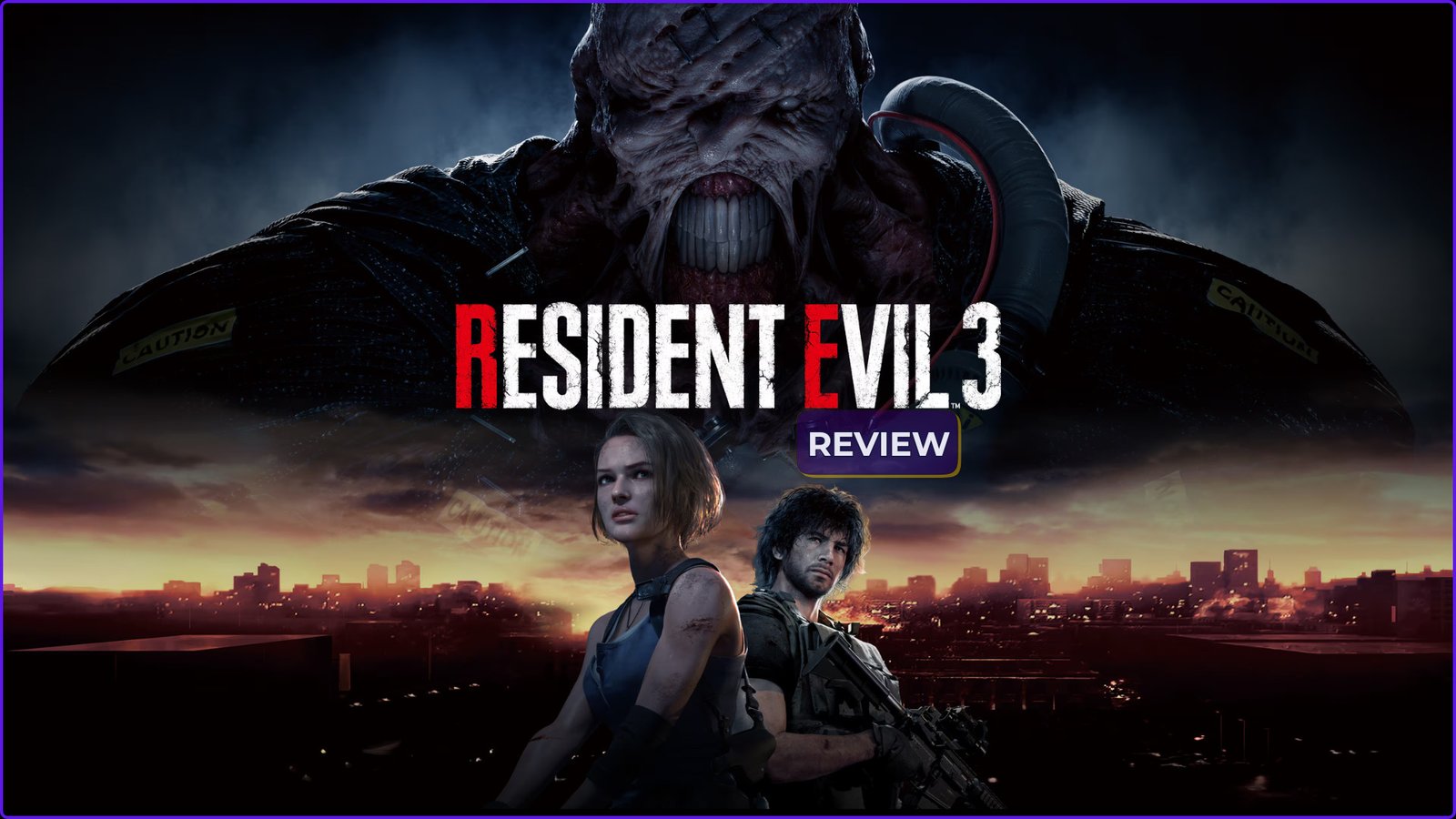
Our Resident Evil 3 (2020) review examines a polished, high-speed sprint through Raccoon City that trades substance for style.
While the technical performance is flawless, the removal of iconic locations and a shift toward scripted encounters makes this reimagining feel like a hollowed out companion piece to its predecessor.
Resident Evil 3 (2020) At a Glance
Release Date
Apr 2, 2020
Genre
Third Person Shooter, Survival Horror
Rating
Mature
Price
$59.99 (Release)
$39.99 (Current)
Proton
Experimental
Reviewed on
Linux (Nobara) | Normal through Inferno difficulties
Time
HLTB 14½ Hours (Main + Sides) | My Clear Time: 19hrs 12min (100%)
Resident Evil 3 (2020) Background
Resident Evil 3 launched on April 2, 2020 for PlayStation 4, Xbox One, and PC, later receiving next-gen updates for Xbox Series X|S, PS5, and PC on June 13, 2022. It arrived on Switch on November 18, 2022 and macOS on March 18, 2025.
Development took roughly three years, partially overlapping with Resident Evil 2 (2019). Capcom producer Peter Fabiano explained that this allowed the teams to share RE Engine technology, AI improvements, and graphical tools while still working independently. The goal was to adapt the original while creating a fresh experience for both newcomers and longtime fans.
Raccoon City was rebuilt using photogrammetry and modern graphics, giving environments, lighting, and character models a photorealistic quality. Jill Valentine’s design was updated to fit into the world while keeping her recognizable. IGN noted that the redesign aimed to show her resilience and ability to survive extreme situations. Story and dialogue expansions emphasize her character under pressure.
Fabiano noted that Live Selection and multiple endings from the original were removed in favor of a single narrative. This streamlined approach highlights key character moments, including Jill’s partnership with Carlos Oliveira, and supports the Nemesis redesign as a distinct, urgent threat. The remake keeps the core of the original while modernizing presentation, pacing, and characterizations.
The development team for Resident Evil 3 (2020) includes:
- Masanori Komine, Takashi Ishihara (Game Designers)
- Masanori Komine: Resident Evil 7: Biohazard, Resident Evil 3 (2020) – Resident Evil 4: Separate Ways (2023), Devil May Cry 5
- Takashi Ishihara: Rez Infinite, Resident Evil 3 (2020), Dragon’s Dogma II
- Yasuhiro Seto, Yasuhiro Anpo, Yukio Ando (Directors)
- Yashuiro Seto: Resident Evil: Survivor 2 – Code:Veronica, Resident Evil: The Umbrella Chronicles, Phoenix Wright: Ace Attorney – Dual Destinies
- Yasuhiro Anpo: Resident Evil: Revelations 2, E.X. Troopers, Resident Evil – Resident Evil 2
- Yukio Ando: Kabu Trader Shun, Steel Battalion: Heavy Armor, Breath of Fire III – IV
- Yasushi Haraguchi (Character Artist)
- Resident Evil 2 (2019) – Resident Evil 4: Separate Ways (2023), Dragon’s Dogma
- Kota Suzuki, Azusa Kato (Composers)
- Kota Suzuki: Onimusha 3: Demon Siege, Resident Evil 5 – 6, Tatsunoko vs Capcom: Ultimate All-Stars
- Azusa Kato: Resident Evil 6, Sengoku Basara 4, Legend of Zelda: Echoes of Wisdom
- Peter Fabiano, Tsuyoshi Kanda (Producers)
- Peter Fabiano: Devil May Cry 5, Ghosts ‘n Goblins: Resurrection, Resident Evil: Village
- Tsuyoshi Kanda: Umbrella Corps, Resident Evil 7 – Resident Evil Village, Devil May Cry 5
Resident Evil 3 (2020) Experience
I’ve been playing the Resident Evil series since the Dreamcast era, starting with Code: Veronica, and have completed nearly every mainline entry. Resident Evil 3 (2020) was originally finished shortly after release, making this my first full replay since launch.
Replayed immediately after Resident Evil 2 (2019), it reads as a companion reimagining built on the same foundation, prioritizing faster pacing and constant forward motion.
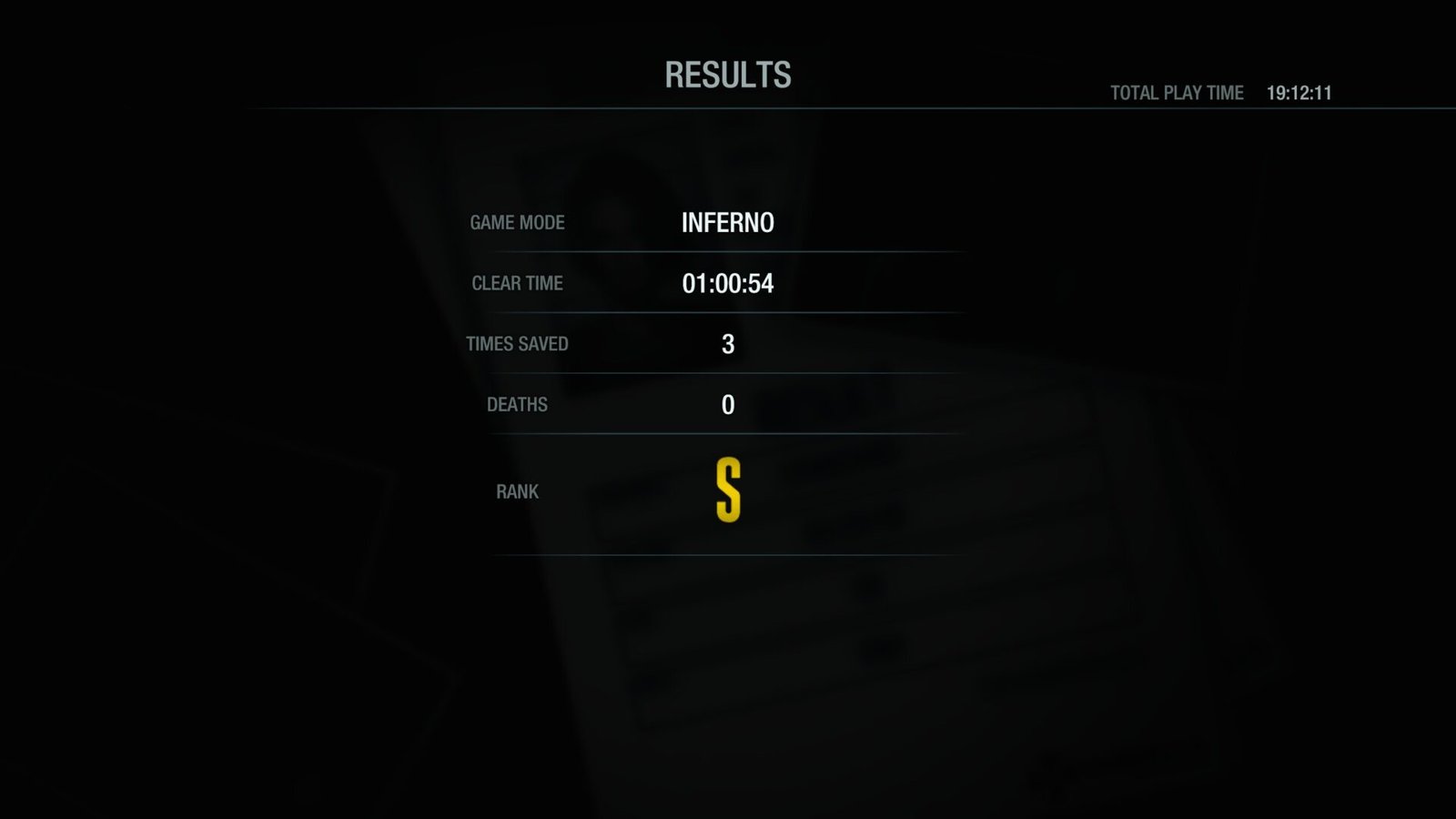
Check out that shiny S-rank for the ultimate bragging rights.
Resident Evil 3 (2020) Impressions
Introduction
Set during the same chaotic 48 hours as Resident Evil 2 (2019), this reimagining follows Jill Valentine, a former S.T.A.R.S. member and survivor of the Spencer Mansion incident. As Raccoon City collapses under the weight of a T-Virus outbreak, Jill attempts a desperate escape while being hunted by Nemesis, a bio-organic weapon designed to eliminate her team. Joining forces with Carlos Oliveira and a squad of Umbrella mercenaries, Jill must navigate the burning streets of a city that feels smaller than fans may remember.
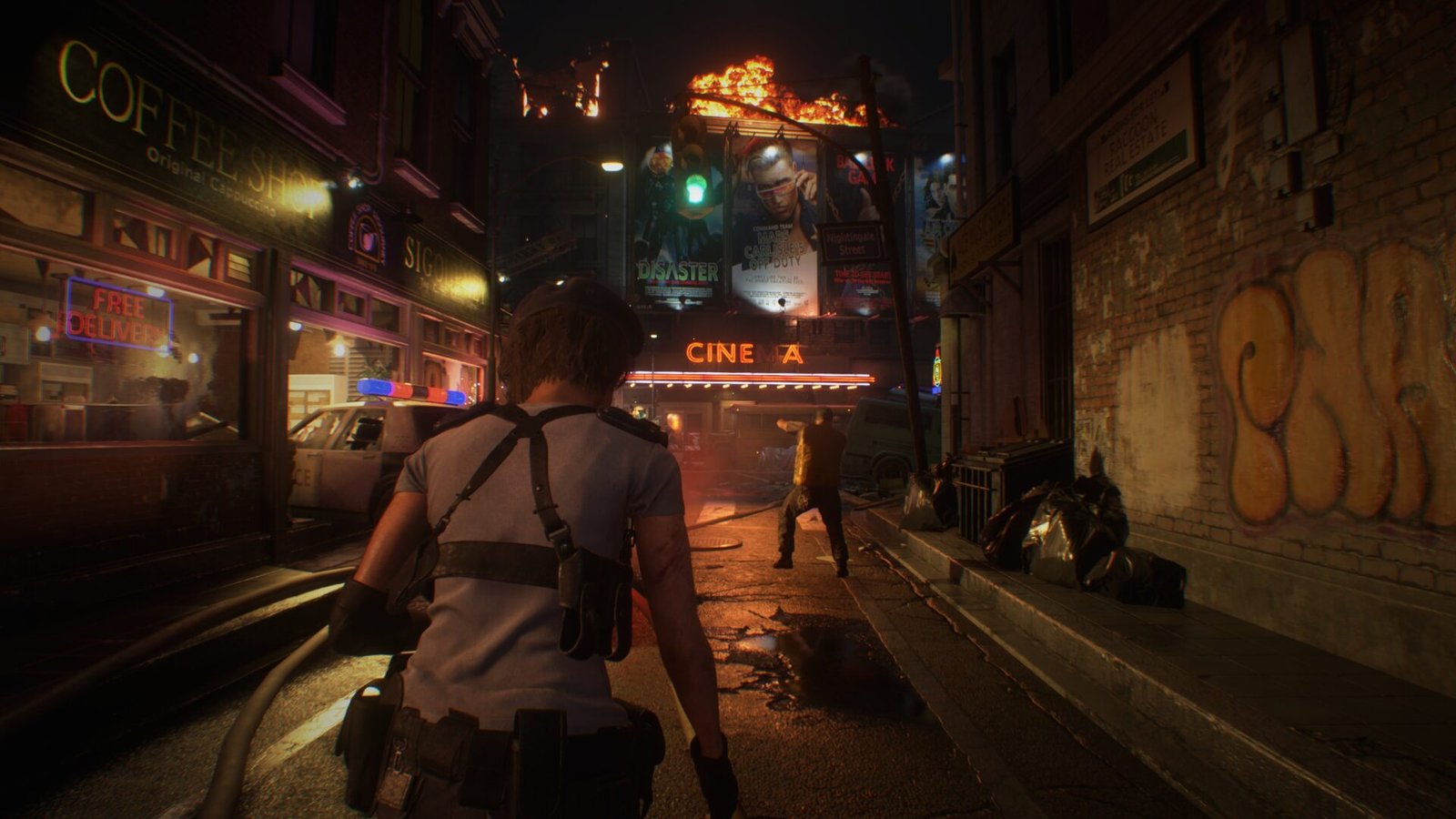
It’s just a shame about the fire and the zombies.
Gameplay & Mechanics
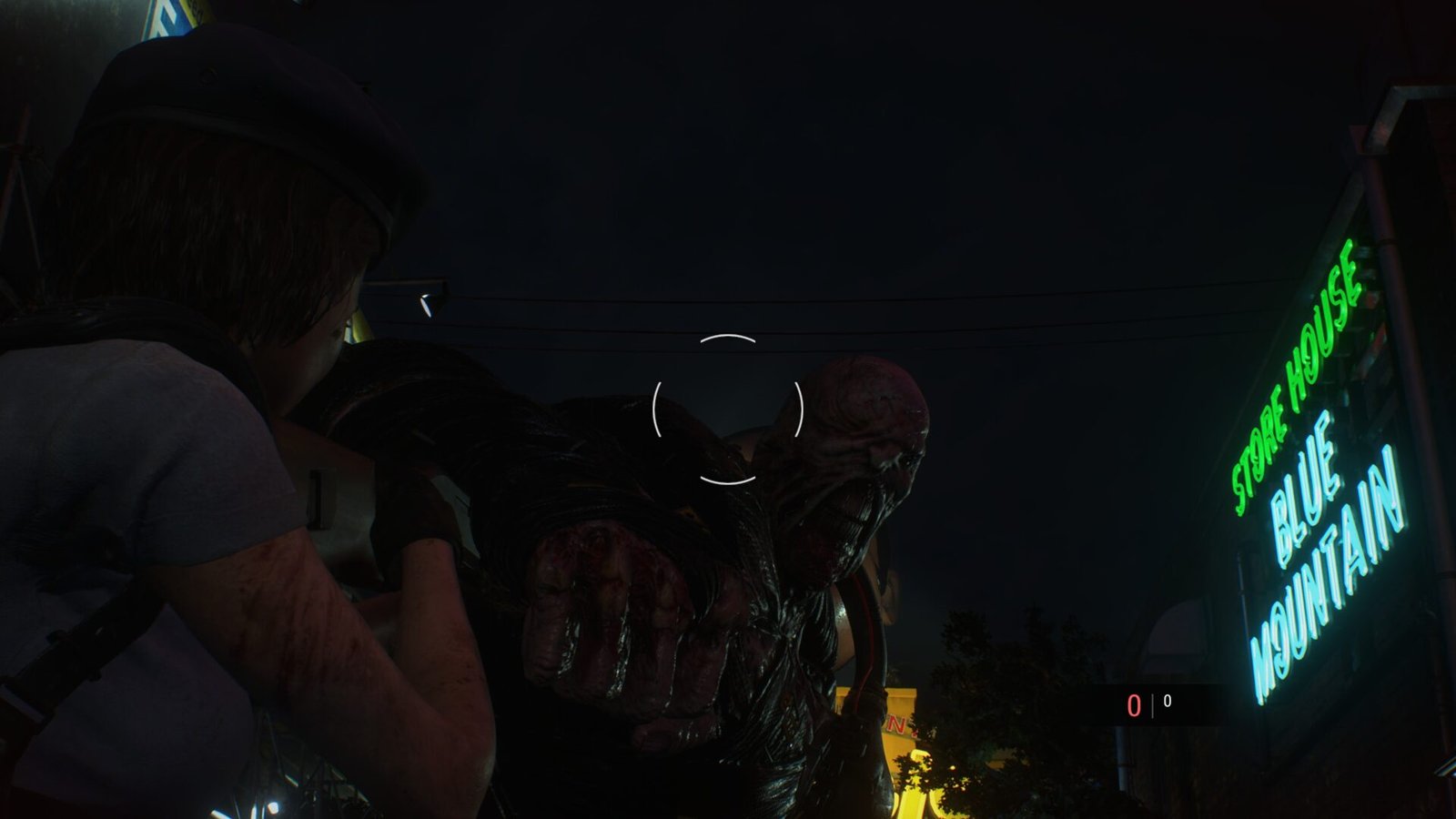
Better keep that reticle steady if you want to see the morning.
Combat
Weapons swap instantly via the D-pad, with four quick-access slots for self-defense items. The aiming reticle tightens with focus for precision shots, and reloads can be manual or automatic. Combat feels faster and more fluid than in RE2, reflecting the game’s constant forward motion.
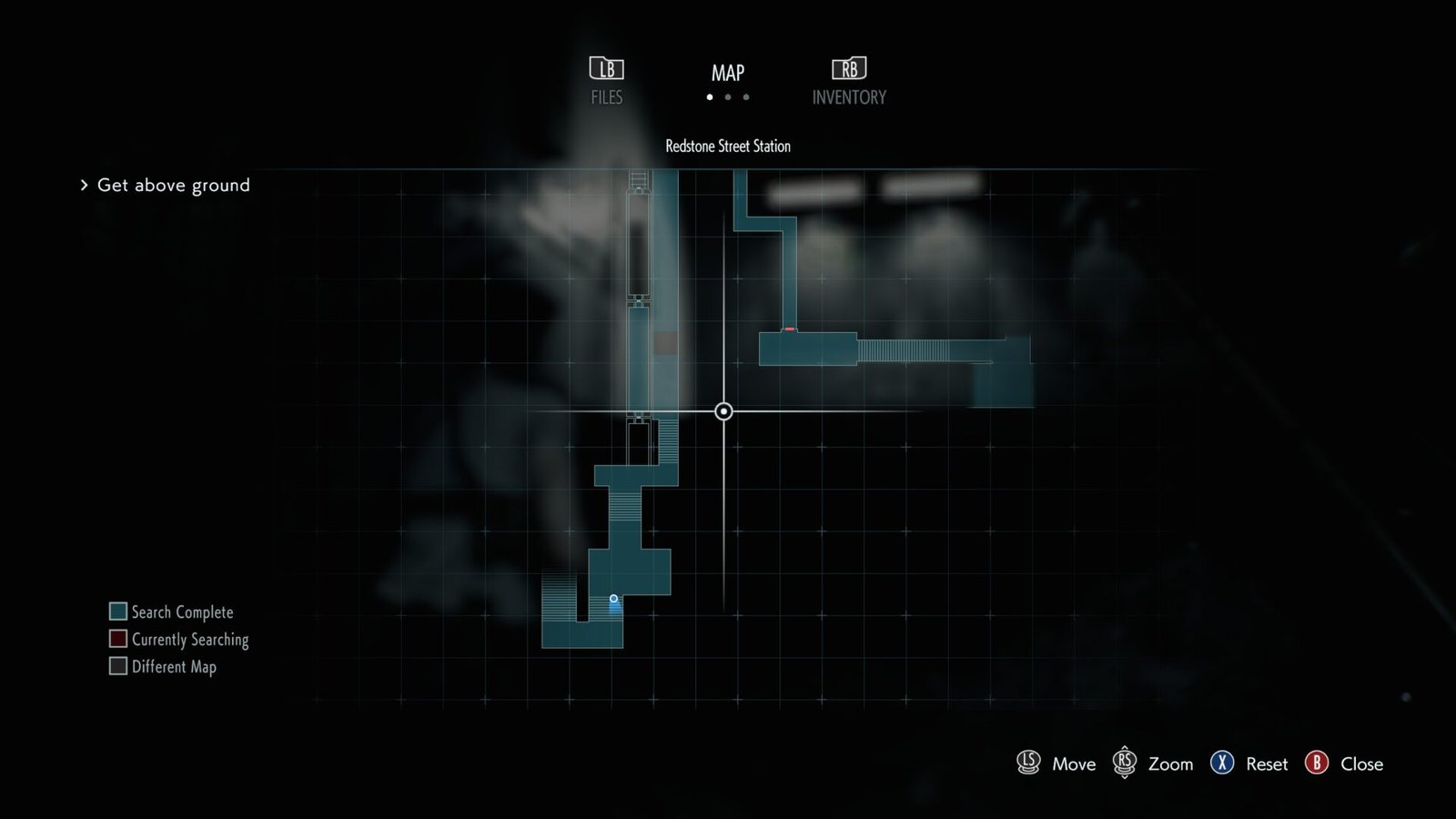
Keep an eye on the colors to make sure you didn’t miss a single herb.
Map
The map shows explored and unexplored areas, helping navigate corridors, streets, and interiors. Turquoise marks cleared zones, red indicates remaining items.
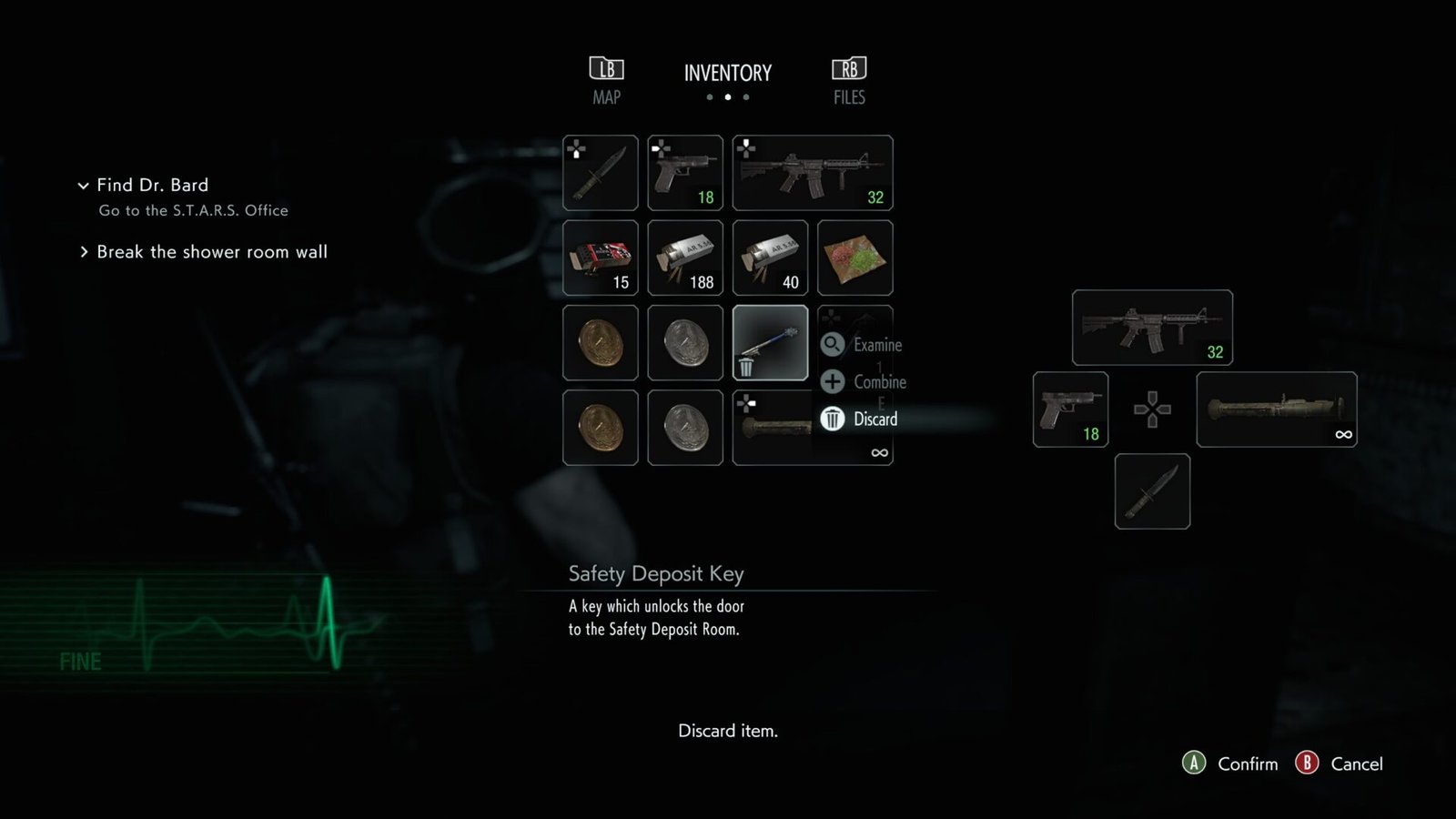
Once that key turns grey, it’s just taking up space in your pockets.
Key Items
Fuse boxes, keycards, and other essentials are needed to progress. Once used, items can be discarded to free inventory space.
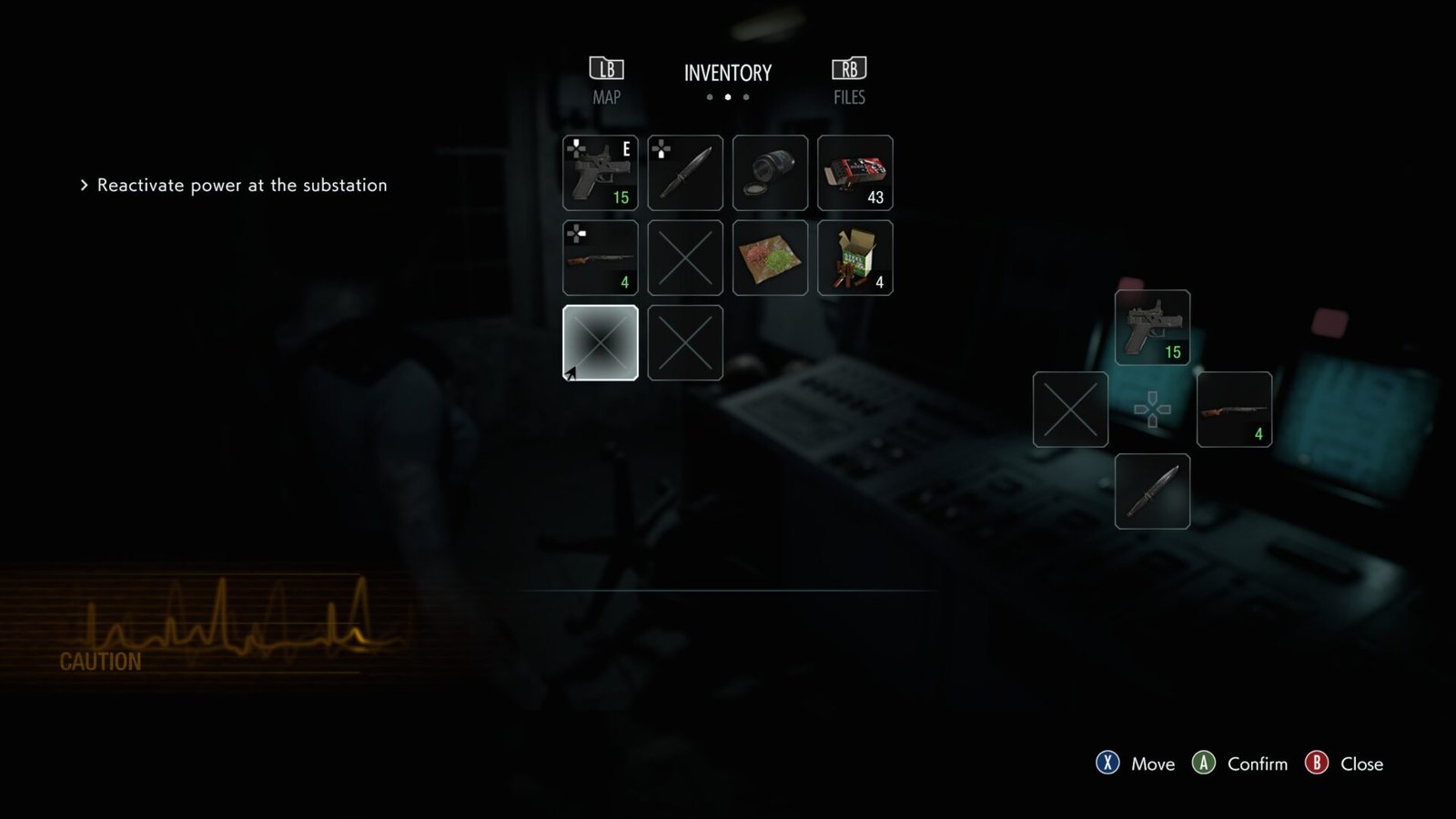
That yellow glow means it’s time for a green herb cocktail.
Status & Healing
Health is displayed from Fine to Danger: green for full, yellow for caution, red for critical.
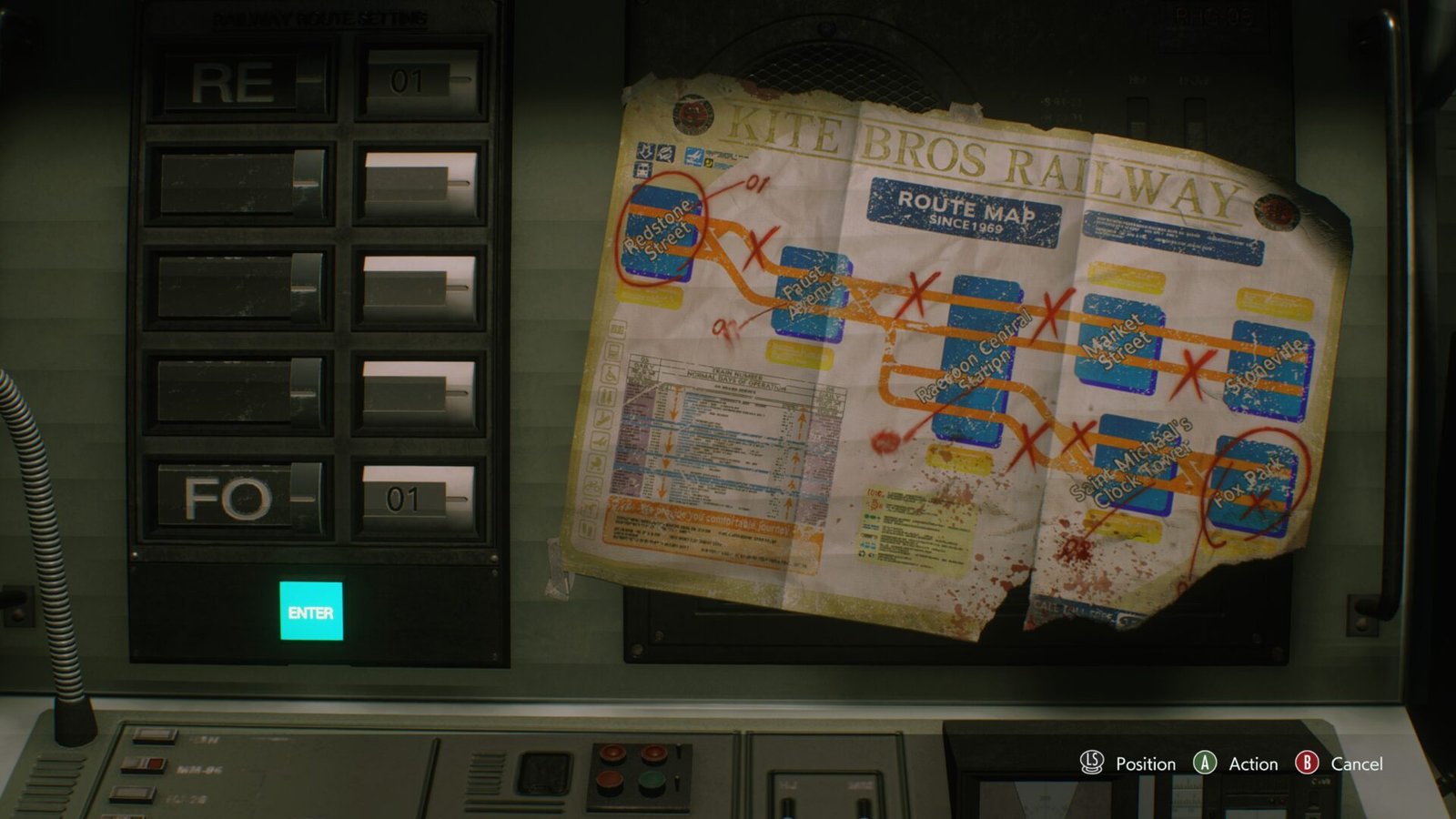
The subway won’t move until you get these station codes in order.
Puzzles
Classic puzzles unlock doors or trigger events. Most autosave on completion.
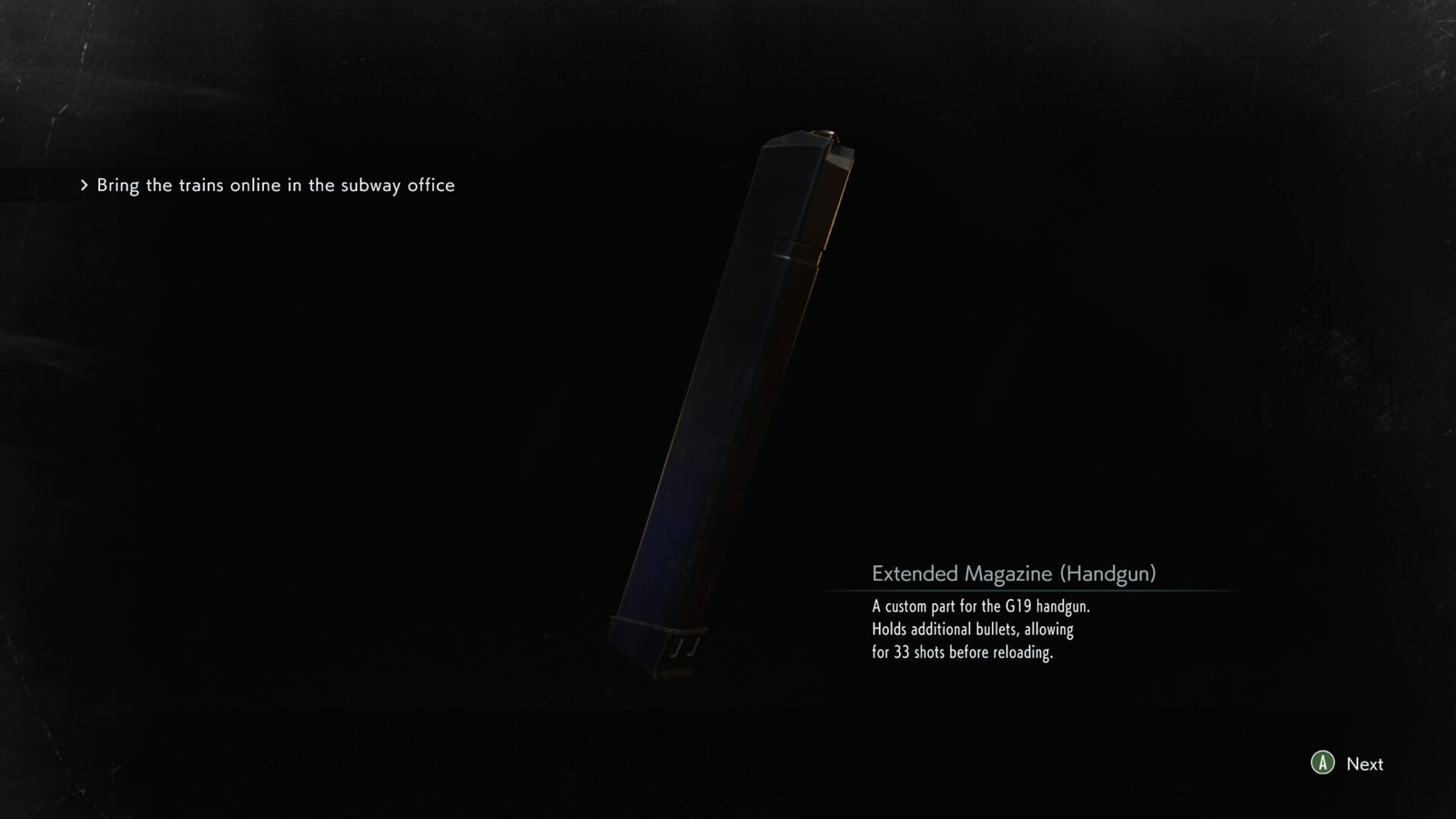
An extra mag means more shots and less sweating.
Weapon Parts
Parts improve recoil and damage for shotguns, pistols, and magnums, offering incremental upgrades.
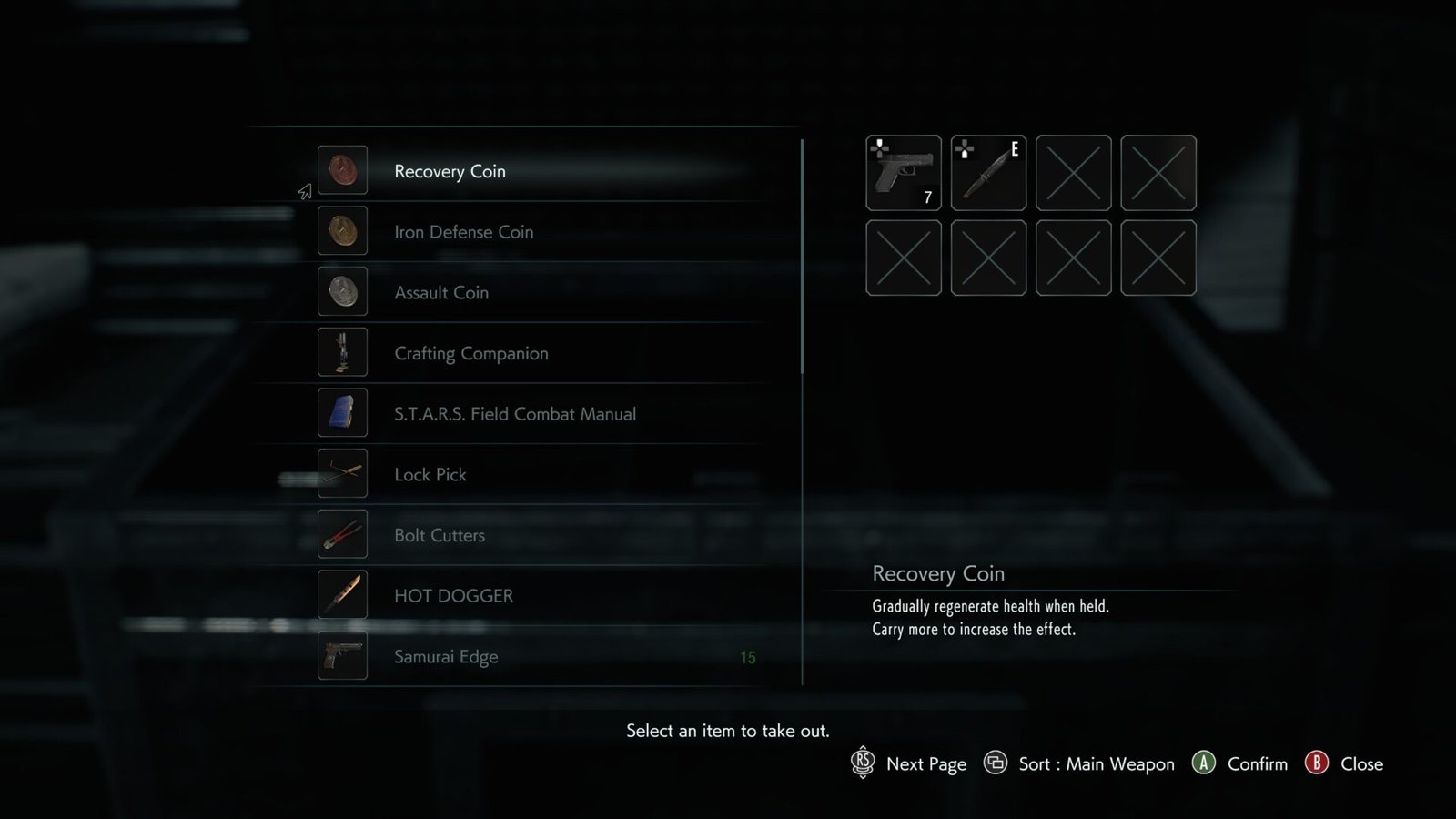
Those coins are the real secret to surviving a nightmare.
Item Box
Items can be stored and retrieved across areas. Inventory starts at 8 slots and expands to 14 with hip pouches.
Story & Writing
Resident Evil 3 reimagines Jill Valentine’s escape from Raccoon City as a relentless sprint under constant threat. The game leans into her trauma from the Spencer Mansion incident, making PTSD a part of her character. This sharpens her personal stakes, but Jill often comes across as abrasive, with emotional strain reading more as mean-spirited than hardened.
Structurally, the game is far more linear than the original. The Live Selection system, which let players make split-second choices that altered routes, encounters, and access to items, is gone. Progression is fixed, with no branching paths or scenario-based decisions.
Several locations and encounters from the 1999 version are absent, including the Clock Tower, Park, Dead Factory, Cemetery, City Hall, and Gas Station. Nemesis’ tentacle forms and some evolution stages are cut, and the Grave Digger boss fight is gone. These omissions reduce the sense of scale and remove layers of strategy.
The remake prioritizes momentum and constant pressure. The story delivers a tense, cinematic experience, but much of the original’s agency, variety, and layered progression is lost.
Art & Audio
Resident Evil 3 (2020) continues to showcase the RE Engine with detailed surfaces, expressive character models, and strong lighting contrast. Downtown Raccoon City is alive with neon signs, burning streets, and emergency lights, giving the game a more immediate visual identity than Resident Evil 2 (2019).
Familiar locations return with new purpose. The R.P.D. feels tighter, the Sewers introduce added enemies, and the Hospital stands out as the most intense section, using harsh lighting and maze-like design to heighten tension. Revisiting these areas adds visual variety and constant pressure.
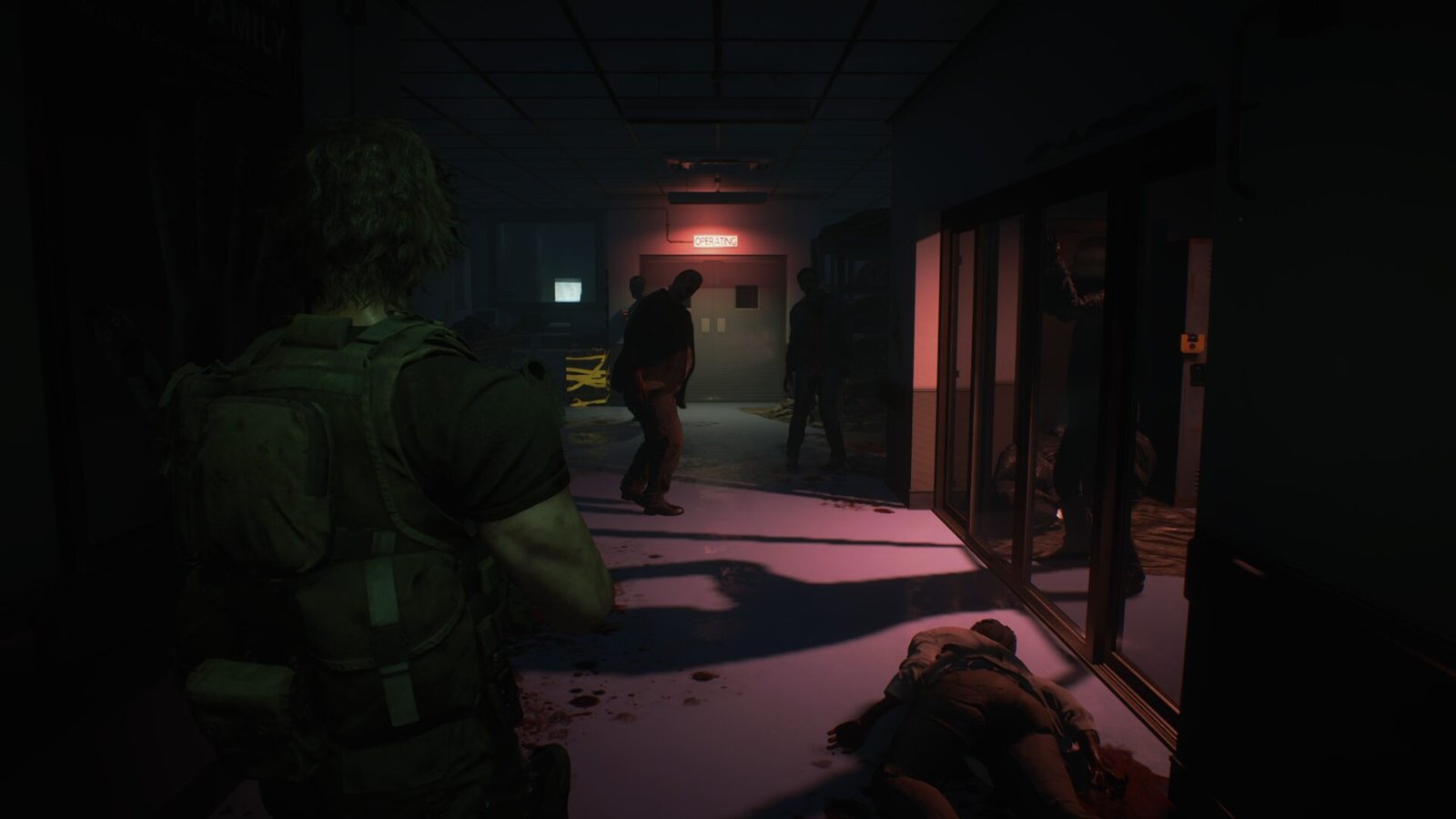
Watch your back for a toothy grin in the hospital shadows.
Audio is tuned to the faster pace. Nemesis’ heavy, rapid footsteps signal imminent danger, turning sound into a cue for urgent action. The presentation remains polished, but it favors momentum and immediate threat over the slower, atmospheric dread that defined Resident Evil 2.
Standout tracks:
The City of Ruin
A somber, atmospheric piece that captures the tragedy. It uses low-frequency drones to create a sense of lingering dread amidst the wreckage.
Save Room (Secure Place)
It sounds like a memory of safety that is slowly fading away. It takes the iconic piano melody of the original RE2 theme and slows it down, wrapping it in thick reverb.
Final
A chaotic, orchestral swell that accompanies the game’s climax. It emphasizes scale and power over the original’s creeping dread.
Unique Features & Mechanics
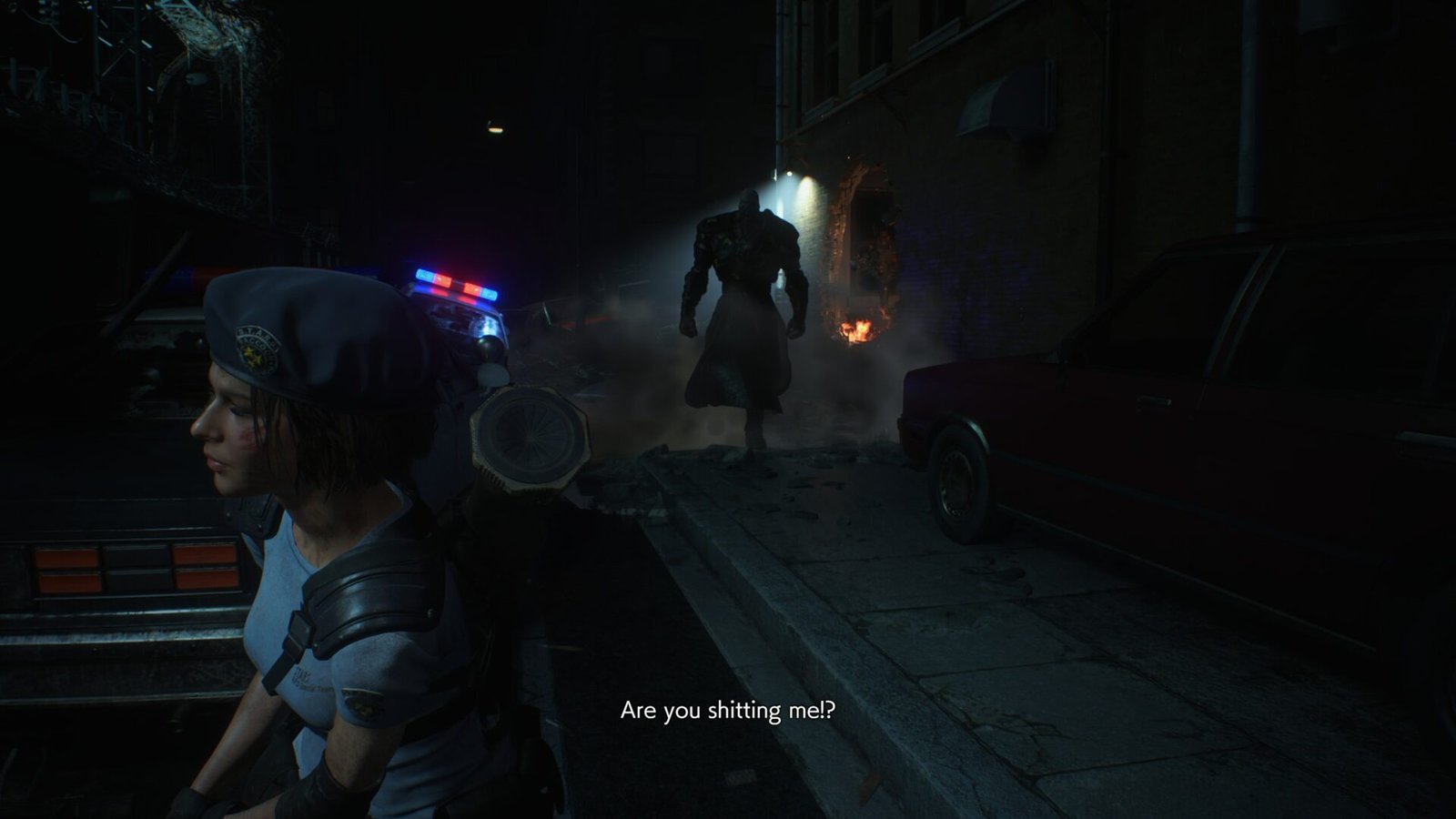
Jill realizes that urban renewal in Raccoon City involves a lot more property damage than expected.
Nemesis
Unlike Mr. X in Resident Evil 2 (2019), Nemesis is mostly limited to scripted set-pieces and specific trigger zones. His speed and weaponry make him dangerous, but his predictable behavior removes the persistent threat element. Rather than carefully planning your route to avoid him, you wait for the next cinematic chase.
Emergency Dodge
Jill’s signature move from the original 1999 game returns. By timing a button press as an enemy attacks, she performs a roll that briefly slows time for a counter-shot. The generous window can make combat feel closer to an action shooter than survival horror.
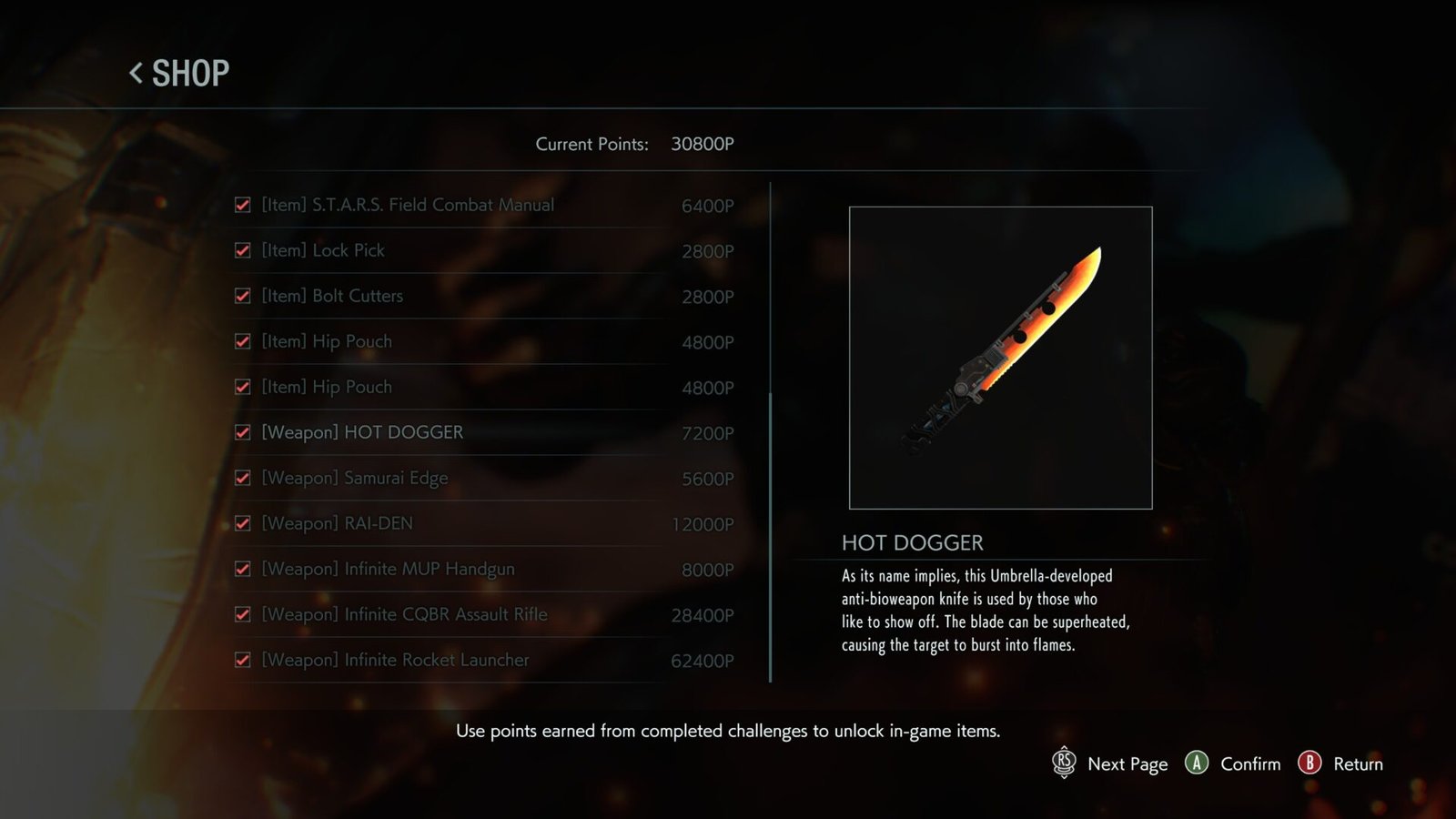
The Hot Dogger is the ultimate way to serve up some justice.
Extra Shop
Building upon the series’ weapon unlocks, Resident Evil 3 allows you to purchase extra weapons and items with completion points. Hip pouches, modifier coins, and special weapons like a flame-imbued knife change the overall tone of each run, offering more replay value than Resident Evil 2 (2019)‘s main scenario.
Adaptive Difficulty
Resident Evil 3 (2020) uses a dynamic difficulty system first seen in Resident Evil 4 (2005). The game tracks your performance through a hidden Game Rank, adjusting enemy durability, aggression, and damage to match your skill.
Seiyuu Performances
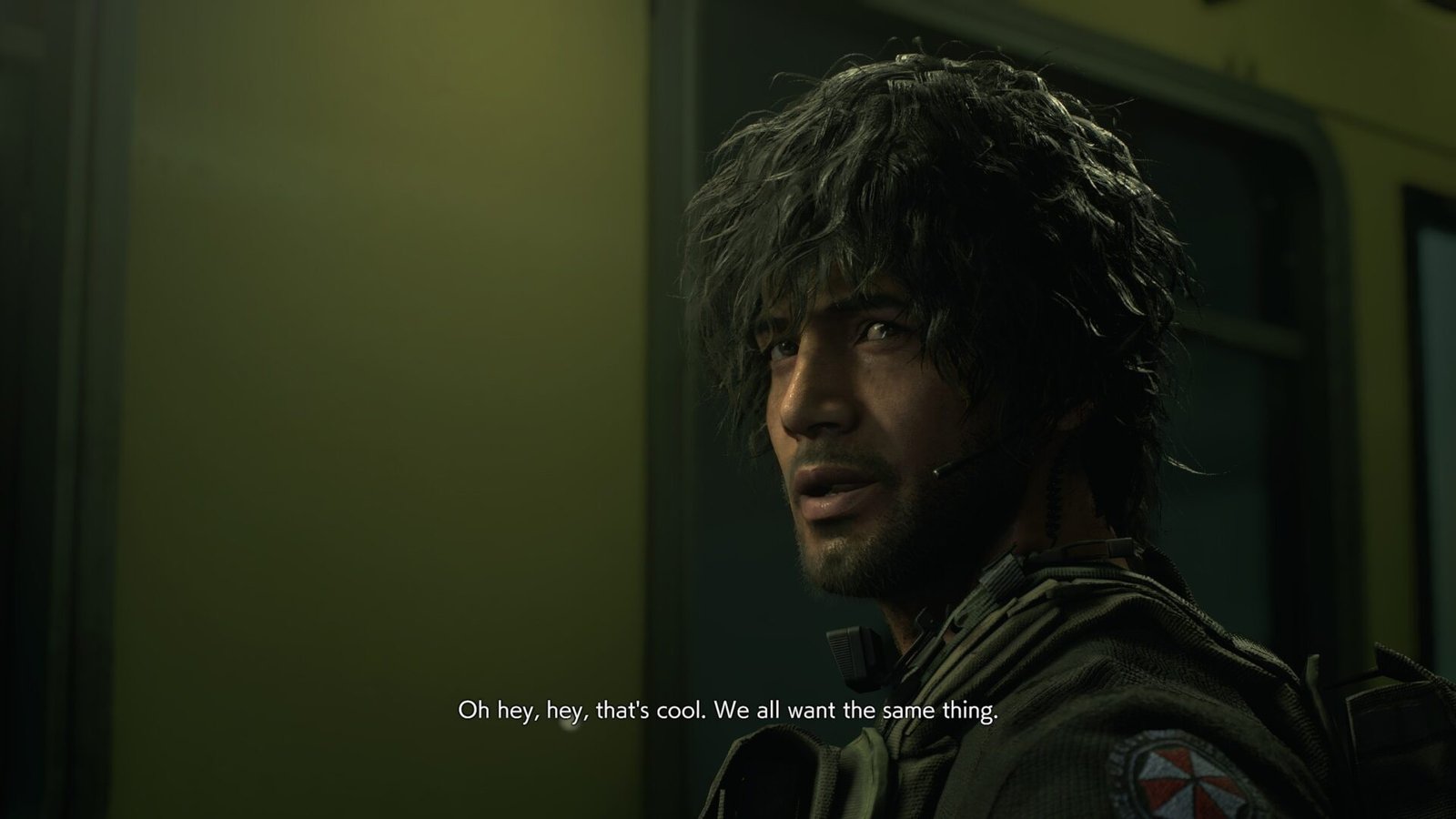
A man of many words who is just trying to survive the night with his hair intact.
The Japanese voice cast in Resident Evil 3 (2020) delivers a cinematic experience, though the script pushes characters into more aggressive territory. Jill’s performance is technically strong but often feels perpetually agitated. Carlos balances mercenary grit with genuine concern for survivors.
- Atsuko Yuya (Jill Valentine): Jill Valentine (Resident Evil), Detective Miwako Sato (Detective Conan), Anya Stroud (Gears of War)
- Hiroki Yasumoto (Carlos Oliveira): Azrael (BlazBlue), Guile (Street Fighter), Victor S. Arseid (The Legend of Heroes)
- Kenta Miyake (Nicholai): Mohammed Avdol (JoJos), Vector (Sonic), Zangief (Street Fighter)
- Daichi Endo (Tyrell): Noble 6 (Male) (Halo: Reach), Twice (My Hero Academia), Mamoru Takabe (Yakuza)
- Wataru Takagi (Brad Vickers): Okayasu Nijimura (JoJos), Eikichi Onizuka (Great Teacher Onizuka), Hugo (Street Fighter)
Resident Evil 3 (2020) Linux Performance
Performance on Resident Evil 3 (2020) was significantly better than on Resident Evil 2 (2019). Average FPS was 240, with a max of 285 and 1% lows at 195. I used the DirectX 11 build, set most graphics options to High or off, and disabled frame generation and upscaling. The game ran without crashes, frame drops, or visual glitches, and no Proton version selection was required.
Resident Evil 3 (2020) Review Verdict
Resident Evil 3 (2020) is a technical powerhouse that shows the gap between modern polish and legacy depth. Coming directly from the dense hallways of Resident Evil 2 (2019), the shift is immediate. It replaces slow-burn dread with a high-octane sprint through a neon-soaked Raccoon City. While the core mechanics are fun and responsive, the amount of content lost to achieve this pacing is difficult to justify.
The gutting of the original scope is a significant disappointment. The removal of iconic locations like the Town Hall, Clock Tower, and Park makes the world feel small. This thinning extends to the bestiary: the omission of spiders, crows, brain suckers, and leeches reduces the mechanical variety. Nemesis is the biggest casualty. In 1999, he was a persistent nightmare. In 2020, he is reduced to scripted sections and a small roaming area that lacks the dynamic presence of Mr. X.
The RE Engine continues to impress, particularly with the redesign of the Hunters. They look more menacing than ever and live up to their reputation as a lethal threat. However, their inclusion cannot fully compensate for the missing set pieces or the shift in writing. Jill design is fantastic, but the script often confuses being a hardened survivor with being perpetually abrasive. Her interactions lack the layered tension found in her 1999 portrayal, making it difficult to connect with her journey.
Resident Evil 3 (2020) feels less like a full numbered entry and more like an expansive DLC. It lacks the structural depth and player agency of the original, but finds a unique rhythm in its Extra Shop system. This meta game loop offers more immediate replay value than the main scenarios of Resident Evil 2 (2019). It is a polished, 200 FPS thrill ride on Linux that delivers fun in short bursts, but its value depends on whether you prioritize technical polish over environmental scale.
Resident Evil 3 (2020) TLDR
Resident Evil 3 (2020) (Linux)
Resident Evil 3 (2020) delivers sharp combat and improved performance, but the experience is diminished by the removal of iconic locations like the Clock Tower.
The omission of classic enemies and a scripted Nemesis result in an uneven remake that lacks the scale and tension of the original.
Tested On
CPU: Ryzen 7 5900X | GPU: AMD RX 9070XT 16GB | RAM: 64GB DDR4 | Storage: Crucial P5 Plus NVMe SSD
OS: Nobara Linux | Resolution: 1440p | Settings: High/Custom | Framerate: Uncapped
Resident Evil 3 (2020) Review References
Interviews
- Lucas White, Resident Evil 3 Interview: Capcom’s Peter Fabiano Talks Nemesis and This Adaptation, Siliconera, June 1, 2020. [Live | Archive]
- Matt Kim, Resident Evil 3: How Capcom Redesigned Jill Valentine Into an Action Hero, IGN, Feb 25, 2020. [Live | Archive]
Music