

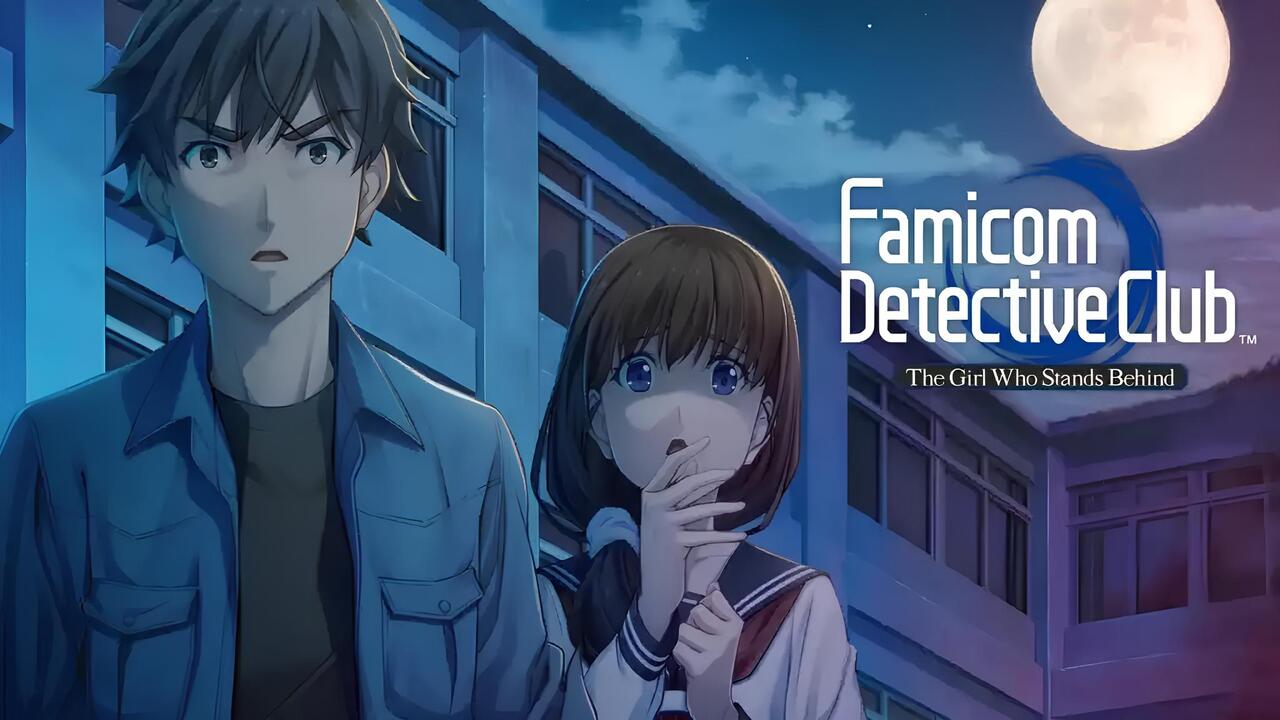
Famicom Detective Club: The Girl Who Stands Behind
Released: May 14, 2021 (WW)
Developer(s): MAGES. Inc.
Publisher(s): Nintendo
Platform(s):

Completed on Nintendo Switch in Docked Mode.
HowLongToBeat Time: 7hrs | My Clear Time: 7hrs 30mins
Background
Famicom Detective Club: The Girl Who Stands Behind, originally released in 1989, serves as a prequel to The Missing Heir. Developed by Nintendo R&D1, TOSE and written by Yoshio Sakamoto, with notable contributions from Gunpei Yokoi and Kenji Yamamoto, this installment builds on the narrative groundwork of its predecessor.
Unlike The Missing Heir, which drew from classic detective novels and giallo films, The Girl Who Stands Behind integrates supernatural themes, inspired by 80s and 90s shojo manga. This includes ghostly apparitions and eerie high school phenomena, reflecting Sakamoto’s interests during that period (Houston, 2024).
The story revolves around a high school mystery tied to the ghostly figure known as “The Girl Who Stands Behind,” pushing the boundaries of Famicom storytelling with its blend of mystery and the supernatural.
On May 14, 2021, MAGES released a remake for the Nintendo Switch, marking the first time the series was available in the west. This updated version modernizes the visuals, voice acting, and controls while preserving the original’s distinctive atmosphere. The remake has been praised for its faithful adaptation and accessibility, broadening the game’s reach to new audiences and renewing interest in this classic adventure series.
The development staff of Famicom Detective Club: The Girl Who Stands Behind (2021) consists of:
- Yoshio Sakamoto (Writer) – Known for Metroid, Super Metroid, Metroid Fusion, Metroid Dread, Wario Land 4
- Tsuyoshi Tonosaki, Hideo Sudo (Directors) – Known for Steins;Gate Elite, Yu-No: A Girl Who Chants Love at the Bound of this World
- Yukihiro Matsuo (Artist) – Known for Chaos;Head: Noah, Chaos;Child, Anonymous;Code
- Kenji Yamamoto, Takeshi Abo (Composers) – Kenji is known for Super Metroid, Metroid Prime, Metroid Fusion, Mike Tyson’s Punch Out!!.
Takeshi is known for Chaos;Head: Noah, Steins;Gate, Anonymous;Code - Yoshio Sakamoto, Makoto Asada (Producers) – Yoshio is known forMetroid,Super Metroid, Metroid Fusion, Metroid Dread, Wario Land 4.
Makoto is known for DeathSmiles II X, Corpse Party: Blood Drive, Anonymous;Code
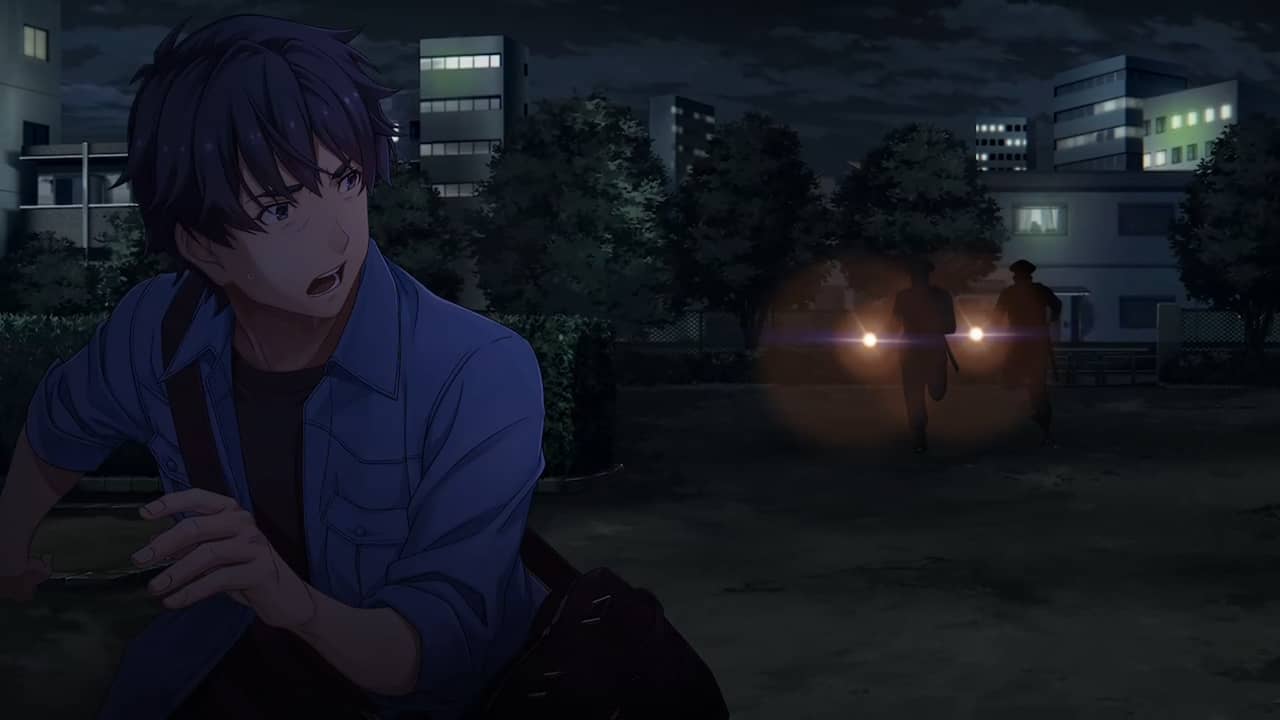
Ninten flees from two glowing lights — a tense moment that brings to mind the Iron Maiden classic.
Experience
Before completing Famicom Detective Club: The Girl Who Stands Behind, I had already played Famicom Detective Club: The Missing Heir, all of the Spirit Hunter games, the first two Danganronpa titles, Fate/Extra, and several other adventure games and visual novels. I’m familiar with MAGES, formerly 5pb, through their work on the SciAdv universe, Muv-Luv, and Corpse Party.

A sharply dressed suspect gives major Josuke vibes in this low-angle shot.
Impressions
From the start of the game, you’re treated to impressive Live2D animations of the protagonist hiding and being chased by two silhouettes. These sequences are accompanied by full voice acting—even for the narration—along with sound effects for accidental actions like bumping into a can, and animations for everything from hiding to running. MAGES has once again worked their magic under the supervision of some of the original staff, and it shows in the best way possible.
As the animations transition to the game’s title screen, you’re greeted with a title theme that evokes the sound of an ’80s horror movie. The character designs do an excellent job of illustrating the uniqueness between characters, with clothing that matches their personalities—especially Ayumi and the other students. Background characters are also animated, with attention given to small details like someone rummaging through their locker and dropping papers while you’re talking to someone a bit farther away, adding to the overall immersion.
Notable features include the option to switch between the original soundtrack and the newly composed arranged one for the remake, the ability to turn off voice acting for the protagonist or entirely, and a recap option when loading a saved game. The inclusion of a recap in a visual novel is rare, so it’s worth noting that this feature is present both here and in the previous The Missing Heir story.
The Girl Who Stands Behind wastes no time in building momentum, quickly drawing players into the mystery of the case and captivating them with the cast as they are introduced. While the Live2D already impressed in The Missing Heir and the opening of The Girl Who Stands Behind, it becomes even more impressive towards the end of the story. The overall enjoyment of the case kept me more invested than The Missing Heir. However, it’s important to note that the same issue that plagued a chapter in The Missing Heir also appears here in Chapter 8: it’s not always clear what conversational abilities you need to exhaust in the bar area, which may trip up some players.
Given that The Girl Who Stands Behind is a prequel, it sets up the events of The Missing Heir, making it an ideal starting point for new players. Despite being released second, starting with The Girl Who Stands Behind allows players to fully appreciate the story’s progression and context.
The talented cast of seiyuu truly brings the characters to life, adding depth and authenticity to the story. Their performances make the already compelling narrative even more engaging:
- Megumi Ogata (known for Ken Amada from Persona 3, Nagito Komaeda from Danganronpa 2, Makoto Naegi from Danganronpa, Shinji Ikari from Neon Genesis Evangelion)
- Yuko Minaguchi (known for Videl from Dragonball Z, Momiji from Ninja Gaiden, Sailor Saturn/Hotaru Tomoe from Sailor Moon S)
- Rikiya Koyama (known for Kiritsugu Emiya from Fate/Zero, Taiga Saejima from Yakuza, Master Chief from Halo 4-5)
- Akio Otsuka (known for Solid Snake from Metal Gear Solid, Daisuke Jigen fromLupin The Third, Batou from Ghost In The Shell)
- Manaka Iwami (known for Akane Kurokawa from Oshi No Ko, Amber from Genshin Impact, Ingrid from Fire Emblem: Three Houses)
Much like my experience with The Missing Heir, The Girl Who Stands Behind kept me hooked from the start. The way it sets up the events of the next game made the story all the more intriguing, and I found myself eager to see how everything would unfold. With the story’s haunting atmosphere and impressive presentation, it’s a must-play for fans of mystery and visual novels.
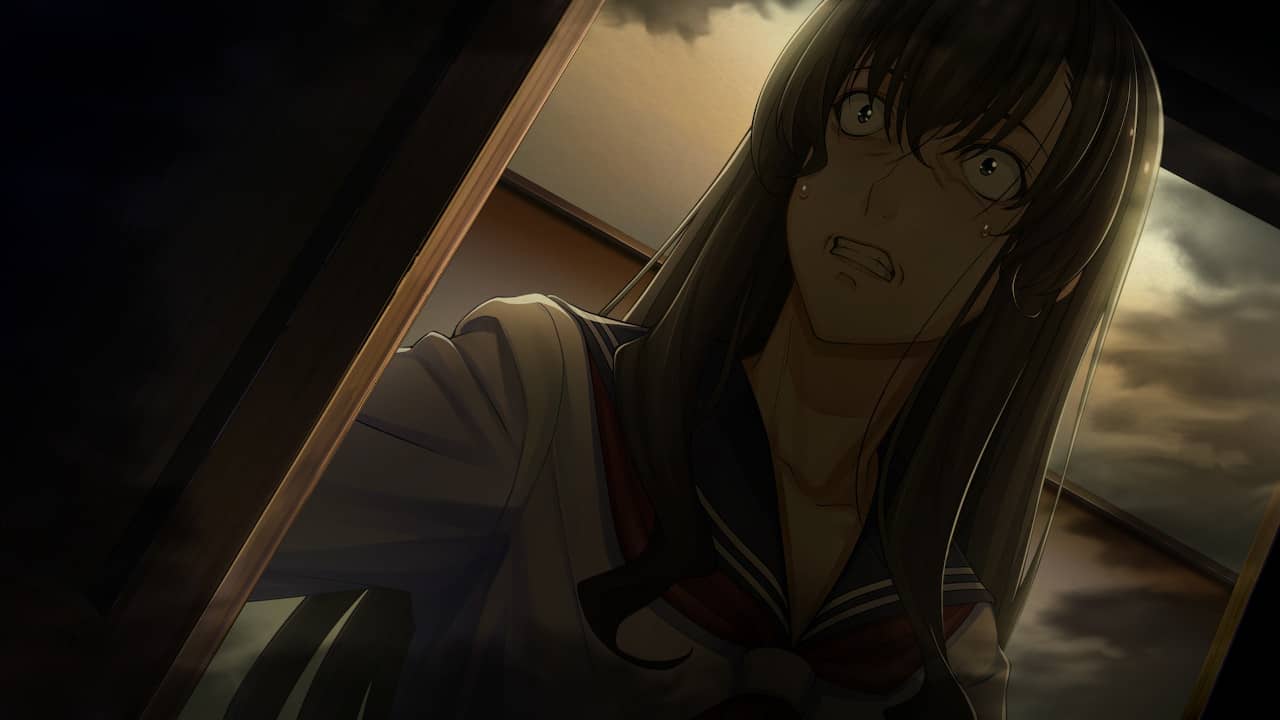
A potential victim’s terror is palpable as she answers the door in this suspenseful moment.
Verdict
The Girl Who Stands Behind impresses with its high production value, distinguishing itself in the visual novel genre. The remarkable Live2D animations and detailed character designs significantly enhance the immersive experience, while the dynamic backgrounds and interactive elements add depth to the gameplay. The game’s user interface is intuitive, ensuring a smooth and engaging experience for players.
The story’s pacing is effectively managed, drawing players into the mystery from the start and maintaining their interest through its compelling narrative and well-developed cast. Although some sections may present challenges in navigating conversational options, the overall storytelling and immersive atmosphere are well worth it.
The exceptional voice cast, featuring talented seiyuu, brings the characters to life, adding authenticity and emotional depth to the narrative. Fans of visual novels and those intrigued by prequel setups will find The Girl Who Stands Behind particularly engaging. In fact, some players might find this entry more captivating than The Missing Heir, especially given its role in setting up the subsequent game.
Overall, The Girl Who Stands Behind offers a captivating experience with its rich storytelling, impressive visuals, and engaging voice performances. It’s a must-play for fans of the genre and serves as an excellent entry point into the series.
TLDR
Rating: 8.5/10
In Summary: The Girl Who Stands Behind excels with impressive Live2D animations, detailed character designs, and an engaging story. Its intuitive interface and strong voice acting enhance the experience, despite some challenges with conversational clarity and pacing. As a prequel, it effectively sets up the series and offers a compelling entry point. With its premise leaning more into the supernatural, it’s a must-play for fans of visual novels.
References
- Houston, F. (2024, August 1). Emio – The Smiling Man: The History of the Famicom Detective Club Games Explained. Game Rant. https://gamerant.com/emio-smiling-man-famicom-detective-club-games-explained/
Leave a Reply