
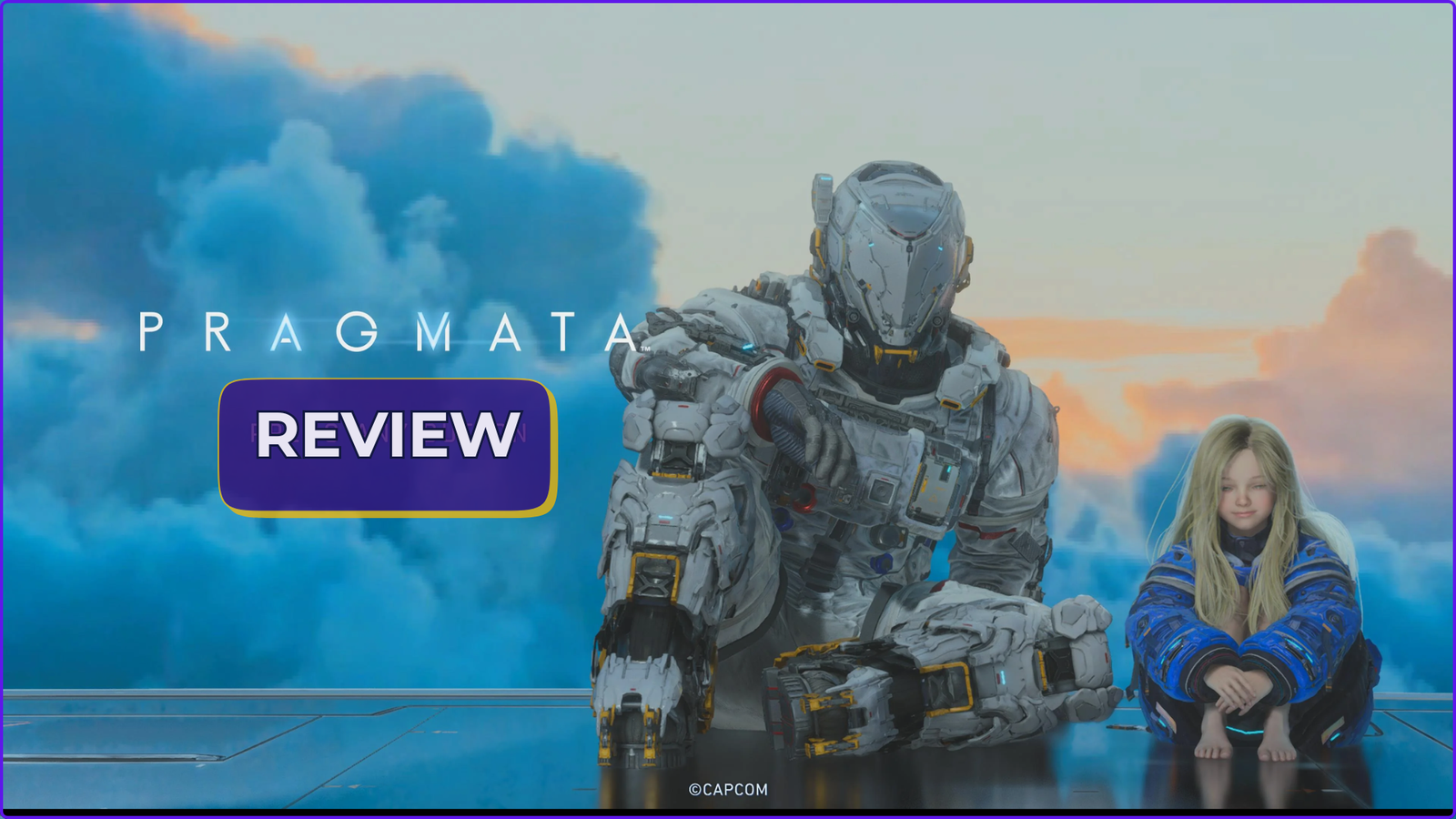
Our Pragmata review confirms that Capcom’s latest sci-fi release sets a clear benchmark for mechanical depth, heavily echoing the deliberate physics and weight of the original Lost Planet.
Performance testing on Nobara Linux reveals an exceptionally optimized engine that pairs a compelling character dynamic with experimental combat systems. Instead of relying on cinematic hand-holding, the game prioritizes tactical weapon attrition to deliver a pure, systems-driven action experience.
Release Date
April 17, 2026
Genre
Action, Puzzle
Rating
Teen
Price
$59.99 (Standard)
$69.99 (Deluxe)
Proton
Experimental
Completed on
Linux (Nobara) | Normal
Time
HLTB 15½ Hours (Main + Sides) | My Clear Time: 11hrs 56min
PRAGMATA Background
Pragmata was originally unveiled on June 11, 2020, during the PlayStation 5 reveal event. The game launched on April 17, 2026, for PC, PlayStation 5, and Xbox Series X/S, with the Nintendo Switch 2 version following shortly after on April 24, 2026.
In a recent interview with Korean media outlet ThisIsGame, translated by AUTOMATON detailing the development process, director Yonghee Cho and producer Naoto Oyama discussed the challenge of crafting a narrative within the science-fiction genre. To balance Capcom’s accessibility-focused approach, the team brought on Macross creator Shoji Kawamori to supervise the worldbuilding. Oyama noted that while the team aimed for an approachable direction to avoid alienating players with overly complex concepts, Kawamori’s review added surprising elements to the setting.
The narrative choice avoids dense lore requirements in the main path, choosing instead to deliver deep science-fiction background elements through environmental files and holograms. Cho cited the 2013 film Oblivion and Yukito Kishiro’s manga Battle Angel Alita as personal genre favorites that helped shape his perspective during production, focusing the core story framework directly on the protagonists, Hugh and Diana.
The development team for PRAGMATA includes:
- Haruo Murata (Scenario Writer)
- Misdaventures of Tron Bonne, Resident Evil 4 (2005) – Resident Evil 5, Dragon’s Dogma I – II
- Yonghee Cho (Director)
- Metal Gear Rising: Revengeance, Nier:Automata, Resident Evil 3 (2020)
- Shoji Kawamori (Narrative Director)
- Macross, Tech Romancer, Omega Boost
- Yasuhiro Anpo (General Director)
- Resident Evil 5, E.X. Troopers, Resident Evil 2 (2019) – Resident Evil 4 (2023)
- Kenji Irie (Lead Character Artist)
- Vanquish, Star Fox Zero, Resident Evil: Village
- Yasumasa Kitagawa (Music)
- E.X. Troopers, Street Fighter 6, Tatsunoko vs Capcom
- Hirokazu Nishida (Audio Director)
- Sengoku Basara 3: Utage, Devil May Cry 4: Special Edition, Monster Hunter: Stories
- Ryota Takei (Game Audio Mixer)
- Asura’s Wrath, Resident Evil 4 (2023), Monster Hunter: Stories 3
- Masachika Kawata (Producer)
- Resident Evil 4 (2005) – Requiem, Mega Man Battle Network: Legacy Collection Vol. 1 – Vol. 2, Project X Zone – Project X Zone 2
- Jun Takeuchi (Executive Producer)
- Resident Evil 5, Resident Evil 7 – Requiem, Lost Planet – Lost Planet 2, Kunitsu-Gami: Path of the Goddess
PRAGMATA Experience
I have been tracking Pragmata since its original announcement in 2020, making it the Capcom project I have anticipated most over the last six years. My interest stems directly from the development pedigree. The team includes veterans behind E.X. Troopers, Metal Gear Rising, and Lost Planet, an unfortunate casualty among Capcom IPs that remains a personal favorite.
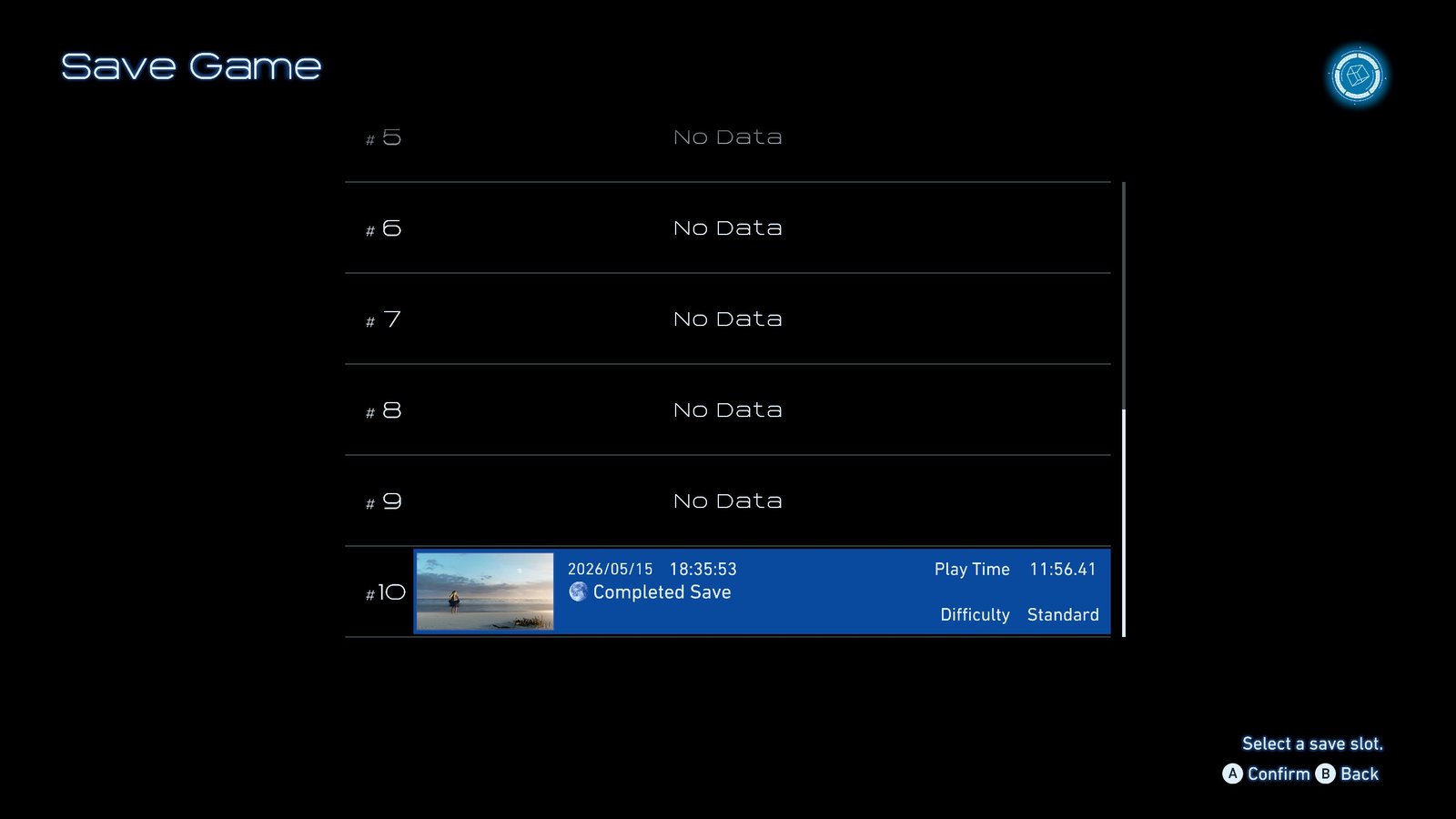
With the primary mission sequence completed, we can finally step outside and look toward the horizon.
The inclusion of talent from Tatsunoko vs. Capcom, a title that cemented my appreciation for Casshern, alongside contributors to Asura’s Wrath, which remains my favorite CyberConnect2 project to date, set a high bar. With such a distinct collective assembly, I went into Pragmata with exceptionally high expectations, trusting this team to deliver a profound experience.
PRAGMATA Impressions
Introduction
Stepping into the lunar setting of Pragmata immediately establishes a cold, clinical atmosphere. The game places you in a heavy, high-tech astronaut suit and tasks you with protecting Diana, a young girl with mysterious holographic abilities. The opening hours do a great job of teaching you the ropes of your equipment while throwing you straight into hostile robotic encounters. You are balancing offensive gunplay with the constant need to shield your companion, creating a very methodical approach to combat.
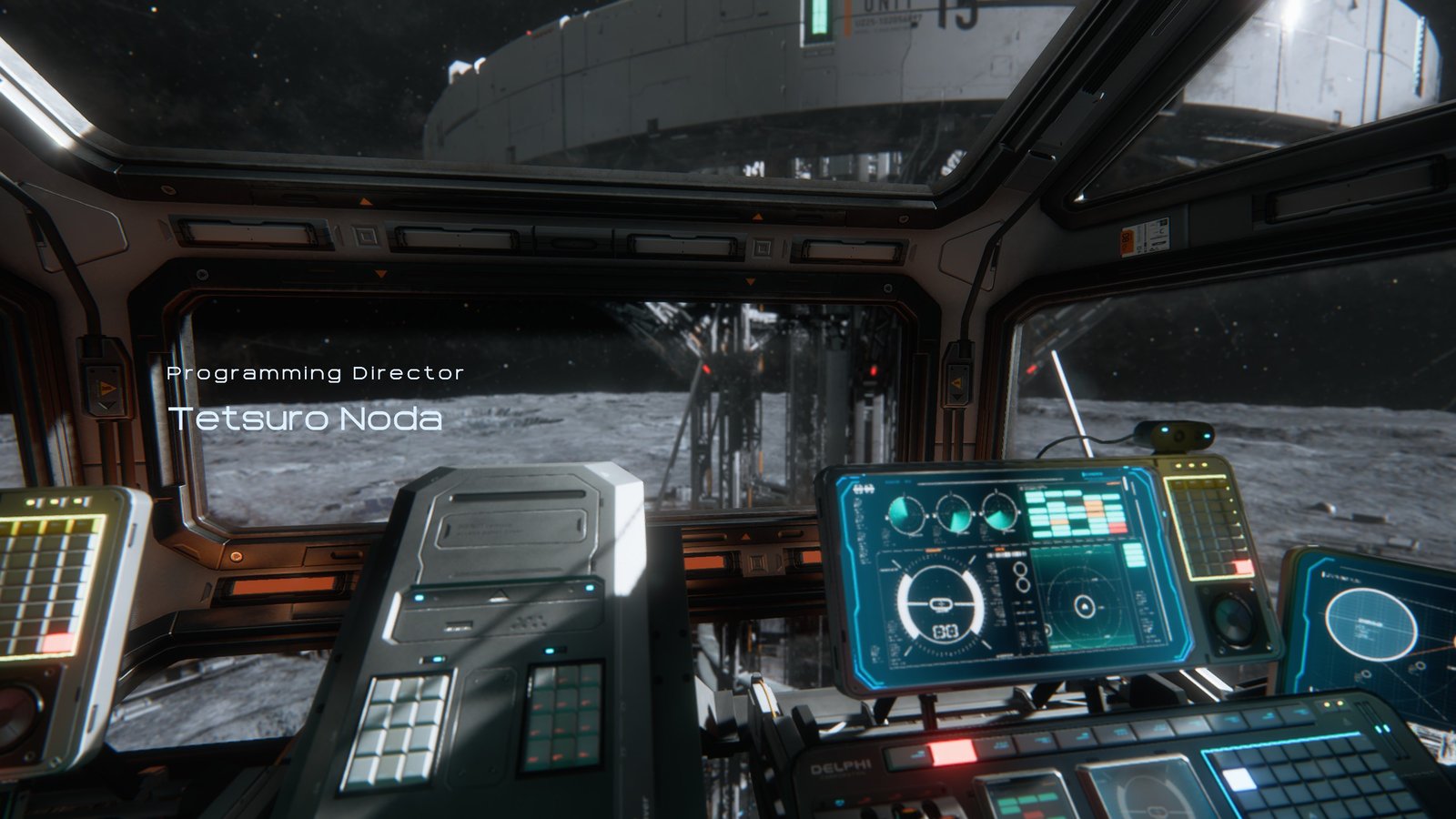
Instruments show stable atmospheric pressure, but the automated entry grid is entirely silent.
Gameplay & Mechanics
- Over-the-Shoulder Gunplay: The core combat relies on tight, third-person aiming. Precision shots are required to break robotic armor plating and expose vulnerable internal components.
- Evasion & Mobility: The heavy spacesuit allows for quick, thruster-assisted dodges to avoid incoming attacks and reposition during firefights. A standard recharge mechanic limits these maneuvers to prevent evasion spam, though progression allows you to upgrade the total number of available charges before depletion.
- Environmental Scanning: A visor mode used to analyze the surroundings, track enemy patrol routes, and locate hidden supply caches.
- Armor Disengagement: Enemy automated units possess heavy plating that reduces raw firearm damage. Completing a hack forcibly opens these mechanical shell defenses to expose critical, high-damage weak points. Node upgrades let you increase breach potency and alter the primary objective of the hack. These configurations range from Assault paths that maximize bonus damage output, Heat paths that maximize enemy stun duration, and various specialized hybrid combinations.
- Action Partitioning: Combat requires you to split focus between positioning Hugh defensively against aggressive mechanical waves and executing real-time digital breaches to neutralize threats. This mechanical split maintains a calculated level of anxiety, heightening immersion during intense defensive encounters.
Story & Writing
The narrative architecture of Pragmata focuses entirely on the evolving relationship between Hugh and Diana. Functioning as structural foils, the duo starts their journey with a palpable indifference toward one another. As the mechanical hazards of the lunar facility escalate, the shared hardships force a gradual transition from detached survival partners to a deeply synchronized unit.
Narrative Subtext Warning
Pragmata relies heavily on mechanical and environmental subtext. The narrative completely avoids over-explaining its universe, requiring you to actively analyze the surrounding environmental cues to fully grasp the broader systemic stakes.
The execution of the storytelling mirrors Capcom’s classic Resident Evil framework. Main campaign cutscenes establish the foundational plot transitions and immediate operational objectives, but the true substance of the worldbuilding relies on player initiative.
The core lore is distributed across text files, terminal records, and environmental notes scattered throughout the linear sectors. Piecing these disparate logs together lets you reconstruct the history of the facility and the exact timeline of the automated network collapse, rewarding methodical exploration with critical narrative context.
Art & Audio
The art style is an absolute visual treat. Previously, RE Engine had some issues with pure blacks having a washed, almost grey look to them. In my playthrough, I can say my OLED monitor sees them with far less of a gray hue or tinge than the Resident Evil games on the engine.
A lot of white is used for the background design, creating an almost sterile feeling to the world, while the robots have a deliberate level of perfection in their design. An uncanny valley feeling surrounds them, walking a line between comfort and unease that works well with the white and silver steel aesthetics. Sharp variances in light make areas pop with neon cyan, greens, aqua blues, and laser reds.
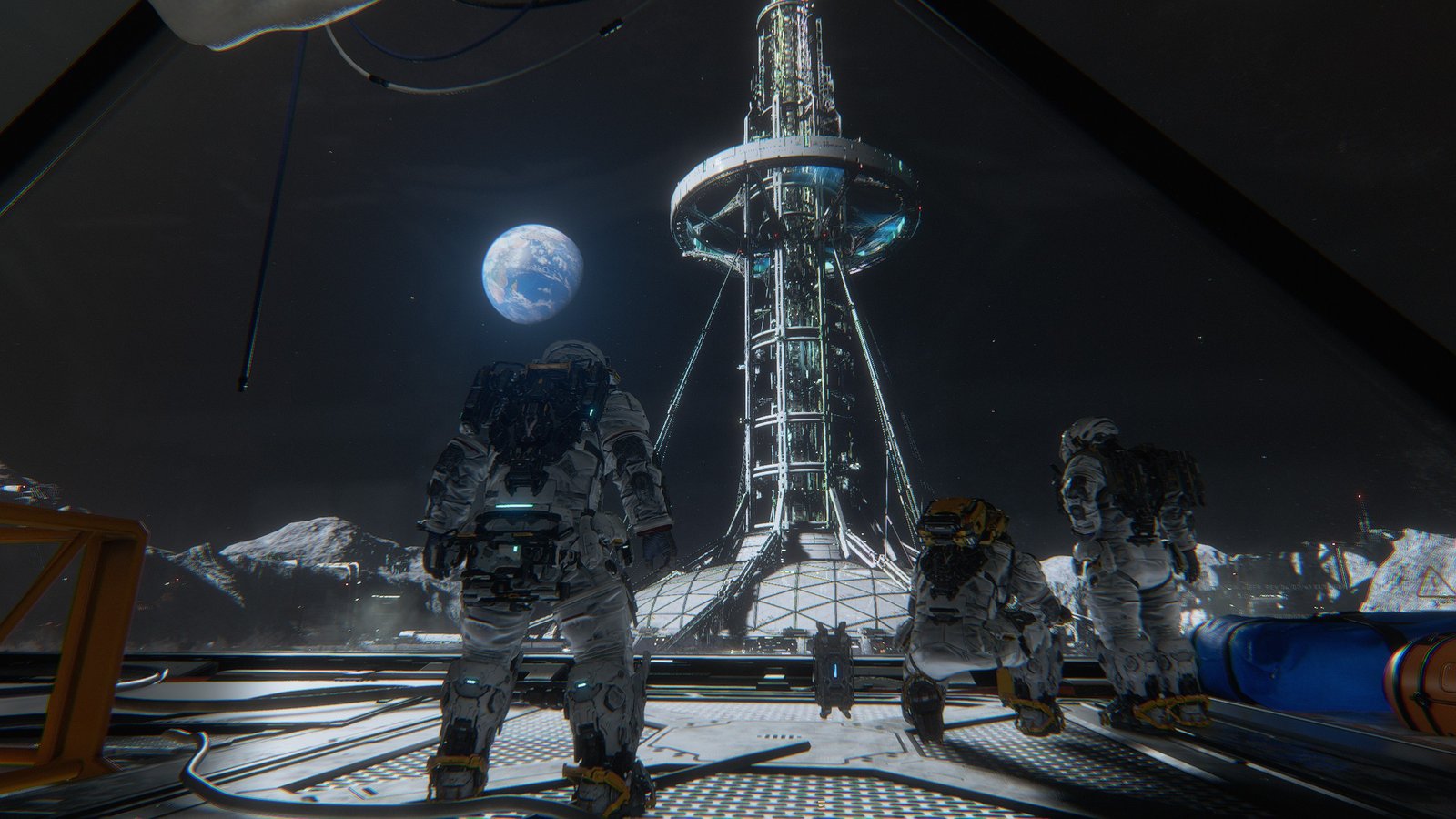
The distance back to safety grows wider with every sector that locks down.
This uncanny aesthetic extends heavily into the simulation design of the New York sector. The developers crafted a highly deliberate, eerie environment to mimic a sterile, machine-constructed replication of the city. Ironically, this artistic direction proved a bit too convincing for some media outlets. Several reactionary reports surfaced claiming Capcom utilized generative AI tools to build the stage assets, completely misinterpreting a brilliant creative choice for actual automated asset generation.
Calling out these developer choices as lazy automation highlights a distinct lack of technical understanding regarding how the RE Engine handles environmental geometry. The unsettling, artificial layout of the city is entirely intentional, serving the narrative themes perfectly while showcasing the meticulous detail human environmental artists poured into the presentation.
The sound design lends itself well to the game. The feedback from every trigger pull is satisfying, and each gunshot sounds distinct with enough kick while avoiding hitting any registers that would be piercingly loud. Kitagawa on composition duties with Hirokazu Nishida’s direction has made for one of the most enjoyable soundtracks for a Capcom game since E.X. Troopers. Pragmata has an impressive variety of music, and the relaxing main menu music is a beautiful, calming piece that I can see myself and many others putting on a playlist.
Standout tracks:
Thoughts
A minimal, ambient piece utilizing soft synth pads and clean piano layers. It scores the main menu interface, delivering a meditative calm that provides a sharp tonal juxtaposition to the high-stress security breaches found during active gameplay.
Shelter
A steady, rhythmic electronic track featuring low-profile percussion and muted digital chords. This loops inside the central upgrade hub, establishing a clinical sanctuary atmosphere that lets you focus entirely on hardware calibration and module printing.
Terra Dome
An up-tempo, aggressive composition that mixes industrial electronic beats with frantic synthetic string motifs. This arrangement drives the kinetic momentum during large-scale automated defense waves, perfectly amplifying the tension of the real-time partitioning loop.
Unique Features & Mechanics
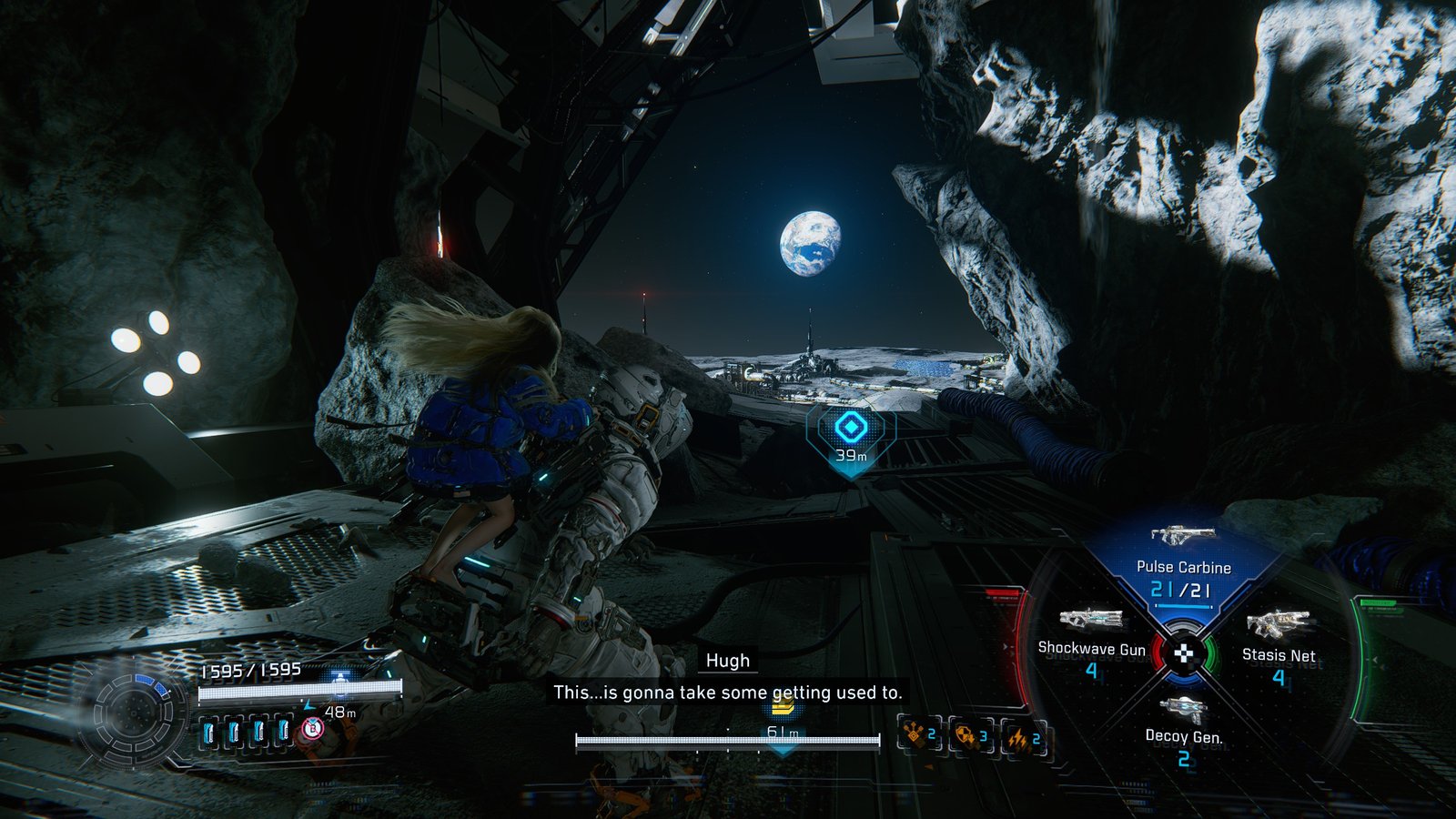
Keep the specialized weapon grid active so we can react instantly to any automated perimeter threats.
Zero-Gravity Traversal
Specific zones strip away gravity, requiring you to navigate using suit thrusters and magnetic boots to engage enemies in 360-degree combat. These sequences function similarly to mechanical logic puzzles, teaching you exactly when to feather or cut the thrusters to maximize drifting distance and avoid overshooting structural targets.
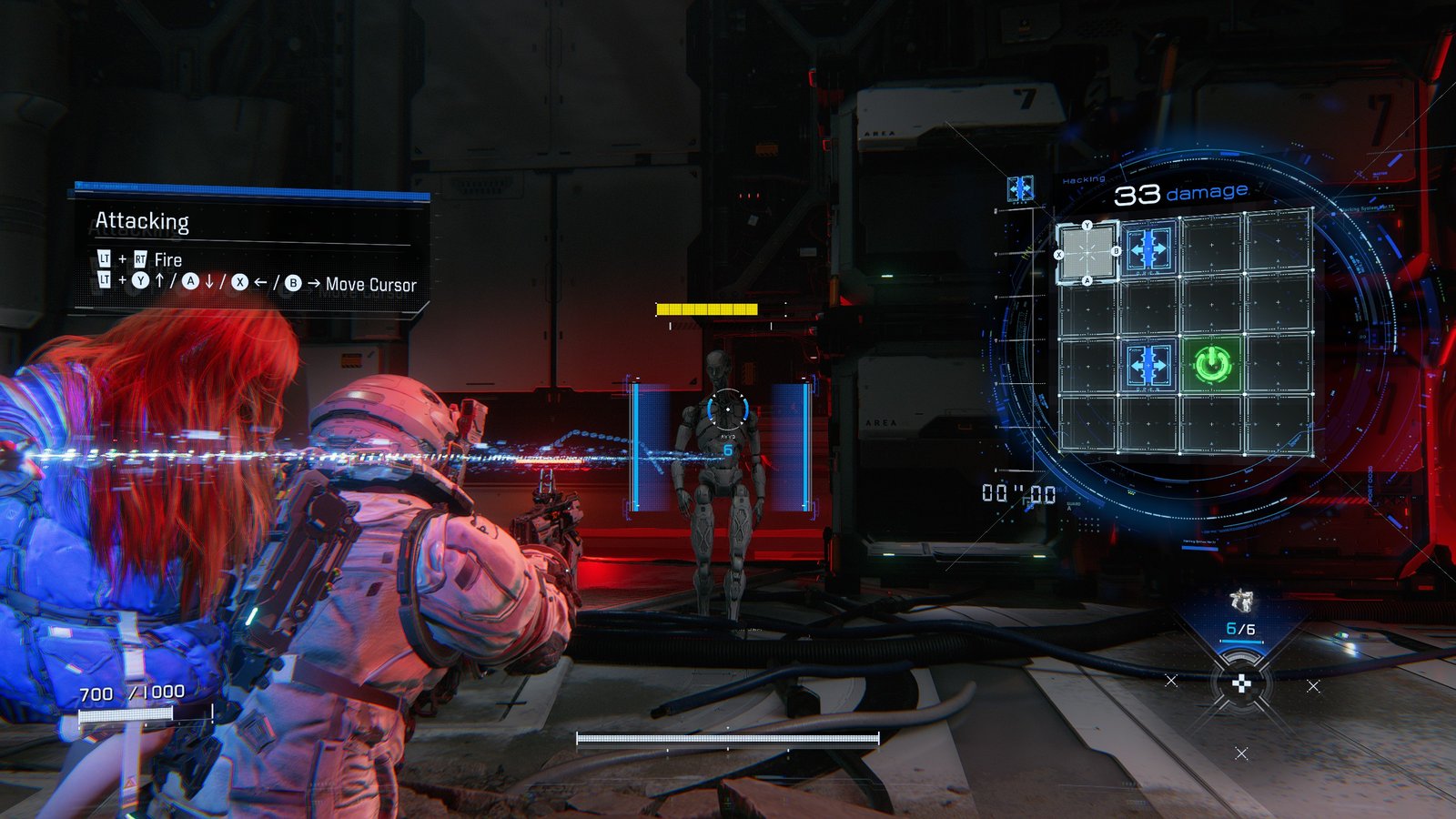
Keep the cursor steady on the matrix node while I draw their defensive fire.
Real-Time Hacking
Engaging the aim button deploys an active grid puzzle where you navigate a cursor to a goal node while under fire, modifying damage potential and status effects based on the path chosen. This sequence serves as the primary combat loop required to expose enemy vulnerabilities so Hugh can deal damage, mechanically anchoring the mutualistic partnership between the two protagonists directly into the core gameplay.
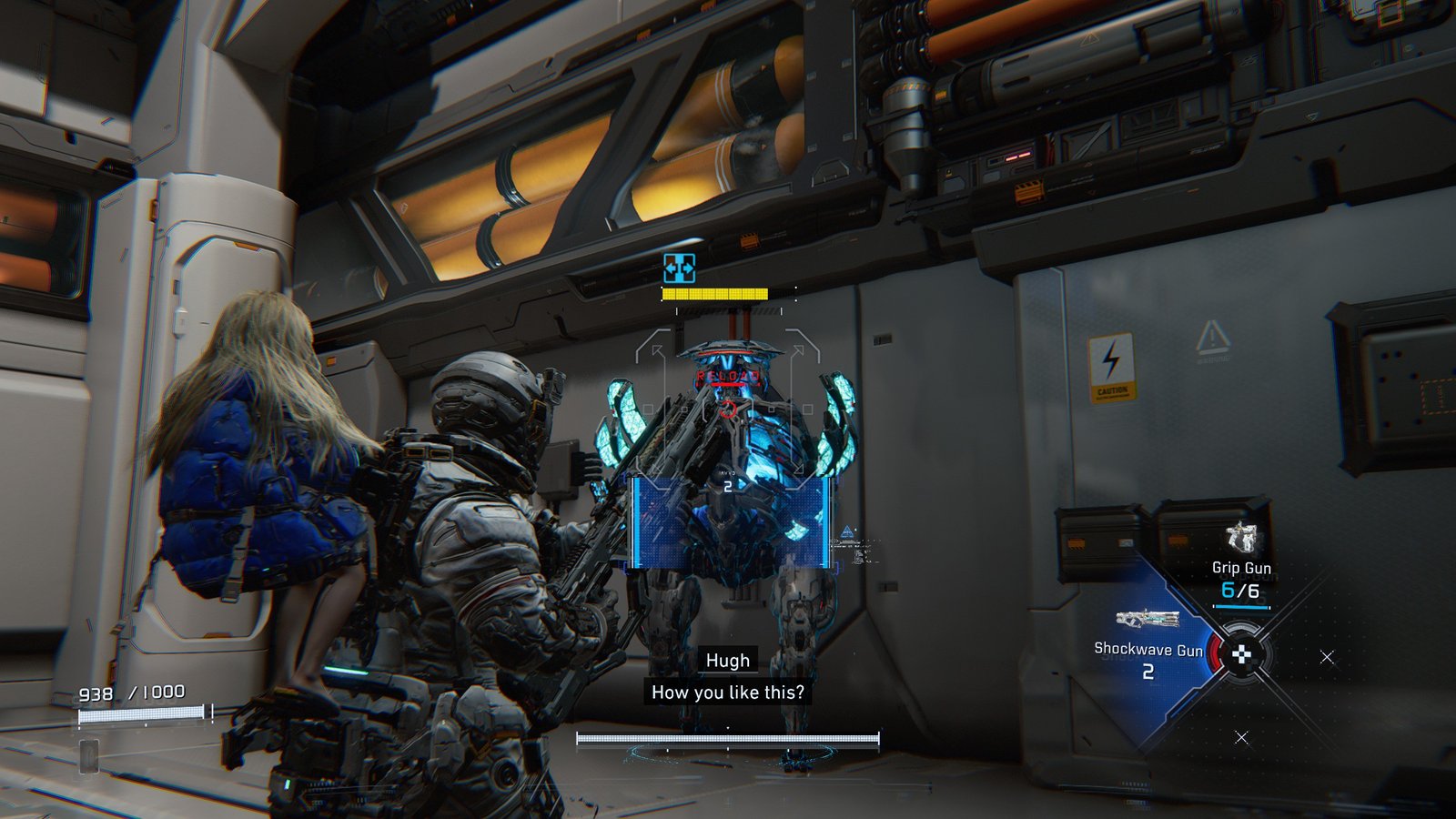
We must monitor our remaining munitions closely before this specialized firearm fractures permanently.
Weapon Attrition
Hugh handles diverse specialized firearms like stasis guns and beam rifles. These powerful weapons break permanently once their finite ammunition pools empty, leaving only a low-damage default rifle that gradually regenerates ammo. This adds a critical layer of strategic resource management, encouraging you to conserve high-tier firearms for absolute necessities rather than deploying them liberally, mirroring the strict item discipline required for the Requiem weapon in Resident Evil 9.
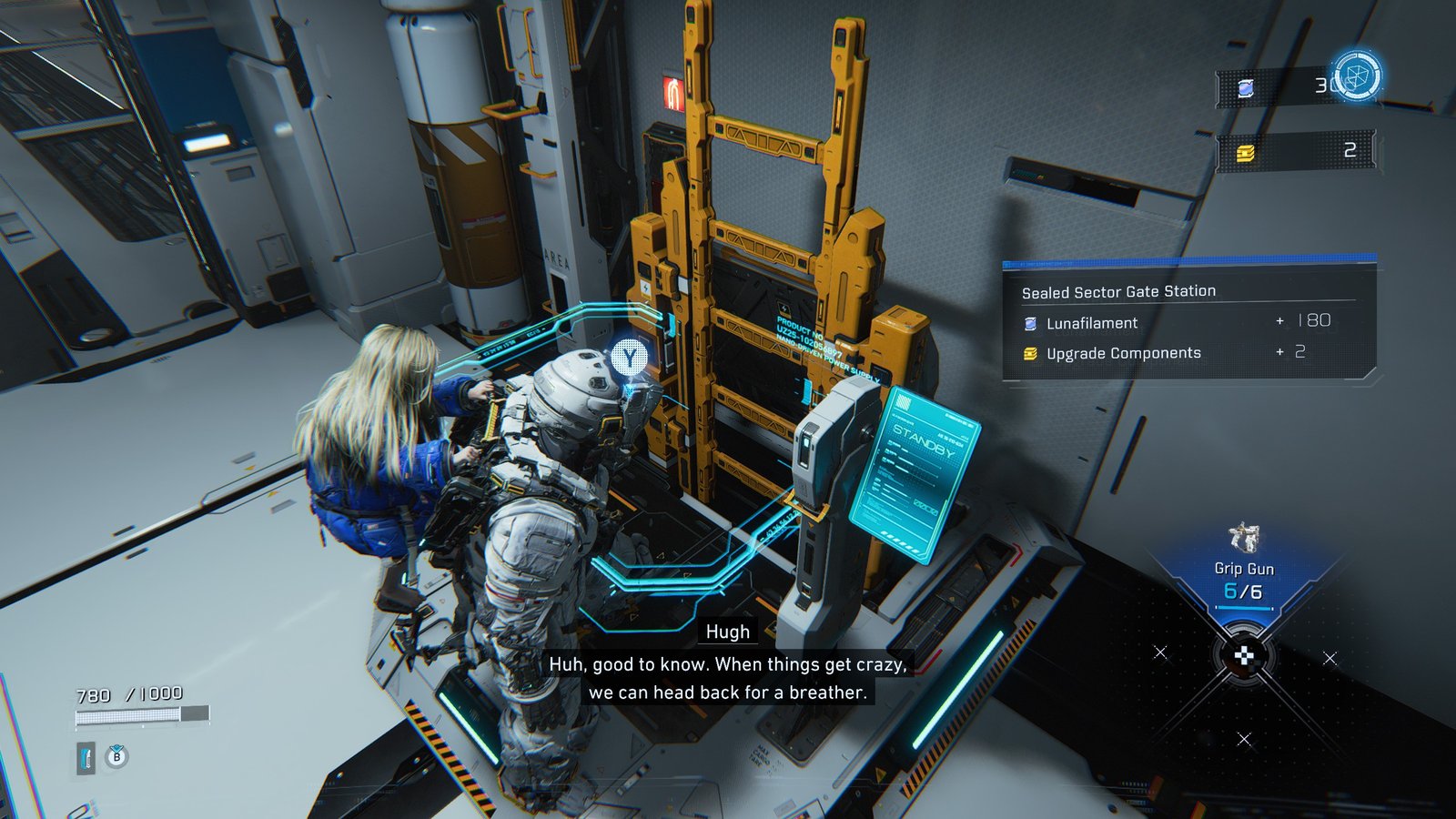
If the defensive waves overwhelm us ahead, we can use this hatch to fall back to safety.
Escape Hatches
Terminal checkpoints spread throughout the linear facility that save your progress. Activating a hatch allows safe transit back to the central hub but resets any unsecure temporary modules in your current loadout. This system functions identically to the cube checkpoints in Stranger of Paradise or the classic bonfire mechanic; utilizing a hatch secures permanent data updates but forces all regional enemies to respawn upon your return.
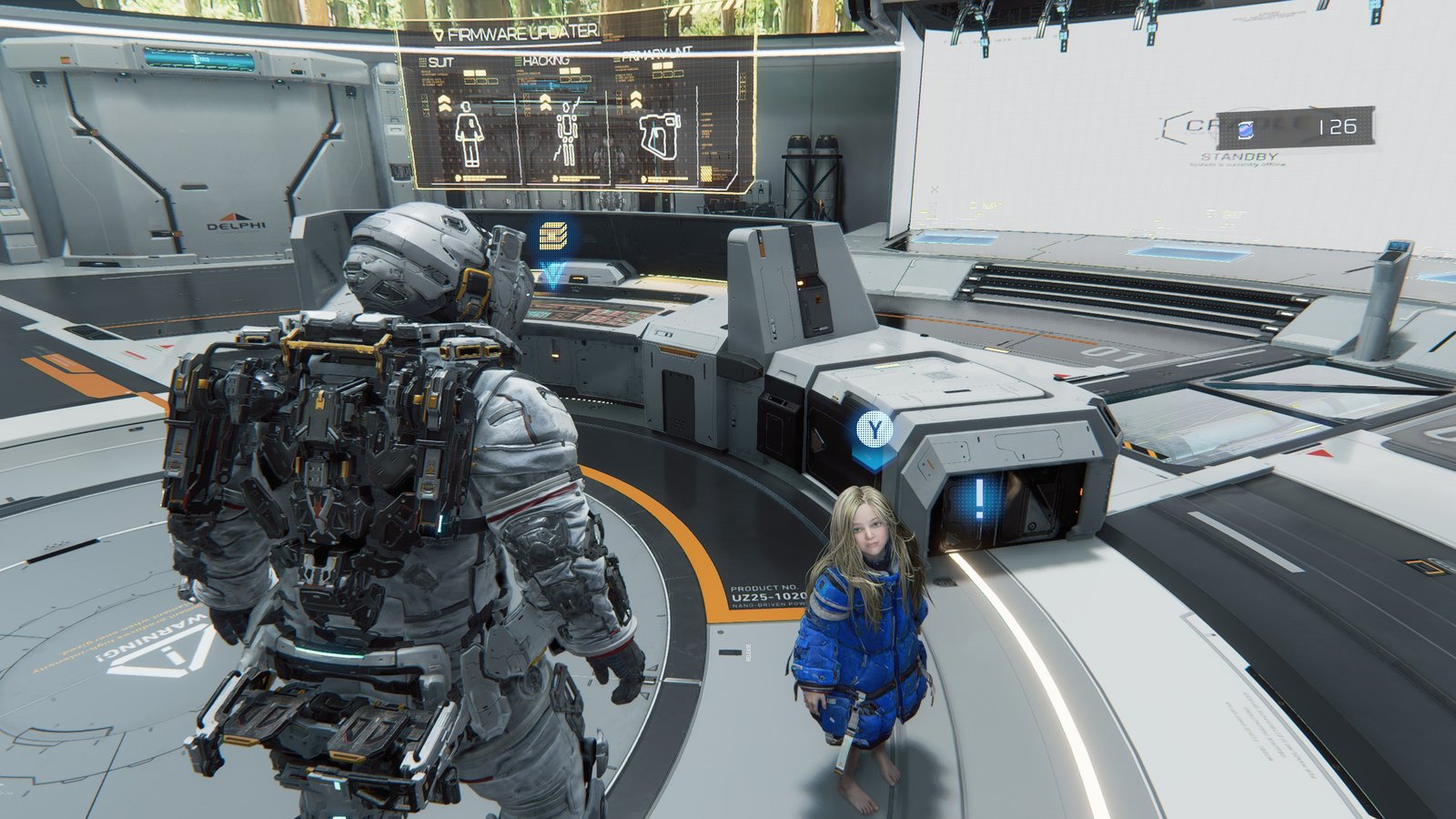
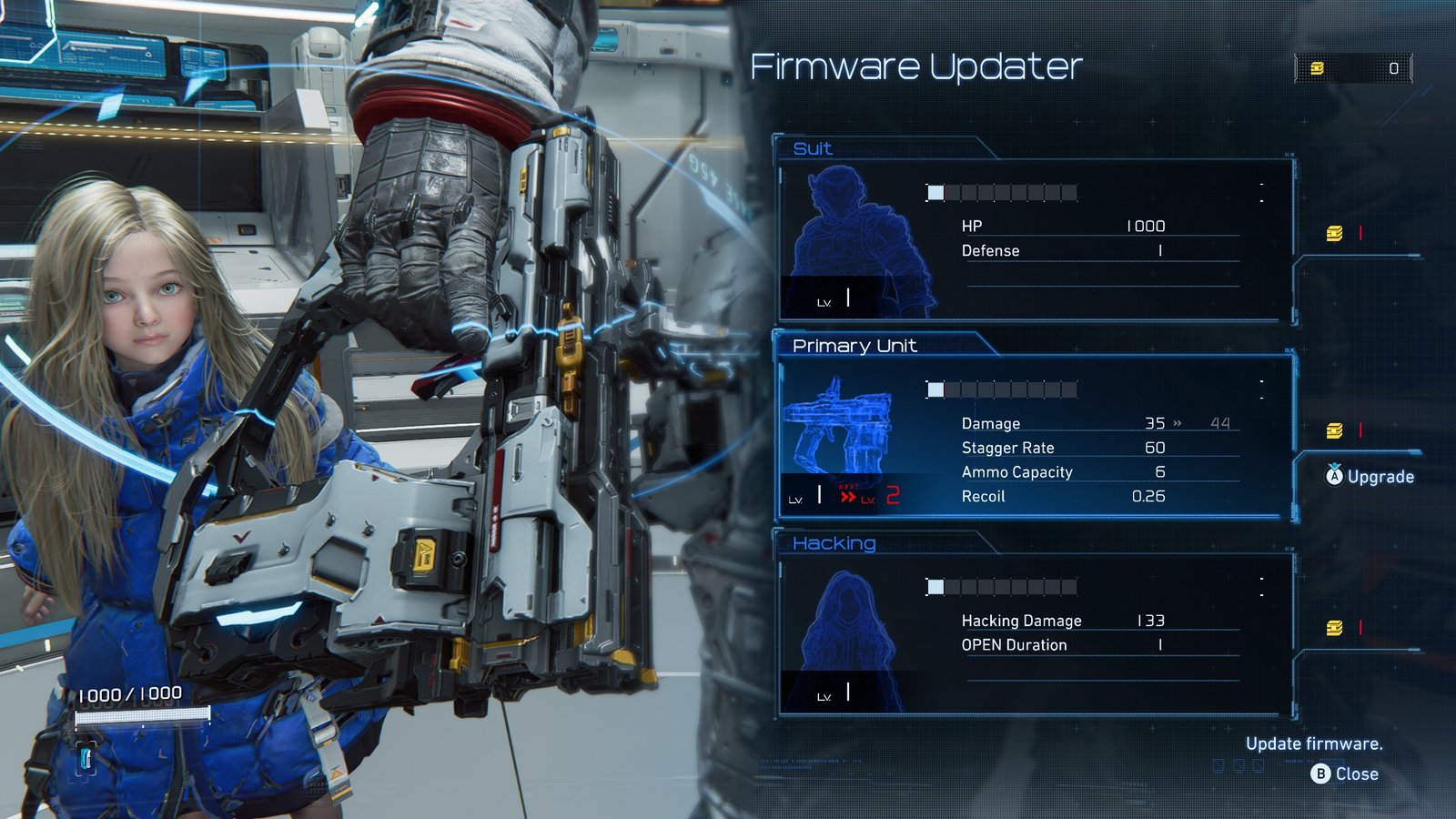
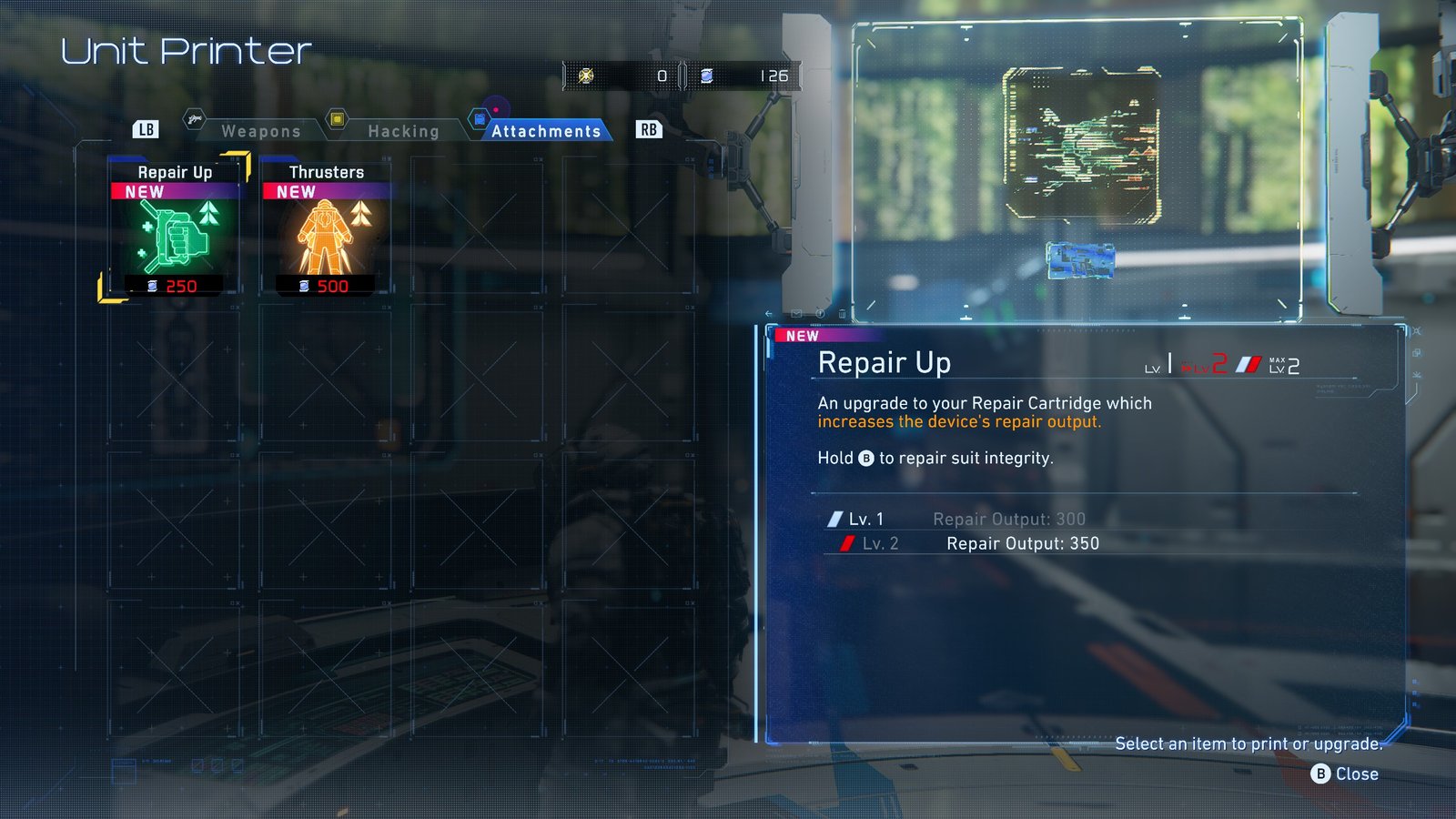
The Shelter Hub
A safe staging ground where you spend collected components at specialized terminals. This zone handles permanent modifications to suit defense, primary weapon handling, and companion hacking efficiency. Progression unlocks training simulation data featuring combat trials reminiscent of Metal Gear Solid 2′s VR Missions. Completing these challenges grants cabin tokens for unique rewards, filament currency, and upgrade cubes to directly improve Hugh, Diana, and your overall loadout power.
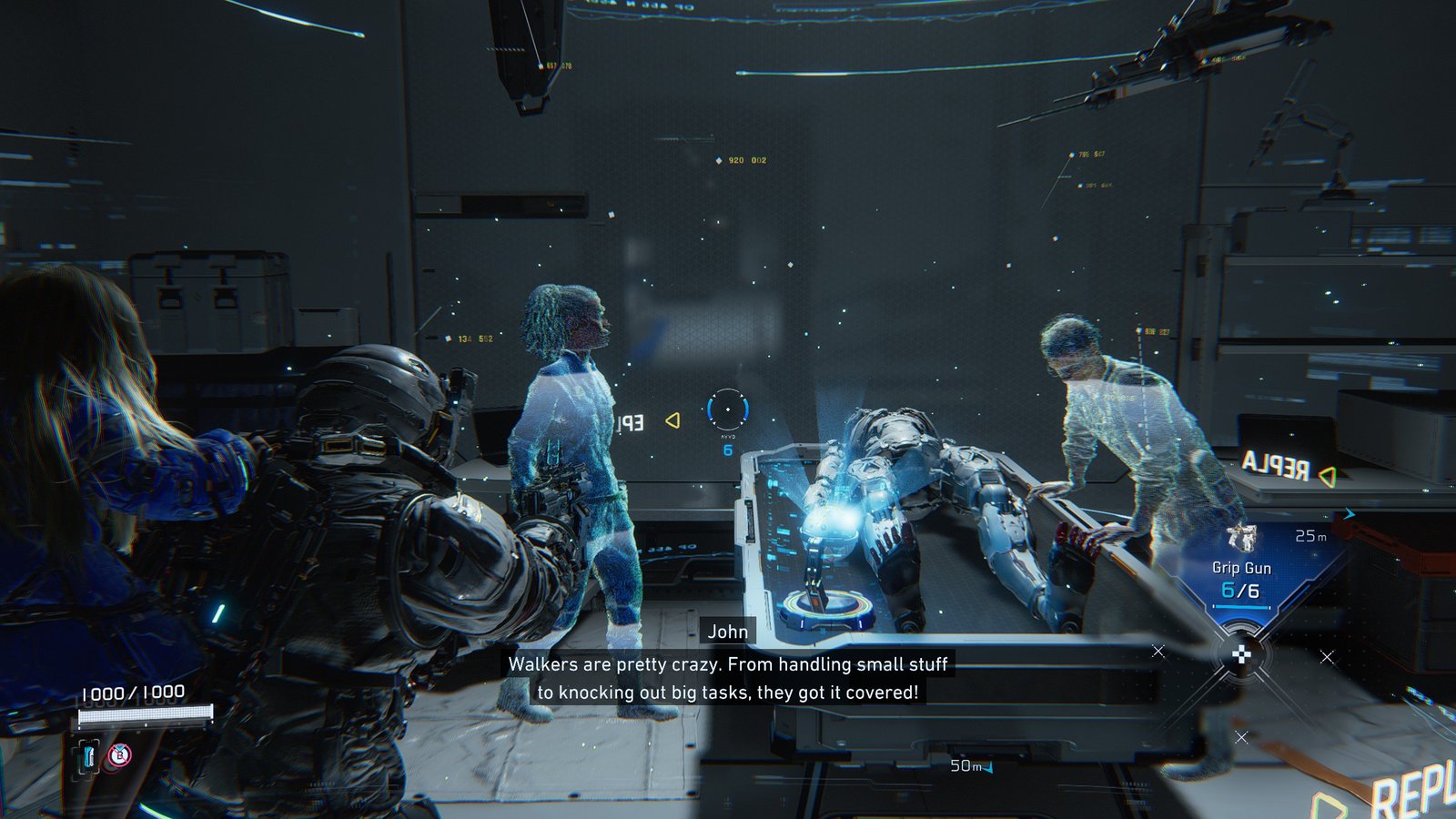
These recordings offer a clear look into the station’s history before the security network went dark.
Holographic Lore Tracking
A dedicated narrative delivery system where optional worldbuilding details and technical logs are accessed via interactive light projections, preventing narrative clutter in the main campaign path. While the primary logs remain highly visible to help general players easily grasp the baseline plot, specialized entries are tucked away off the beaten path, occasionally hidden behind invisible structural boundaries that require specific late-game interactions to bypass.
Seiyuu Performances
The seiyuu performances are outstanding; Nao Tōyama and Miou Tanaka’s dynamic forms the emotional core of the experience. Diana’s childlike curiosity, altruism, and wonder regarding her surroundings act as a clear foil to Hugh’s detached, mission-first disposition. Their interaction constantly drives the narrative forward, utilizing ambient incidental dialogue to develop their bond naturally outside of primary story milestones.
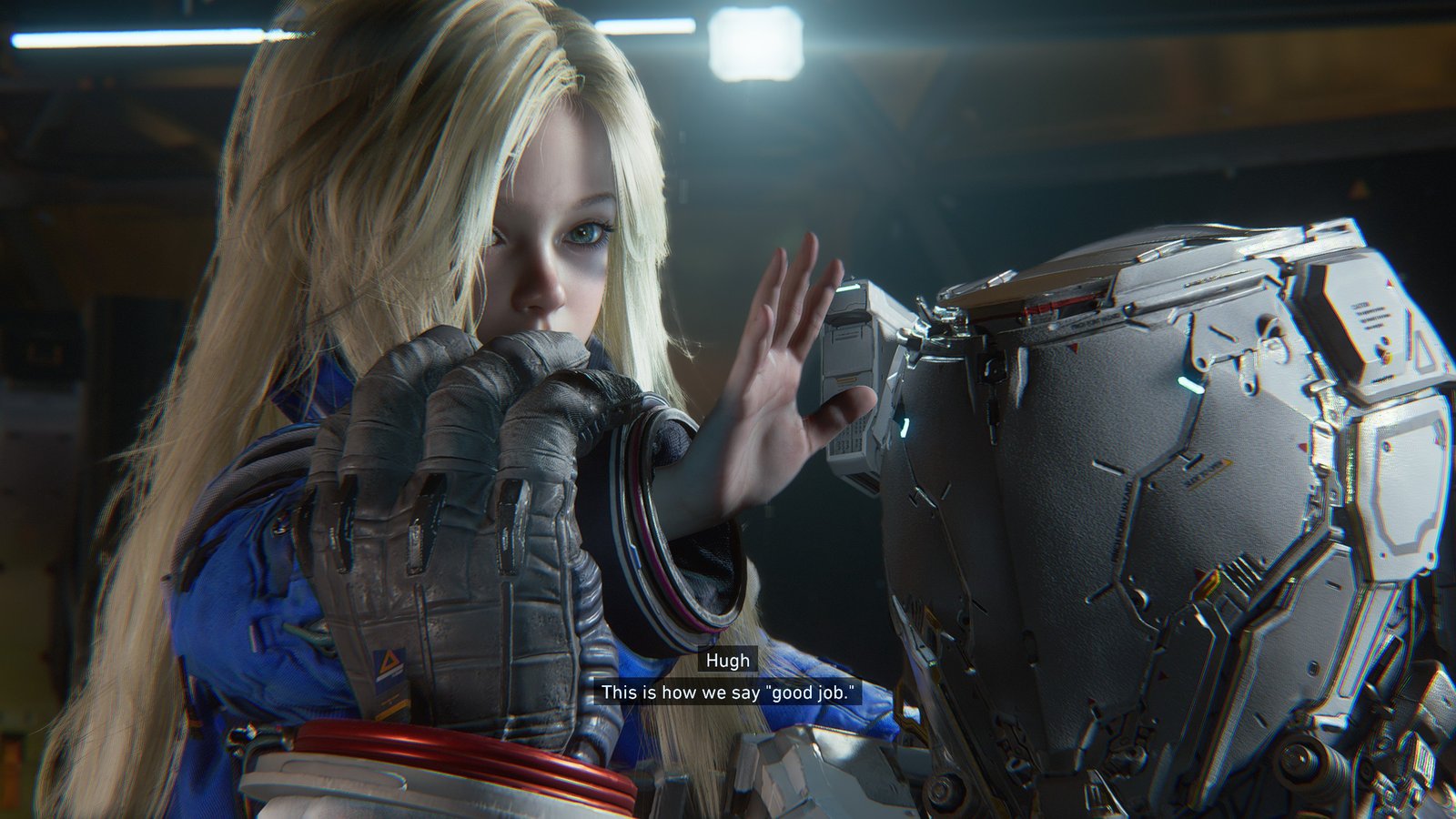
Celebrating a successful data breach keeps our focus sharp before the next mechanical wave activates.
- Miou Tanaka (Hugh): Yosuke Tendo (Yakuza: Like a Dragon), Kyohei Hamura (Judgment), Kojiro Murdock (Gundam SEED Freedom)
- Nao Tōyama (Diana): Aoi Sakamoto (Sakamoto Days), Vatista (Under Night In-Birth), Lelei La Lalena (Gate: Thus the JSDF Fought There)
- Haruna Mikawa (Eight): Aoi (Eiyuden Chronicle), Rinrada (Bâan: The Boundary of Adulthood), Setsuna Ashikaga (Medalist)
- Haruo Yamagishi (IDUS): Umber Eyes (Resident Evil), Muneo Iseri (Girls Band Cry), Heidern (King of Fighters XIV)
PRAGMATA Linux Performance
Pragmata runs exceptionally well on Linux. I did not have to tweak anything outside of Steam to get it to run properly. It ran smoothly on the default option I have, which is Proton Experimental. There was one small instance of traversal stutter going into the first shelter area, though it has not happened since.
Testing during the chaotic post-game boss encounter in the New York sector showed an average frame rate of 129 FPS, with the 1% lows dipping to 83 FPS during heavy particle sequences. The 0.1% minimums held at 44 FPS under maximum load. These results were achieved without using any form of upscaling, frame generation, path tracing, or ray tracing. Pragmata was played on High 1440p borderless with a few small visual tweaks off like motion blur (I disable it in every game I play).
PRAGMATA Review Verdict
Pragmata is one of the most polished and experimental new properties Capcom has made in a long time. While pre-release rumors claimed this was a secret Mega Man game, it functions much more like a spiritual successor to the original Lost Planet. The movement weight and Hugh’s running animation feel pulled straight from that first game, capturing a classic Capcom style where mechanical variety and high production values fit perfectly.
The tactical tension from weapon attrition and real-time hacking stays engaging all the way to the credits. The weapon selection avoids a catch-all solution. Every robot type requires a specific tool, but the game never forces you into a single mandatory loadout. Because any build remains viable with good play, it encourages genuine experimentation to find what synergizes with your playstyle. This design style represents the highest point a mechanics-driven action game can hit.
The story delivers a total payoff if you invest time into the world. The plot is always moving, especially during traversal when Hugh and Diana chat outside of battle to color in their backgrounds and strengthen their bond. The lore relies heavily on subtext, metaphors, and scattered data files. Players who dislike or skip over nuance might find the setup sparse, but piecing the text logs together reveals a highly rewarding sci-fi narrative.
Performance on Nobara Linux was rock solid. Heavy combat sequences inside the New York sector averaged 129 FPS, while the 1% lows dipped to 83 FPS during intense alpha-effect allocation. Frame pacing remained excellent, with the average frame time holding at a remarkably consistent 7.8 ms. The black levels on an OLED panel remained excellent throughout the entire playthrough, showing deep blacks instead of the washed-out gray tones seen in previous RE Engine titles.
Capcom has delivered a package in its new IP that’s as respectful to player agency as it is emotionally resonant, while throwing its hat in the ring for the best protagonist dynamic in modern gaming.
PRAGMATA TLDR
Pragmata (Linux)
Pragmata stands as one of the best new Capcom IPs since Lost Planet, anchoring its mechanical journey in the outstanding Hugh and Diana dynamic.
With great optimization running alongside deep, experimental gunplay, this release delivers a premier technical action experience.
Tested On
CPU: Ryzen 7 5900X | GPU: AMD RX 9070XT 16GB | RAM: 64GB DDR4 | Storage: Crucial P5 Plus NVMe SSD
OS: Nobara Linux | Resolution: 1440p | Settings: High/Custom | Framerate: Variable
PRAGMATA Review References
Interviews
- P, Đ. (2026, March 10). Pragmata’s sci-fi worldbuilding was supervised by Macross creator Shoji Kawamori to balance out Capcom’s “accessibility-focused” approach to the genre, producer says. AUTOMATON WEST.
[Live | Archive]
Music