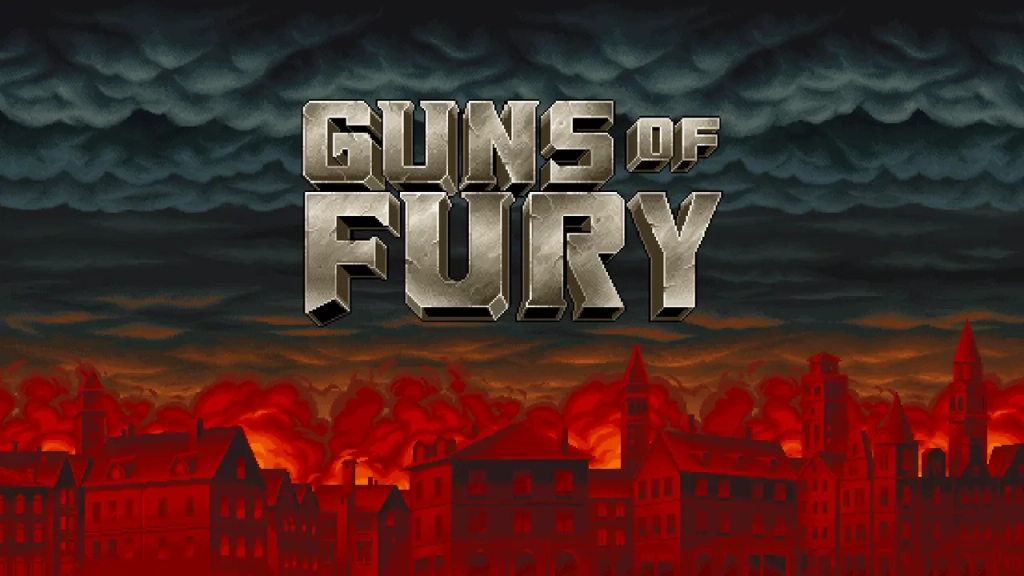
Guns of Fury delivers a relentless blend of run-and-gun action and deep exploration that rewards both practice and curiosity.
By focusing on precise movement and an expansive upgrade system, the developers have crafted a challenging and polished experience that stands out as a significant entry for fans of the genre.
| Title | Guns of Fury |
| Released | Feb 13, 2025 |
| Developer | Gelato Games |
| Publisher | Gelato Games |
| Platform |    |
| Genre | Metroidvania, Run & Gun, Indie |
| Rating | T |
| Pricing | $14.99 |
| Proton | Native |
Completed on PC
HowLongToBeat Time: 10½ Hours (Main + Sides) | My Clear Time: 8 Hours (Main + Sides)
Guns of Fury Background
Guns of Fury is a Metroidvania action platformer developed by Gelato Games Ltd, a small indie studio founded in 2017. The team, composed of brothers John and Lefteris Christodoulatos, previously created Goblin Sword, a popular 2D action platformer that launched on iOS in 2014 and later released on the Nintendo Switch.
Released on February 13, 2025, Guns of Fury expands on their earlier work with a larger, more ambitious scope. The game blends fast-paced run-and-gun combat inspired by Metal Slug with classic Metroidvania exploration and progression, creating a challenging and rewarding experience for fans of both genres.
The development team for Guns of Fury includes:
- John Christodoulatos (Programming)
- John is known for Goblin Sword
- Lefteris Christodoulatos (Graphics)
- Lefteris is known for Goblin Sword
- Dominic Ninmark (Composer)
- Dominic is known for Blazing Chrome, Gravity Circuit
Guns of Fury Experience

Black screen with “The END” in bold red letters.
Going into Guns of Fury, I already had a strong foundation with run-and-gun and Metroidvania titles. I’ve spent plenty of time with Metal Slug 3 and 7, and I’ve finished Metroid Fusion, Super Metroid, and Dread. On the Castlevania side, I’ve played every entry commonly considered part of the Metroidvania subgenre, as well as Symphony of the Night, the game that helped define it.
I also really enjoyed Monster Boy & The Cursed Kingdom, which blended platforming with light exploration and combat. With all that in mind, I came into Guns of Fury with expectations shaped by some of the best in the genre.
Guns of Fury Impressions
Introduction
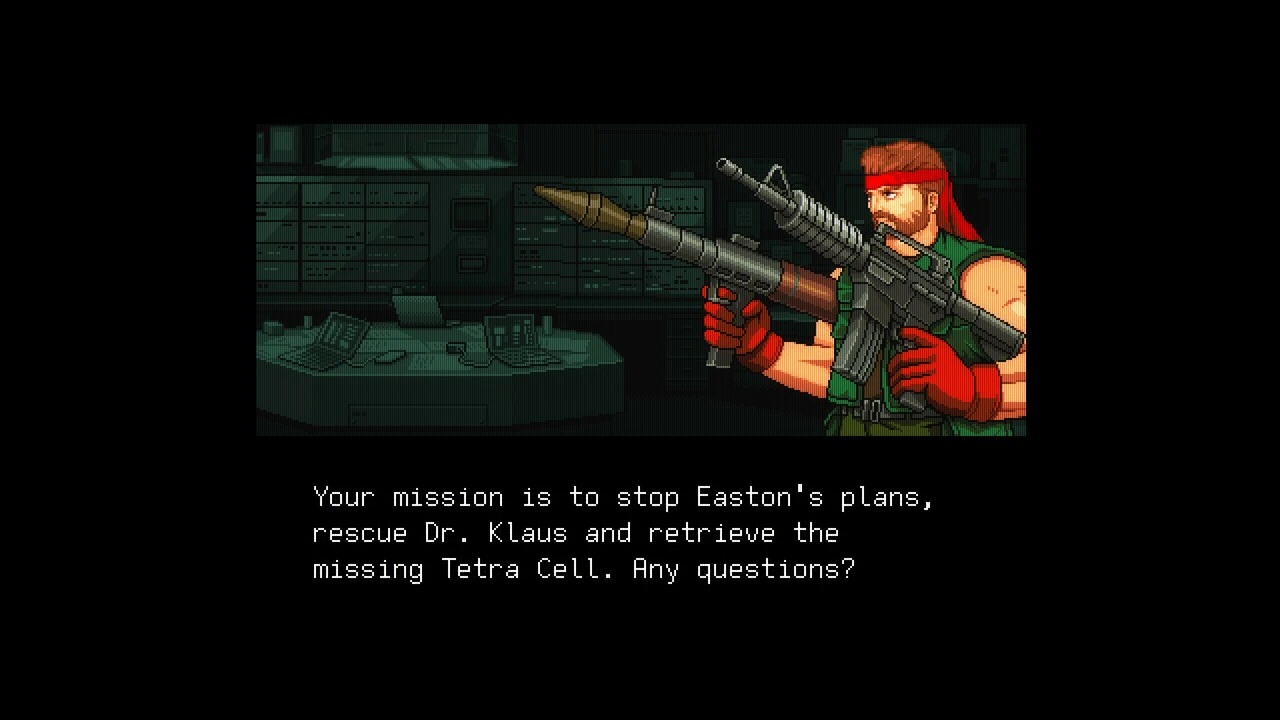
Vincent Fury wields a rifle and RPG-7 as the intro mission briefing appears.
Set in a near-future world on the brink of collapse due to a global energy crisis, Guns of Fury casts you as Vincent Fury, a special operative sent behind enemy lines. When renowned scientist Dr. Klaus unveils a breakthrough energy source known as the Tetra Cell, it offers a glimmer of hope, until he vanishes and his lab goes up in flames. All signs point to Easton Industries, a powerful corporation with its own paramilitary force and a CEO who may be trying to weaponize the discovery.
Your mission: infiltrate their high-security facility, uncover the truth, and stop whatever they’re building before it’s too late. Along the way, you’ll explore an interconnected world, gain new weapons and abilities, and fight your way through Easton’s private army and a lineup of themed executive bosses.
Gameplay and Mechanics
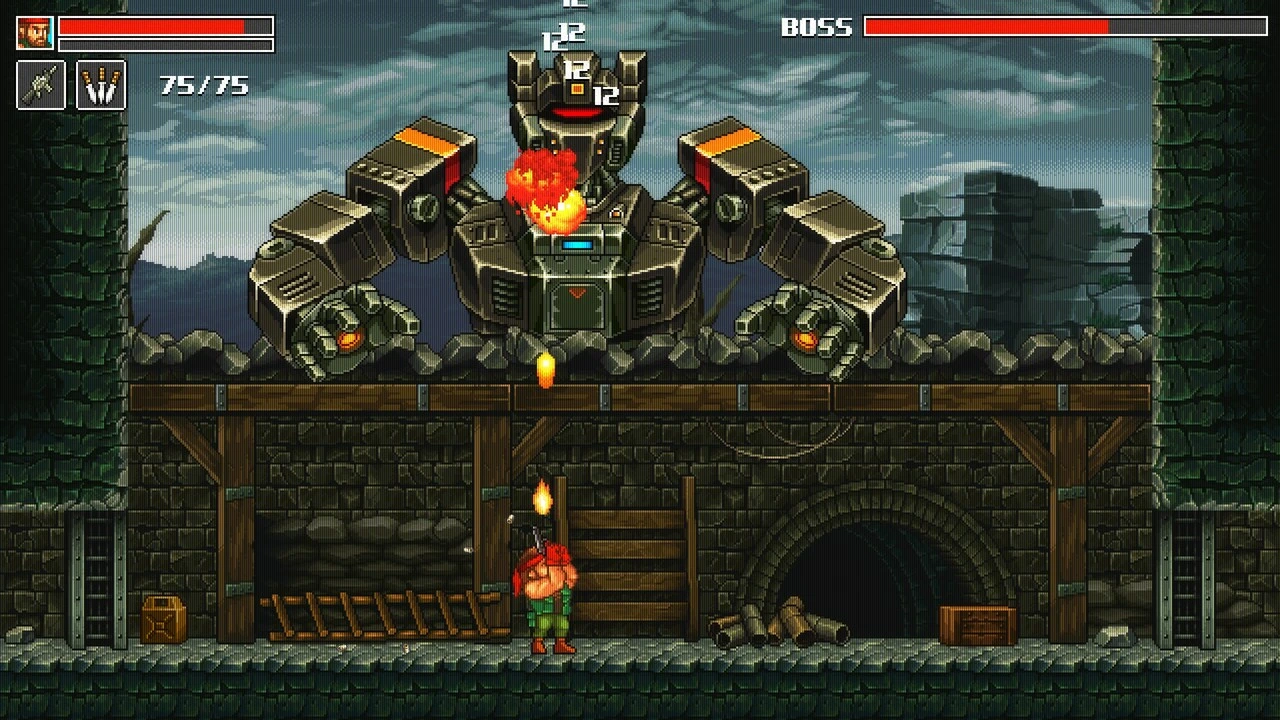
Vincent fires at a towering robot boss as its health bar ticks down.
Movement & Aiming
Vincent moves with precision, capturing just the right amount of airtime to make platforming feel deliberate without being floaty. Aiming and shooting feel snappy and responsive, channeling the tight run-and-gun action of classic Metal Slug games.
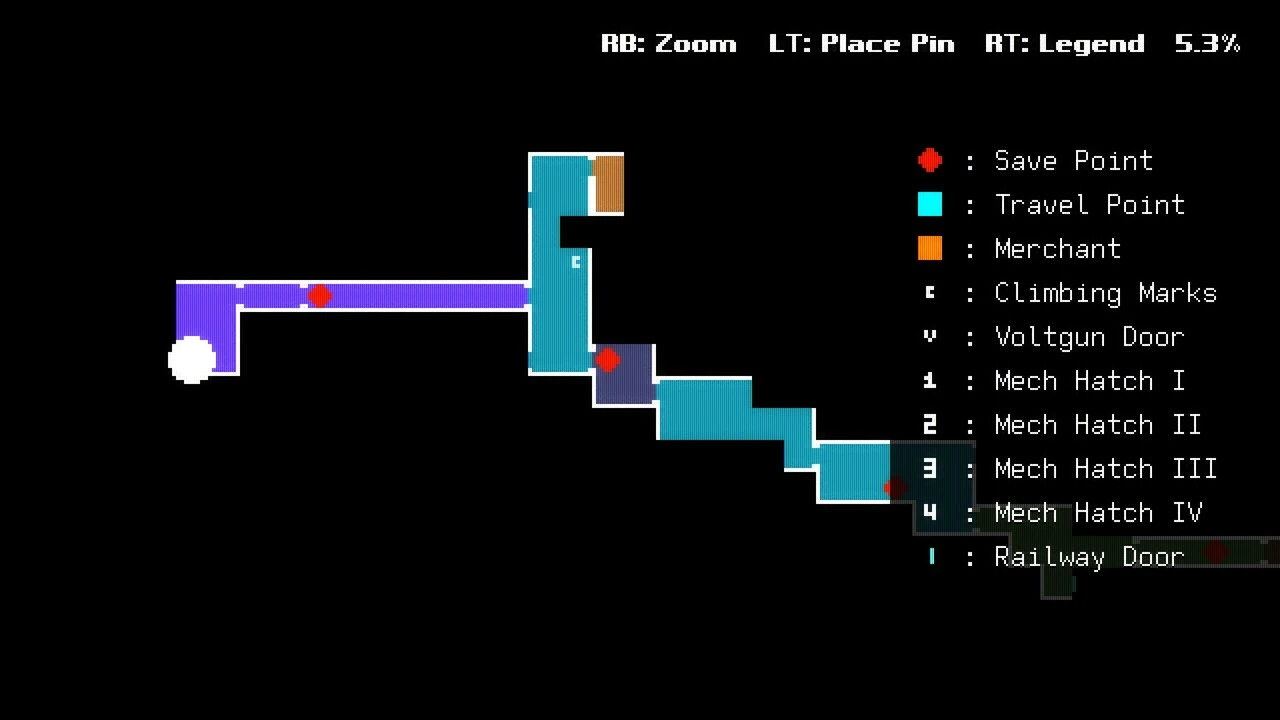
Map screen with legend showing icons for travel, saves, and merchants.
Map System
The large, interconnected map follows Metroidvania conventions with distinct zones and clear tracking of explored areas. Accessible from the pause menu, it gives players a solid overview of their progress. A pin system is also included, letting you mark locations with unreachable items or areas to revisit, perfect for players who want to keep their backtracking intentional.
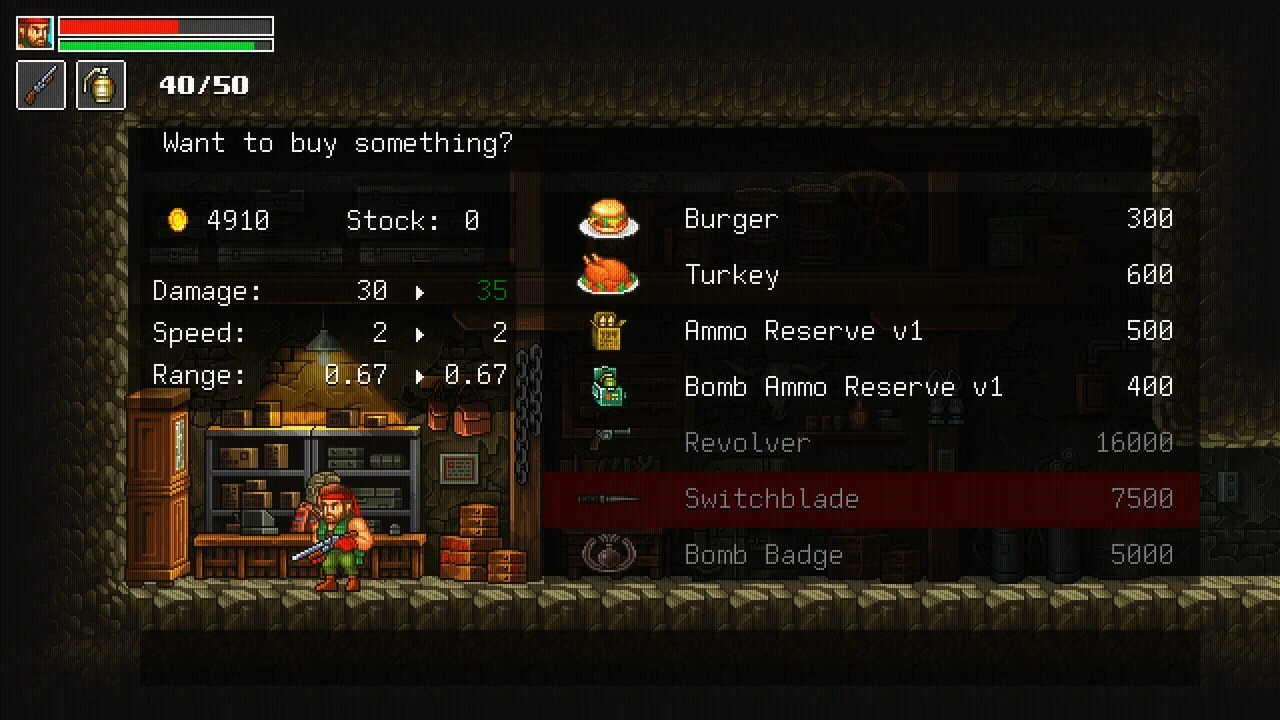
Merchant’s inventory with item details and gear comparison.
Shop
Each zone has its own merchant offering guns, equipment, food, and other useful items. The selection varies by area, giving the shop system some personality and strategic value.
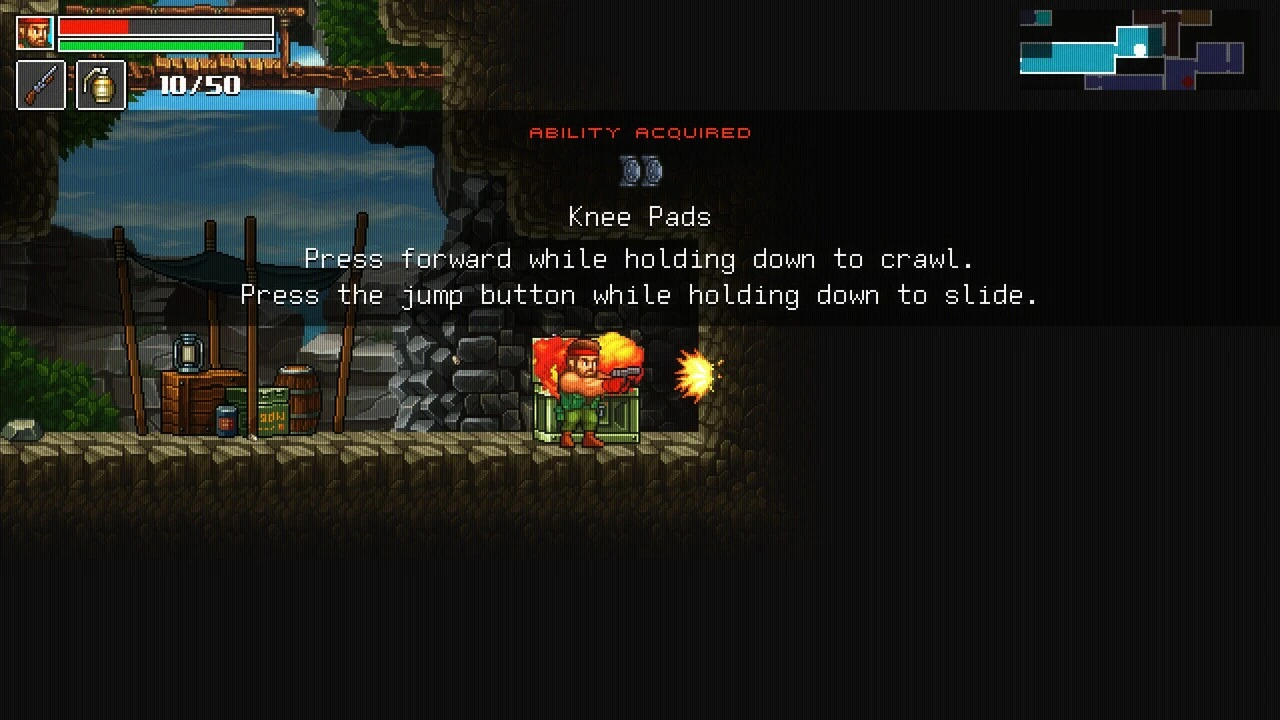
Vincent picks up knee pads, detailing their effects and how to use them.
Abilities
Progression is tied to unlockable abilities, as expected from the genre. These range from double jumps to wall climbing, expanding your movement and combat options while opening up new parts of the map.
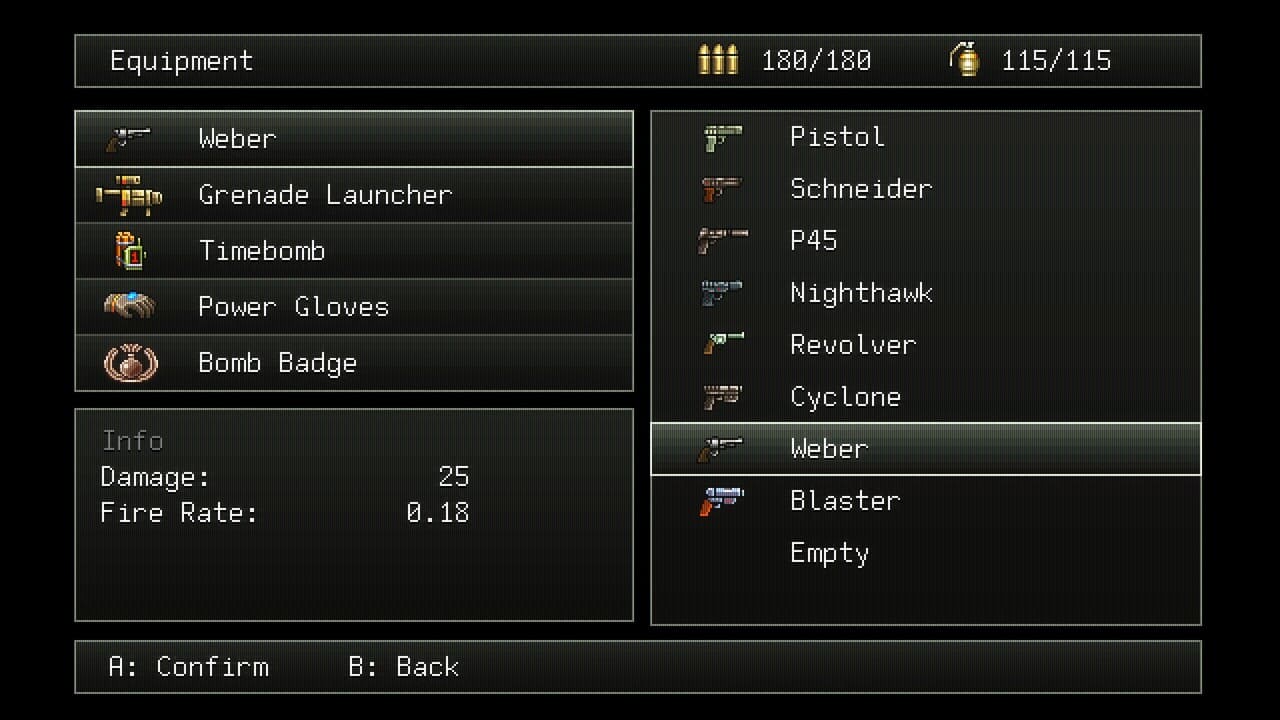
Vincent’s equipment screen displaying all available handguns.
Equipment
The Equipment screen lets you assign a primary weapon, an ammo-based secondary, a throwable gadget (heart-style resource), and a passive item that grants effects like bullet pierce. It’s a flexible system that encourages smart loadouts and on-the-fly adjustments.
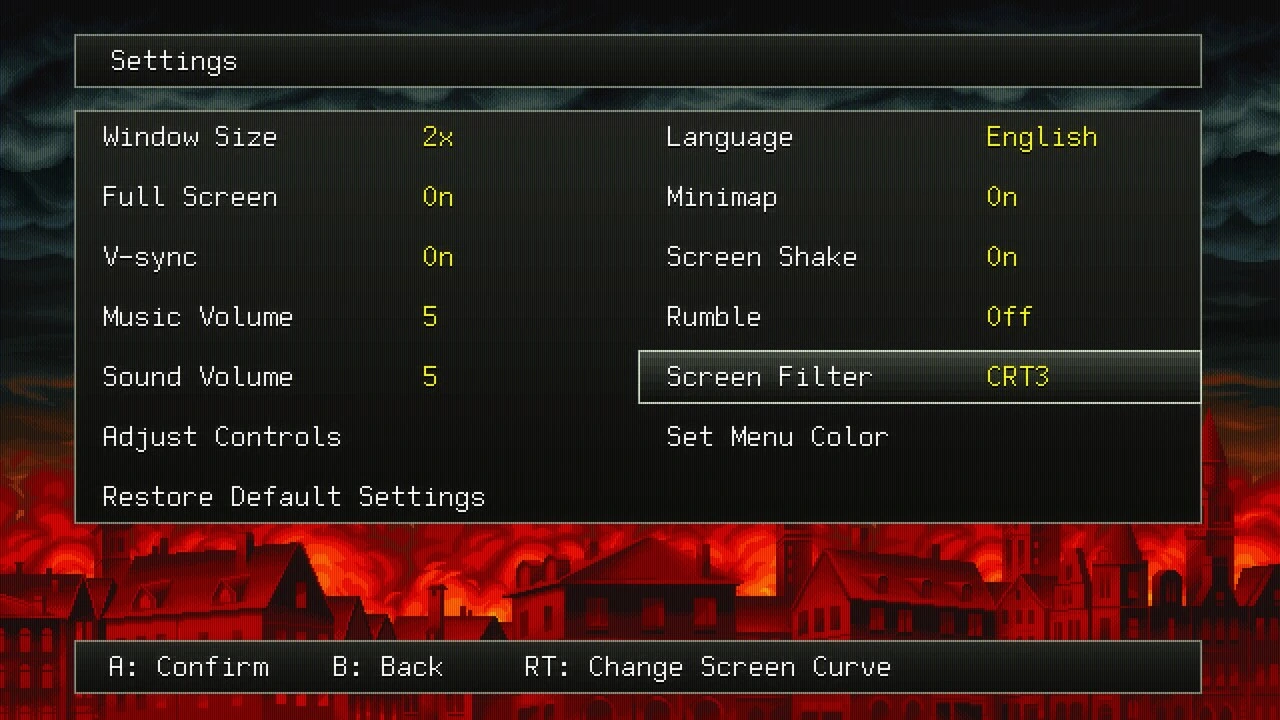
Settings menu showcasing the CRT2 screen filter option.
Settings
The settings menu includes a solid range of options: window size, language, screen shake, rumble, menu colors, controls, audio levels, and visual filters. The CRT-style filters are a nice bonus—CRT3 in particular gives the game a nostalgic, arcade-style edge.
Art & Audio
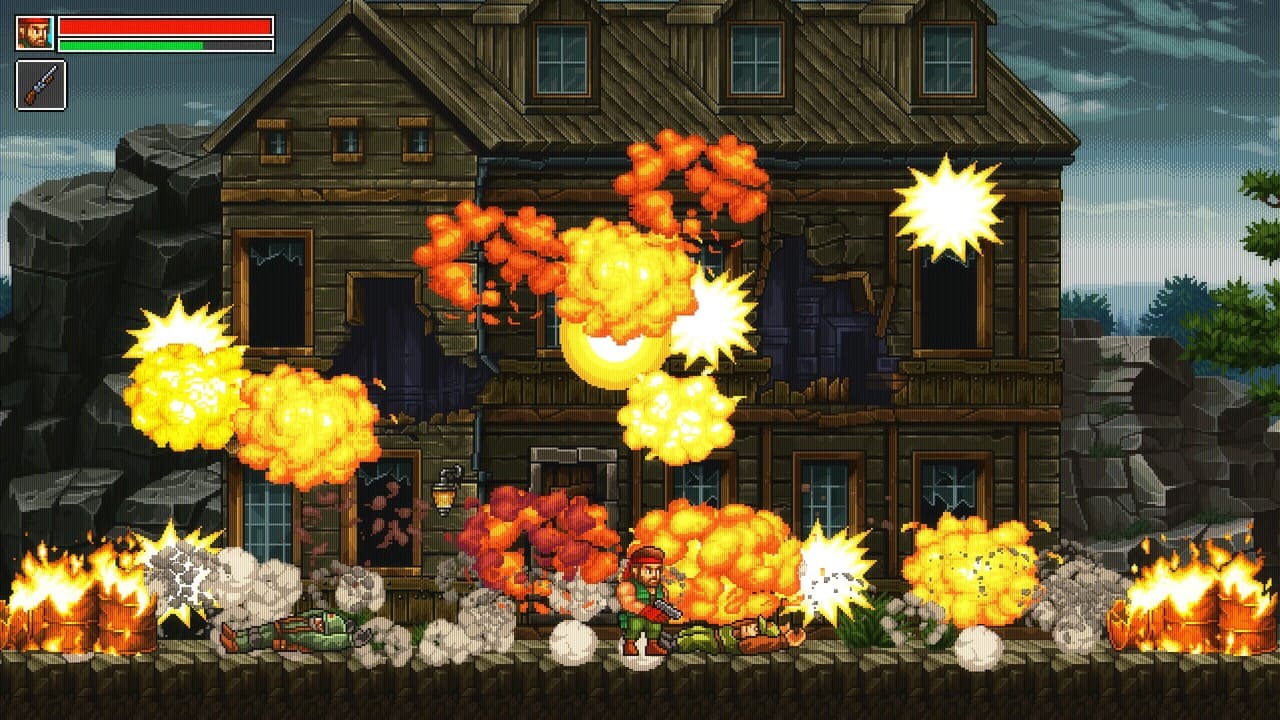
Massive explosion tears through a giant house, Michael Bay style.
Visual Style
The art style nails the look and feel of Metal Slug-era sprite work to the point that it’s easy to forget Guns of Fury came out this year. The game wears its ‘80s action movie influence on its sleeve, everything from the chunky character design to the screen-shaking explosions sells the vibe, with enough visual chaos to rival a Michael Bay film.
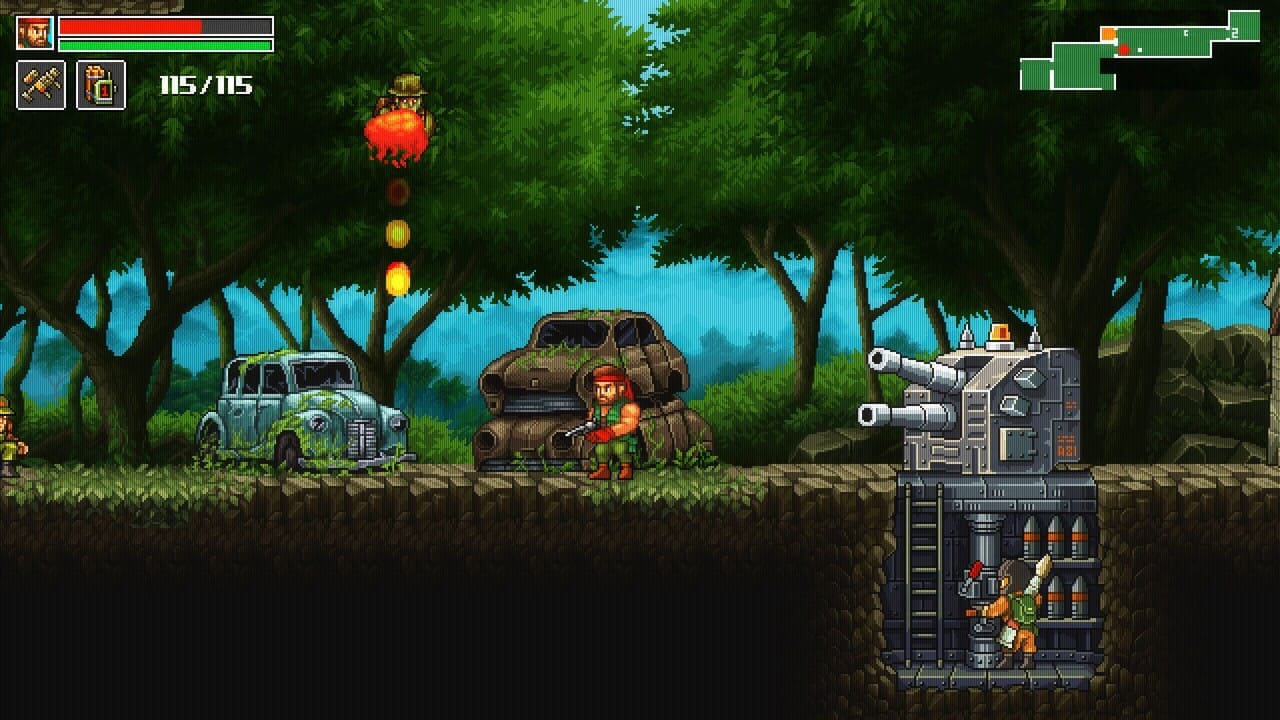
New enemy types including a turret operator and guerrilla soldiers in a lush jungle setting.
Enemy & Environment Design
Enemy variety stays fresh throughout the game. Enemies fit their zones naturally: GIs hide in jungle brush, tanks patrol abandoned town streets, and mounted gun emplacements fire from windows. Every area feels designed with intent, and enemy behavior consistently matches the environment’s theme.
Audio Design & Soundtrack
The game’s audio punches well above its weight. Gunfire is sharp and satisfying, explosions rumble with force, and the overall sound design reinforces the gritty, pixel-heavy world with flair. Complementing this is a high-energy soundtrack by Dominic that elevates nearly every encounter. Picking just three standout tracks is tough, but a few pieces clearly rise above the rest.
Steel Foundry
Begins with synths and slides into an industrial drum rhythm, layered with catchy guitar riffs. It sounds like something straight out of Cobra or a lesser-known Cannon Films classic.
Boss
Kicks off with a pick slide and launches into slap bass before riding a wave of high-energy guitar riffs. It wouldn’t sound out of place in Mighty Morphin Power Rangers.
Sewers
Dials things back, opening with a mellow tone that leans heavier on bass. There’s a subtle weight to it. Moody, contemplative, and fittingly grimy.
Unique Features & Mechanics
Animations
Weapons each come with their own attack animations and visual effects, adding a level of individuality rarely seen in other games in the genre. Nothing here feels like a lazy palette swap, every weapon looks and feels like its own tool of destruction.
Multiple Endings
Guns of Fury includes several endings, some of which are locked behind New Game+ and specific in-game decisions. It rewards thorough exploration and experimentation, giving completionists something substantial to chase.

Dr. Ross explains her need for herbs to create new medicine during a side quest.
Side Quests
While side quests aren’t new to the genre, Guns of Fury makes them matter. Some quests alter the ending you receive, while others strengthen your healing medicine, adding layers of consequence and value to what could’ve been simple fetch tasks.
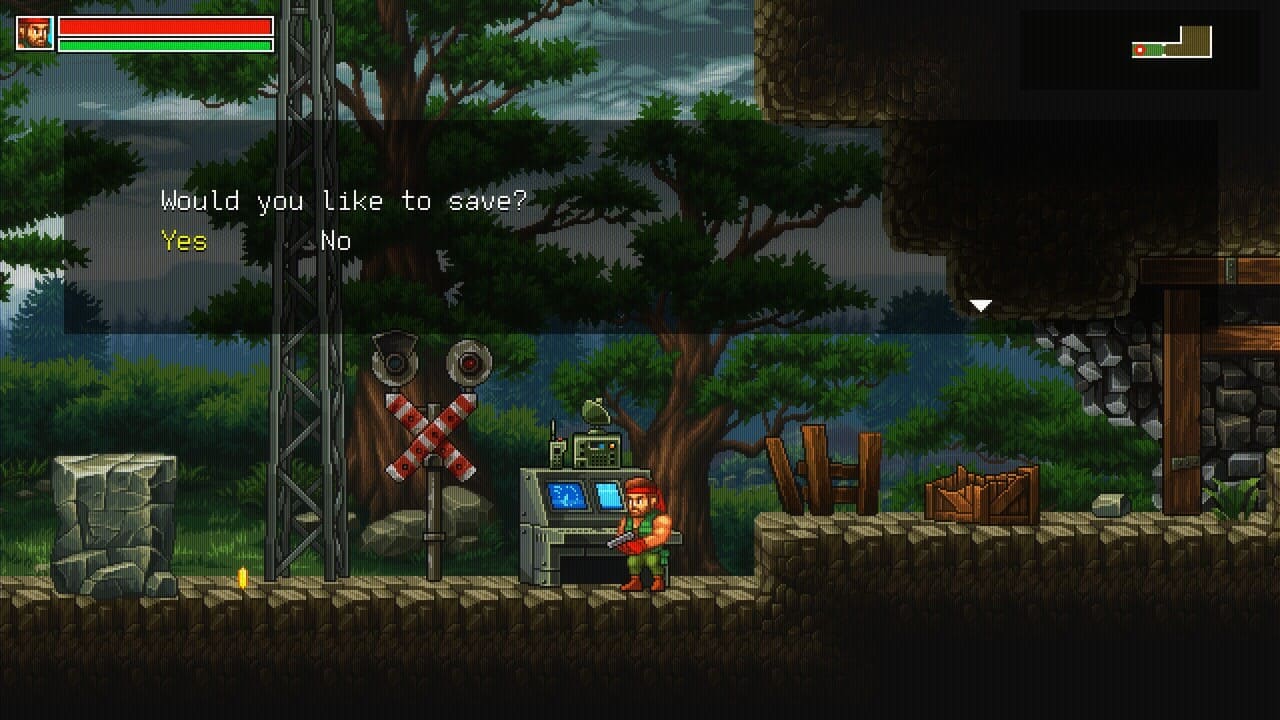
Vincent uses a save station that fully restores all resources.
Save Stations & Teleporting
Save rooms aren’t just for preserving progress, they fully restore health, ammo, and bombs without respawning enemies. Once teleporting is unlocked, these same rooms double as fast travel points, letting you instantly warp between discovered locations. It’s a streamlined system that cuts down on tedious backtracking while maintaining the game’s pacing and challenge.
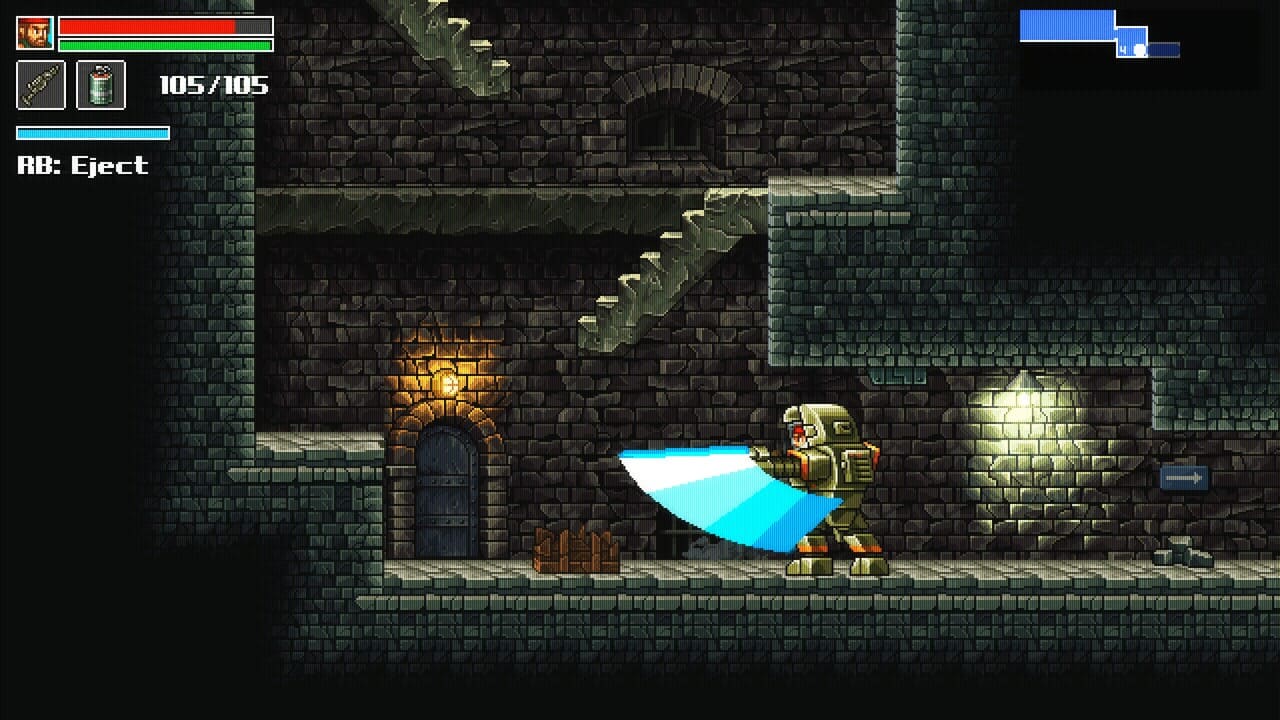
Vincent’s mech swings its beam saber in a sweeping arc attack.
Destructible Environments
Guns of Fury goes beyond standard breakable walls by turning the environment into a strategic asset. You can collapse ledges under enemies or drop hazards like TVs onto them, adding layers of creativity to combat. Pilotable mechs also come into play, smashing through reinforced walls and opening up areas otherwise out of reach, expanding both the gameplay variety and exploration.
Guns of Fury Verdict
Guns of Fury blends the tight, responsive action of classic run-and-gun games with Metroidvania-style progression in a package that’s both satisfying and surprisingly expansive. The shooting feels impactful, traversal is precise, and the destructible environments add a nice layer of interactivity that rewards creativity. Quality-of-life features like teleporting to any save room, pinning the map, and full resource restoration at save points show thoughtful design choices that enhance the overall experience.
While it doesn’t fully explore the Metroidvania concept of zone-specific mechanics and their integration into boss design, and the difficulty curve spikes hard at points, most notably with the Sewer boss, these drawbacks are outweighed by the game’s strengths. There’s real replay value here: multiple endings, New Game+, optional side quests, and solid combat variety make returning to Guns of Fury worth it.
For a $15 game, it punches well above its weight. Between the crunchy pixel art, energetic soundtrack, and a gameplay loop that invites experimentation, Guns of Fury delivers a memorable, rewarding ride for fans of both genres.
Guns of Fury TLDR
Guns of Fury (PC)
Guns of Fury combines tight, responsive combat with Metroidvania-style progression, offering a satisfying and engaging experience.
The mechanical depth and well-paced exploration loop create a very strong action title that remains rewarding throughout the entire campaign on PC.
Tested On
CPU: Ryzen 7 5900X | GPU: RTX 3080 Ti | RAM: 32GB DDR4 | Storage: Crucial P5 Plus NVMe SSD
OS: Windows 11 x64 | Resolution: 1440p
References
- Guns of Fury – Official Gameplay Trailer
- Steel Foundry – Dominic Ninmark
- Boss – Dominic Ninmark
- Sewers – Dominic Ninmark