
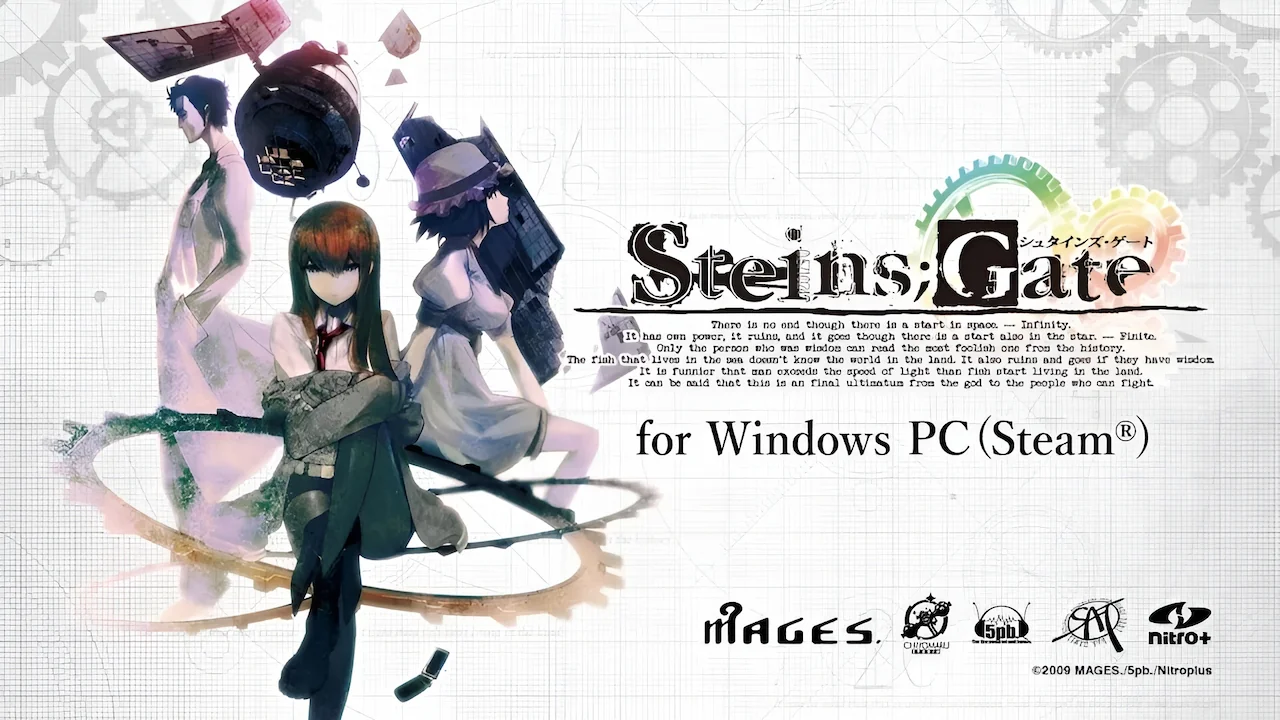
Steins;Gate builds its reputation on a time-travel narrative that avoids the usual genre tropes. The story focuses on small-scale consequences, utilizing a unique art style and atmospheric audio to ground the laboratory members in a believable reality.
The deliberate pacing and sheer volume of text may test the patience of those new to the genre. For those who stick with it, the emotional payoff and clever writing establish this title as an iconic visual novel on PC.
| Title | Steins;Gate |
| Released | JP: October 15, 2009 WW: March 31, 2014 |
| Developer | MAGES. Inc. |
| Publisher | Spike Chunsoft Co., Ltd. |
| Platform |       |
| Genre | Visual Novel, Adventure |
| Rating | M |
| Pricing | $29.99 |
| Proton | 8.0-5 |
Completed on PC
HowLongToBeat Time: 26hrs | My Clear Time: 59hrs 32m
Steins;Gate Background
Steins;Gate, the second entry in Chiyomaru Shikura’s Science Adventure series, debuted as an Xbox 360 exclusive in Japan in 2009. It wasn’t until 2014 that the acclaimed visual novel reached a global audience with its Windows release. Despite the delay, Steins;Gate gained significant recognition early on, thanks to its anime adaptation, which aired from April to September 2011. This year celebrates the 15th anniversary of the series, and with that more information behind the development of Steins;Gate came to light by an interview Crunchyroll conducted with producer Tatsuya Matsubara.
In the interview, Matsubara shed light on the rigorous research and creative process behind Steins;Gate, stating:
“I was personally always a fan of the sci-fi genre, so I would read novels and fiction, but I would never dig too deep into the scientific theories behind them. So when we began working on Steins;Gate, the originator, Chiyomaru Shikura, gave me about 10 books on different time travel and scientific theory because he said the next game we’re making is going to kind of use this mechanic as a kind of puzzle element to unravel this world, this mystery. So that’s where the real research began for me.”
Crunchyroll
The development team for Steins;Gate includes:
- Matsubara Tatsuya (Director)
- Known for Chaos;Head Noah, Anonymous;Code, Steins;Gate.
- Naotaka Hayashi, Ouka Tanizaki (Scenario, Planning)
- Naotaka is known for Anonymous;Code, Chaos;Head Noah, Steins;Gate, Robotics;Notes, Steins;Gate 0.
- Ouka is known for Steins;Gate, Cyberdimension Neptunia: 4 Goddesses Online, Chaos;Child
- Shikura Chiyomaru (Scenario, Planning; Producer)
- Known for Chaos;Head, Chaos;Child, Steins;Gate.
- huke (Character Designer)
- Known for Black Rock Shooter, Metal Gear Solid: Portable Ops, Fate/Extella Link.
- Abo Takeshi (Composer)
- Known for Famicom Detective Club: The Girl Who Stands Behind, The Missing Heir (2021, arranged scores),Steins;Gate, Chaos;Head Noah.
Steins;Gate Experience
Before completing Steins;Gate, I saw the anime for it back in 2013 along with Steins;Gate 0 when it released in 2018. My familiarity with Science Adventure was also found in completing all of the routes for Chaos;Head Noah earlier this year. Coming from a game with delusions, murders, and frequent tonal whiplash, I didn’t expect to find the same in Steins;Gate as I’ve seen the anime before and despite it not being 1:1, it was overall pretty good.
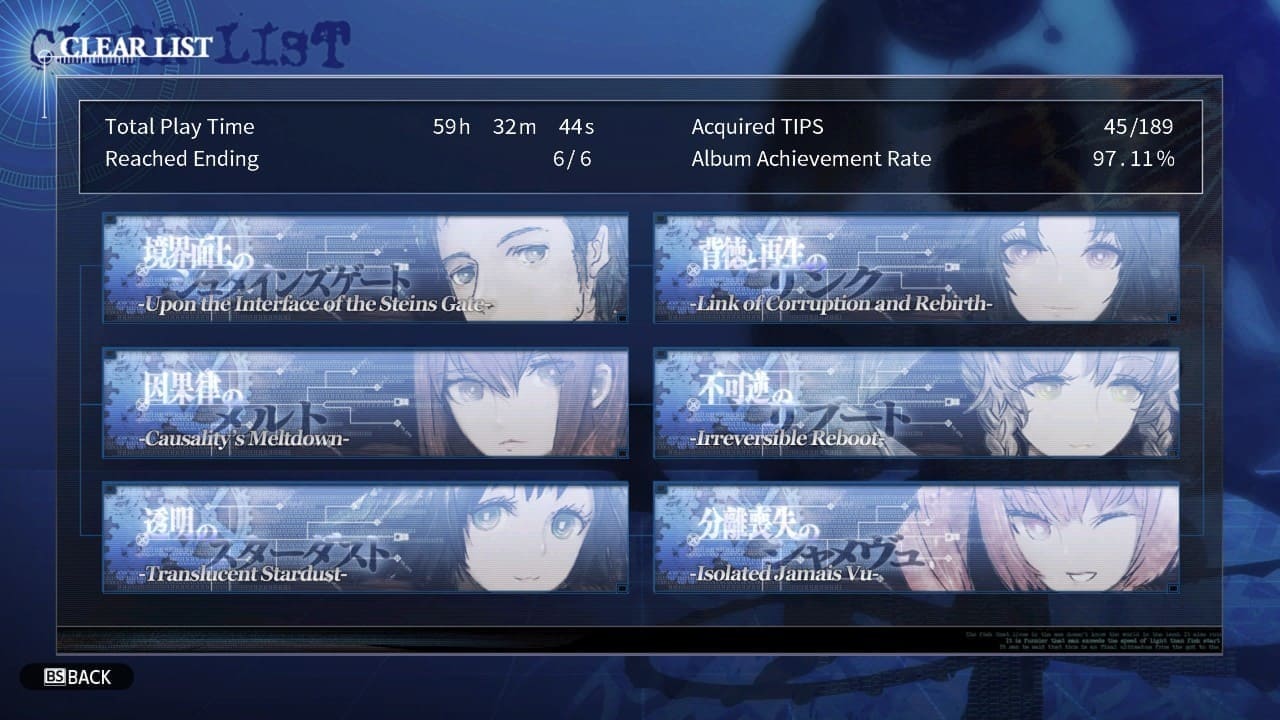
Complete route clear with nearly 100% album achievement
I have also played several adventure game series such as Spirit Hunter, Famicom Detective Club, and countless others. Takeshi Abo, the main composer, I constantly listen to his music and know him also for doing the arranged music on theFamicom Detective Club remakes and scoring the recent Emio entry.
Steins;Gate Impressions
Introduction
Steins;Gate begins by introducing Rintarou Okabe, a self-styled “mad scientist” with a flair for the dramatic, and his small group of friends. They’re tinkering with a strange invention, a “Phone Microwave,” which has the ability to send text messages to the past. What starts as an odd experiment soon spirals into a thrilling story where the boundaries of time and reality blur, leaving Okabe to navigate a world of growing uncertainty and dangerous consequences.
The game’s opening sets the stage for a gripping narrative that blends science fiction, humor, and emotional depth, drawing players into its world without giving away too much too soon.
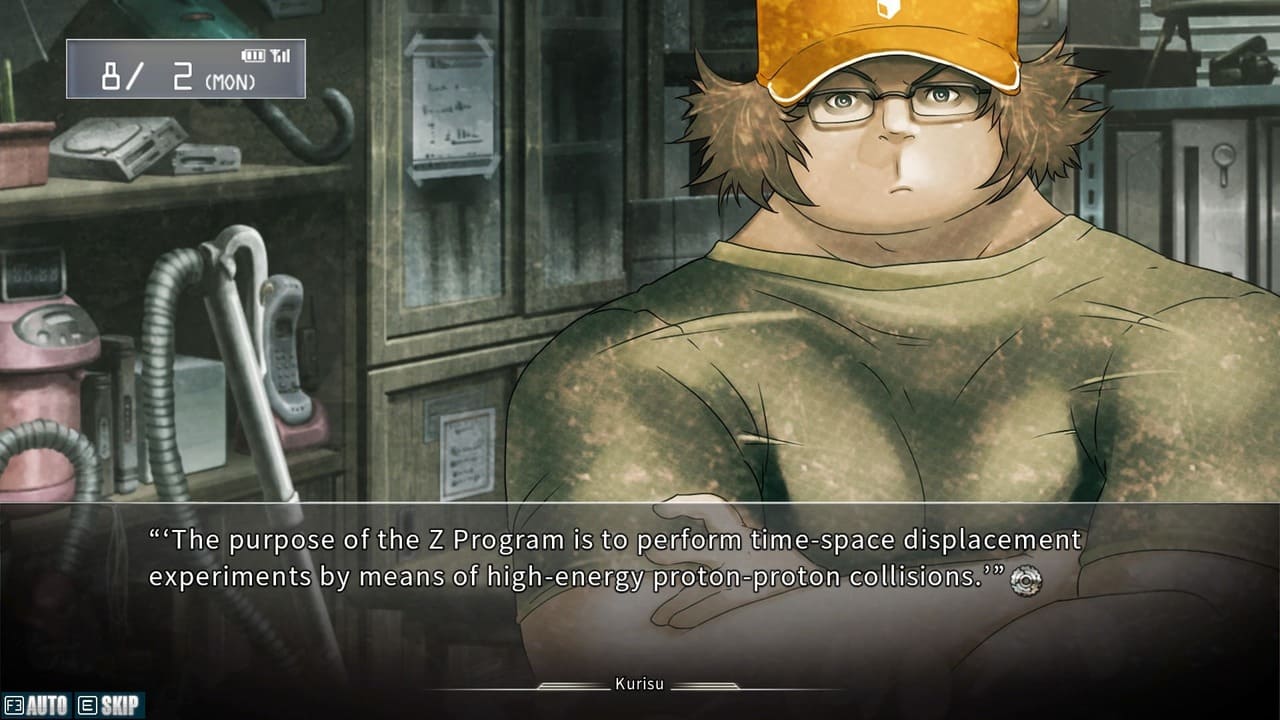
Kurisu explains the Z Program while Daru strikes a pose
Gameplay and Mechanics
Steins;Gate is a visual novel that primarily revolves around reading the story and making key decisions that shape the narrative. The gameplay is simple in structure, with most of the experience focused on dialogue and text-based interactions. Players navigate through different scenarios by selecting options during conversations, such as engaging with the keywords in emails on your phone or choosing to skip them entirely.
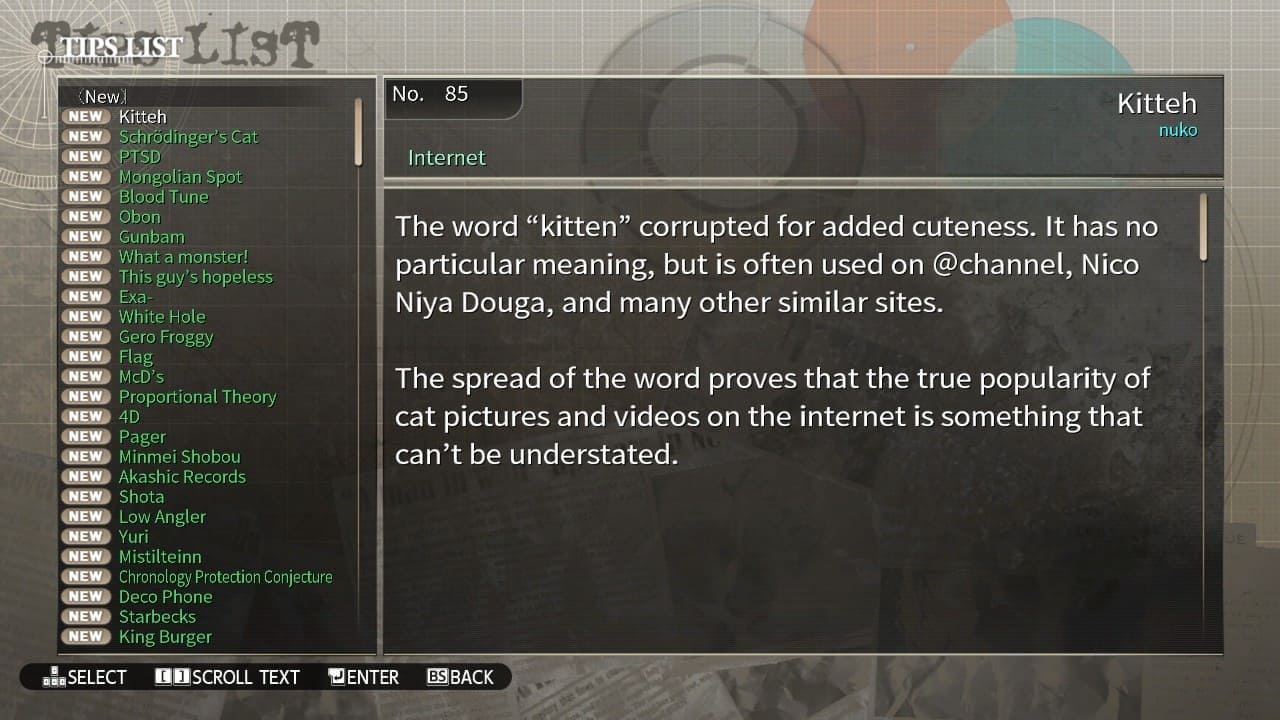
The Tips List defines “Kitteh” with net-culture precision
As expected from a visual novel, Steins;Gate includes a range of standard features to enhance the experience through a collapsible menu:
- A well-placed Save/Load feature
- A Tips List to help players understand terminology
- Quick Save & Quick Load options
- A Backlog to review prior text from conversations
- Customizable Settings
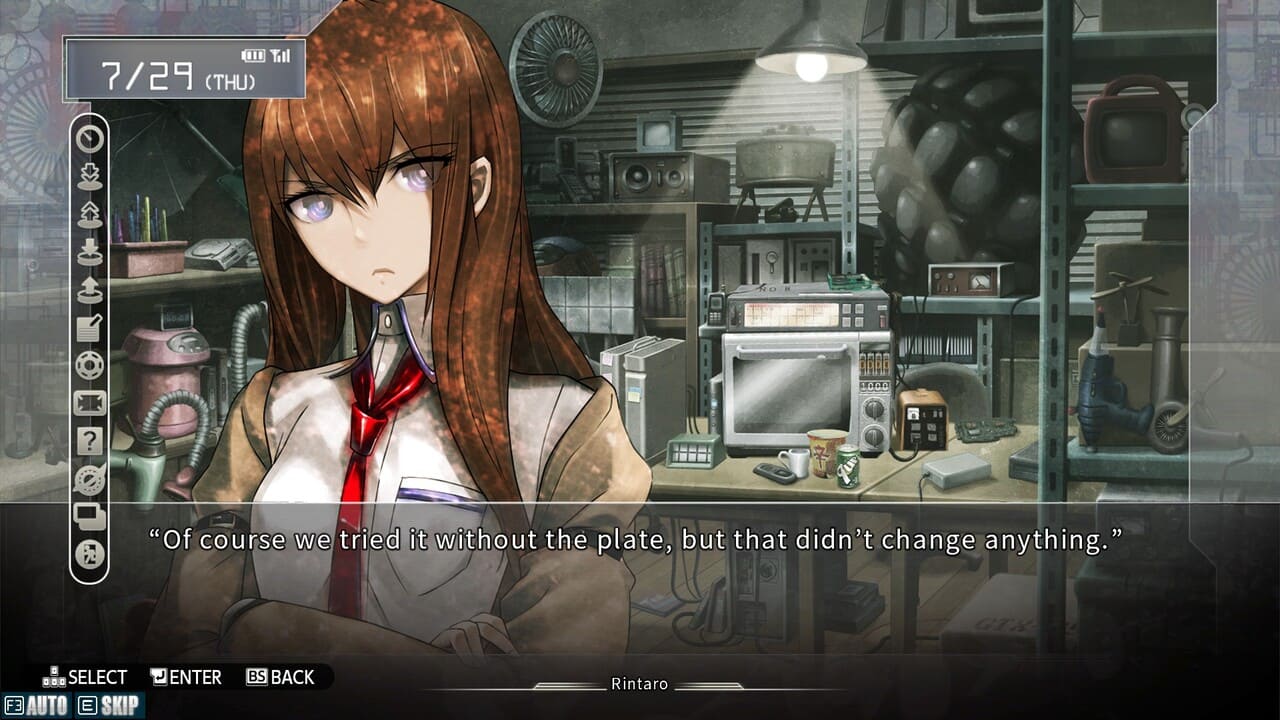
Kurisu in the lab as Okabe discusses gadget experiments
One unique feature of Steins;Gate is how it immerses players in the scientific themes that underpin its narrative. Unlike the anime adaptation, which simplifies the time travel concepts, the visual novel lets players interact with complex scientific terms. Tapping on these terms reveals detailed explanations of the theories behind them, allowing players to delve deeper into the story’s scientific foundations and gain a better understanding of the intricacies of time travel.
The game also includes a feature to lock save slots, preventing accidental overwriting of important saves. This is particularly helpful for players new to visual novels, as it provides easy access to pivotal moments when revisiting routes or triggering different outcomes. Another handy feature is the Skip function, which lets players skip previously read dialogue, stopping only when new or unread text appears. This includes moments when you can respond to D-mails to alter the course of the story.
To unlock the true ending, players must experience the other five endings, making the save system essential for replaying sections and exploring alternate routes. These features work together to streamline the experience, allowing players to immerse themselves fully in the story while easily navigating the various choices and outcomes.
Art & Audio
The Science Adventure series often retains the same artist for each entry, with huke handling the art for Steins;Gate, while other artists took charge of Robotics;Notes and the Chaos;Head/Chaos;Child titles. huke’s painterly approach brings a cosmic shimmer to the characters and colors, adding a distinctive and striking flair. The designs of the Steins;Gate cast lean toward a more grounded, homely aesthetic, and huke’s style enhances this by giving their eyes a particularly captivating and beautiful quality that draws the player into the characters’ emotions.

Kurisu’s tiger clashes with Suzuha’s dragon in a heated exchange
Equally instrumental to the game’s atmosphere is Takeshi Abo’s masterful score, which blends melancholic melodies with dynamic compositions that perfectly mirror the story’s tension and emotional beats. From moments of intense drama to reflective scenes of camaraderie, Abo’s music elevates the narrative, making it an integral part of the player’s immersion. The theme song, performed by Kanako Ito, known for her work across the Science Adventure series adds a powerful emotional resonance that captures the essence of Steins;Gate.
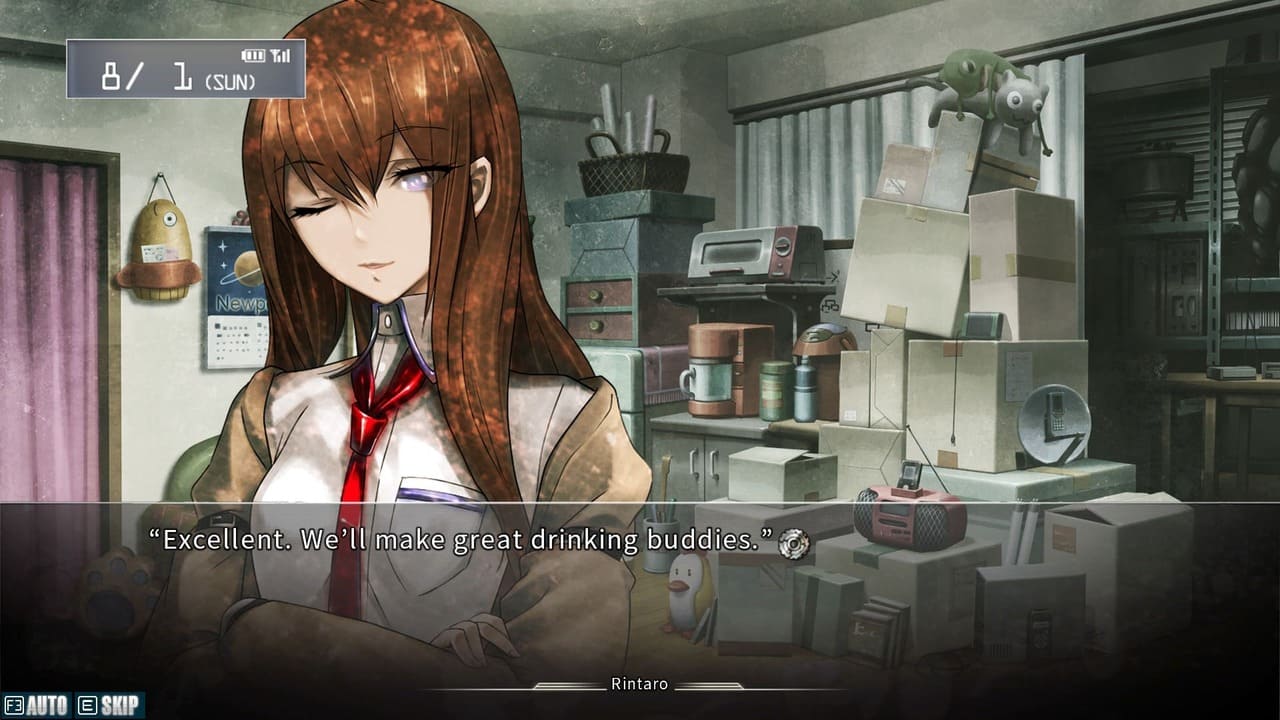
Kurisu smirks as Okabe declares future drinking camaraderie
In addition to huke’s painterly art style and Abo’s evocative soundtrack, the development of Steins;Gate saw producer Tatsuya Matsubara taking on a hands-on role that went beyond the typical duties of a producer. Visual novels are typically developed by small teams, and for Steins;Gate, the team was especially tight-knit, with just 10 core members.
Matsubara’s background in graphic design led him to contribute directly to many aspects of the game’s visual presentation, from the logo to the UI design. His involvement in shaping the game’s graphic elements was crucial in creating the distinct aesthetic that makes Steins;Gate stand out, where even the subtle details, like the characters’ large, expressive eyes, are meticulously crafted to align with the emotional depth of the story (Allen, 2024).
Unique Features and Mechanics
Steins;Gate incorporates a unique conversational system through its text messaging feature, allowing players to choose from various keywords to respond to. These choices can significantly alter the course of the story, with some being necessary to unlock the true ending and other routes. Based on my experience, I haven’t encountered another game that uses this mechanic in such a direct and impactful way.
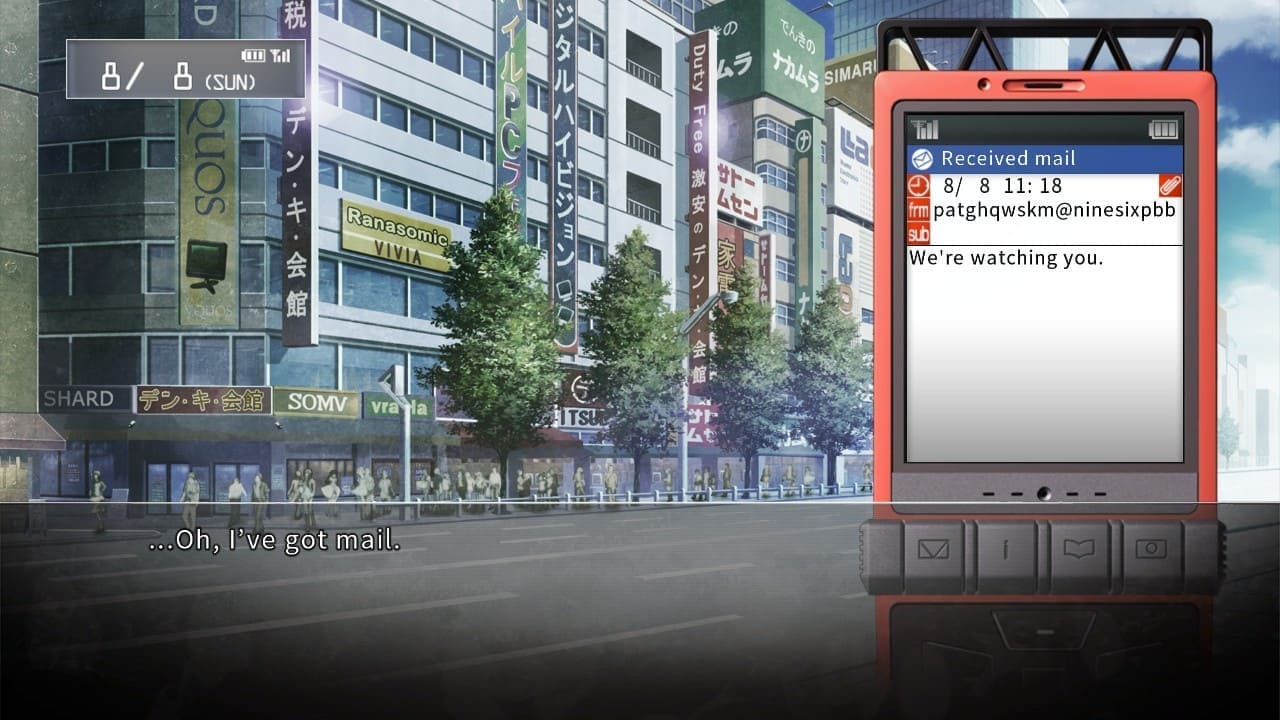
Okabe receives a cryptic warning: “We’re watching you.”
Steins;Gate also introduces the concept of D-mails, which play a central role in altering the flow of time within the game. Players send these emails to the past, changing key events and potentially shifting the entire timeline. The mechanic is not just a plot device but a core element of gameplay, requiring players to make deliberate choices about when and how they interact with these time-altering messages. The game’s ability to intertwine choices with scientific theory, especially in the form of the D-mails, adds a layer of complexity and intrigue that enhances the player’s engagement with the narrative.
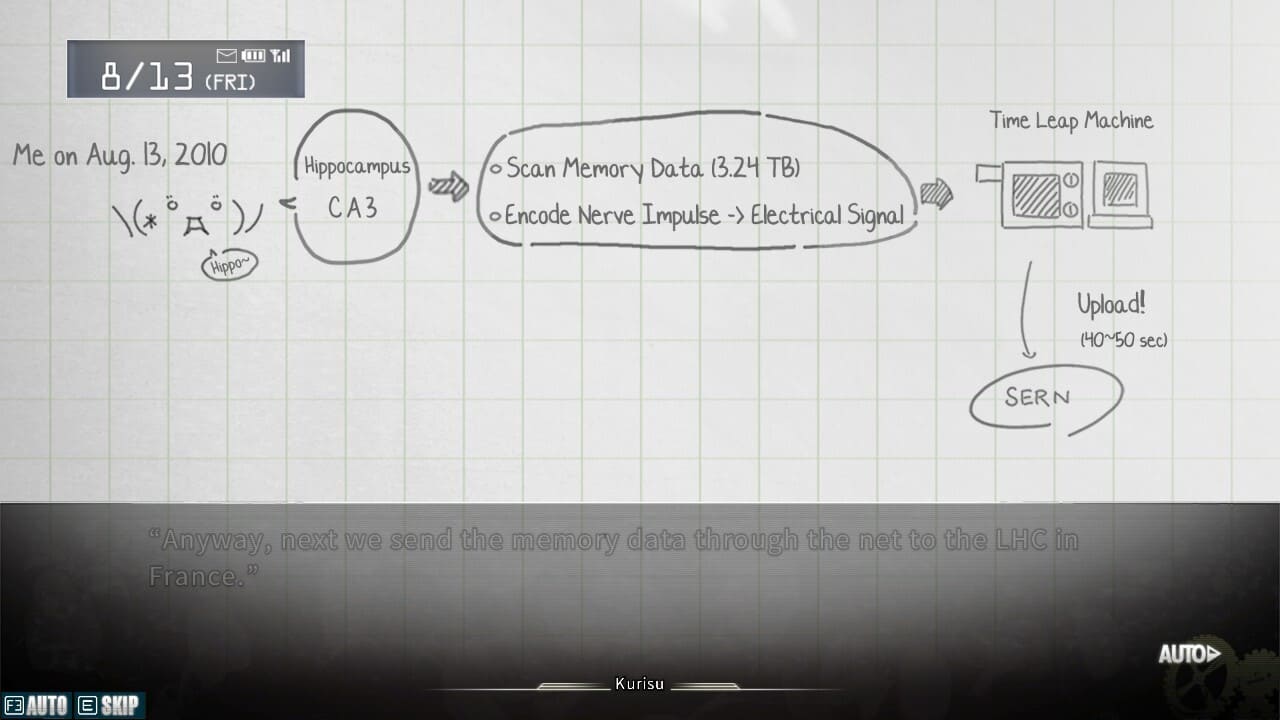
Explaining the science behind D-Mail time leap limits
To create a more believable narrative around time travel, Steins;Gate drew from real-world scientific principles and theories. Producer Tatsuya Matsubara shared that while he was always a fan of the sci-fi genre, he had to dive deeper into time travel theories as the project progressed. Chiyomaru Shikura, the originator, provided Matsubara with several books on time travel and scientific theory, which became integral to the game’s puzzle-like mechanics.
This research allowed the team to incorporate authentic time travel concepts into the gameplay, adding an intellectual dimension to the experience (Allen, 2024).
Seiyuu Performances
Steins;Gate features a talented voice cast, with standout performances from several well-known seiyuu. Asami Imai shines as Kurisu Makise, bringing depth and emotion to the character. Mamoru Miyano, known for his roles as Light Yagami in Death Note and Okabe in Steins;Gate, delivers a memorable portrayal of the eccentric protagonist. Kana Hanazawa, Yukari Tamura, and Yu Kobayashi also bring their distinct voices to key characters, further enriching the narrative. Each voice actor contributes to the game’s immersive experience, ensuring that the emotional weight of the story is felt in every scene.
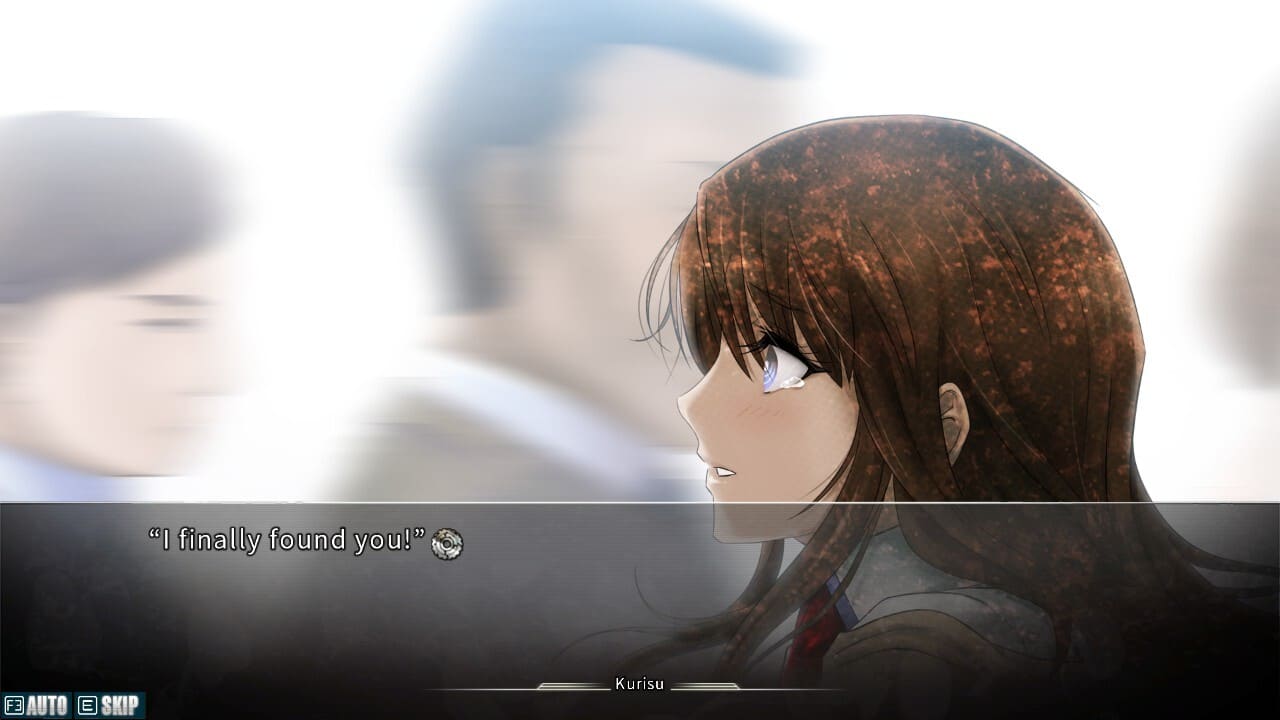
Kurisu’s emotional breakthrough amid the crowd
- Asami Imai
- Known for Noire from Neptunia, Kuirsu Makise from Steins;Gate, Vira from Granblue Fantasy
- Mamoru Miyano
- Known for Light Yagami / Kira from Death Note, Chrollo Lucilfer from Hunter x Hunter, Okabe from Steins;Gate
- Kana Hanazawa
- Known for Mayuri Shiina from Steins;Gate, Ichika Nakano from Quintessential Quintuplets, Chiaki Nanami from Danganronpa 2
- Tomokazu Seki
- Known for Gilgamesh from Fate, Enrico Pucci from JoJos, Daru from Steins;Gate
- Yukari Tamura
- Known for Suzuha Amane from Steins;Gate, Rika Fudure from When They Cry, Talim from SoulCalibur
- Yu Kobayashi
- Known for Lucina from Fire Emblem, Mahiru Koizumi from Danganronpa 2, Ruka Urushibara from Steins;Gate
Steins;Gate Verdict
Steins;Gate stands as a very good example of visual novel storytelling, masterfully weaving science fiction with heartfelt human emotion. Its time-travel narrative, rooted in real-world scientific concepts, is nothing short of compelling, and the game’s ability to explore the psychological toll of altering time sets it apart from other entries in the genre. The well-implemented mechanics, like the D-mail system and branching paths, ensure a deeply engaging experience for players who appreciate narrative complexity.
The game’s strengths are bolstered by huke’s distinct art style, which brings an atmospheric brilliance to the characters and their world. Takeshi Abo’s evocative soundtrack elevates every dramatic twist and emotional turn, while the stellar performances by a cast of talented seiyuu breathe life into each character, particularly Okabe’s eccentricities and Kurisu’s multifaceted personality.
However, Steins;Gate does come with its challenges. Its pacing may feel deliberate, even slow, to newcomers unfamiliar with visual novels, and its text-heavy approach, while expected of the genre, might not suit those looking for a more gameplay-driven experience. Reaching the true ending also requires thorough exploration, which can feel daunting without the save system’s helpful tools.
Steins;Gate TLDR
Steins;Gate (PC)
Steins;Gate provides a compelling time-travel story with striking art and top-tier voice acting.
While the deliberate pacing and high text volume are demanding, the emotional resonance and narrative twists create a very strong experience for genre fans on PC.
References
- MAGES. (2016, September 9). STEINS;GATE Steam Trailer. YouTube.
- Allen, S. (2024, October 19). Tatsuya Matsubara on the Making of STEINS;GATE and What He’s Doing Next. Crunchyroll.