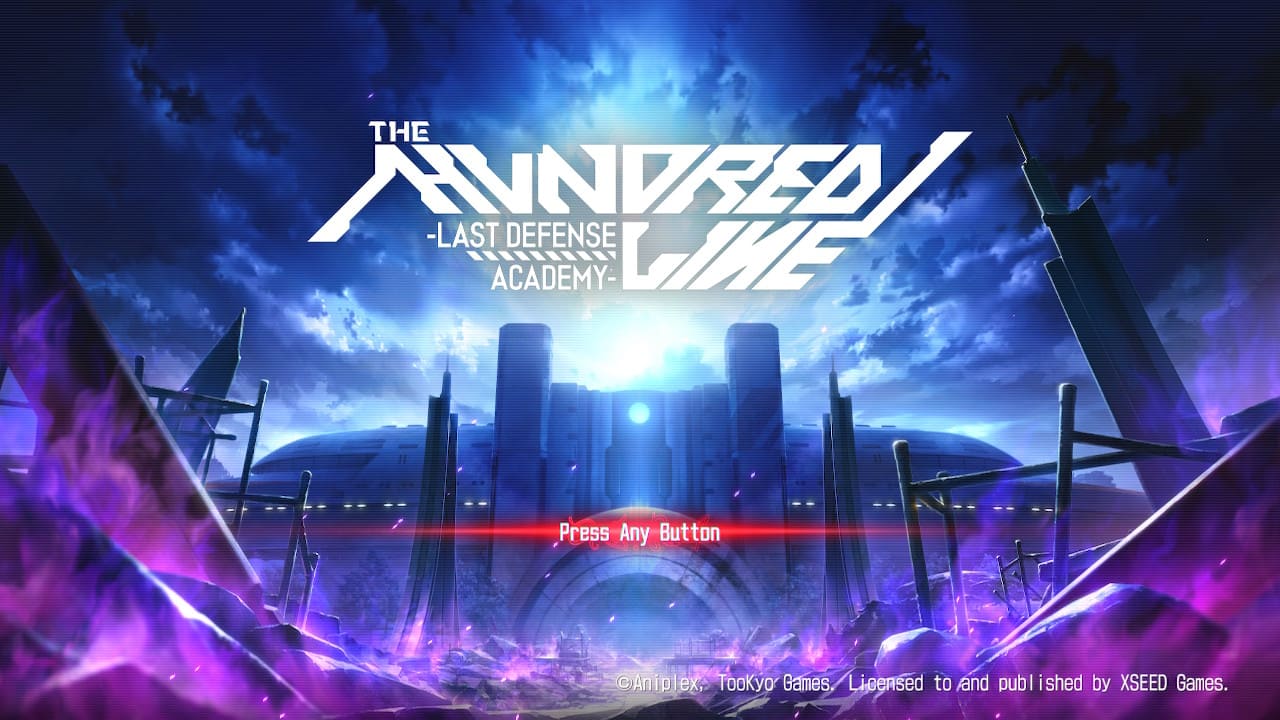
The Hundred Line: Last Defense Academy delivers a chaotic and ambitious blend of genres that could only come from the combined minds of the Danganronpa and Zero Escape creators.
By merging high stakes tactical combat with a massive branching narrative, Too Kyo Games has crafted a unique and memorable adventure that rewards patience and curiosity in equal measure.
| Title | The Hundred Line: Last Defense Academy |
| Released | April 24, 2025 |
| Developer | Too Kyo Games, LLC Media.Vision |
| Publisher | Aniplex Inc. Xseed Games |
| Platform |     |
| Genre | Adventure, Visual Novel, SRPG |
| Rating | M |
| Pricing | $59.99 |
| Proton | Experimental |
Played on Switch in both Docked & Handheld Mode on Normal
HowLongToBeat Time: 179 Hours (Completionist) | My Clear Time: 50hrs (Main+ Extra)
The Hundred Line: Last Defense Academy Background
The Hundred Line: Last Defense Academy is a strategy RPG from Too Kyo Games, led by Kazutaka Kodaka, creator of Danganronpa. Published by Spike Chunsoft, it combines visual novel storytelling with tactical gameplay. With veterans from Zero Escape and Valkyria Chronicles on the team, this Nintendo Switch and PC release has been highly anticipated by fans of strategic, story-driven games.
Initially teased as Extreme x Despair, the game was unveiled in a 2024 Nintendo Direct. Its dark, apocalyptic setting and striking art immediately drew attention. The story centers on defending a school over 100 days, with irreversible consequences shaping every decision, a tense mix reminiscent of Battle Royale and Persona.
Development was ambitious. Kodaka and co-writer Kotaro Uchikoshi aimed for 100 unique endings, each a valid conclusion. Uchikoshi doubted it was possible, but the team pressed on.
“We decided to invest everything in this game,” Kodaka explained in a documentary with Archipel. “Our money, our time, our lives… our passion as well.”
With no project lined up after, the team’s future depended on its success.
The core development team includes:
- Kazutaka Kodaka, Kotaro Uchikoshi, Rui Komatsuzaki, Masafumi Takada (Original Concept & Planning)
- Kodaka is known for Danganronpa, Master Detective Archives: Rain Code, Clock Tower 3
- Uchikoshi is known for 999: Nine Hours · Nine Persons · Nine Doors, World’s End Club, Ai: The Somnium Files
- Rui is known for Danganronpa, Master Detective Archives: Rain Code, Fate / Grand Order
- Takada is known for God Hand, No More Heroes, The Silver Case
- Akihiro Togawa (Director / Game Design Direction)
- Togawa is known for Persona 5: Tactica, Persona Q2, Persona 5: Royal
- Rui Komatsuzaki (Character Designer / Artist)
- Rui is known for Danganronpa, Master Detective Archives: Rain Code, Fate/Grand Order
- Masafumi Takada (Composer)
- Takada is known for God Hand, No More Heroes, The Silver Case
- Atsuhiro Iwakami (Executive Producer)
- Iwakami is known for Fate/Grand Order, Magia Record: Puella Magi Madoka Magica [Side Story], Fate/Samurai Remnant
The Hundred Line: Last Defense Academy Experience
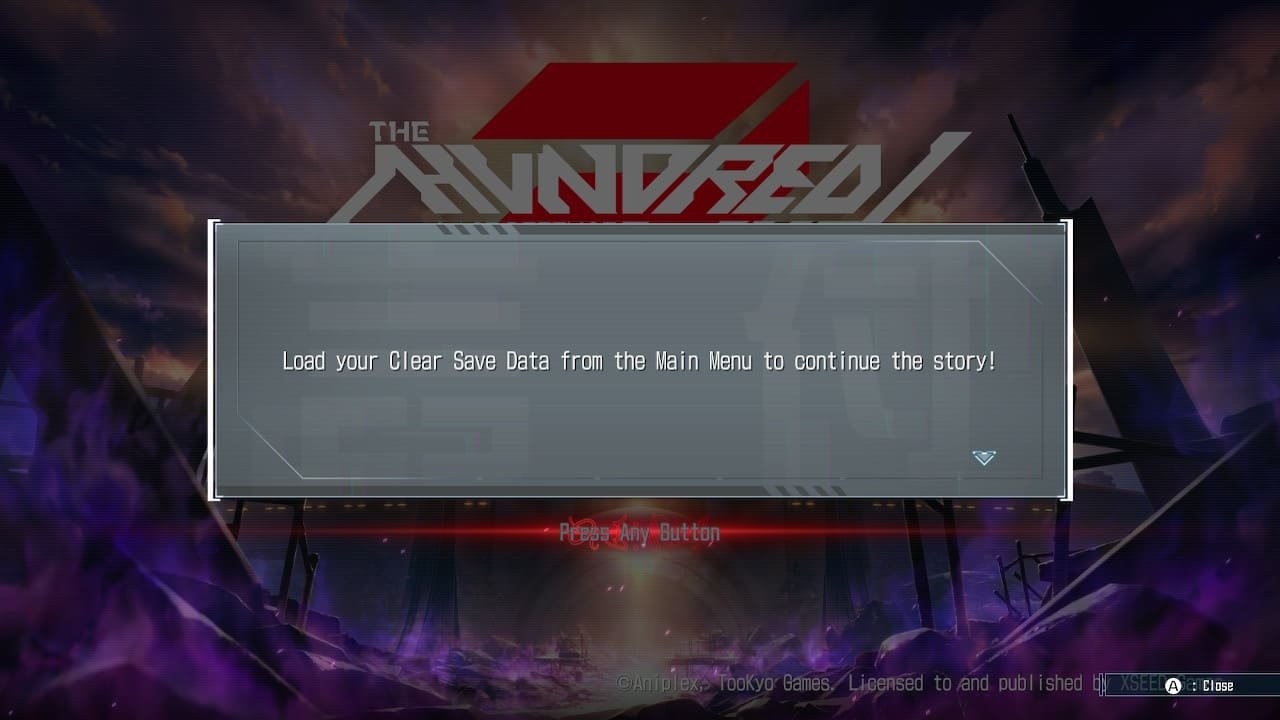
Prompt tells players to load Clear Save Data to unlock further progression.
As a fan of visual novels and tactical RPGs, from Science Adventure titles to Fire Emblem: Awakening and 13 Sentinels, The Hundred Line instantly caught my attention. The team’s pedigree promised a unique blend of tower defense and character-driven storytelling.
The Hundred Line: Last Defense Academy Impressions
Introduction

Takumi faces a brutal turning point, drenched in fire and blood.
You play as a student defending your school for 100 days. The game mixes tactical tower defense with visual novel elements, managing relationships, resources, and battles. Each choice matters, revealing the mystery behind the threat.
Though initially intense, the daily rhythm quickly becomes engrossing.
Gameplay and Mechanics
The day divides into segments: morning for exploration and story, afternoon and night for prep and combat. The steady pacing balances tension without dragging.
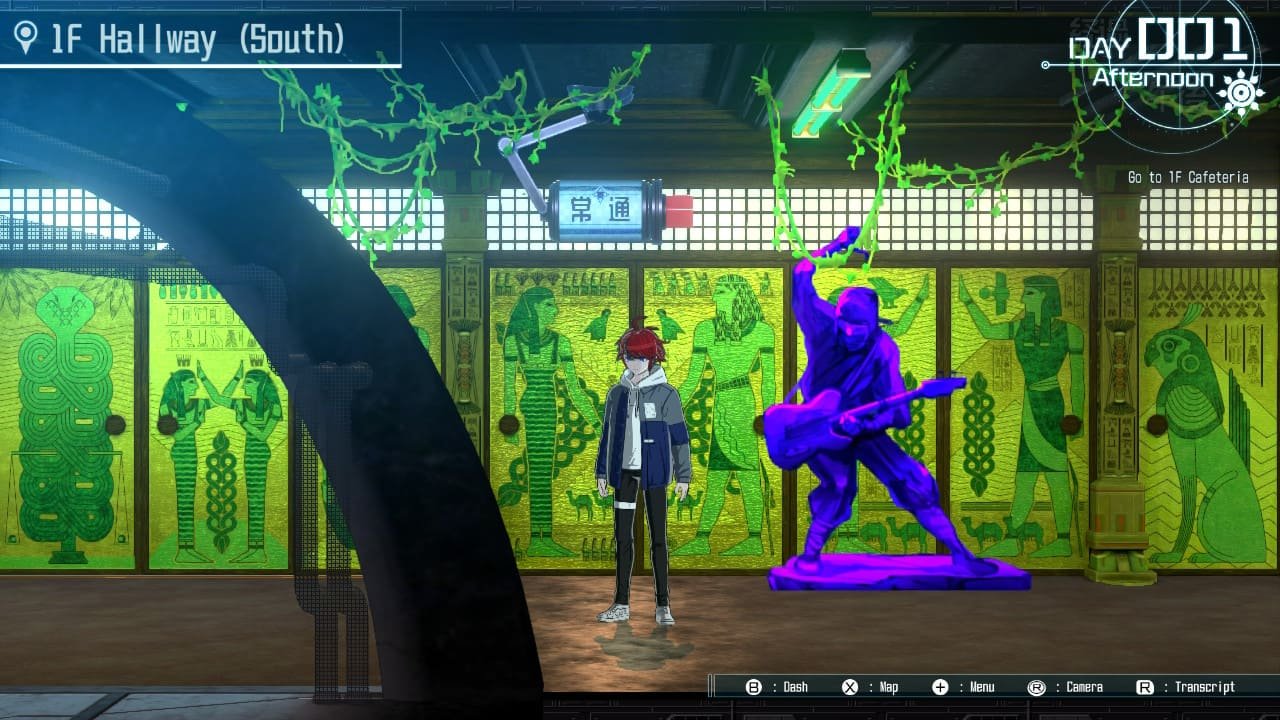
Takumi explores the campus in 2.5D, HUD and all.
Daily Structure
Days break into segments, mornings for free exploration or story events, afternoons and nights for preparation and combat. The pacing is steady, balancing tension without dragging.
Exploration uses a 2.5D side-scrolling style similar to Danganronpa 2.
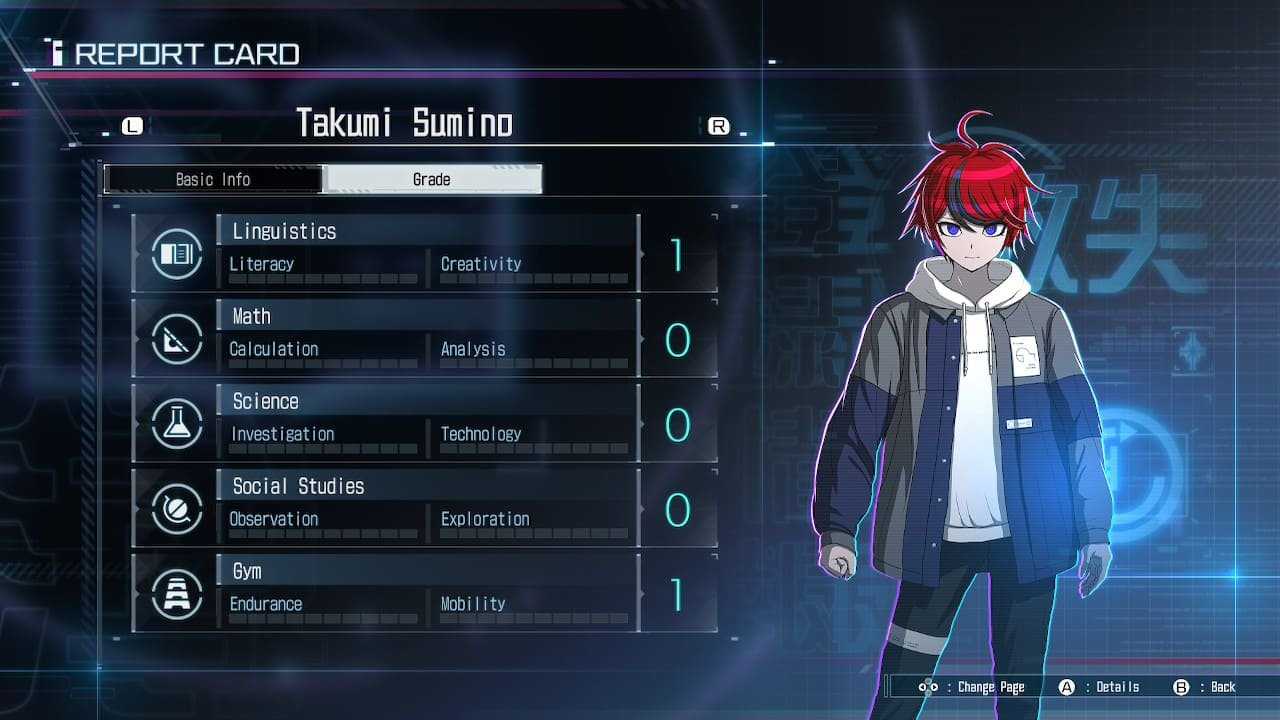
Takumi’s report card displays vital stats and progress indicators.
Social Interaction & Report Card
Building relationships boosts stats that influence weapon upgrades, dialogue options, and expedition outcomes. It’s more than gating, it shapes strategy.
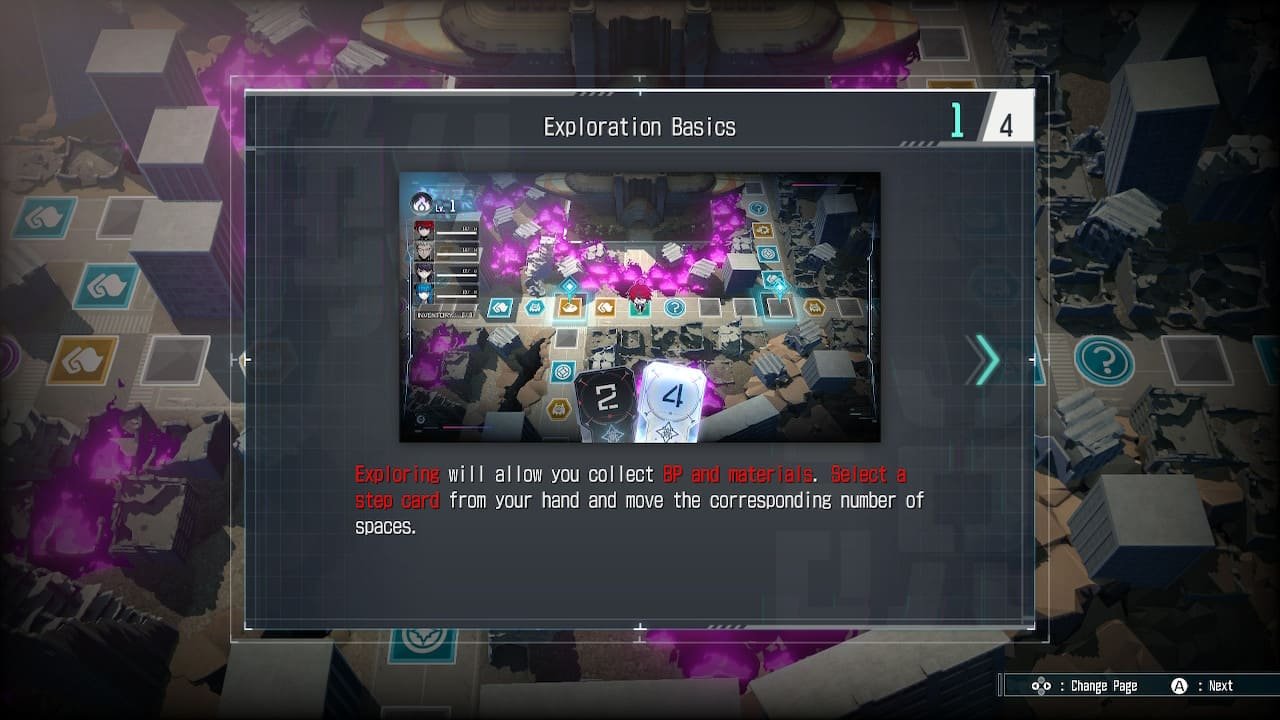
Tutorial covers the basics of exploration and interaction.
Expeditions & Board Game System
A card-based board game determines movement, with tiles triggering random events ranging from safe to high-risk encounters, adding layers to exploration.
This expands and improves on the Danganronpa S board, making it part of exploration and planning.
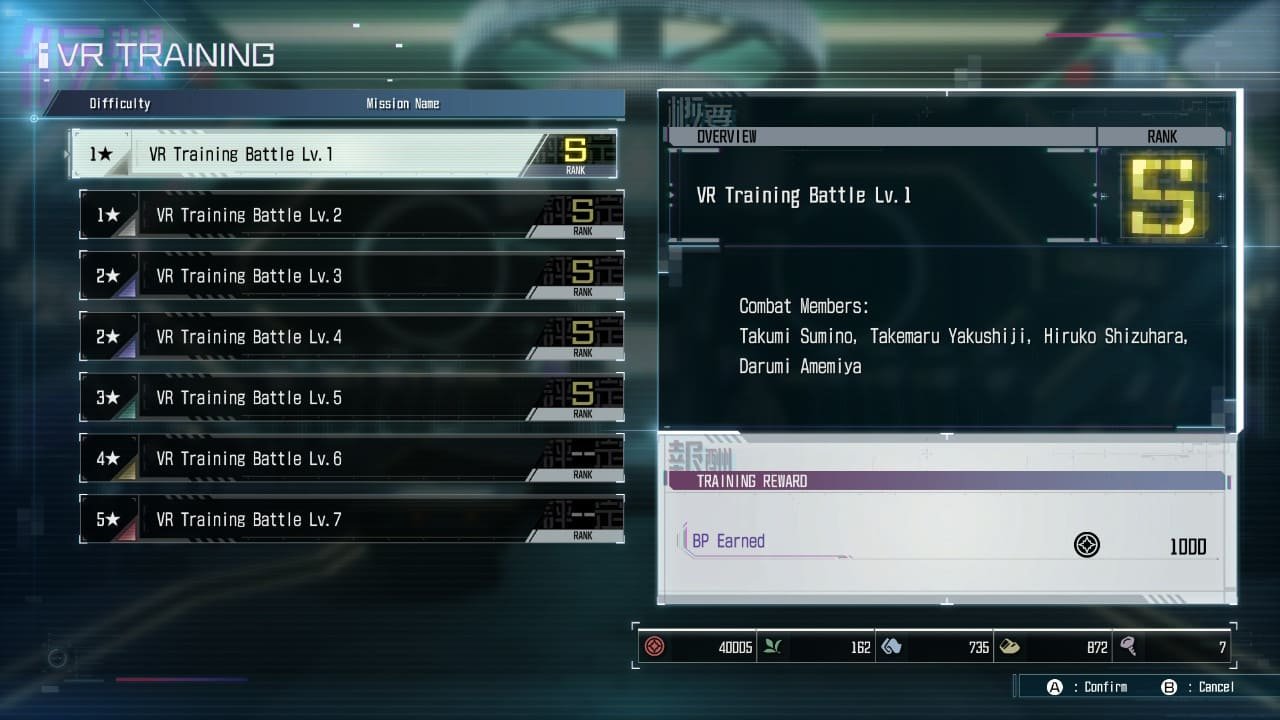
Daytime VR Training earns BP for upgrades and supplies.
Combat Training
The Training Room offers repeatable VR battles to earn experience, cash, and practice strategies. More than a grind, it’s an efficient way to tune your team and test upgrades.
Combined with the garage’s customizable upgrade system, downtime always feels productive.
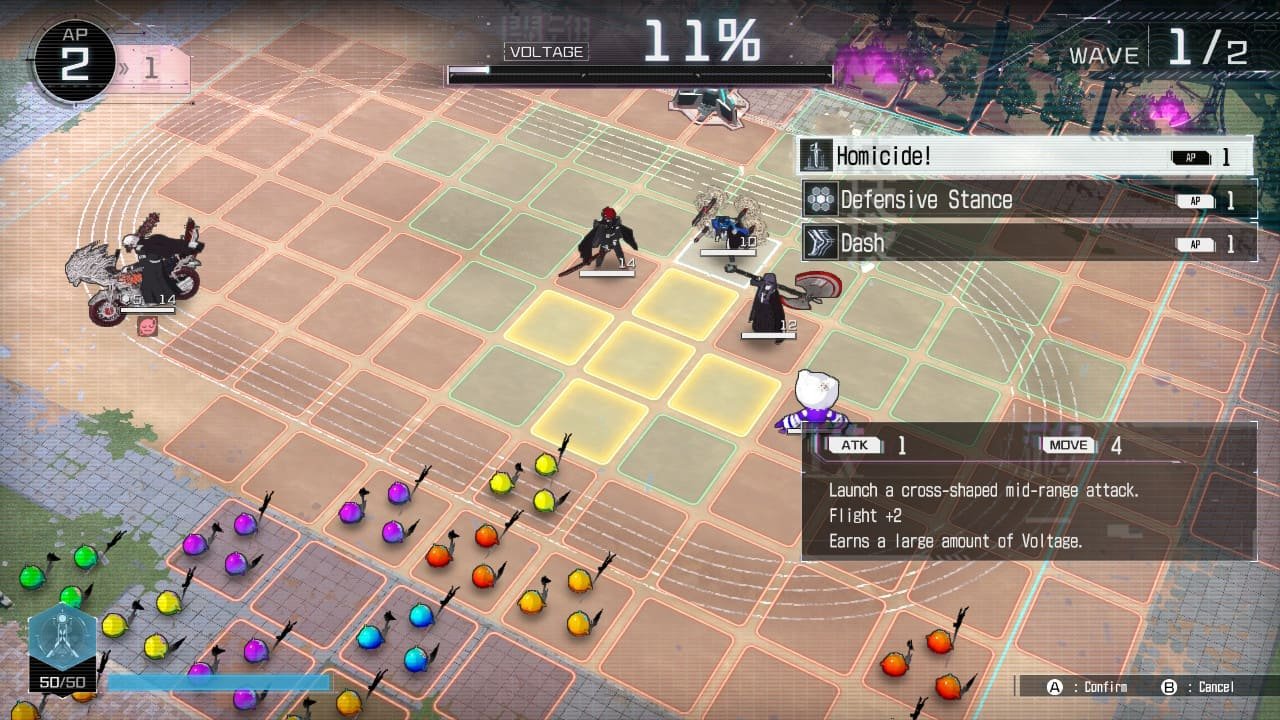
Darumi’s “Homicide!” move highlights its cross-shaped impact zone.
Tower Defense Battles
Night combat plays like a streamlined SRPG. Every action costs AP, and skill ranges and shapes require careful positioning as new enemies and hazards appear. What starts simple becomes tactically deep.
Art & Audio
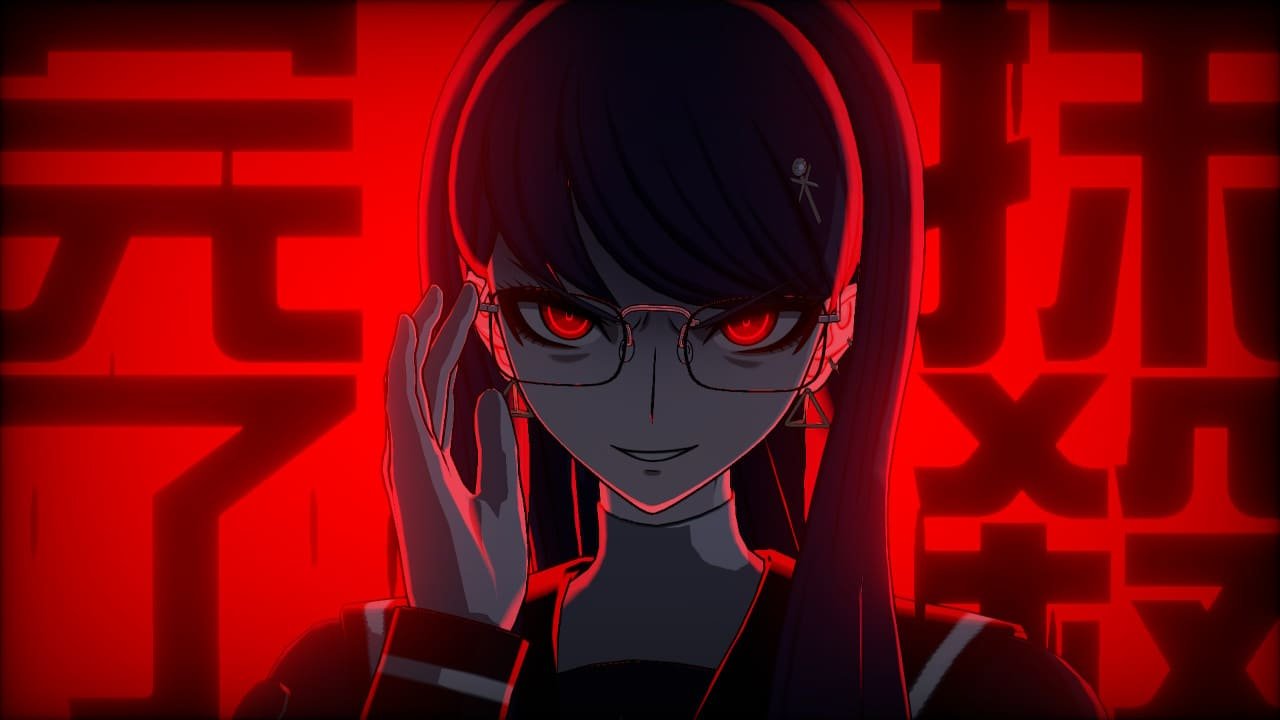
Hiruko’s Extermination finale lights up the battlefield.
Visual Style
The game’s style is boldly Too Kyo: sharp, contrasting character art with heavy color blocking and a sleek UI. Portraits express personality through exaggerated features fitting the surreal tone. Backgrounds blend 2D and light 3D elements, avoiding visual clutter.
Masafumi Takada’s soundtrack stands out:
Rumble
Slams into the soundtrack with a wild fusion of metalcore, glitch electronics, and breakbeat chaos, an unexpected but fitting burst of raw energy that amplifies key confrontations.
Carousel
Offers a slower burn: soft vocals and a melancholic R&B flow that wouldn’t feel out of place in a quiet, reflective moment from Persona 3.
Interception
Enters with operatic vocals and organs, giving boss moments a theatrical, ominous punch.
Hello Irregularity
Leans into synthetic distortion and anxious rhythms, wrapping tense scenes in a surreal, almost feverish atmosphere.
Unique Features and Mechanics
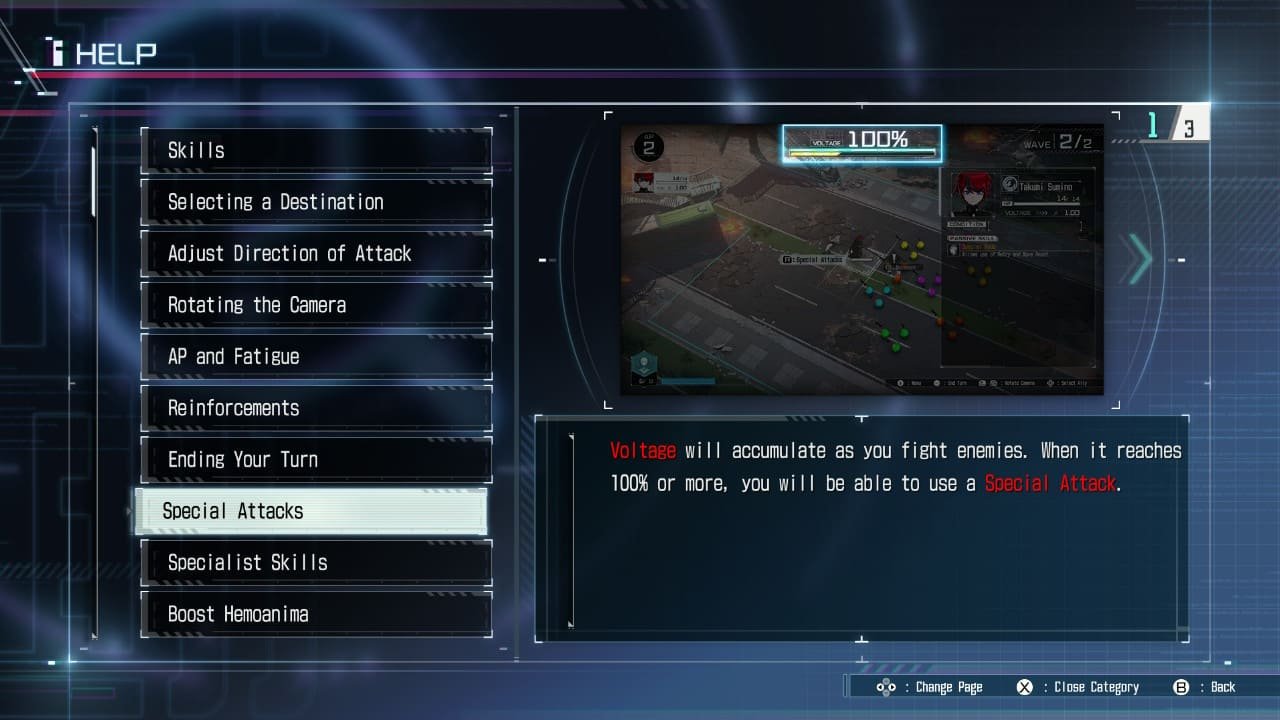
Voltage boosts special attacks’ strength in combat.
Voltage System
Characters build Voltage to unleash powerful supers, stunning themselves next turn. When allies die, Voltage spikes, encouraging risky plays.
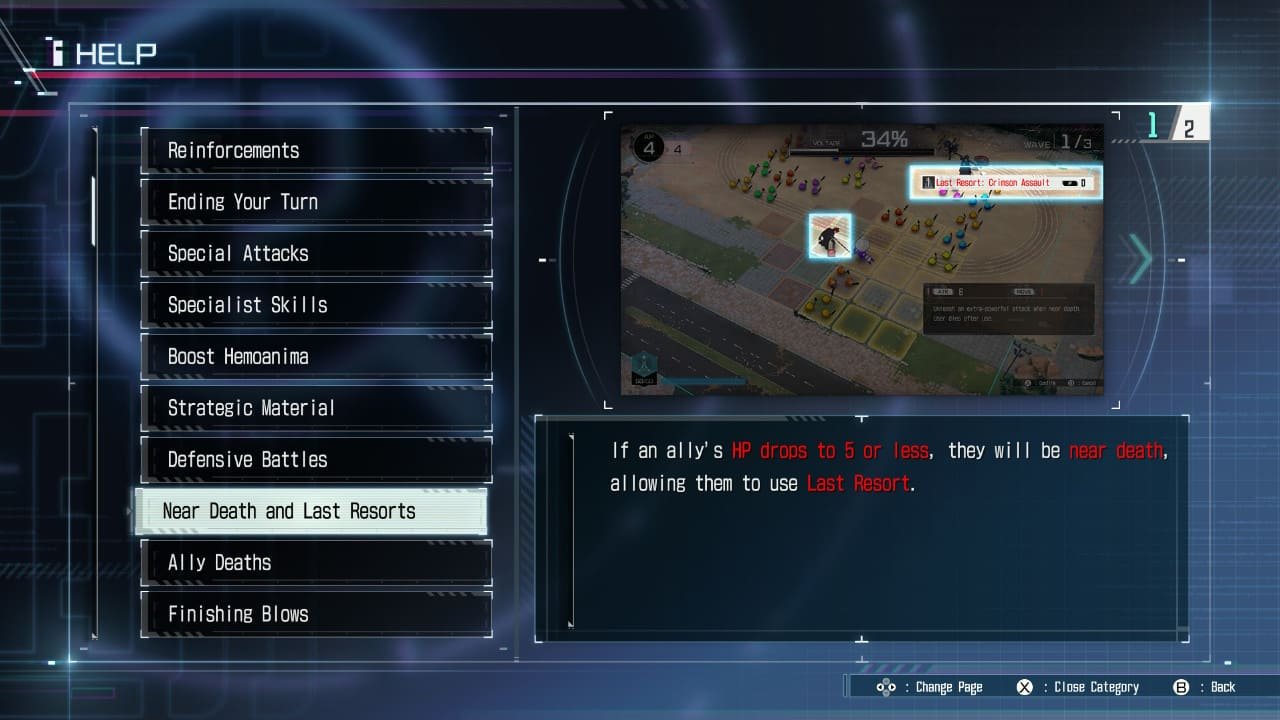
Near Death and Last Resorts mechanics guide survival in battle.
Last Resort
Near-death characters can perform a final super move at the cost of their life, adding emotional and tactical weight.
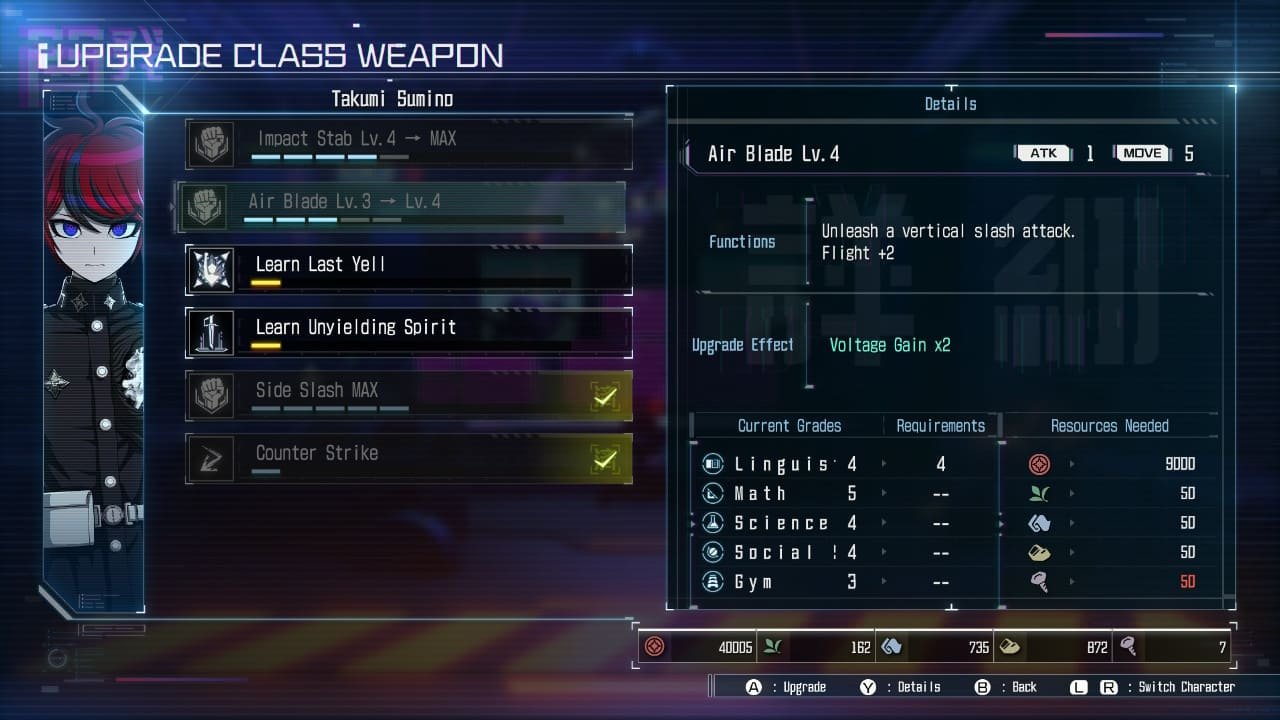
Weapon upgrades unlock new moves and power-ups.
Class & Weapon Progression
Upgrades tie into social bonds and stats, connecting downtime and combat growth.
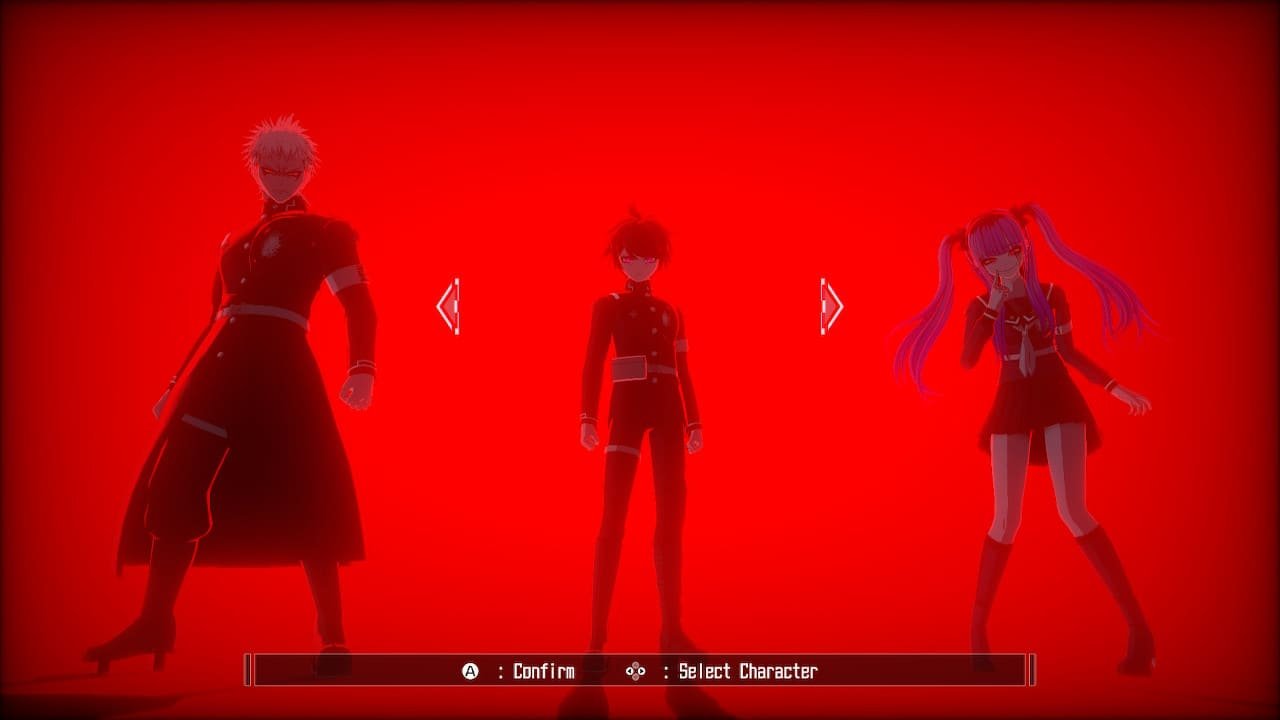
Pick Takemaru, Takumi, or Darumi for the big boss fight.
Finishing Blows
At boss battles, choosing the student to execute the enemy commander affects their abilities and appears in cutscenes that carry into new routes and New Game+.
Seiyuu Performances
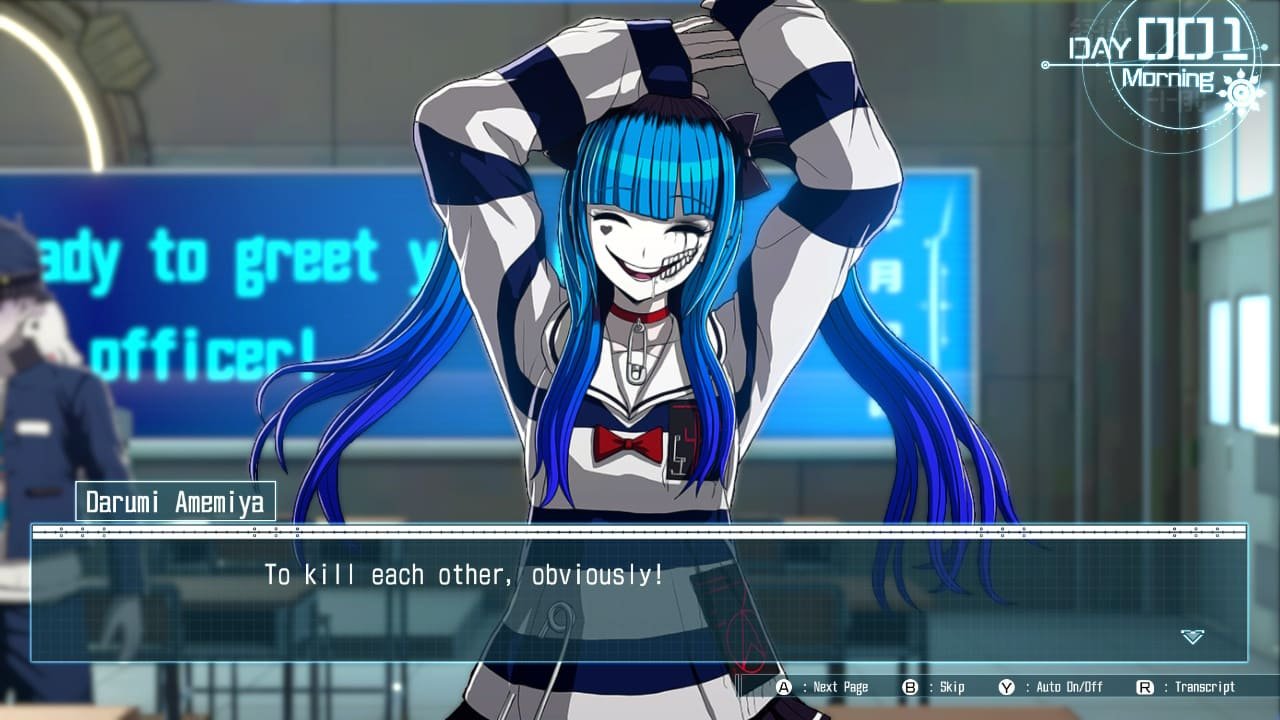
Darumi’s twisted humor lights up the classroom.
The cast includes Ayane Sakura, Fairouz Ai, and Takahiro Sakurai, whose nuanced work elevates the emotional stakes, especially Darumi’s chaotic energy.
- Ayane Sakura
- Known for Elonora Yumizuru from Tokyo Mirage Sessions #FE, Prinz Eugen from Azur Lane, Aira Shirtori from DanDaDan
- Takahiro Sakurai
- Known for Cloud Strife from Final Fantasy, Rohan Kishibe from JoJos, Jin from Xenoblade Chronicles 2
- Fairouz Ai
- Known for Jolyne Cujo from JoJos, Power from Chainsaw Man, Iono from Pokémon
- Marina Inoue
- Known for Yoko Littner from Gurren Lagaan, Mono from Boko No Hero Academia, Alicia Melchiott from Valkyria Chronicles
- Tomoyo Kurosawa
- Known for Sothis from Fire Emblem, Ringo from Soul Hackers 2, Kumiko Oumae from Sound! Euphonium
- Daisuke Namikawa
- Known for Yu Narukami from Persona 4, Lord El-Meloi from Fate, Goemon from Lupin The Third
The Hundred Line: Last Defense Academy Story & Writing
At its core, The Hundred Line explores isolation, responsibility, and how individuals face their regrets under intense pressure. While the story sometimes borders on the absurd, its emotional foundation remains genuine, a fact emphasized by the creators themselves.
In a documentary with Archipel, writer-director Kazutaka Kodaka described the narrative as “a coming-of-age story that only becomes possible in a world on the brink of collapse.” Kotaro Uchikoshi echoed this, explaining their aim to depict how youth are forced to grow up quickly through choices with lasting consequences.
This commitment shines through in the game’s branching paths and the emotional payoffs found in its route structure. Whether you’re grappling with moral dilemmas or witnessing characters break under strain, The Hundred Line doesn’t shy away from letting difficult moments linger. It’s messy and flawed but sincere. qualities familiar to fans of Danganronpa and Zero Escape alike.
Localization & Content Adjustments
The English script was handled by Active Gaming Media (AGM), the parent company of gaming outlet AUTOMATON. Known for stylized localizations, AGM’s version here leans heavily into punch-ups, often swapping original lines for pop culture references, internet slang, or jokes far removed from the Japanese script’s tone.
For example:
- Darumi’s “I’ve got it~! The Truth~” becomes “Elementary, my dear Clarissa! Stick with me and I’ll explain it all~ kyohohohoo!” a nod to a 1991 Nickelodeon sitcom most players likely won’t recognize.
- Tsubasa’s “Why are you laughing!? That’s creepy!” turns into “Your laugh is way creepy! And my name’s not Clarissa!”
- Kako Tsukumo’s “Eh? You’re already giving up!? Do high school students just give up like that?” becomes “I-is that true? Is kinky group sex some kind of rite of passage at this academy?!”
- Gaku’s “Ah! Is it because I’m poor? Are you a discriminator?” changes to “It’s because I’m poor isn’t it? That’s discrimination! I hope you get cancelled and end up alone and friendless.”
- One of the most jarring rewrites is Takemaru’s “You bitch, go get a damn sex change, right now! After that, I’ll give you a beating!!” which is reworked as “Can’t… hit… girls…! You sure you’re not really a dude? Now’d be a great time for you to crack yer egg an’ take a pounding!”
These rewrites alter character portrayals, disrupt emotional beats, and often undermine serious moments.
For players who enjoy irreverent humor, this localization may work. But those wanting fidelity should opt for Japanese audio and subtitles. The tonal gap is wide enough to change your impression.
Given the team’s sacrifices and the more restrained localization of Rain Code, this chaotic rewrite feels misaligned even disrespectful. The care poured into these characters was clearly lost in translation.
The Hundred Line: Last Defense Academy Verdict
The Hundred Line: Last Defense Academy blends strategy, narrative depth, and character-driven drama into a bold, engaging experience. Kazutaka Kodaka and Kotaro Uchikoshi craft an intense coming-of-age tale, with Darumi’s chaotic charm and sharp wit anchoring a cast that leaves a lasting impression.
Rui Komatsuzaki’s striking art and Masafumi Takada’s versatile soundtrack, blending metalcore energy and melancholic R&B, elevate every moment with vivid style. The tactical tower defense gameplay deepens over time, with choices shaping battles and stories across 100 unique endings.
Yet, the journey has hiccups. The English localization, handled by Active Gaming Media, leans heavily on pop culture humor, like dated sitcom references, which may polarize players seeking tonal fidelity. The opening route’s extended setup may feel lengthy for some before the broader narrative unfolds.
Despite these quirks, the game’s ambition, driven by Akihiro Togawa’s direction and Atsuhiro Iwakami’s production, shines through. Ayane Sakura, Fairouz Ai, and Takahiro Sakurai’s voice performances breathe life into characters, even through script inconsistencies.
For fans of Danganronpa or Zero Escape, this is Kodaka and Uchikoshi at their boldest, fusing strategy and storytelling with 100 endings to offer a path for every player. It’s not flawless, but it’s a rewarding journey worth taking.
The Hundred Line: Last Defense Academy TLDR
The Hundred Line: Last Defense Academy (Switch)
The Hundred Line: Last Defense Academy fuses gripping storytelling with tactical tower defense where choices shape the world. Darumi’s chaotic brilliance and 100 endings offer a path for every player, though the extended opening and polarizing localization humor temper the experience slightly.
Kodaka and Uchikoshi fans will find a flawed but unforgettable gem that remains a standout narrative experience on Switch.
References
- Trailer
- Hundred Line – Short Documentary with Kazutaka Kodaka & Kotaro Uchikoshi – Archipel
- Rumble – Paledusk
- Carosuel
- Interception
- Hello Irregularity