
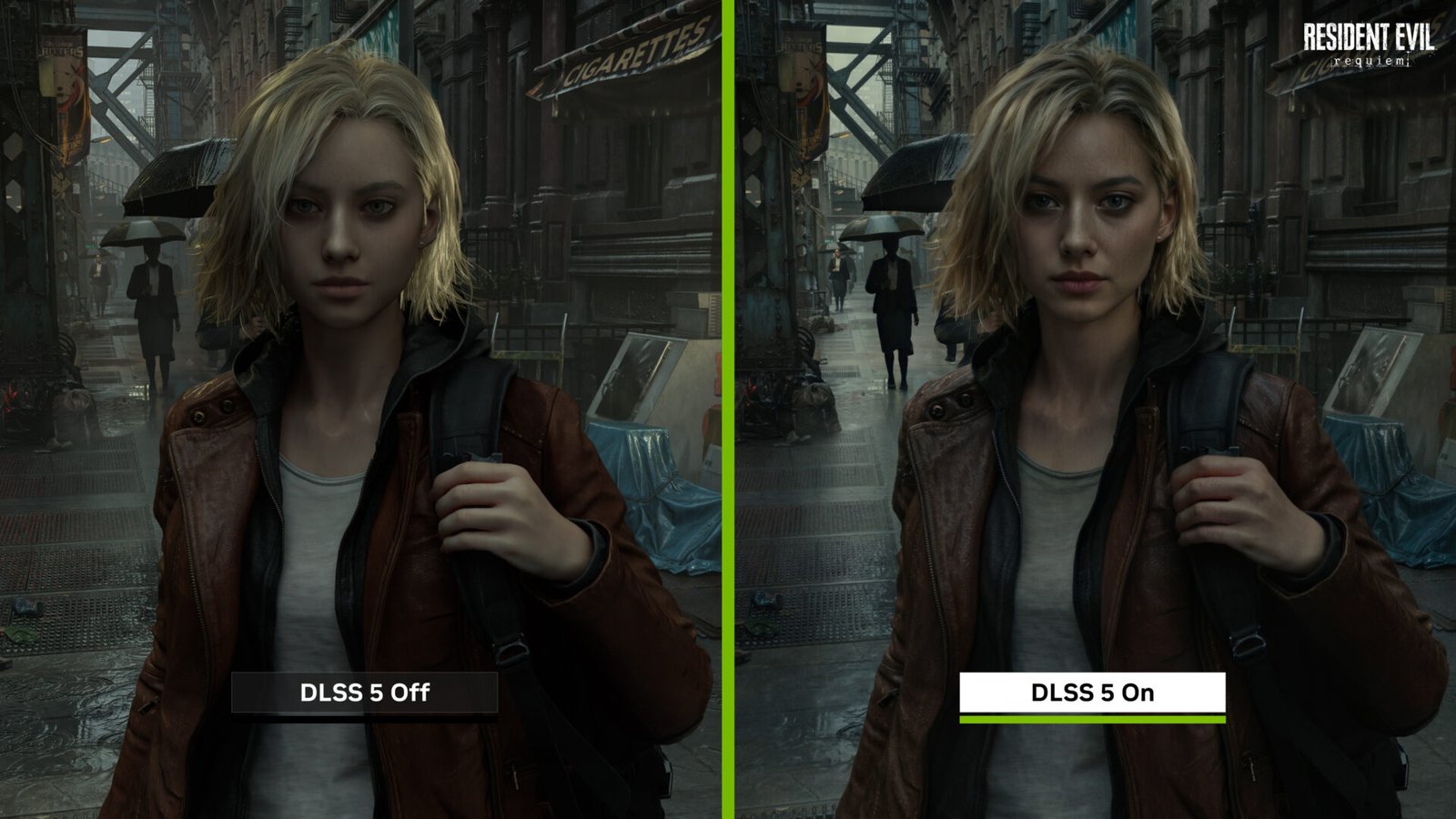
NVIDIA DLSS 5 announced at GTC 2026 marks a massive shift from performance-focused upscaling to a fundamental reinvention of real-time computer graphics. Arriving this fall, the technology introduces a neural rendering model designed to infuse pixels with photoreal lighting and materials previously reserved for Hollywood visual effects.
Announcing NVIDIA DLSS 5
DLSS 5: Bridging the Divide Between Rendering and Reality
Building on what NVIDIA describes as a “GPT moment” for graphics, DLSS 5 moves beyond simple pixel reconstruction or frame interpolation. The AI model is trained to understand complex scene semantics. It manages subsurface scattering on skin, the sheen of fabric, and intricate light interactions on hair, all while maintaining the structure of the original 3D content.
Key Technical Pillars:
- Neural Material Rendering: Enhances source 3D content with realistic material properties and environment-aware lighting.
- Deterministic Output: Unlike standard generative models, DLSS 5 is grounded in the developer’s motion vectors to ensure frame-to-frame consistency and visual stability.
- Granular Developer Control: Artists retain tools for intensity and masking to ensure AI enhancements remain aligned with a game’s unique aesthetic.
Major Game Support and Confirmed Titles
NVIDIA confirmed that DLSS 5 will see immediate support from industry leaders, including Bethesda, Capcom, and Ubisoft. The announcement also served as a confirmation for several long rumored projects and highly anticipated updates:
- Hogwarts Legacy
- Resident Evil Requiem
- The Elder Scrolls IV: Oblivion Remastered
- Assassin’s Creed Shadows
- Starfield
- Phantom Blade Zero
Editor’s Take
From the demonstration footage released with the announcement, DLSS 5’s neural rendering delivers noticeably more realistic subsurface scattering, fabric sheen, and environment-aware lighting on character models in several scenes. These additions can look impressive in isolation.
Even so, the same early examples frequently cross into uncanny valley territory. Faces and skin take on an overly smoothed, hyper-real quality that feels disconnected from the original art direction. In cases like Resident Evil Requiem’s Grace or certain Starfield NPCs, the result borders on generic “AI beauty” rather than preserving the distinct stylistic choices developers made. This raises legitimate questions about whether the promised granular controls truly prevent overrides of artistic intent, or if the tech inherently pushes toward homogenization.
The announcement’s near-total silence on DLSS’s persistent real-world drawbacks is even more concerning. Frame generation continues to introduce measurable input latency, and inconsistent frame pacing remains a frequent complaint in gameplay scenarios that demand responsiveness. For many players, these core issues, which directly affect feel, precision, and enjoyment, far outweigh marginal gains in photorealistic detail.
Given NVIDIA’s overwhelming dominance in the discrete GPU market with a 90 percent plus share in recent reports, there is reduced incentive to prioritize fixes for these longstanding pain points over flashy, marketable visual upgrades. At KonNetwork, we continue to prioritize technologies that deliver genuine improvements to the player experience, not just another layer of spectacle that risks compromising what makes games feel authentic and responsive.