
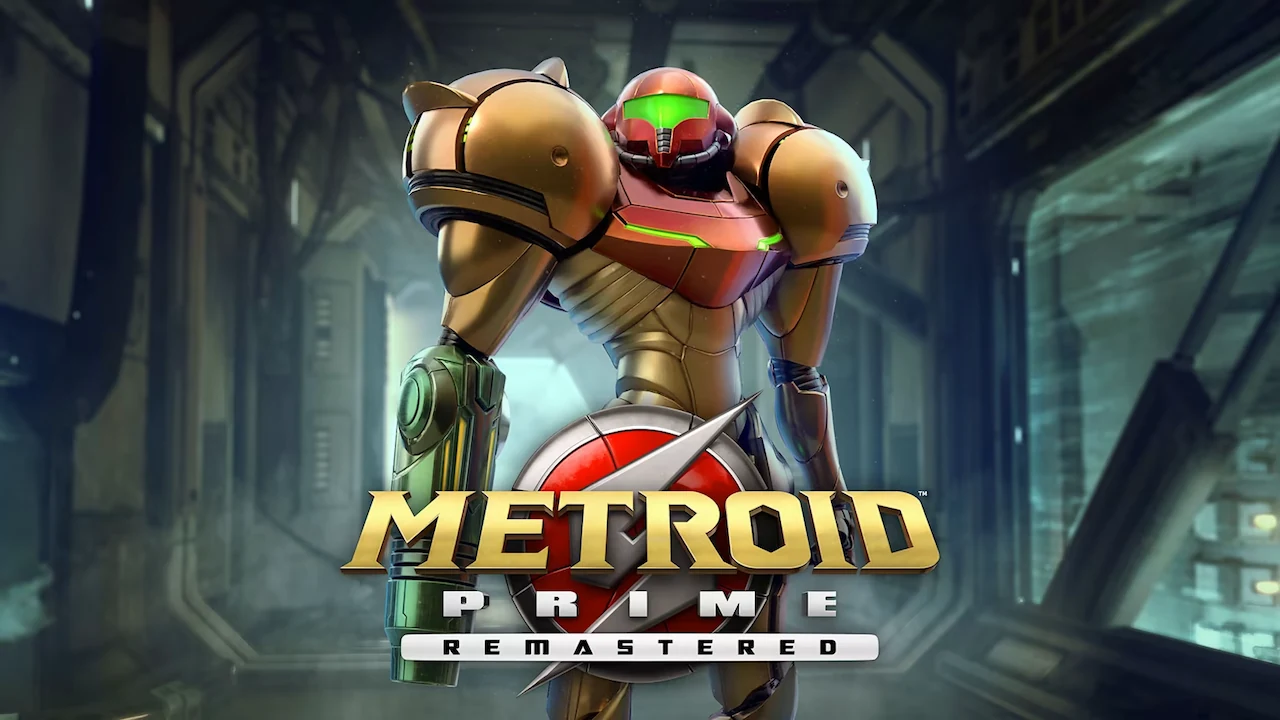
Metroid Prime Remastered is more than just a nostalgic trip back to Tallon IV; it is a masterclass in how to modernize a classic without compromising its soul.
By pairing strikingly sharp visuals with a suite of dual-stick control schemes and accessibility options, Retro Studios has ensured that this 2023 experience feels every bit as revolutionary as the original did two decades ago.
| Title | Metroid Prime Remastered |
| Released | Feb 8, 2023 |
| Developer | Retro Studios Inc |
| Publisher | Nintendo |
| Platform |   |
| Genre | Action-Adventure, FPS, Metroidvania |
| Rating | T |
| Pricing | $39.99 |
Completed on: Switch 2 (Docked), Normal
HowLongToBeat Time: 16 Hours (Main + Sides) | My Clear Time: 9hrs 45min
Metroid Prime Remastered Background
Metroid Prime arrived on GameCube as one of Nintendo’s key first party releases and marked the moment Retro Studios proved they understood Metroid on the same level as Sakamoto. Prime began as an unrelated project that caught Shigeru Miyamoto’s interest. He asked Retro to drop their current work and rebuild it into a Metroid title using that technology.
There are plenty of behind-the-scenes stories from this period, including the faulty GameCube dev unit that required a freezer to keep it running, and the visor static effect created by displaying strands of game code.
The remaster circulated through rumor cycles until Nintendo placed it in the middle of a Direct with a surprise digital release and a later physical copy for 39.99. It features redesigned visuals, several control layouts including a dual stick option, and a few regional extras. One of the more notable additions is the narration support, which was limited in Europe and fully present in Japan but absent in North America during the original release.
The development team for Metroid Prime Remastered includes:
- Bill Vandervoort (Game Design Director): No One Lives Forever, Metroid Prime 3: Corruption
- Kyle Hefley, Greg Frizzell (Lead Character Artist/ Lead Environment Artist)
- Kyle: Spider-Man: Web of Shadows, Call of Duty: Black Ops, Halo 4
- Greg: Defiance, Atlas Reactor
- Kenji Yamamoto (Composer): Super Metroid, Famicom Detective Club, Metroid Dread
- Marisa Palumbo (Producer): Manhunt 2, L.A. Noire, Max Payne 3
- Michael Kelbaugh (Executive Producer): Metroid Prime 2: Echoes, Metroid Prime 3: Corruption, Donkey Kong Country: Tropical Freeze
Metroid Prime Remastered Experience
After completing my second run of Metroid Dread, I returned to Metroid Prime Remastered for another full playthrough. I had not touched the game since its launch on February 8, 2023. I have played every 2D entry except Metroid II and the Samus Returns remake, and I finished Prime on GameCube during its original release. Earlier this year I also revisited a small portion of Prime 2: Echoes.
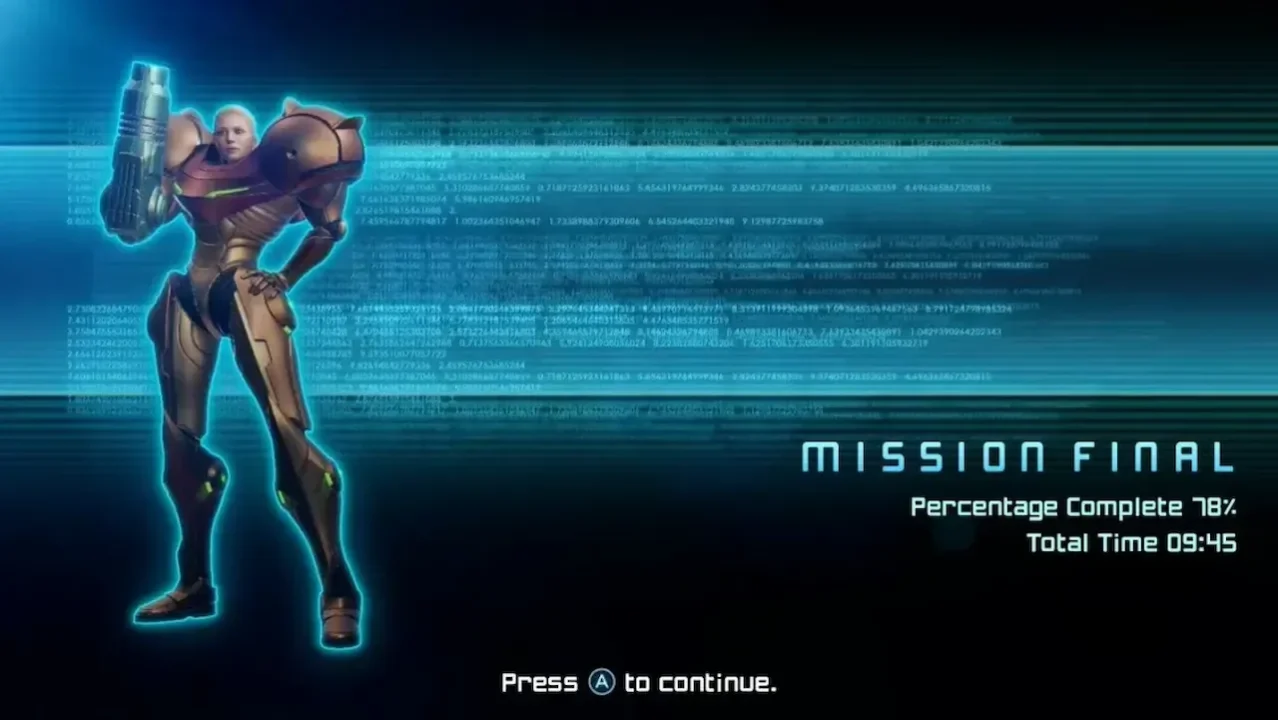
Samus closes the run with style and speed.
Metroid Prime Remastered Impressions
Introduction
Prime opens with Samus responding to a distress signal on a derelict station. A chain of events interrupts her escape, leaving several suits and beam functions behind. She follows Ridley to Talon IV and begins rebuilding her arsenal.
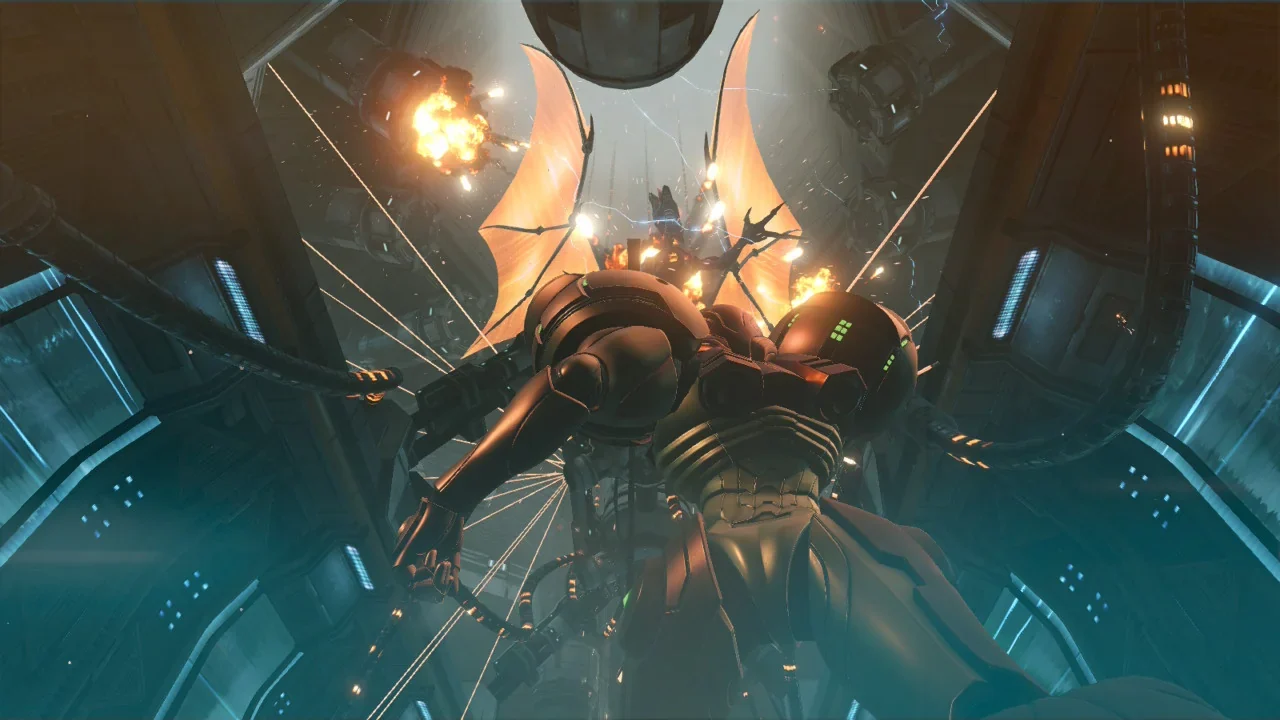
Samus watches the escape that kicks everything into motion.
Gameplay & Mechanics
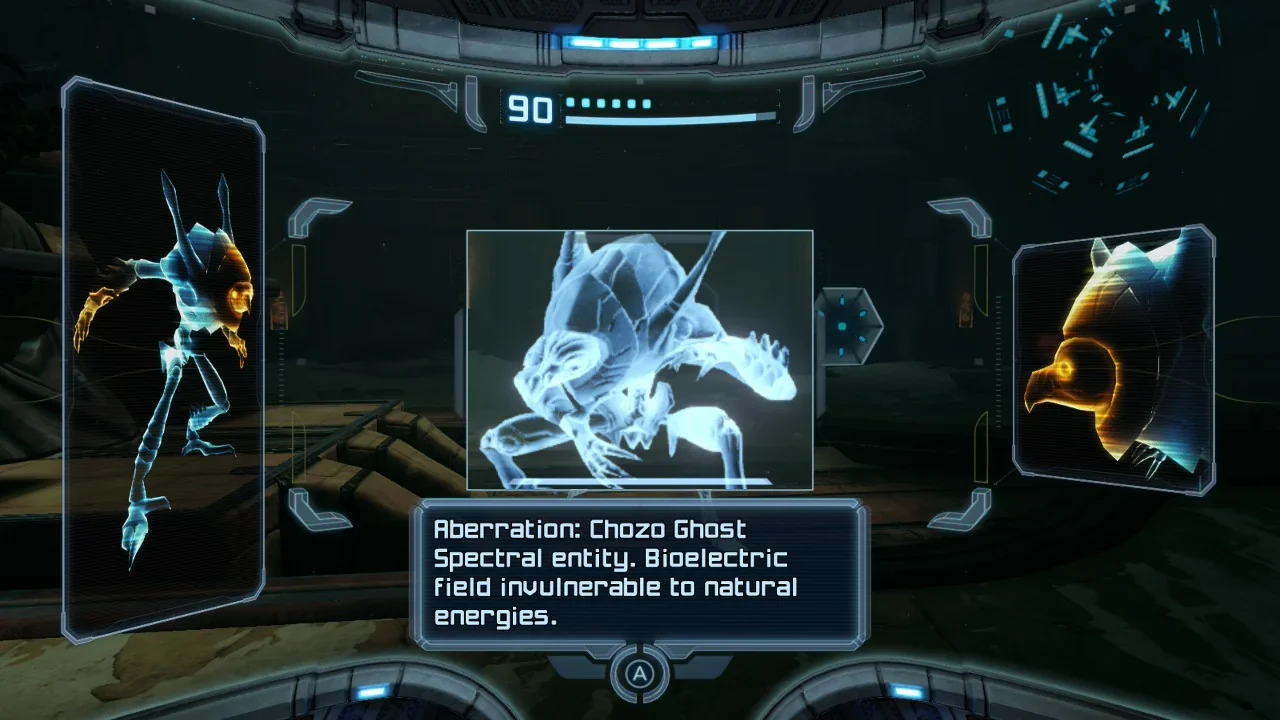
The visor reveals what the eye can’t catch.
Scan Visor
The Scan Visor records enemies, objects, Chozo scripts, terminals, and environmental details. It expands the world’s context and contributes to unlockable extras once enough log entries are collected.
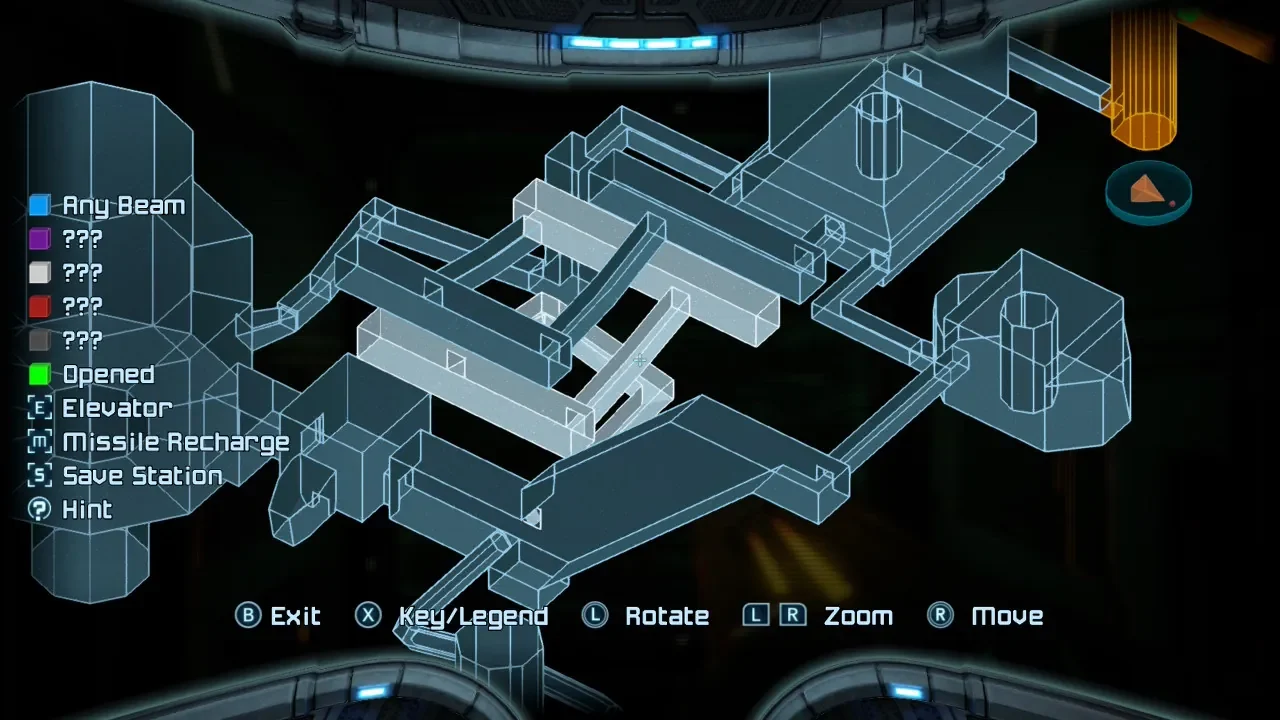
Prime’s 3D map keeps every path within reach.
3D Map
Prime’s 3D map presents each room with clear vertical layering and door indicators that match beam requirements. It helps track routes and reduces the feeling of wandering without direction.
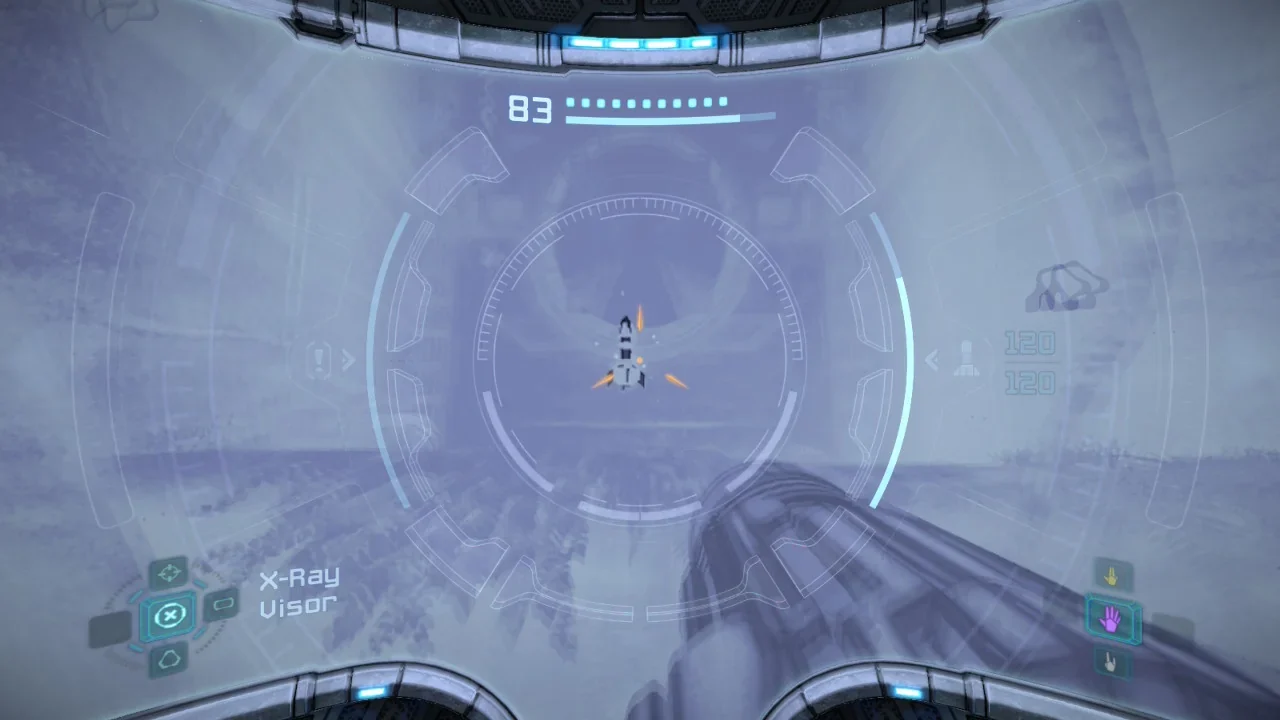
The X-Ray Visor pulls hidden upgrades into focus.
Beam & Visor Switching
Samus transitions between beams and visor modes in real time. This keeps battles active since certain foes react differently to specific beams, and visor modes reveal clues, puzzles, and weak points that are invisible in standard view.
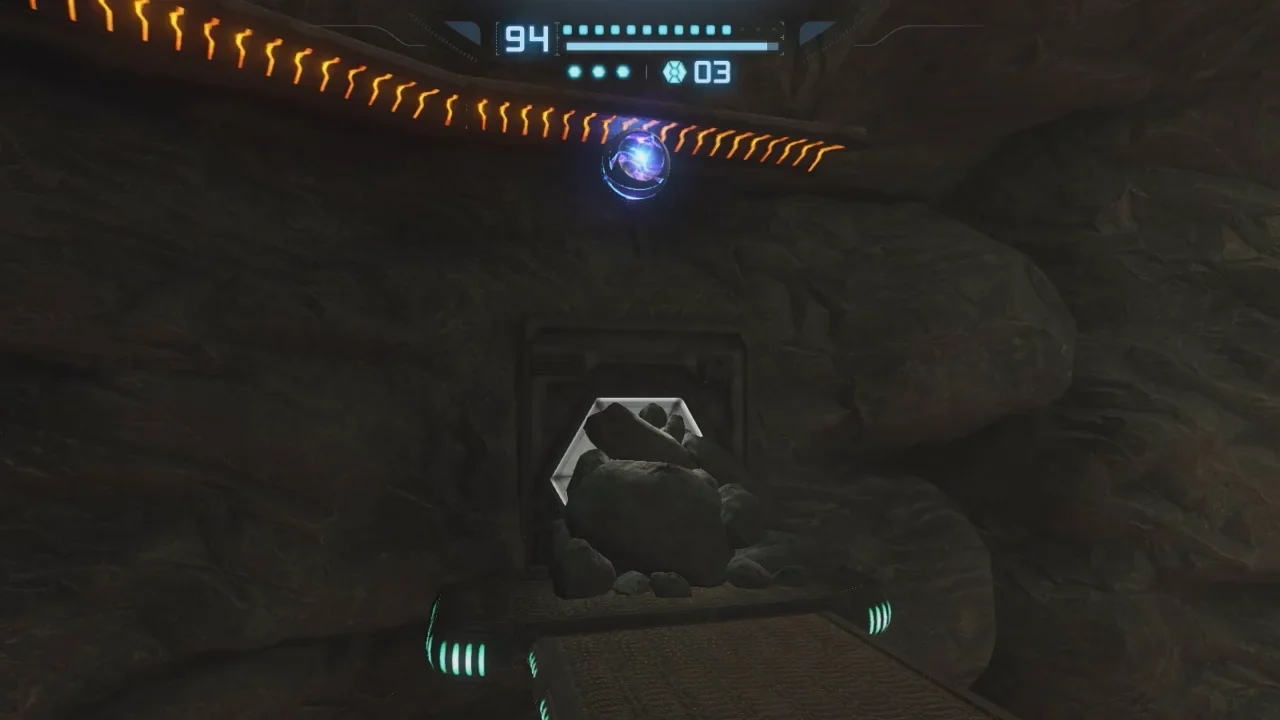
The Spider Ball turns tight paths into new routes.
Morph Ball & Physics
The Morph Ball has a weight and momentum that feels consistent on slopes, half-pipes, rails, and tunnels. Bomb jumps gain height through controlled timing, and several late-game routes depend on this precision.
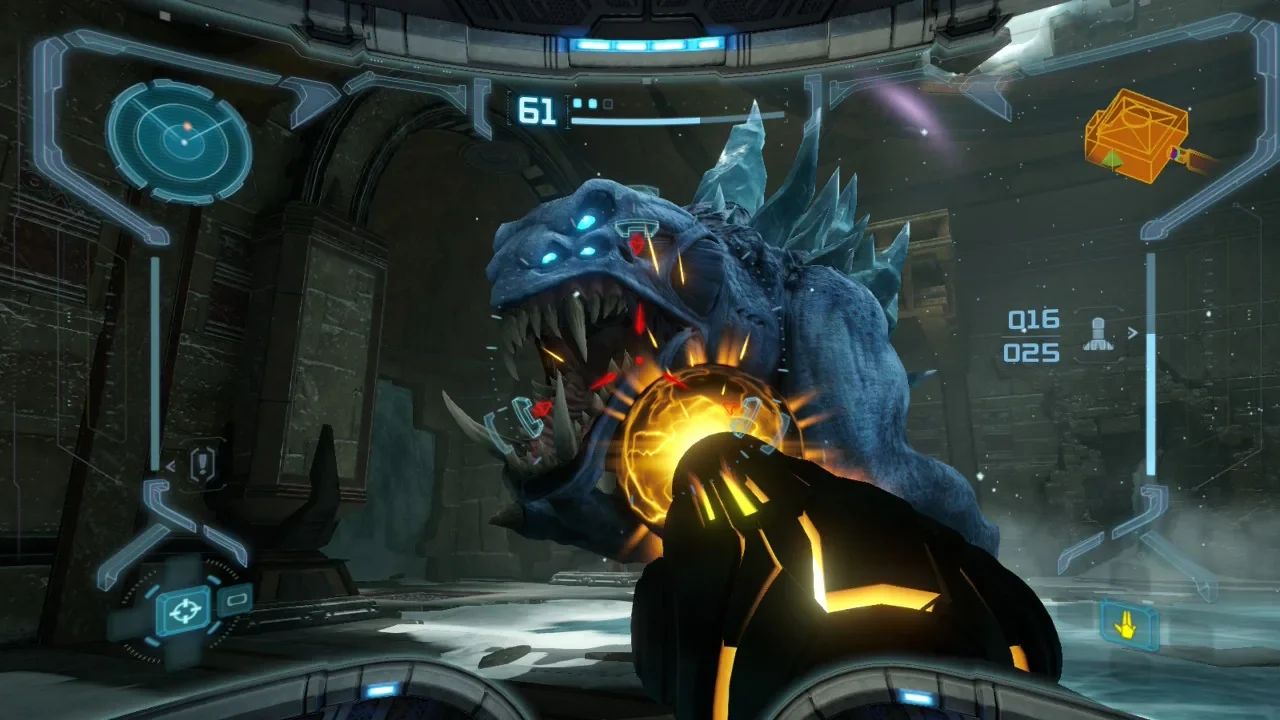
Sheegoth leaves an opening and Samus answers fast.
Bosses
Each major boss telegraphs vulnerabilities through color cues, sound cues, and environmental prompts. The readability helps players learn patterns rather than rely on brute force.
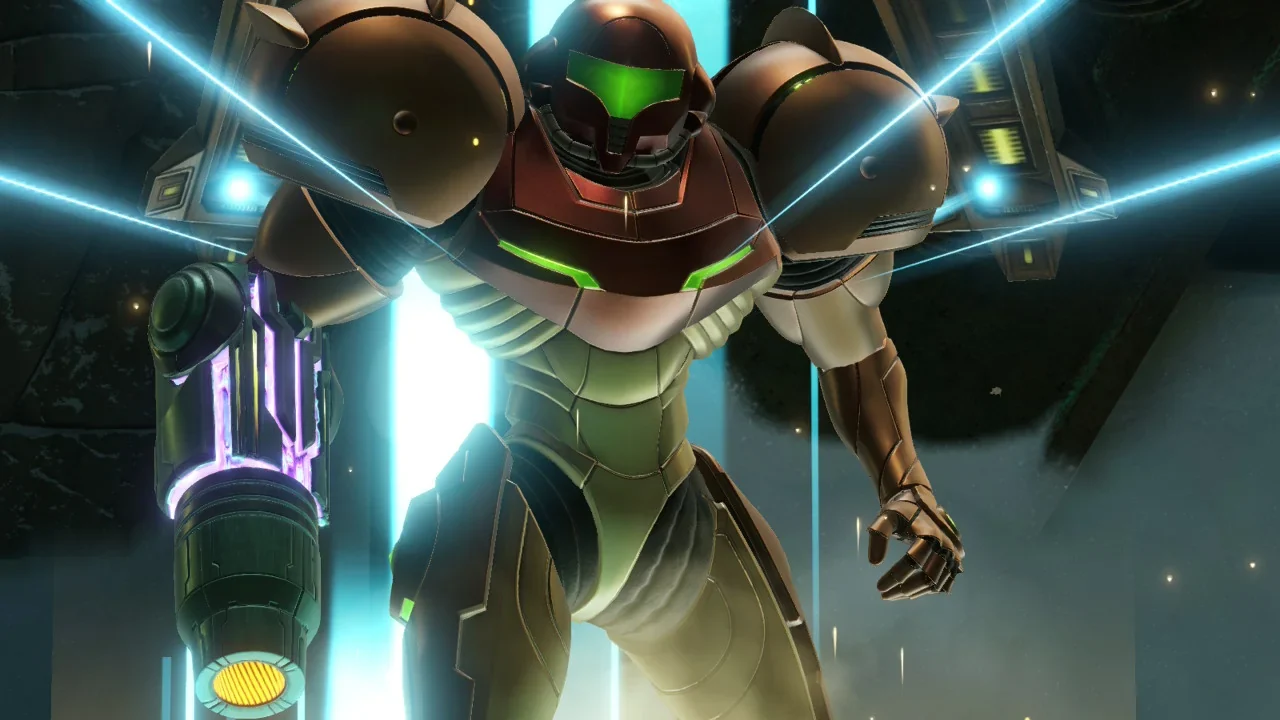
Blue beams restore Samus before the next stretch of exploration.
Save Rooms & Exploration
Save stations and elevators are spaced in a way that encourages exploration without punishing the player for backtracking. The world loops into itself so that new routes open naturally as abilities return.
Art & Audio
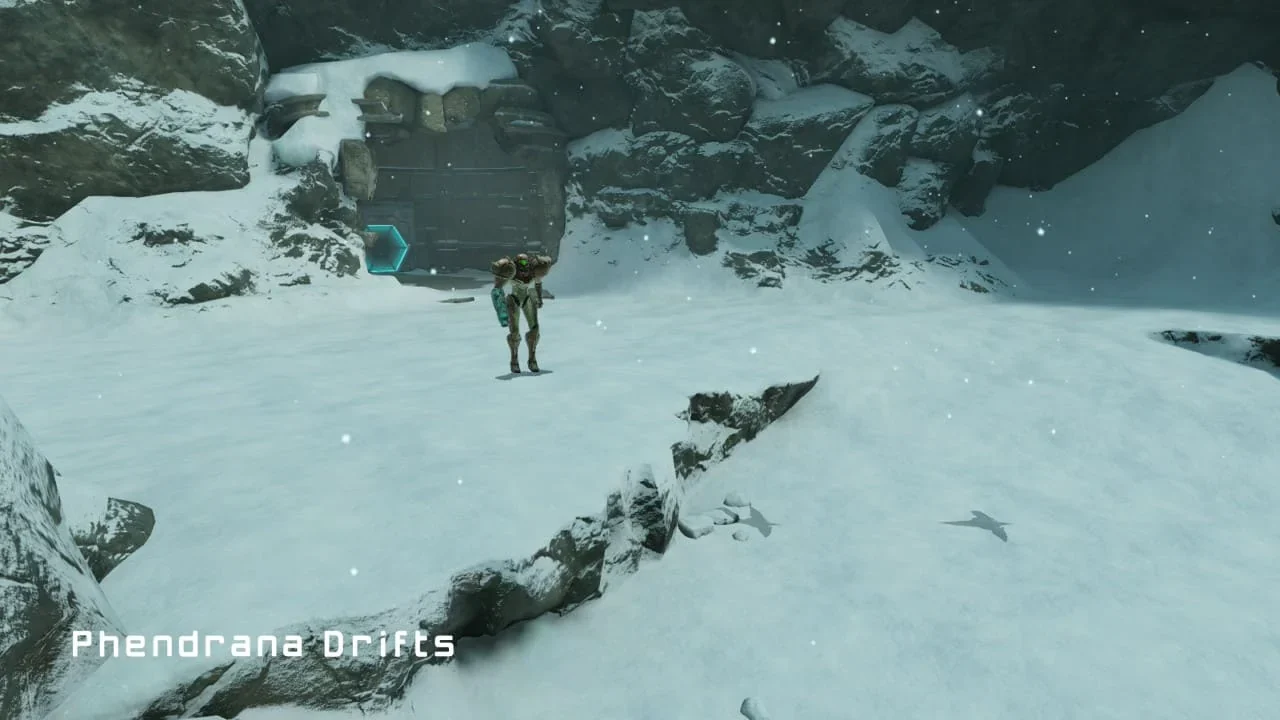
Prime Remastered raises the visual standard by rebuilding environments with detailed geometry and lighting that supports each region’s identity. Phendrana reflects cold air and soft snow while Magmoor emphasizes heat distortion and rough surfaces. Every biome feels distinct due to texture work that stays faithful to the GameCube art direction.
Samus bites harder.
Yamamoto’s music holds up with a mix of eerie ambience, heavy percussion, and melodic cues. Phendrana uses a colder, airy arrangement that sets a calm pace. Magmoor leans into rhythmic pressure that fits the tension of volcanic caverns.
Standout tracks:
Magmoor Caverns
Heavy percussion and synths drive a tense rhythm that matches the volcanic heat and lava hazards.
Phendrana Drifts
Quiet piano and twinkling high notes create a calm, cold atmosphere over snowy shores.
Crashed Ship Frigate Orpheon
Piano melodies and synth effects form a soothing underwater ambiance in the flooded wreck.
Unique Features & Mechanics
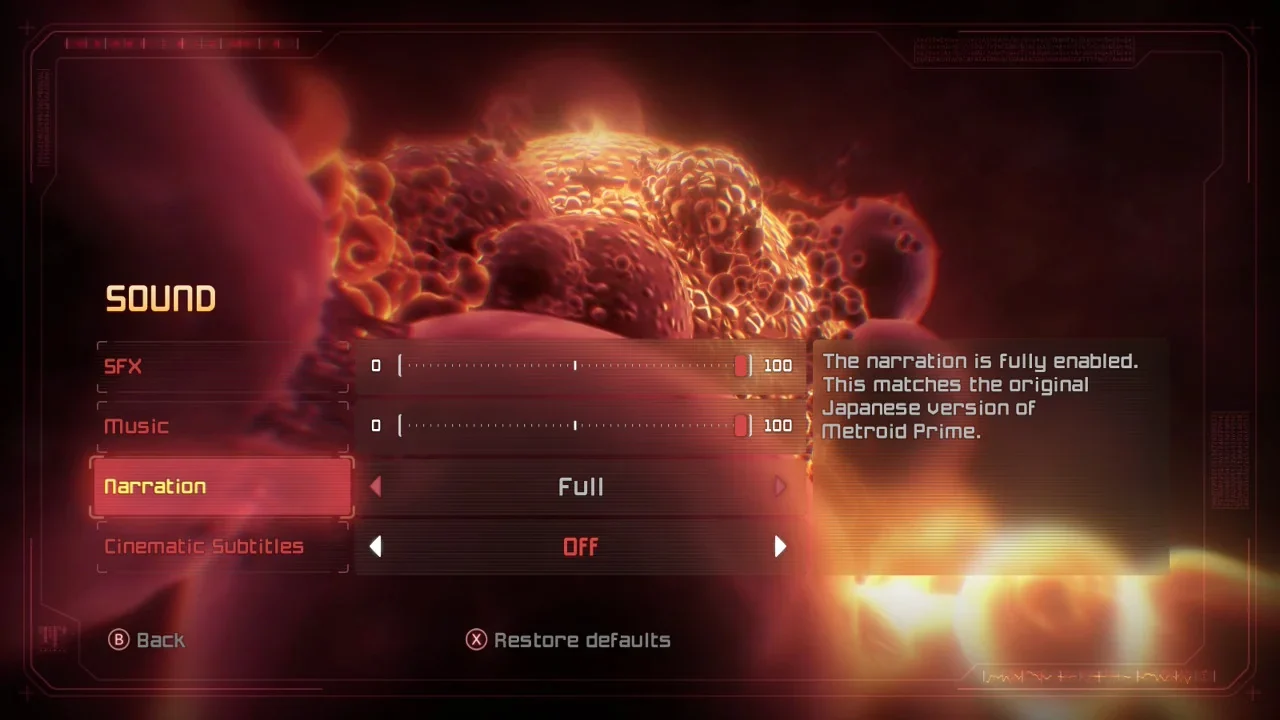
Narration can be toggled on, off, or in partial mode for full control.
Narration Options
The narration from the Japanese and European releases is now included as an optional toggle. Players can choose full narration, partial narration, or disable it entirely to match the original North American release.
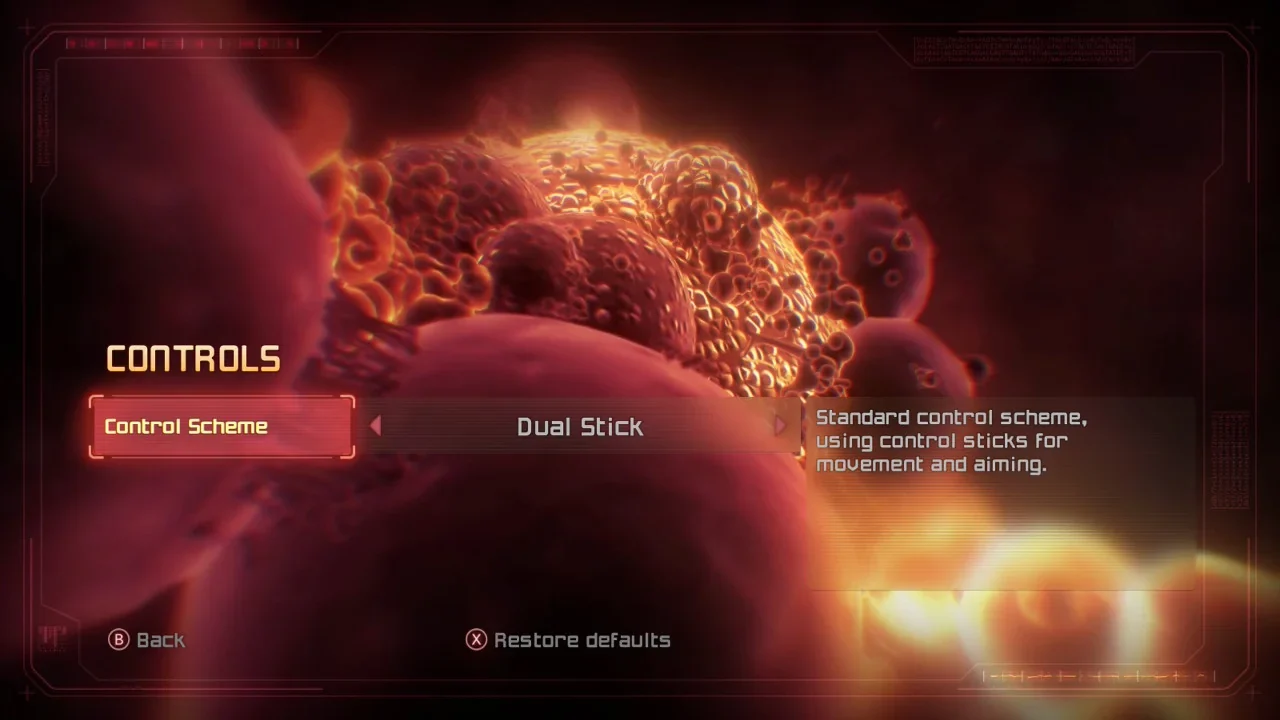
Dual Stick and motion options keep combat feeling fresh.
Controller Layouts
Prime Remastered supports dual stick controls, motion aiming, a hybrid layout that blends sticks with motion, and a layout that recreates the GameCube configuration. Each one changes the feel of movement and combat without altering the core structure.
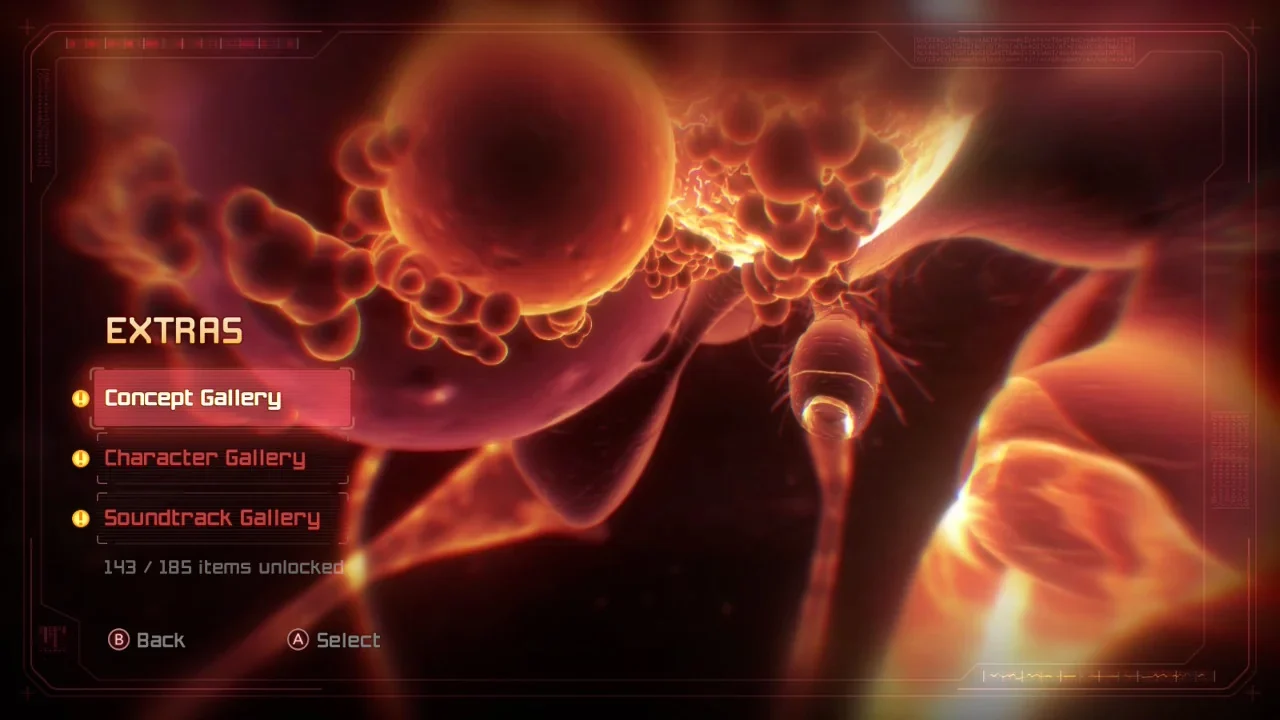
Concepts and models await those who explore every corner.
Extras & Unlockables
The Gallery and Model Viewer expand as players collect log entries and complete difficulty modes. These bonus features reward exploration rather than speed.
Metroid Prime Remastered Switch 2 Performance
Doors open faster, reducing the overall time spent between rooms outside of combat and exploration. Prime maintains 60fps even in handheld mode, a rarity on the other Switch models. Docked resolution is 900p, handheld is 600p.
Metroid Prime Remastered Verdict
Metroid Prime Remastered makes its case that it was never carried by nostalgia. Samus feels responsive in combat with the dash mechanic and fluid while moving through Talon IV with the morph ball boost. The world stays immersive because the game leaves space for environmental detail instead of constant dialogue. Every region has a clear identity and the audio design carries that weight. Prime pulls you in through atmosphere, pacing, and how its map design rewards steady exploration without nudging you at every step.
The controller support adds more flexibility than the GameCube release ever had. Dual stick, motion aiming, and the hybrid setup offer different ways to approach combat and traversal while still feeling true to the original layout. The options menu also includes a colorblind setting that adjusts visual elements so that enemy cues and beam indicators stay readable for more players.
Metroid’s variety of biomes works well in 3D and the art direction is nearly untouched aside from a few door designs. Performance holds 60fps in handheld mode which is still uncommon on the Switch. With Metroid Prime 4 almost here, this is a perfect time to revisit the GameCube classic that put Retro Studios on the map.
If Nintendo is paying attention, a remaster of Echoes, Corruption, and Hunters would complete the set as we get ready for Prime 4.
Metroid Prime Remastered TLDR
Metroid Prime Remastered (Switch 2)
Metroid Prime Remastered raises the bar for future remasters through strong performance, careful visual work, and controls that fit modern play without losing the core identity.