Metroid Prime 4: Beyond delivers confident combat and sharp encounter design, but its segmented progression and pacing decisions stall the seamless exploration momentum that defined the series.
At a Glance
Release Date
Dec 4, 2025
Developer
Retro Studios
Platforms


Genre
Action-Adventure, Metroidvania, FPS
Rating
Teen
Price
$59.99 (Switch)
$69.99 (Switch 2)
Completed on: Switch 2 (Docked), Normal
Time: HLTB 14½ Hours (Main + Sides) | My Clear Time: 15hrs 33min
Metroid Prime 4: Beyond Background
Metroid Prime 4: Beyond has a notably complex development history. It began at Bandai Namco Studios Singapore in collaboration with Nintendo, following its brief E3 2017 logo reveal.At the time, Nintendo confirmed that Retro Studios was not involved, and the game remained largely unseen for several years (Eurogamer, 2018).
In 2019, Nintendo announced development had restarted from scratch under Retro Studios, restoring continuity with the Prime trilogy and the series’ original design identity. The final release builds directly on the Prime foundations while modernizing pacing and systems, emphasizing mechanical cohesion, environmental readability, and momentum between exploration, combat, and puzzles.
The development team for Metroid Prime 4: Beyond includes:
- Bill Vandervoort (Design Director): Metroid Prime 3: Corruption, No One Lives Forever, Alien vs Predator 2
- Jhony Ljungstedt (Senior Art Director): Mirror’s Edge: Catalyst, Metroid Prime: Remastered
- Kyle Hefley (Lead Character Artist): Spider-Man: Web of Shadows, Halo 4, Metroid Prime: Remastered
- Kenji Yamamoto (Composer): Super Metroid, Metroid Prime 1-3, Famicom Detective Club
- Minako Hamano (Composer): Super Metroid, Metroid Fusion, Wario World
Metroid Prime 4: Beyond Experience
Before playing, I revisited Metroid Dread and Prime Remastered. I’ve completed all 2D Metroid games except Metroid II / Samus Returns, and my 3D experience includes Metroid Prime and Prime Hunters.
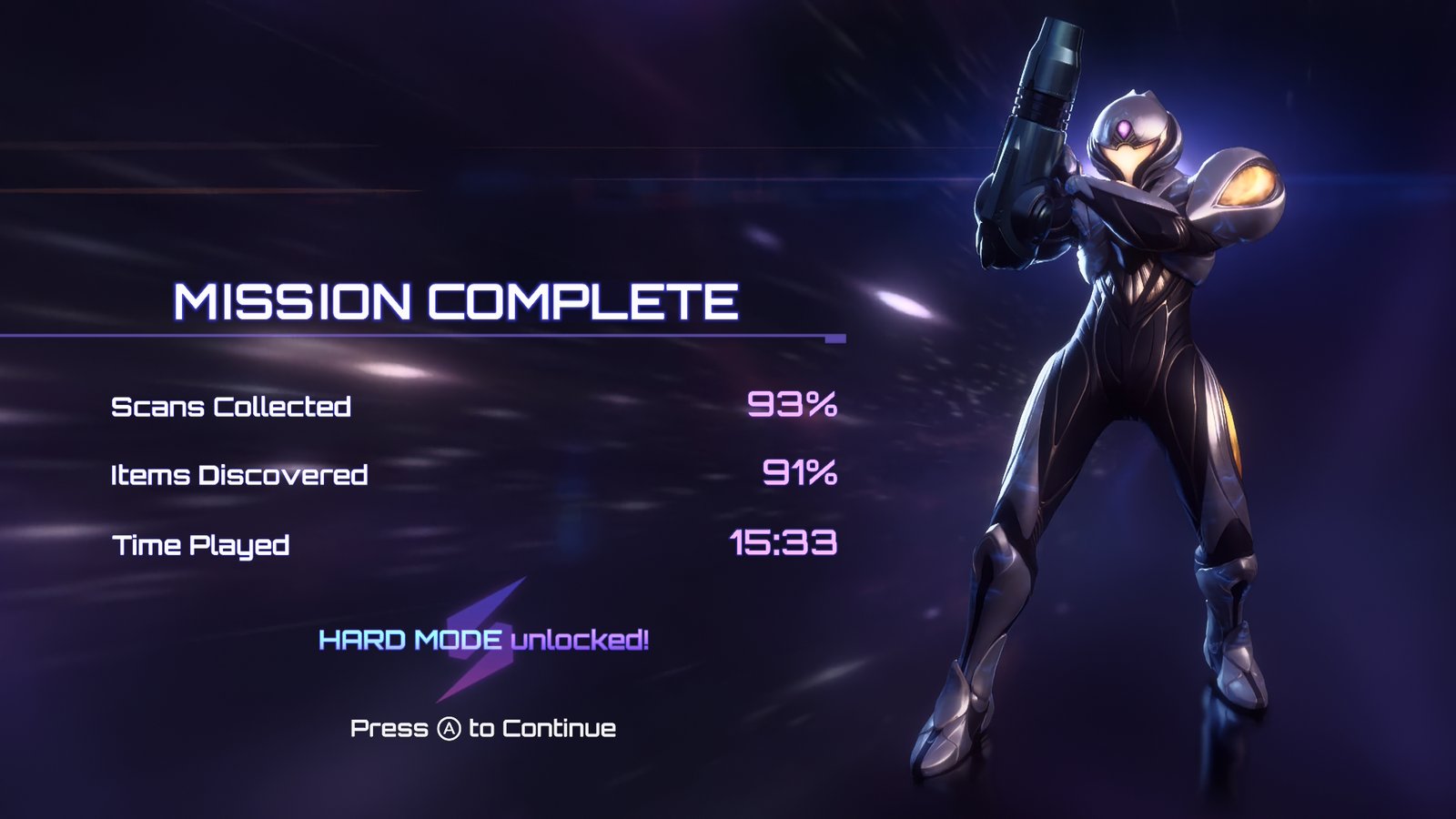
Completion stats highlight how much Viewros still hides.
Metroid Prime 4: Beyond Impressions
Introduction
Prime 4 immediately immerses you in a high-stakes scenario. Samus begins at a Galactic Federation Base under attack, serving as an intense tutorial before leading into Viewros, where the main game begins.
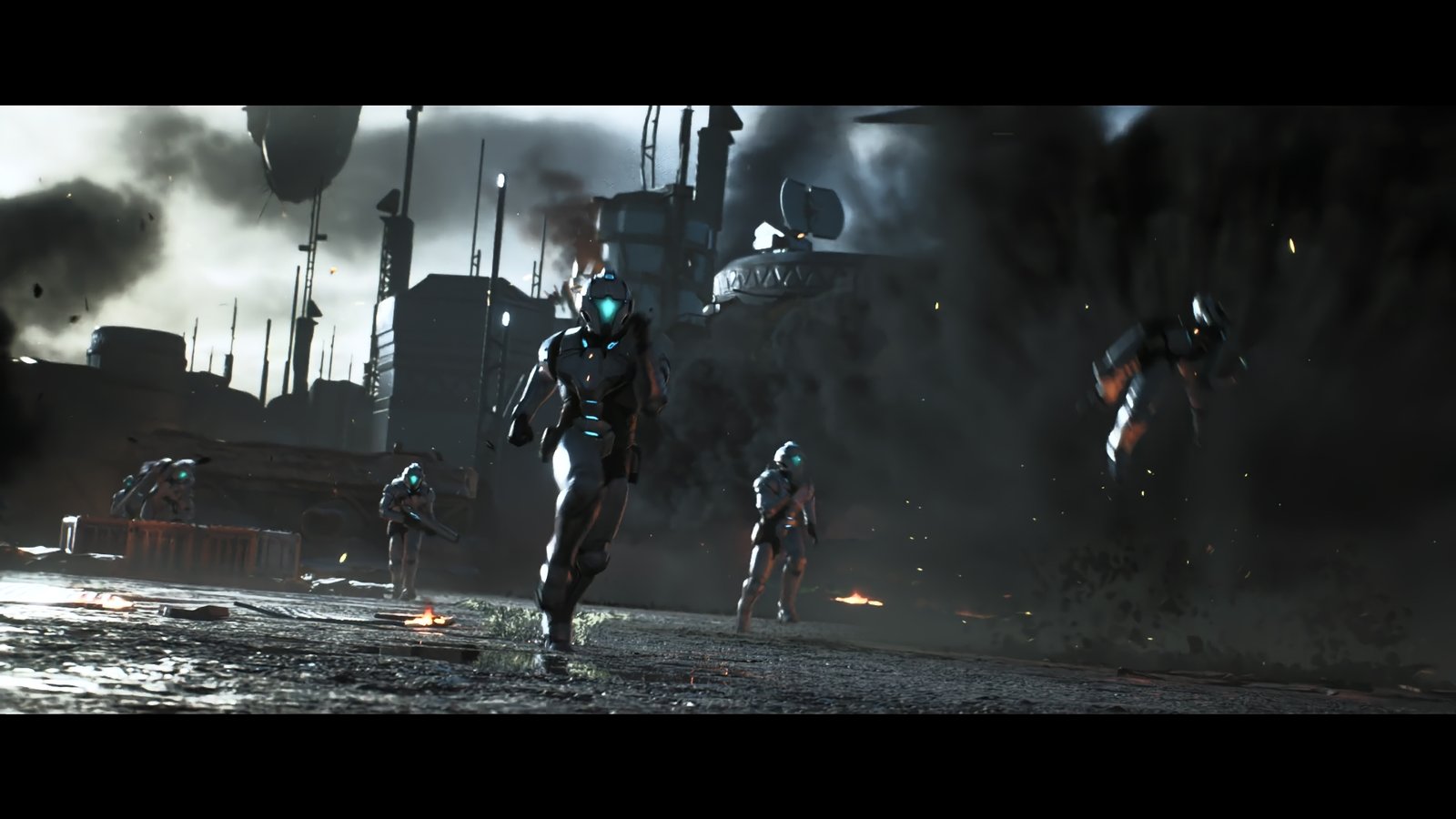
Prime 4 opens with urgency, not mystery.
Gameplay & Mechanics
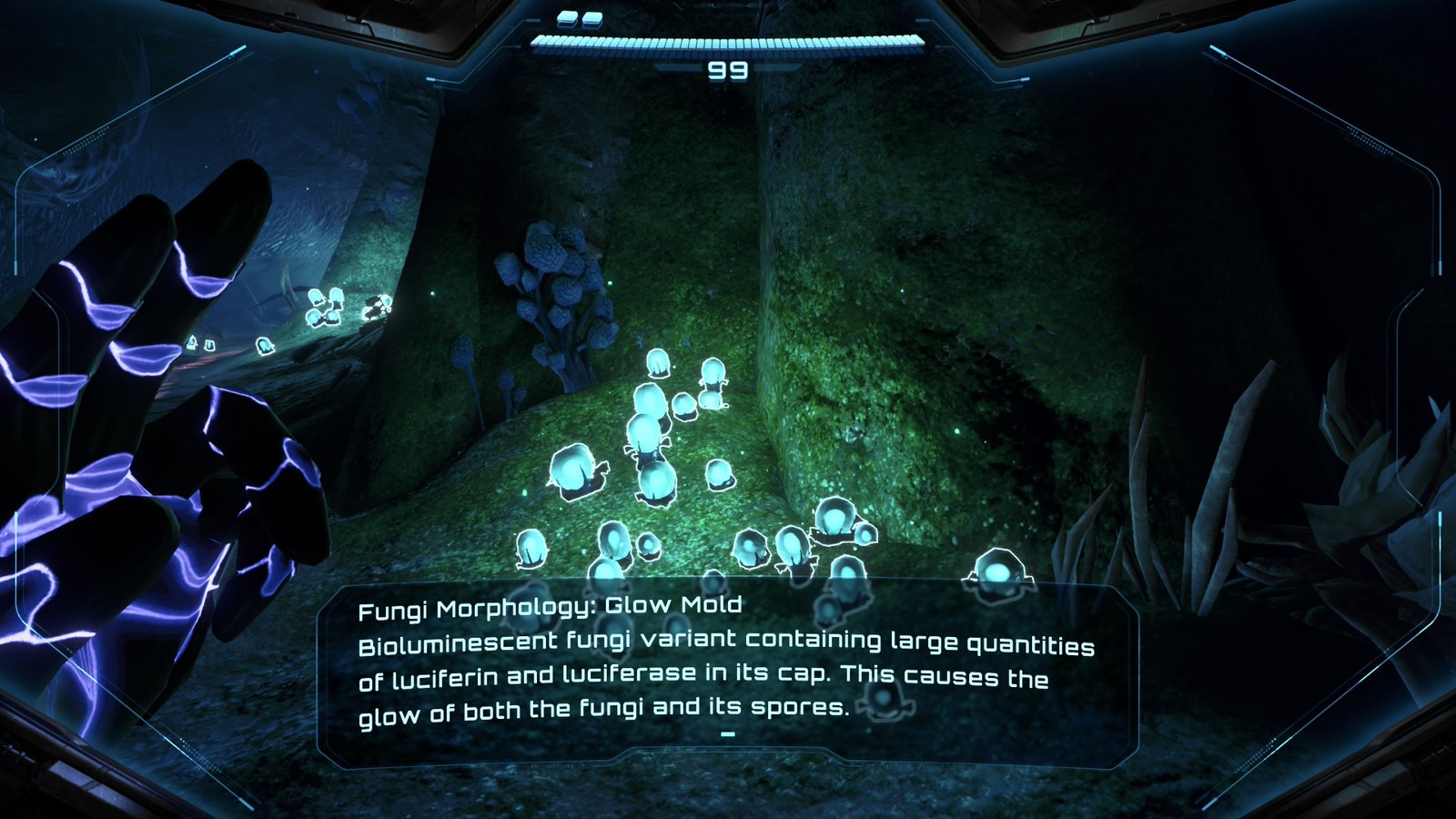
Lore is present, but never intrusive.
Scan Mode
Scan Mode remains foundational, though its role has shifted slightly. Scanning is less about halting progress to extract lore and more about maintaining situational awareness. Environmental cues, enemy behaviors, and puzzle elements are integrated more cleanly into natural movement, which keeps momentum intact during exploration-heavy stretches.
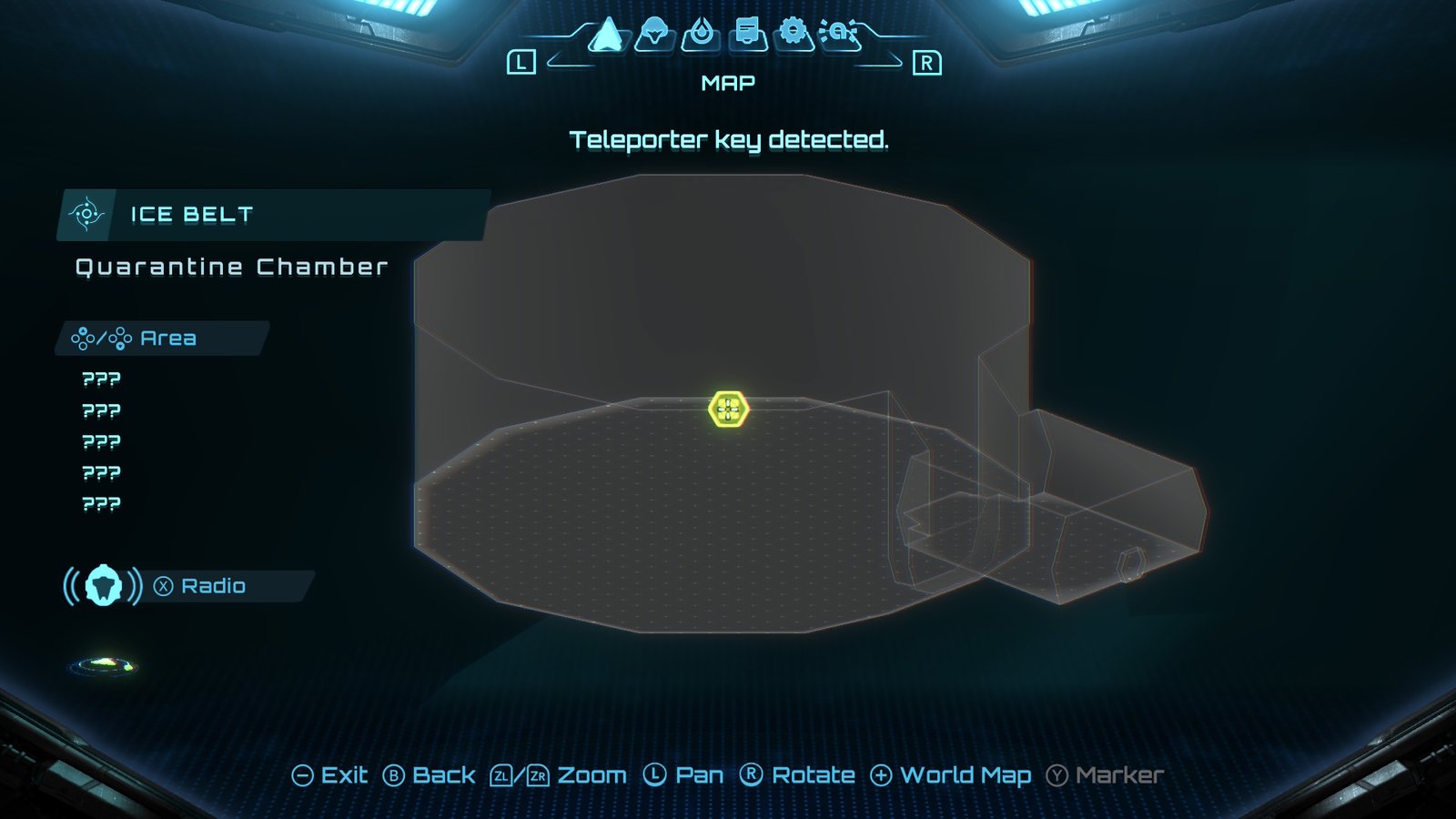
The 3D map favors clarity over constant backtracking.
3D Map
The 3D map is more readable than prior entries, particularly when navigating vertically layered spaces. Objectives, shortcuts, and locked paths are easier to parse without relying on constant backtracking. The result is a map that supports exploration rather than interrupting it.
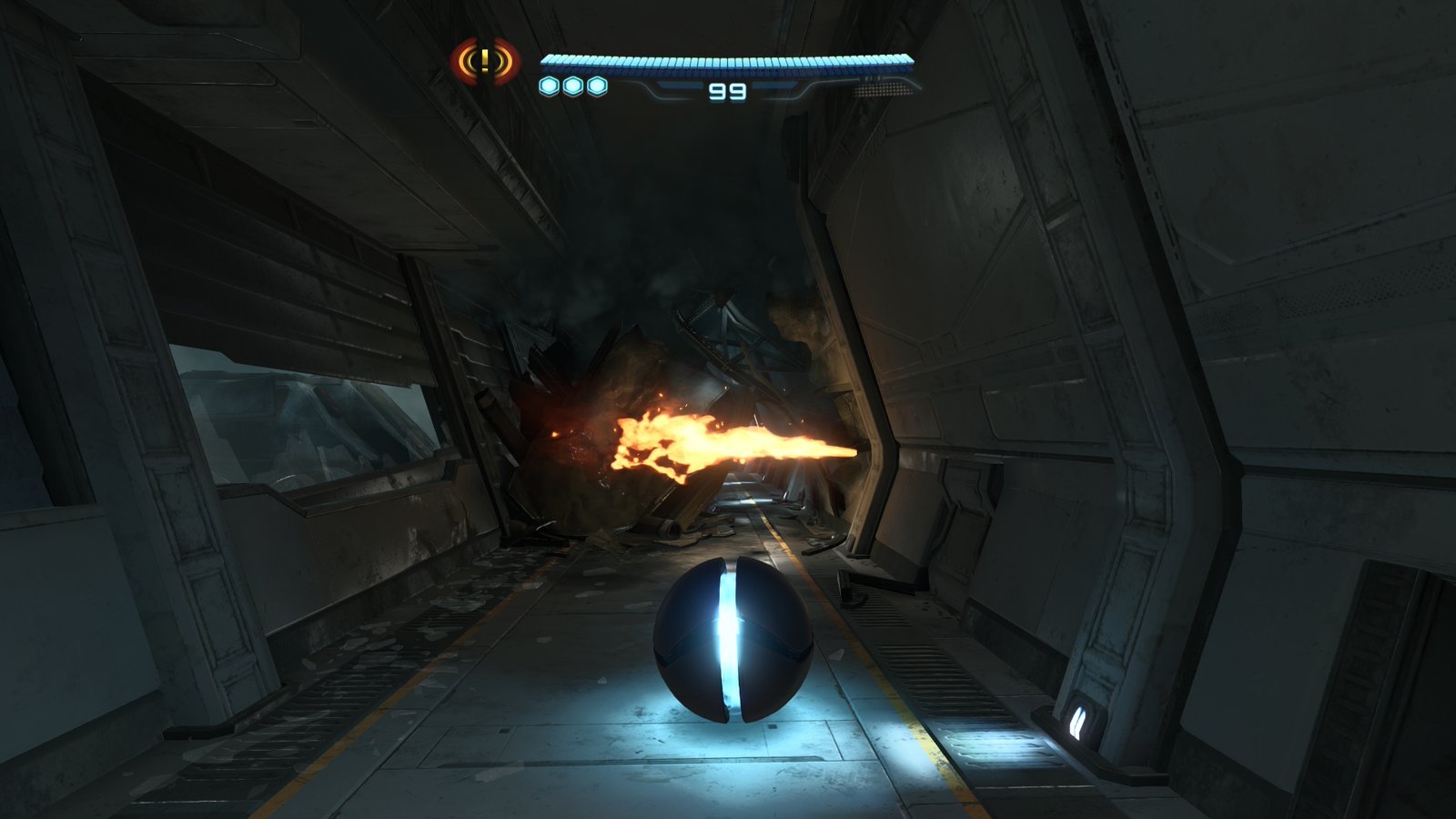
Morph Ball flow feels tighter than ever.
Morph Ball
The Morph Ball sees refinement rather than reinvention. Its physics feel tighter, and its puzzle applications are better woven into the surrounding environment. Transitions between standard movement and Morph Ball traversal are faster, which helps maintain flow during exploration-heavy segments.
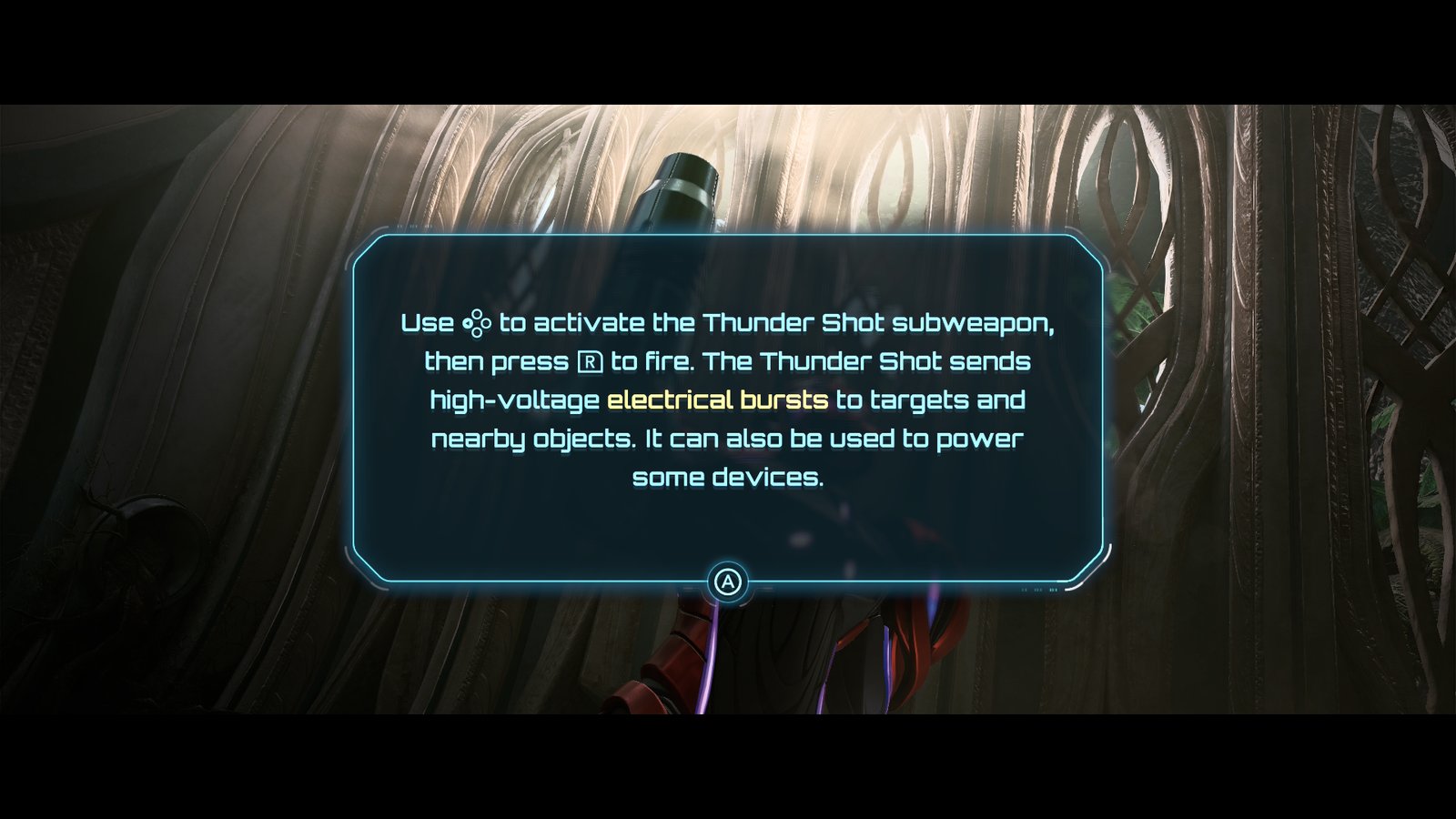
Shots feel deliberate rather than disposable.
Shots
Shots represent one of the game’s most meaningful mechanical revisions. Instead of tying enhanced beams to Missile consumption, Prime 4 introduces a dedicated shot ammo pool used for charged and elemental attacks. The pool upgrades independently from Missiles, making combat decisions tactical without limiting frequent use.Elemental shots feel distinct, and their integration into both combat and puzzles gives them consistent relevance.
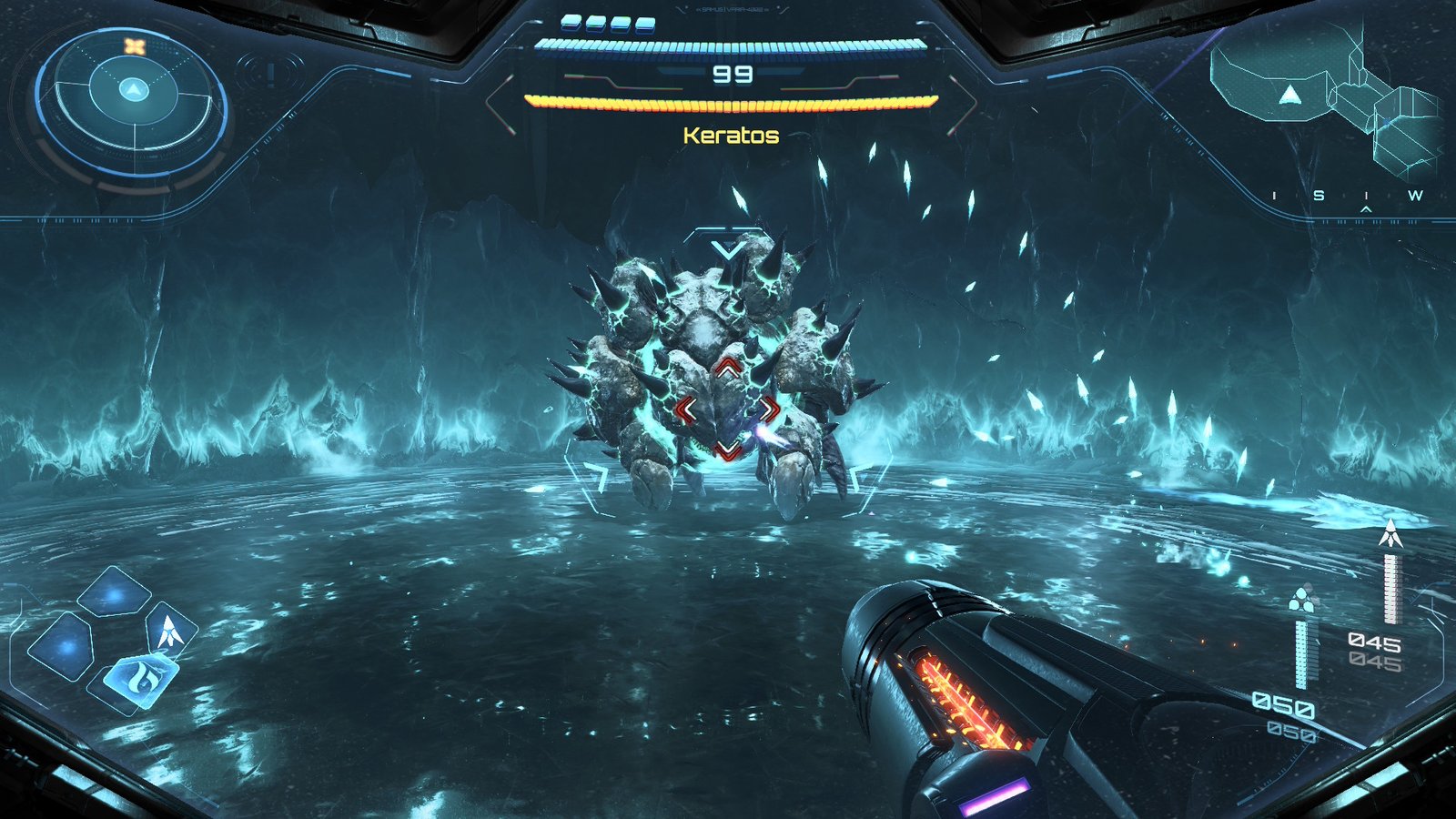
Prime 4 rewards being outplayed, not careless.
Bosses
Boss encounters follow classic Prime design principles. Each biome features encounters built around environmental identity and mechanical escalation. Attack patterns remain readable, and fights emphasize adaptation rather than attrition, keeping them challenging without overstaying their welcome.
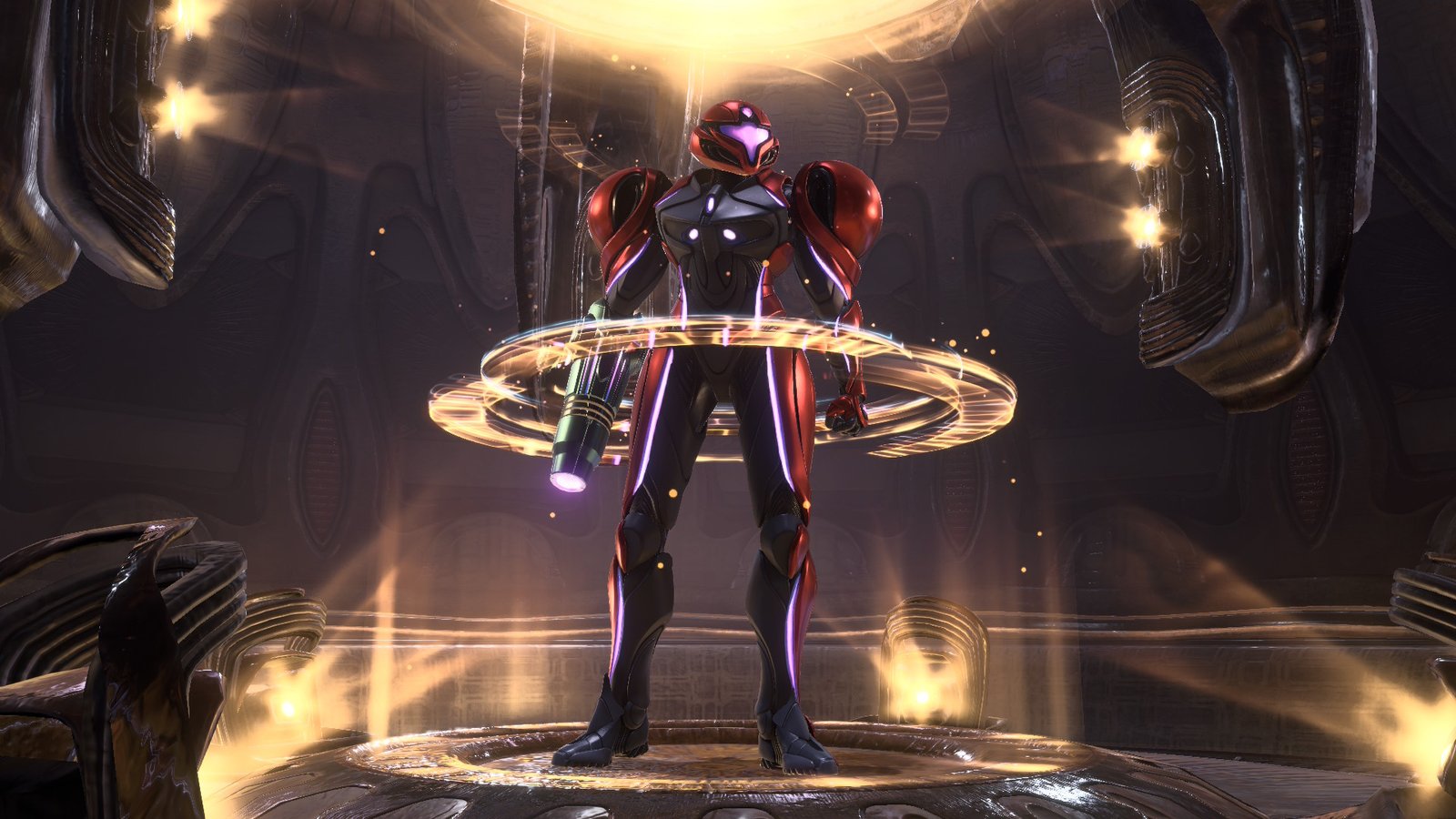
Save rooms still signal safety and structure.
Save Rooms & Exploration
Save rooms and exploration are structured to support steady forward movement. Checkpoints are placed with intent, encouraging risk during discovery without punishing experimentation. Optional paths consistently reward curiosity with upgrades, lore, or mechanical shortcuts.
Story & Writing
The story centers on being stranded on Viewros, an unfamiliar and hostile planet where survival comes first. Cut off from support, you search for signs of your comrades while fighting to escape alive. The constant threat of Sylux, alongside aggressive wildlife and unknown lifeforms, creates steady pressure as you explore. Progress is driven by piecing together Viewros’ history, turning the struggle to leave the planet into both a fight for survival and an effort to understand where you are trapped.
Art & Audio
Viewros establishes a strong visual baseline, blending alien geometry with clear navigational landmarks, while biomes maintain distinct identities without sacrificing clarity, supported by controlled lighting and strong silhouette work. Environmental storytelling stays restrained, allowing spaces to suggest history and threat through layout and texture rather than explicit exposition.
Viewros leans toward high fantasy, with towering gold and purple architecture that feels monumental but never disorienting. Other regions contrast sharply in tone and structure. Flare Pool emphasizes heat and instability through fiery vistas and oppressive lighting. Ice Belt shifts the pace with open, frozen plains that prioritize visibility and scale. Volt Forge blends weathered industrial machinery with constant storms, using rain and lightning to reinforce its volatile atmosphere. Great Mines adopts a darker palette, built around decayed interiors and tight corridors where danger feels ever-present.
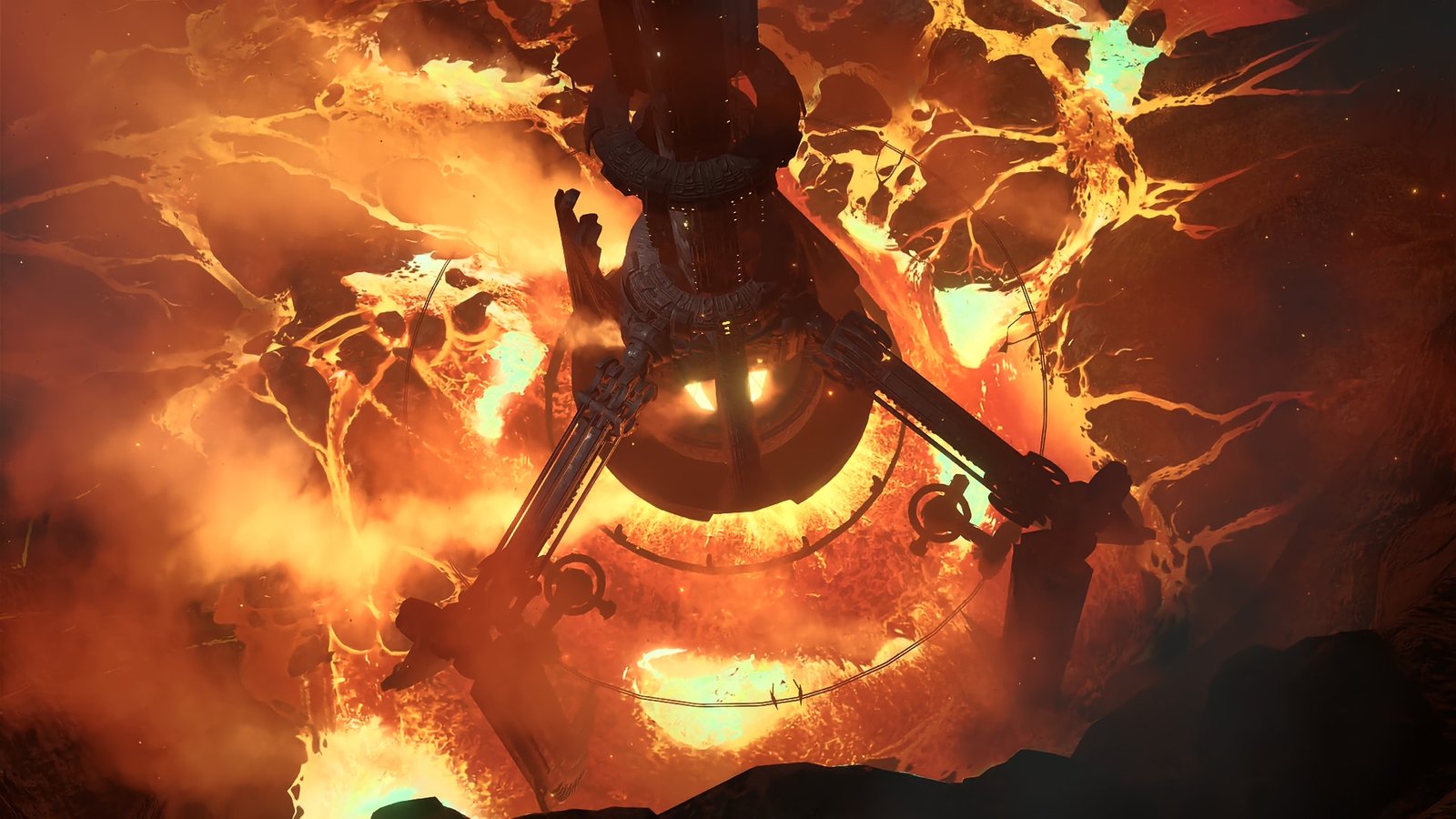
Flare Pool turns spectacle into sustained tension.
Kenji Yamamoto and Minako Hamano’s score reinforces these spaces, using restrained tension and atmospheric cues to enhance exploration and combat without overwhelming the moment-to-moment experience.
Standout tracks:
Aberax Boss Battle Music
Heightened tension and rhythmic percussion underscore the fight, keeping focus on the boss’s telegraphed patterns and rewarding strategic timing.
Chrono Tower
Sweeping melodies and restrained synths evoke a sense of vertical scale and layered exploration, matching the tower’s imposing design.
Ice Belt
Sparse instrumentation and subtle crescendos reflect the frozen, open expanse, emphasizing both isolation and visibility in the biome.
Unique Features & Mechanics
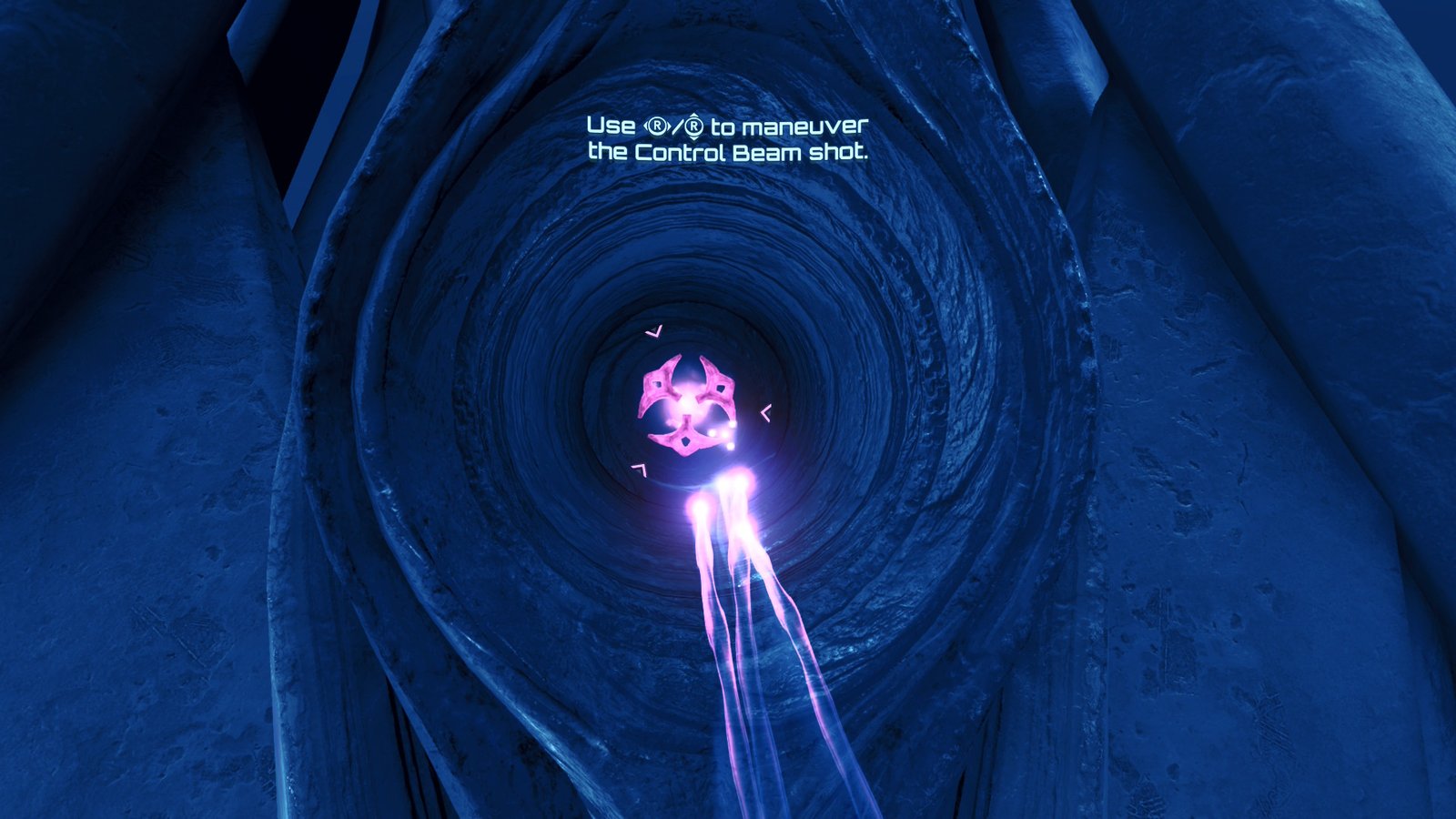
The Control Beam feels designed in, not bolted on.
Control Beam
A new way to fight some bosses and solve puzzles, the Control Beam offers a controlled shot similar to Arkham’s remote batarang mechanic. Some bosses and doors require simultaneous triggering of appendages and buttons, so this shot acts as a solution to it.
Mouse Controls
While I completed the game using the 8BitDo Ultimate 2 Evernight Controller, I did spend time testing the Switch 2 mouse controls. Even at default sensitivity, aiming felt smooth and responsive, with no need for heavy adjustment. More importantly, the control scheme feels designed around Prime 4’s systems rather than functioning as a novelty input.
Mouse controls integrate cleanly with combat, Scan Mode, and precision tools like the Control Beam. They feel like a legitimate alternative rather than a gimmick-driven hook, offering accuracy without disrupting balance or pacing.
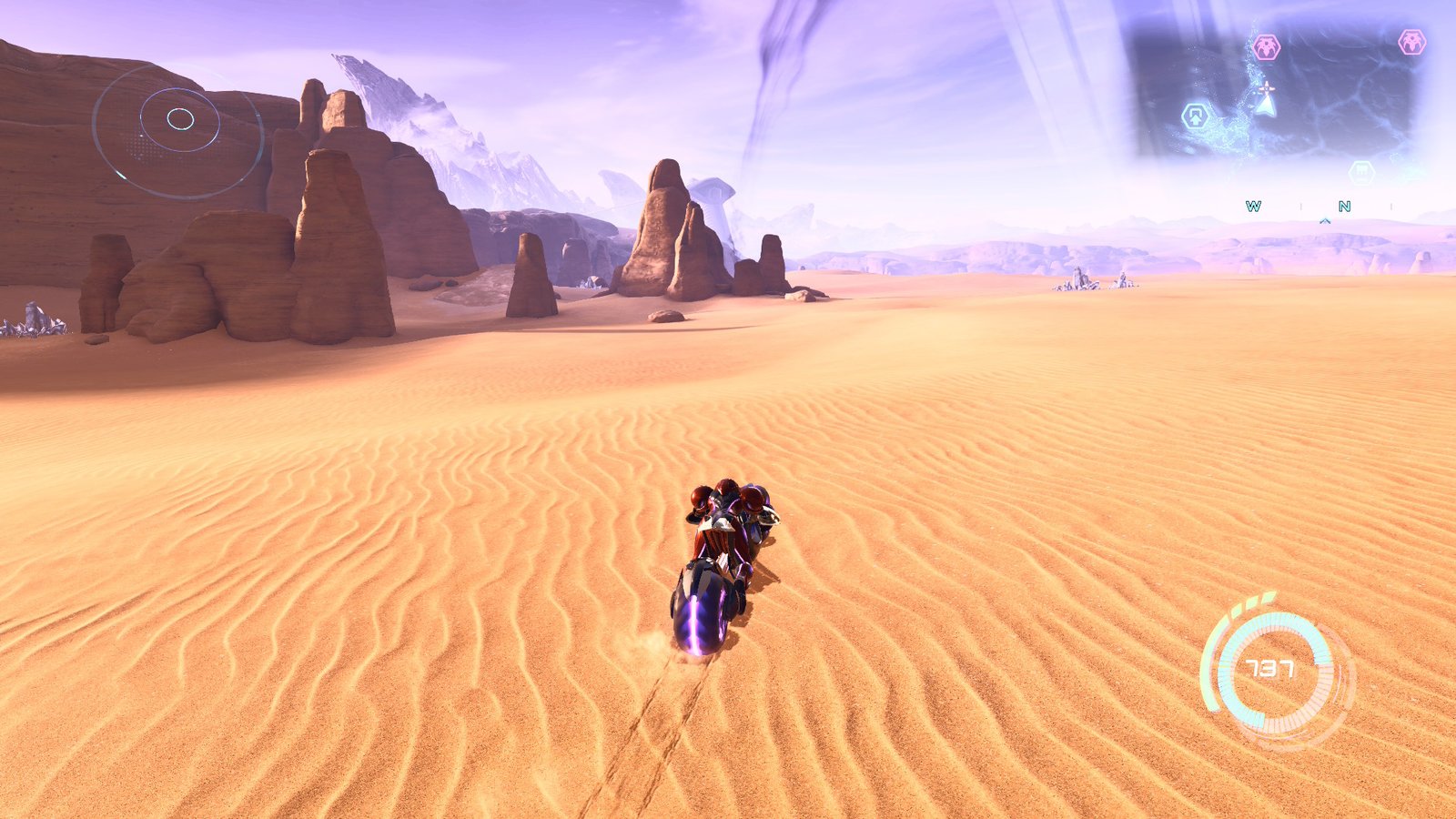
Sol Valley changes pacing between biomes.
Sol Valley
Sol Valley acts as the connective tissue between biomes. This desert hub is traversed using the Vi-O-La motorcycle and serves as both a narrative and mechanical anchor. Its open structure contrasts with the more confined biomes, offering a change in pacing while housing puzzles and optional upgrades.
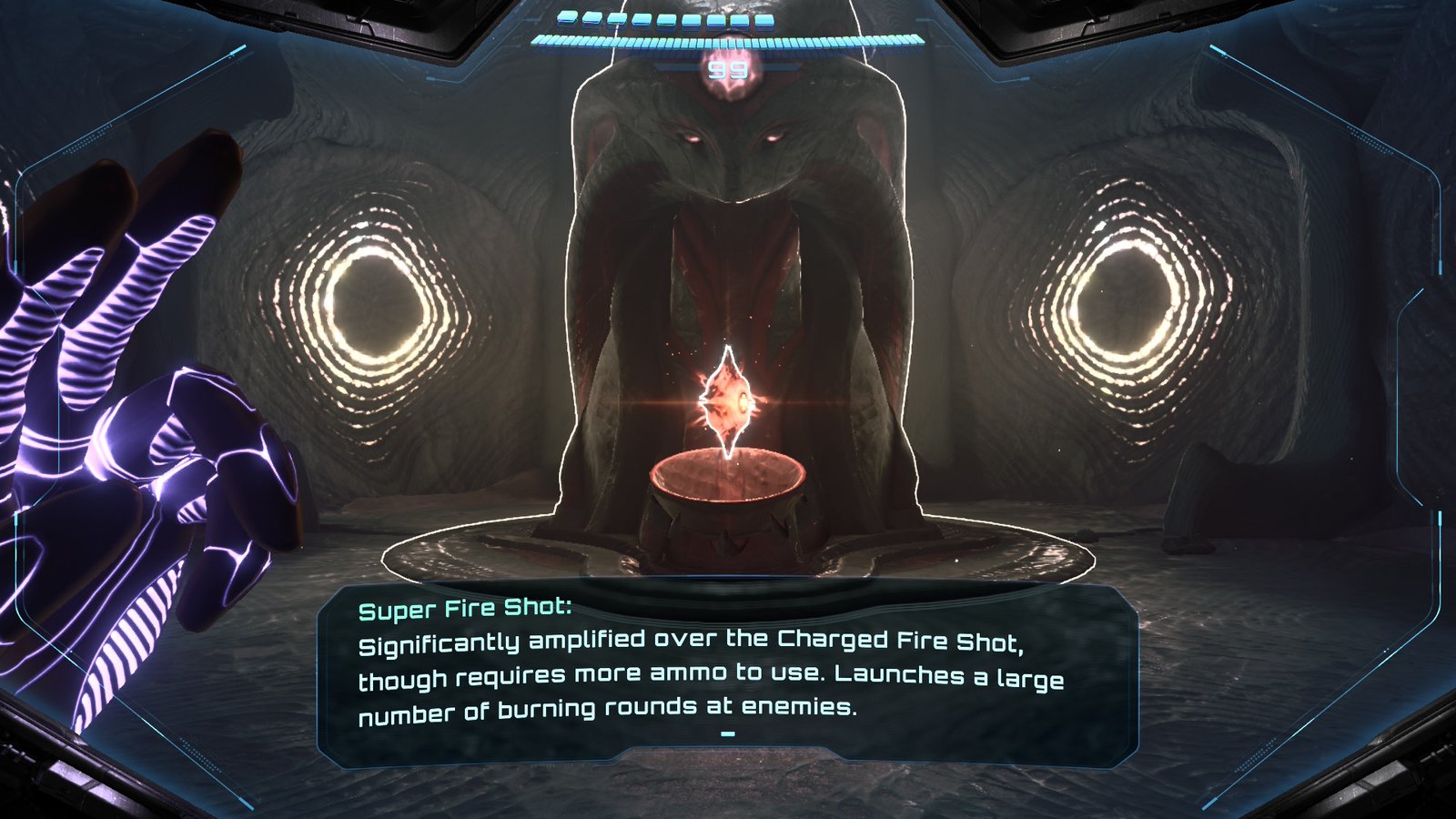
Shrines favor upgrades over spectacle.
Shrines
Similarly to Legend of Zelda Breath of the Wild, Prime 4 features shrines. These reward players with upgrades to the elemental shots once they have been completed. There are six shrines in total and they are all completely optional.
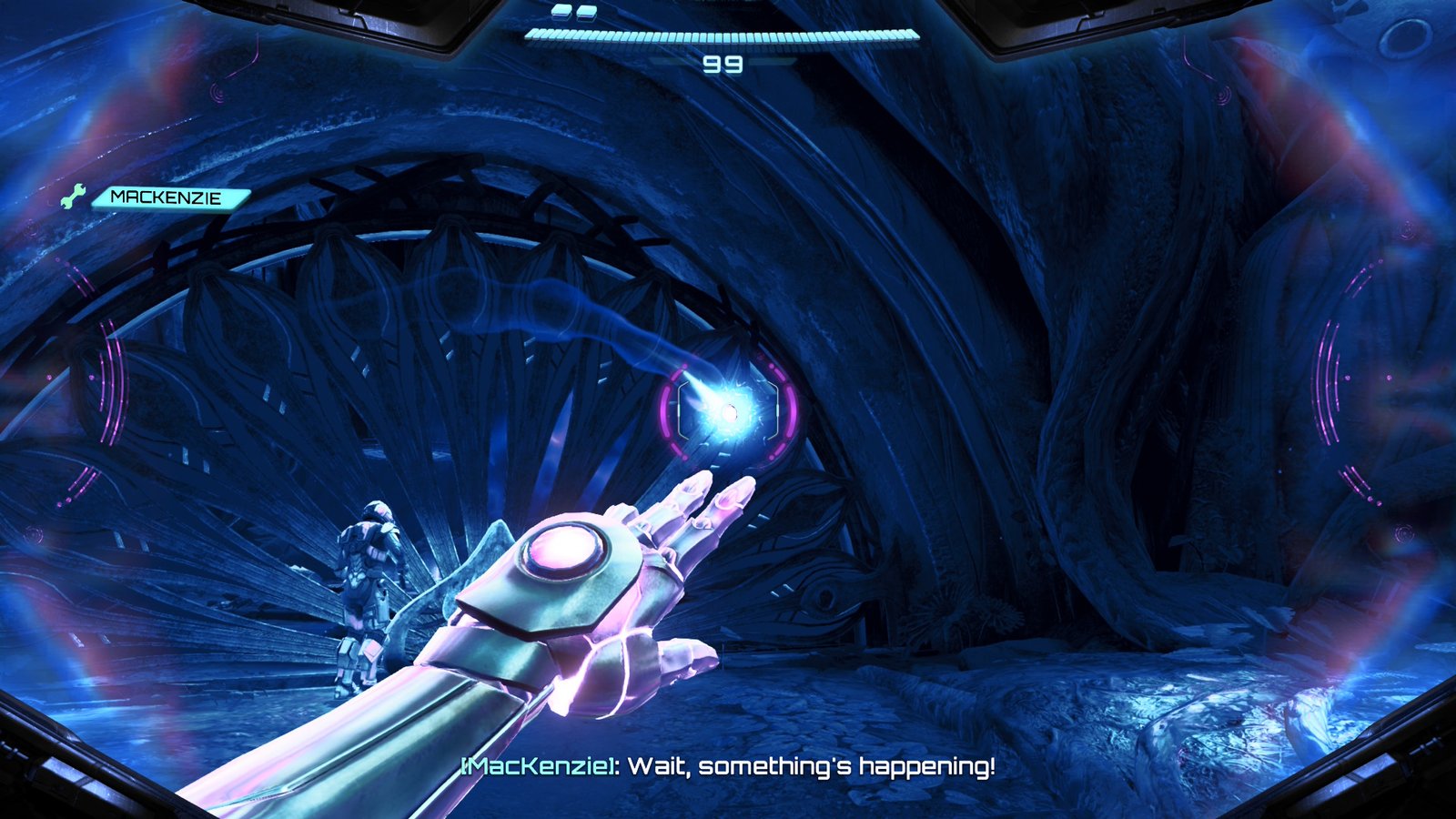
Psychic mechanics shape puzzles and combat alike.
Psychic Puzzles
Psychic puzzles expand Samus’ toolkit through spatial alignment challenges. Puzzles use Scan Mode, Control Beam, and Morph Ball tethering, offering layered challenges without overcomplicating solutions.
Guidance & Completion Tools
Guidance systems are handled through the radio and Scan Bots. The radio provides general directional hints without explicit objectives, while Scan Bots, once powered and scanned, reveal collectible data for entire biomes. Together, these systems support completion-focused play without trivializing exploration.
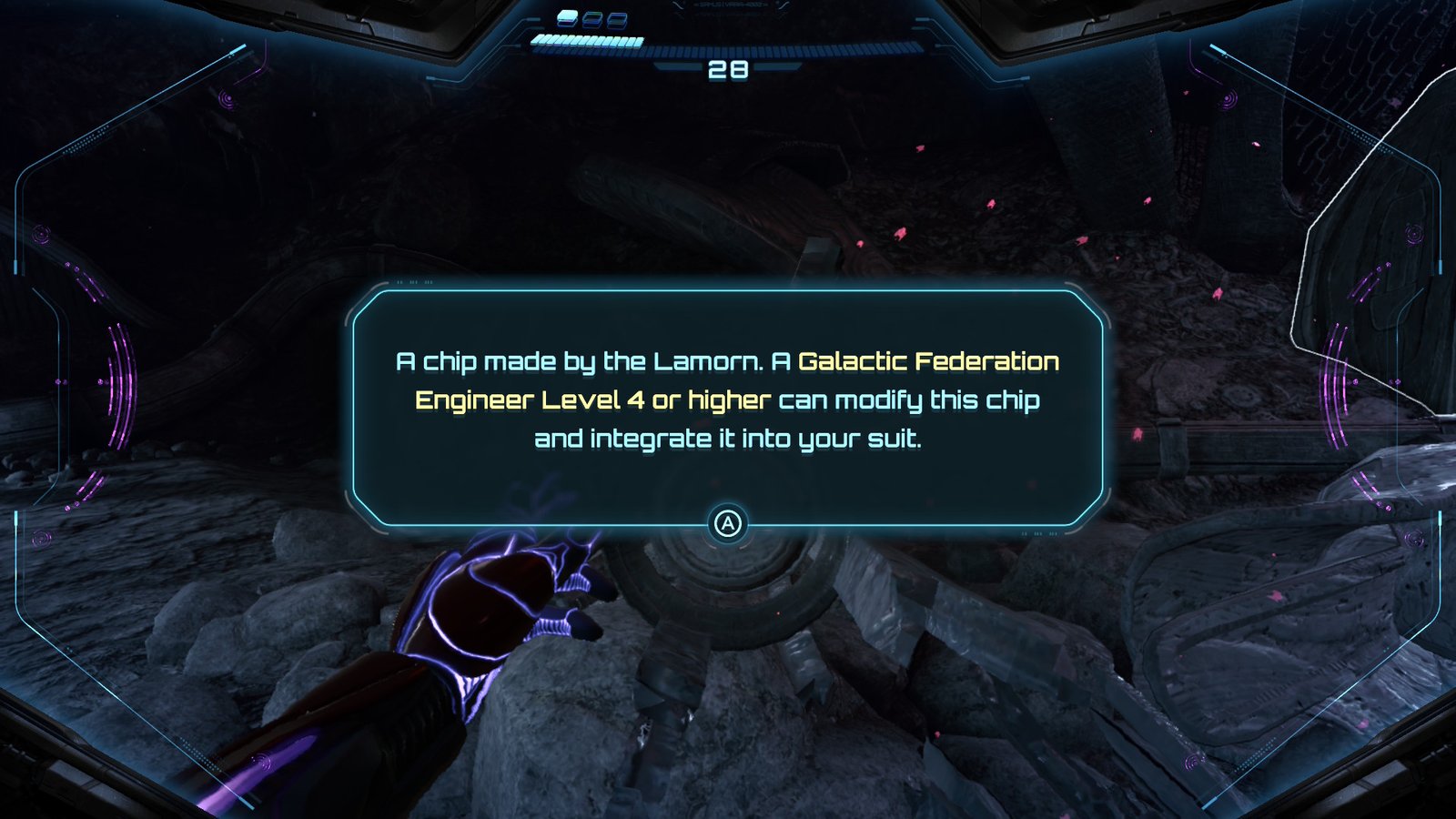
The chip system slows the classic Metroid rhythm.
Chips
Chips serve as modular elemental upgrades found throughout the world. Chips must be installed at Fury Green, reinforcing the loop between exploration and preparation without granting instant power spikes.
Voice Acting
Eren remains silent outside combat and damage cues, which still convey tension effectively. Miles is far less grating than his reputation suggests, with any irritations resolved through his arc. Armstrong’s fangirl energy is tempered by development. Duke stands out as calm and professional, while Sylux’s relatively unknown actor delivers intense, convincing rage.
- Erin Yvette (Samus): Blonde Blazer (Dispatch), Yoko Hiromine (SMT V: Vengeance), Snow White (The Wolf Among Us)
- Laith Wallschleger (Sylux)
- Jason E. Kelley (Duke): Doom Slayer, (Doom Eternal), Colt Vahn (Deathloop)
- David Goldstein (Miles MacKenzie): Vence, (Hyrule Warriors: Age of Imprisonment), Billy Bob (Final Fantasy VII: Integrade)
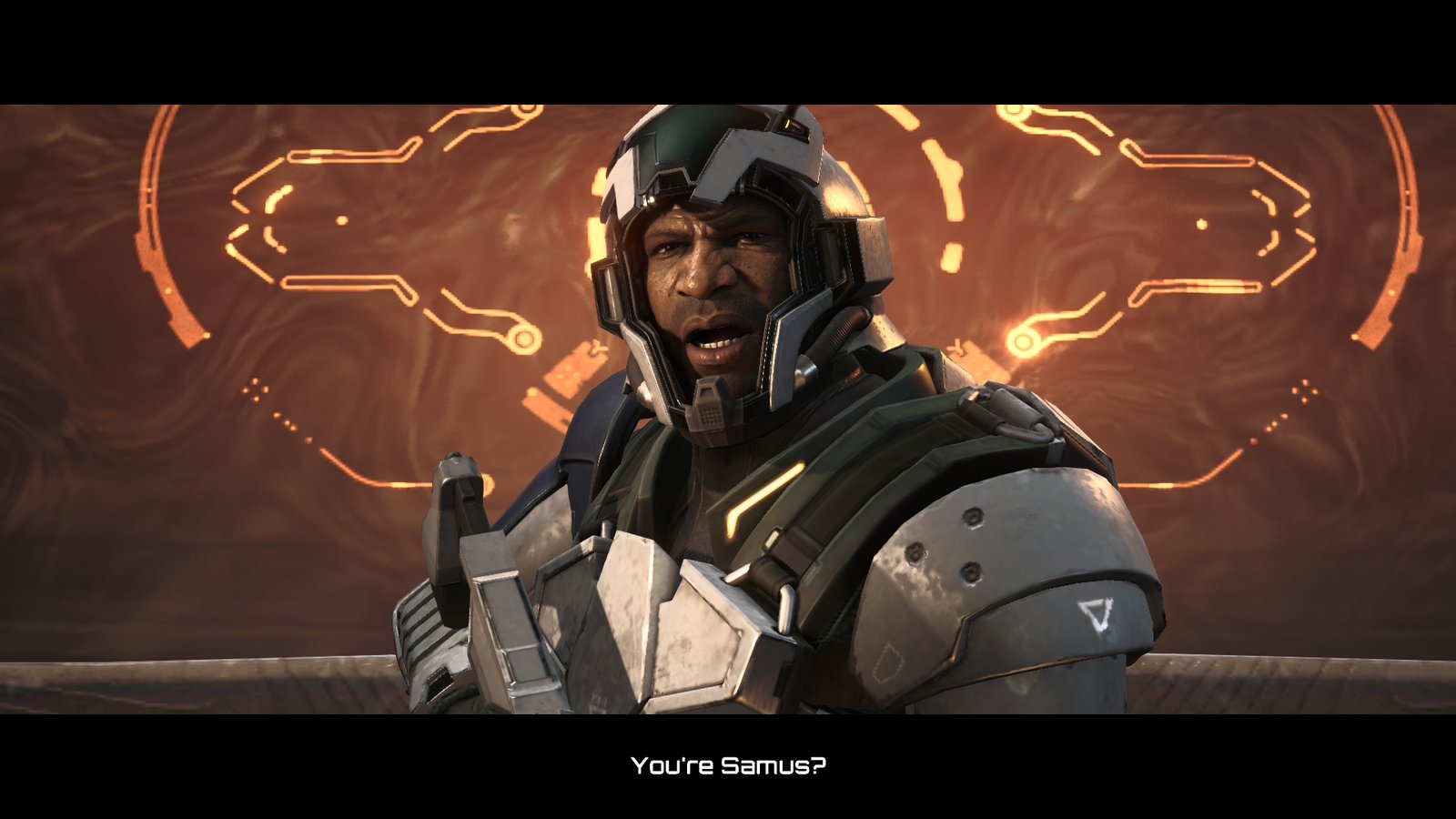
Duke anchors the supporting cast early.
Metroid Prime 4: Beyond Switch 2 Performance
On Switch 2, Performance Mode runs at 120 frames per second at 1080p while docked and handheld. Quality Mode reaches 4K at 60 frames per second, tested primarily in the Fury Green area. Across version 1.1.0, no significant frame drops, visual artifacts, or stability issues were observed during my playthrough.
Metroid Prime 4: Beyond Verdict
Metroid Prime 4: Beyond departs from some traditional Prime design principles. The chip system softens the classic tension of new abilities, requiring backtracking to Fury Green for elemental installation. Late-game crystal grinding adds friction, and biomes feel segmented, with Sol Valley less seamlessly integrated than Prime 1’s Talon Overworld. The lack of a New Game+ means all scans and collectibles must be reacquired to unlock extended sequences, including Sylux’s backstory, further slowing completionist runs.
Where it shines is in encounters. Bosses challenge players, rewarding adaptation over endurance, and the refined shot system separates charged and elemental attacks from Missiles while keeping combat tactical. Psychic abilities and the focused Control Beam integrate naturally, supporting both combat and puzzles without feeling gimmicky.
Despite these departures, the game is approachable, technically polished, and confident. It may lack Prime 1’s cohesion, but as a continuation guided by intent rather than compromise, it stands as a strong entry that sparks curiosity about the series’ future.
Metroid Prime 4: Beyond TLDR
Metroid Prime 4: Beyond (Switch 2)
Metroid Prime 4: Beyond offers a refined, inventive entry in the series with strong bosses, clear visuals, and polished combat.
Some design choices, like gated elemental upgrades and the absence of New Game+, add friction and slightly fragment the world, but it remains a must-play for Switch 2 owners.
References
- Metroid Prime 4: Beyond Switch 2 Edition Trailer
- Phillips, T. (2018, February 10). Yes, Bandai Namco is working on Metroid prime 4. Eurogamer.net.
- Aberax Boss Battle Music
- Chrono Tower
- Ice Belt