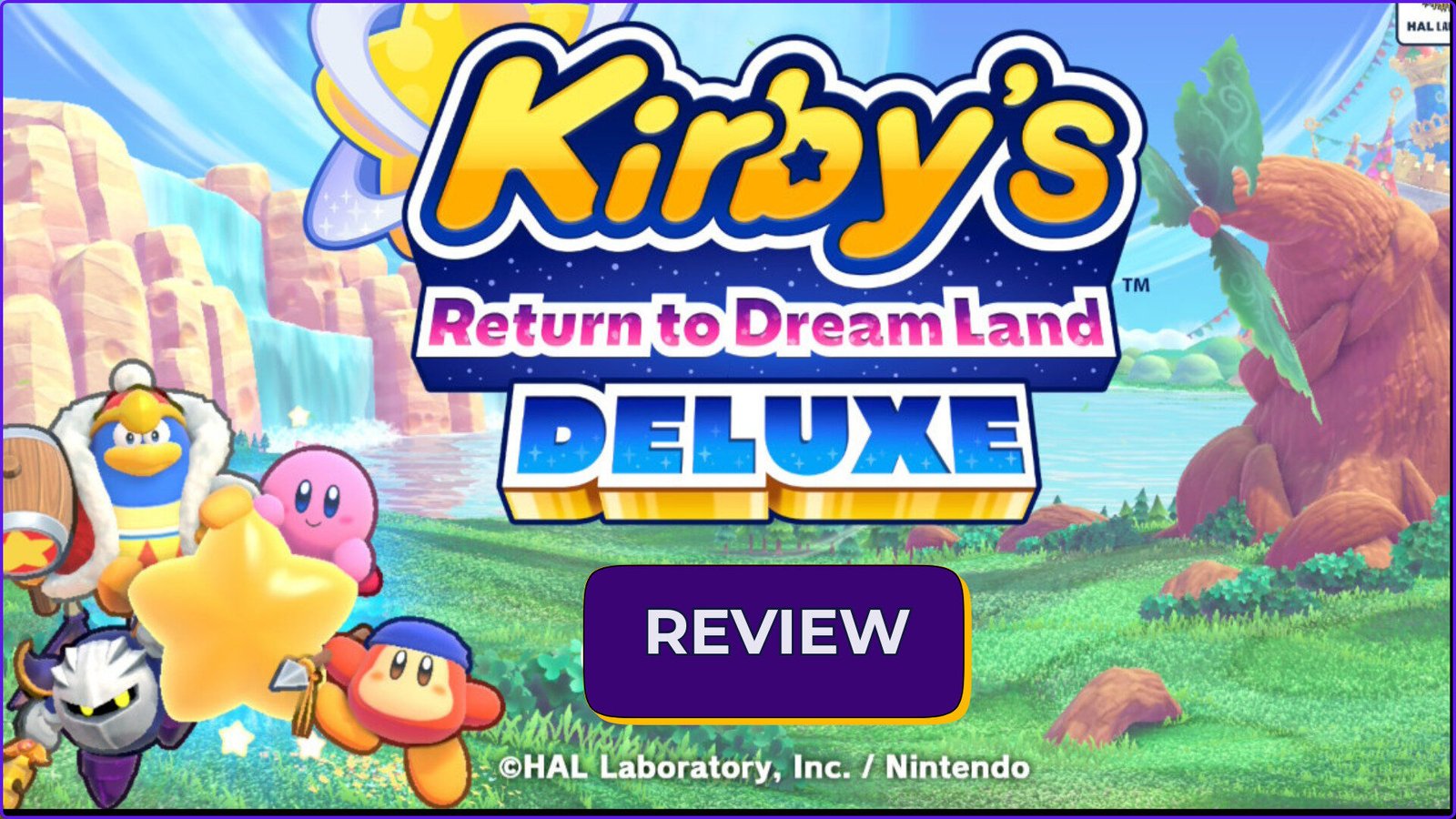
Trading innovation for pure execution, Kirby’s Return to Dreamland Deluxe delivers a masterfully polished platforming experience that proves a technical facelift can make a decade-old classic feel brand new.
At a Glance
Release Date
Feb 24, 2023
Developers
HAL Laboratory, Inc.
VANPOOL Inc.
Platforms


Genre
Action, Platformer
Rating
E10+
Price
$59.99
Completed on: Switch 2 (Docked), Normal
Time: HLTB 11 Hours (Main + Sides) | My Clear Time: 8hrs
Return to Dreamland Deluxe Background
Kirby’s Return to Dreamland Deluxe is a remake of the 2011 Wii title, rebuilt for Switch with updated visuals, performance improvements, and new content while preserving its original structure. One of the most noticeable changes is the addition of character outlines, a decision the development team approached cautiously rather than treating as a simple visual upgrade.
The outlines were introduced primarily to improve the visibility during four-player cooperative play. With multiple characters sharing the screen, the goal was to ensure players could easily track their character at all times without compromising the game’s visual style. Rather than relying on a standard outline technique, the team refined the effect with subtle gradation so characters remained distinguishable while still blending naturally into the environments.
The change also served a broader purpose. The developers wanted Return to Dreamland Deluxe to be immediately distinguishable from Kirby Star Allies, while still staying true to the more fantasy-driven, cartoon-like aesthetic of the original Wii release. With the series having since moved into fully 3D design, the Deluxe version reflects a careful balance between modern presentation and preserving the identity of a classic 2D Kirby entry (Brian, 2023).
The development team for Kirby’s Return to Dreamland Deluxe includes:
- Yutaka Watanabe (Director): Planet Robobot, Kirby Star Allies, Kirby and the Forgotten Land
- Tsuyoshi Fujita (Lead Art Director): Triple Deluxe, Planet Robobot, Kirby Star Allies
- Kenichiro Kita (Character Art Director): Kirby and the Forgotten Land, Kirby Star Allies, Return to Dreamland
- Hirokazu Ando (Composer): Kirby’s Adventure, Kirby Air Ride, Return to Dreamland
- Yuki Shimooka (Composer): Kirby Fighters 2, Kirby and the Forgotten Land, Dream Buffet
- Yuki Endo (Level Design Director): Return to Dream Land, Triple Deluxe, Planet Robobot
Return to Dreamland Deluxe Experience
My experience with Kirby is scattered rather than continuous. My earliest exposure came through Kirby: Right Back at Ya!, followed by years of playing Kirby Air Ride with friends when it released. My first personal purchase was Kirby: Canvas Curse, which stood out for how differently it approached movement compared to more traditional entries. Many years later, Kirby Star Allies became my main modern reference point.
A renewed interest came gradually through video essays and conversations, including Kirby retrospectives I often watched before bed. I picked up Kirby’s Return to Dreamland Deluxe during a Black Friday price drop at $29.99, approaching it without nostalgia and with measured expectations, which made it easier to judge the game on execution rather than legacy.
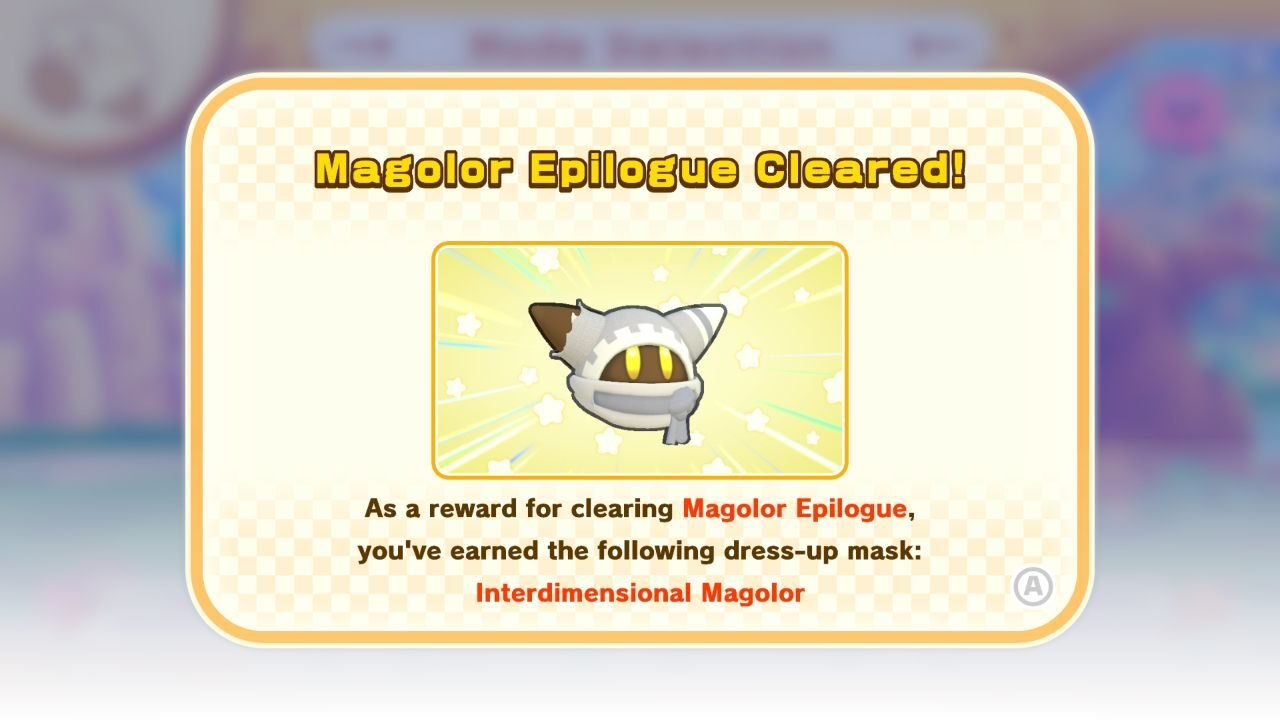
One mask earned.
Return to Dreamland Deluxe Impressions
Introduction
Kirby’s Return to Dreamland Deluxe follows Kirby and his allies as they explore a series of side-scrolling stages in Another Dimension. Attempting to help the stranded Magolor recover the scattered parts of his ship through traditional copy ability-based platforming stages with optional cooperative play.
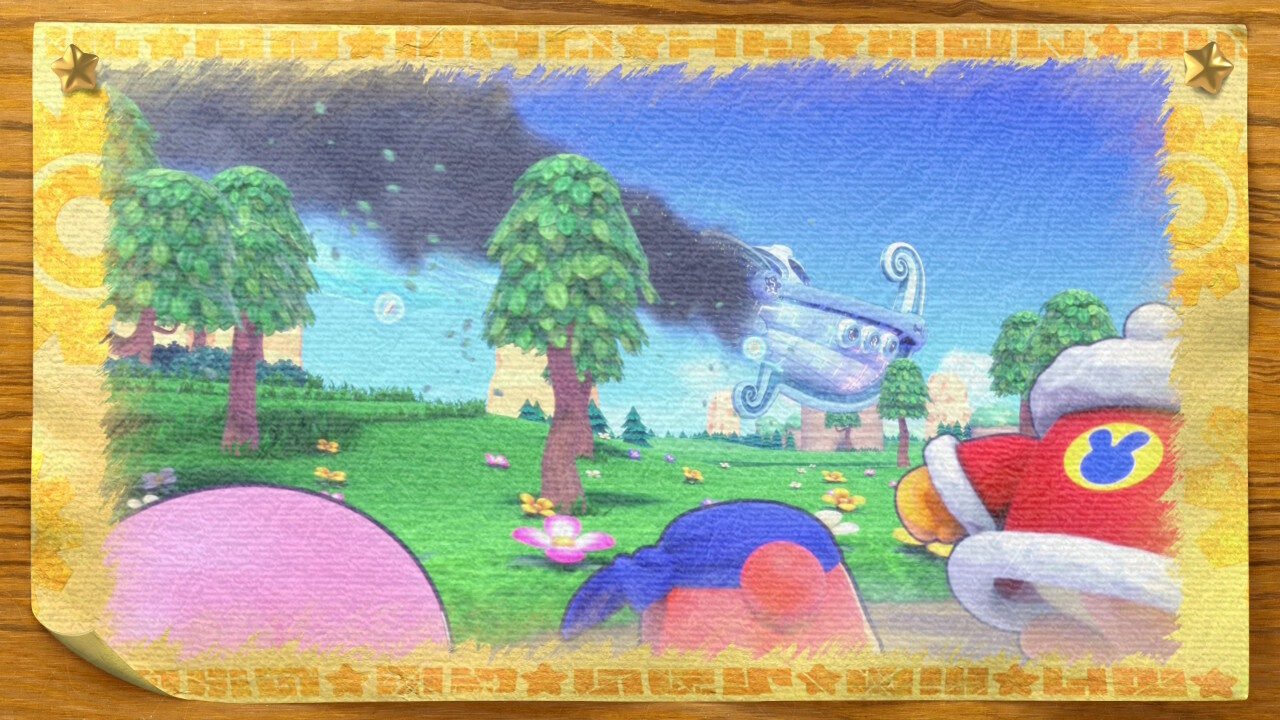
An adventure begins.
Gameplay & Mechanics
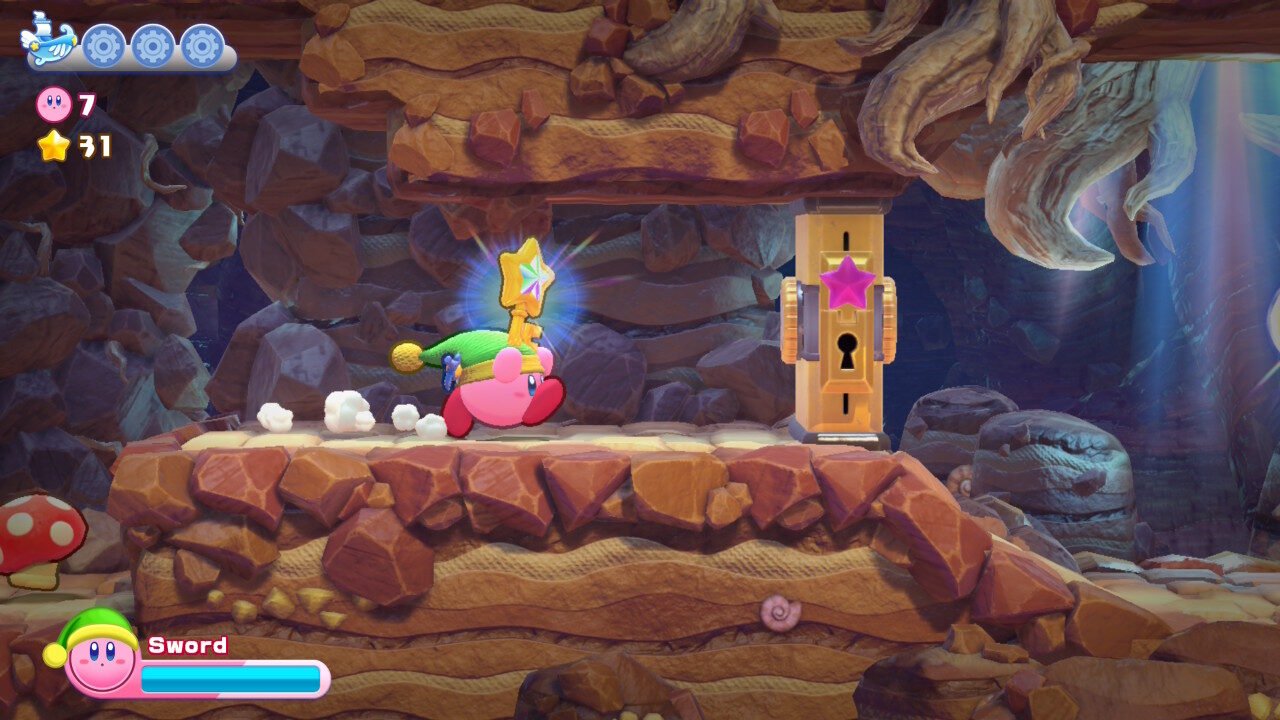
No wasted steps.
Level Structure
The game is built around linear, self-contained stages that emphasize forward momentum. Levels introduce ideas quickly and move on before they overstay their welcome, keeping pacing consistent across worlds.
Forgiving jumps.
Platforming Feel
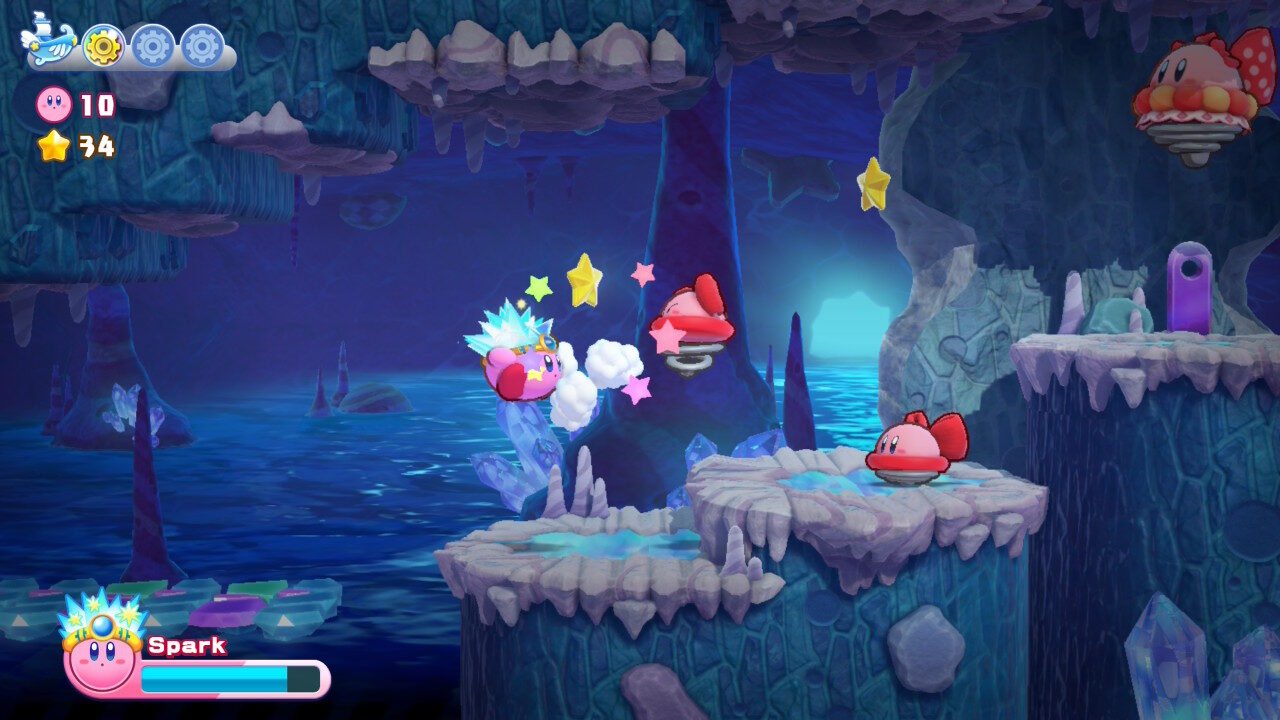
Movement is light and forgiving, with generous air control and readable jump arcs. Being precise is rarely demanded of you, but the control feels responsive enough to avoid loose or imprecise positioning.
Instant identity.
Copy Abilities
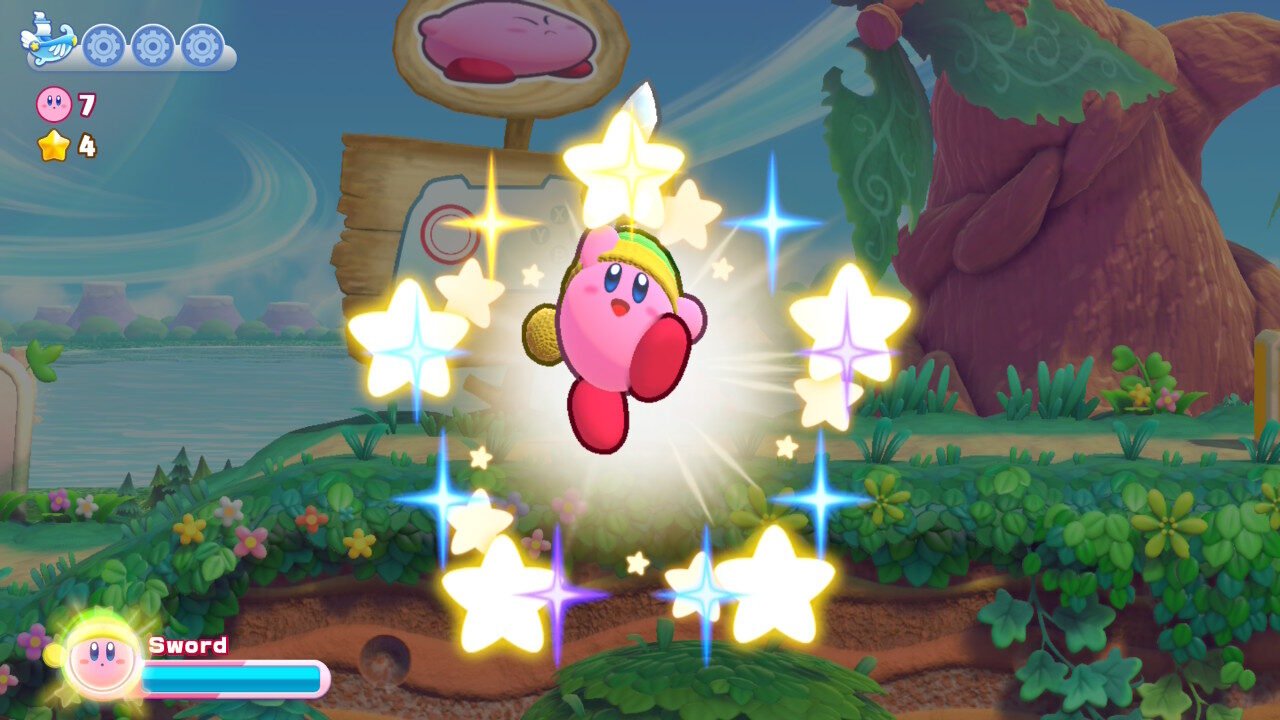
Kirby’s copy ability forms the mechanical core of Return to Dreamland Deluxe. Each ability offers a distinct fighting style with clear strengths and weaknesses. They feel similar to using a new character in a fighting game when you acquire a new ability. The options like Sword and Beam feel mechanically tighter and more reliable than in earlier versions.
Mistakes you can learn from.
Enemy Design
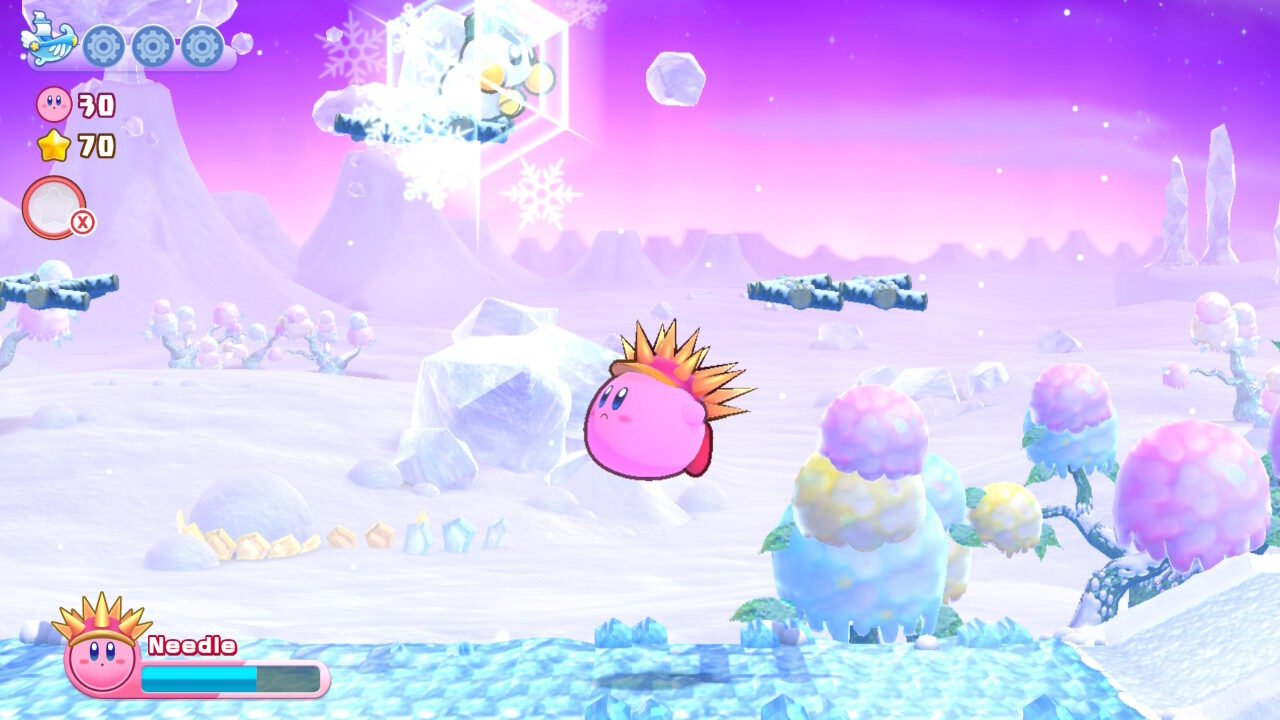
Enemies are positioned to reinforce using your abilities, rather than overwhelm you. Encounters prioritize readability, with attack patterns that communicate intent clearly.
Then strike.
Boss Encounters
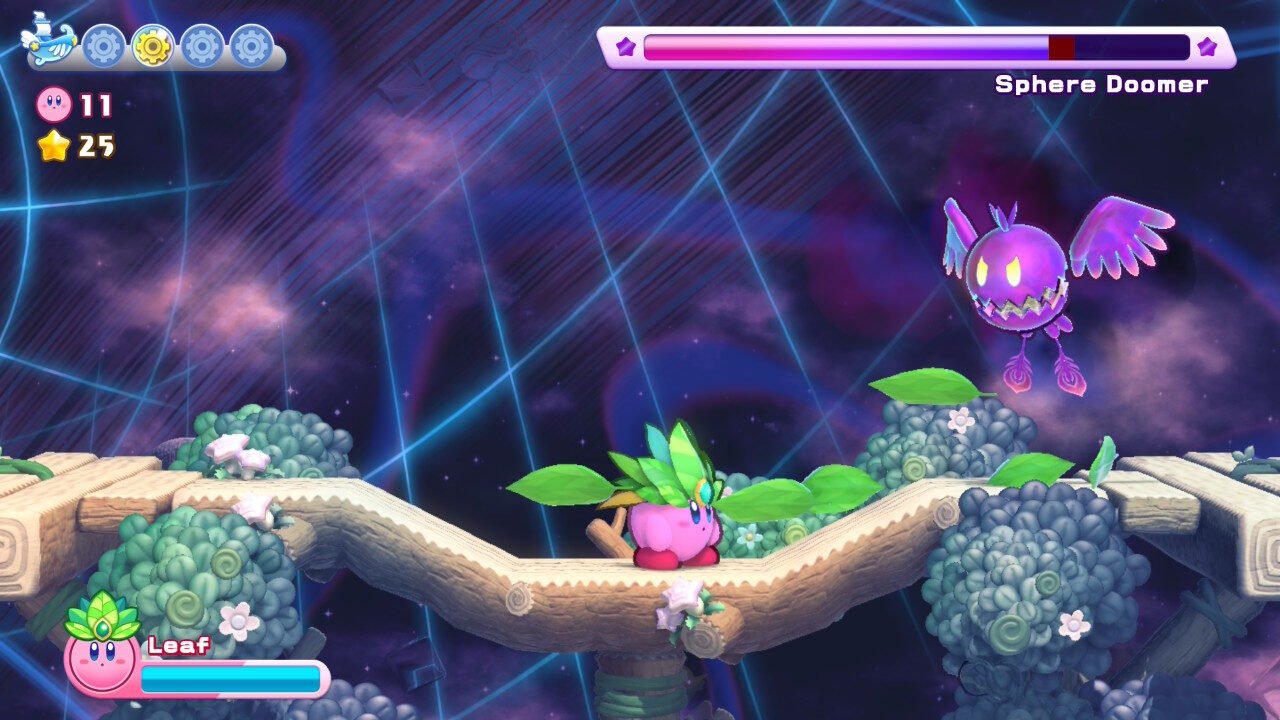
Boss fights emphasize pattern recognition and adaptability over endurance. Phases are distinct and readable, and keep the encounters engaging without demanding insane precision.
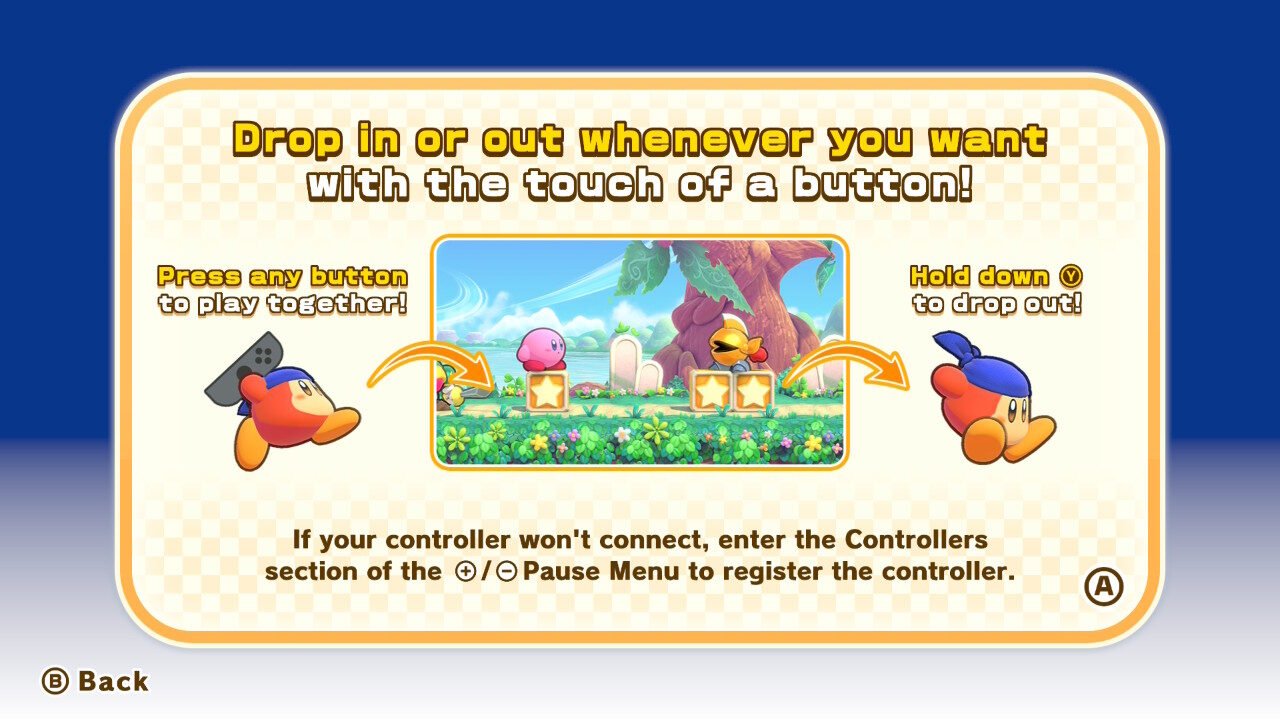
Jump out just as easily.
Co-op Integration
Up to four players can participate simultaneously, with drop-in support at any time
Difficulty Curve
The main campaign remains approachable throughout, with optional challenges providing light escalation. Dying carries a trivial penalty, reinforcing the game’s low-friction design.
Art & Audio
Kirby’s Return to Dreamland Deluxe presents a bright, clean art style that emphasizes clarity and color over heavy detail. Environments shift regularly as Kirby moves through Another Dimension, moving from grassy plains and mechanical interiors to icy landscapes and fiery zones. Each area relies on a distinct visual theme, using simple shapes and readable foreground elements to keep platforming legible while still maintaining a sense of variety across worlds.
Character and enemy animations reinforce that readability. Movements are exaggerated and expressive, making attacks and reactions easy to track even during the most crowded encounters. Boss designs lean on scale and motion rather than visual overwhelm, allowing their patterns to remain clear within the fixed camera perspective. The overall presentation of Return to Dreamland Deluxe remains consistent in both solo and cooperative play, with stable performance and restrained effects preventing visual clutter.
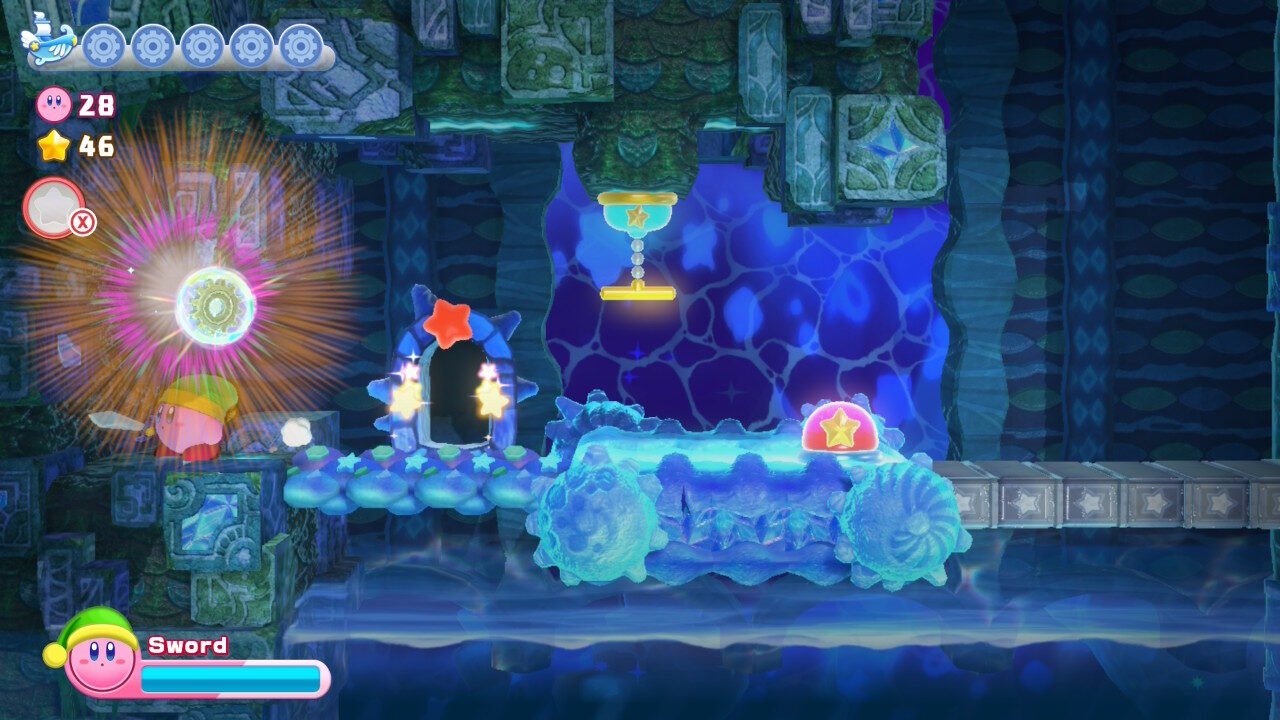
Same clarity.
Standout tracks:
Welcome Your New Overlord (Remastered)
A dramatic boss theme driven by heavy percussion and choral accents, marking a sharp tonal shift late in the game. The remaster adds clarity and weight without dulling its menace.
C-R-O-W-N-E-D (Remastered)
A fast-paced track built around sharp rhythms and escalating instrumentation, underscoring the urgency of the final confrontation. The updated mix gives each layer more presence while preserving its intensity.
Fly, Kirby! (Remastered)
An uplifting, melodic theme that captures the series’ optimistic spirit. The remaster adds warmth and fullness without losing its light, adventurous tone.
Unique Features & Mechanics
A slower pace.
Magolor Epilogue: The Interdimensional Traveler
A standalone mode that reframes Magolor as the playable character, introducing a progression system built around ability upgrades rather than copy powers. It offers a slower, more deliberate pace and adds narrative context that was absent from the original release.
Mecha Copy Ability
A new copy ability exclusive to the Deluxe version, centered on ranged attacks and sustained firepower. Its heavier movement and emphasis on positioning contrast with Kirby’s usual agility, adding mechanical variety without altering core systems. This adds a level of balancing to the Mecha ability, so it can’t be mindlessly abused.
Optional detours.
Merry Magoland
A theme-park-style hub built around returning subgames and new minigames. It functions as a multiplayer-focused attraction, offering rewards that tie back into the main game while remaining completely optional.
Between adventures.
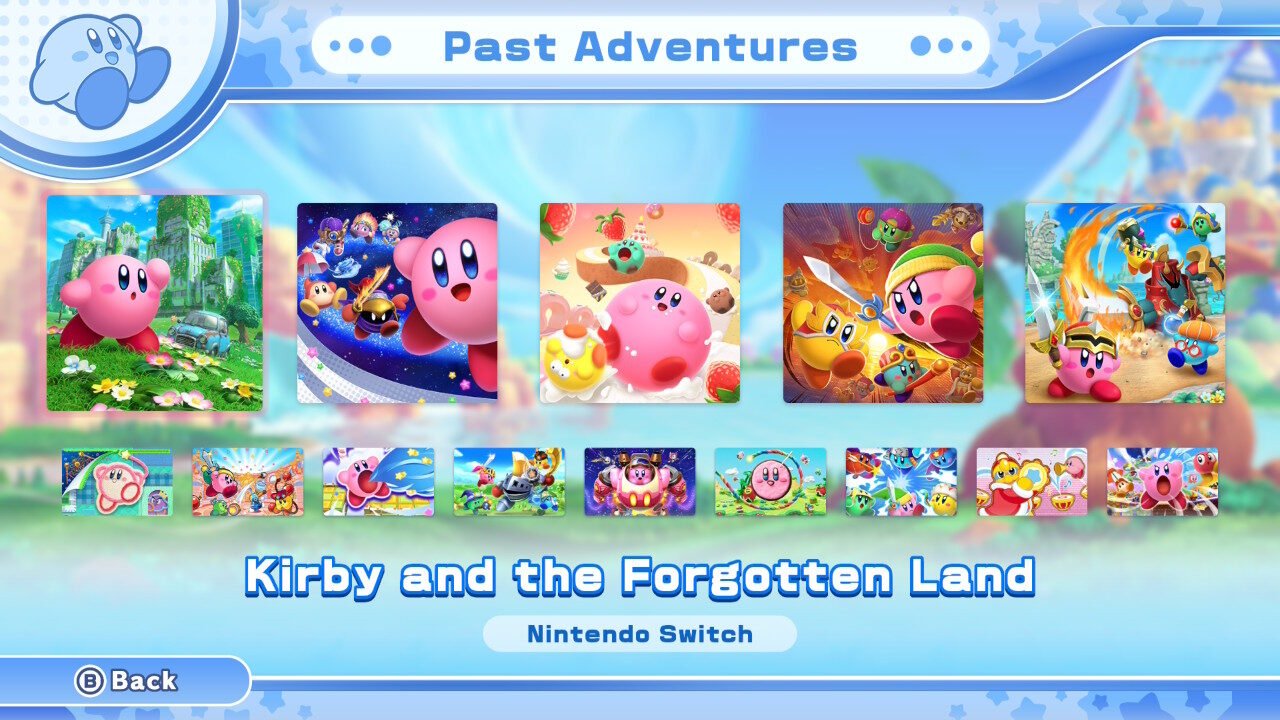
Past Adventures
An unlockable gallery tied to Merry Magoland that allows players to revisit classic sub-games, listen to music from earlier Kirby titles, and view artwork from across the series. It functions as a light archival bonus rather than a standalone mode, offering series context without affecting core progression.
Same balance.
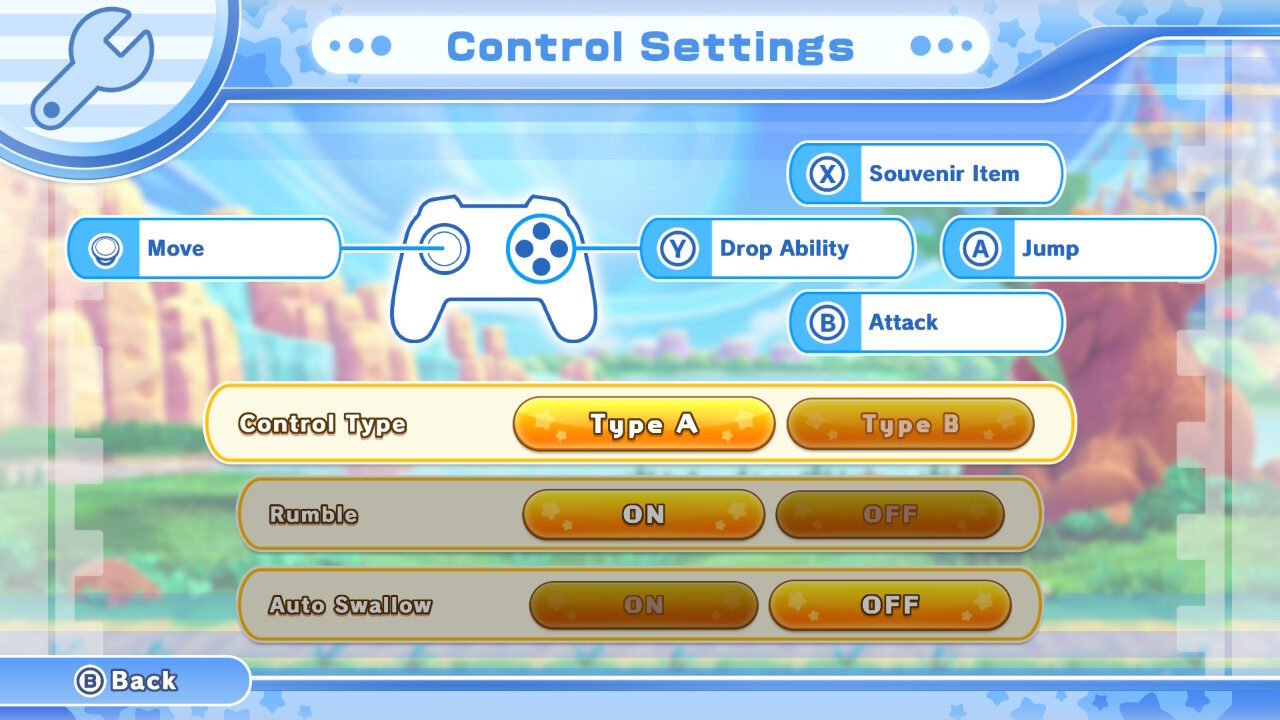
Quality-of-Life Adjustments
Subtle refinements across menus, controls, and presentation streamline the gameplay compared to the Wii version. These changes reduce potential difficulty without altering level structure or balance.
Return to Dreamland Deluxe Switch 2 Performance
Kirby’s Return to Dreamland Deluxe runs at a consistent 60 frames per second during the main campaign and the Magolor Epilogue across both docked and handheld play. Platforming, boss encounters, and four-player co-op maintain smooth animation and stable input response, even during visually busy scenes.
In docked mode, the game targets a 1080p presentation, while handheld play runs at 720p. Image clarity remains solid on smaller screens, and load times between stages and hubs are brief, keeping downtime minimal.
Merry Magoland runs at 30 frames per second, reflecting its focus on minigame-style experiences rather than precise platforming. The reduced frame rate is noticeable when transitioning from the main game but remains stable and does not impact responsiveness within its intended scope.
Return to Dreamland Deluxe Verdict
Kirby’s Return to Dreamland Deluxe benefits most from how naturally it plays. The move to a consistent 60 frames per second over the original Wii release materially improves responsiveness, making movement, combat, and ability usage feel noticeably smoother throughout the campaign. That added fluidity reinforces the game’s strengths, allowing its pacing and readability to shine without friction.
The core adventure remains straightforward by design, built around linear stages that communicate their intent clearly and keep the momentum steady. Copy abilities feel reliable, co-op integration works without complication, and the overall presentation prioritizes clarity over spectacle. These choices may limit surprise, but they create an experience that remains consistently enjoyable from start to finish.
The Deluxe-exclusive content complements that foundation rather than taking away from it. Magolor Epilogue offers a slower, more deliberate alternative with a distinct progression structure, while Merry Magoland and Past Adventures function as optional diversions that add texture without overstaying their welcome. None of these additions redefine the game, but they meaningfully round out the package.
Taken together, Kirby’s Return to Dreamland Deluxe stands as a polished, confident platformer that understands its scope and executes within it exceptionally well. It may not push the series forward mechanically, but its fluidity, consistency, and accessibility make it genuinely fun to play, especially when experienced on its own terms.
Return to Dreamland Deluxe TLDR
Kirby's Return to Dreamland Deluxe (Switch 2)
A polished and genuinely enjoyable platformer that improves on its original release through smoother performance and thoughtful refinement.
Kirby’s Return to Dreamland Deluxe delivers consistent fun, strong pacing, and meaningful extras without overcomplicating its design.
References
- Kirby’s Return to Dream Land Deluxe – Overview Trailer
- Brian. (2023, July 23). Kirby’s return to Dream Land Deluxe DEVS explain the new graphical outlines. Nintendo Everything.
- Welcome Your New Overlord (Remastered)
- C-R-O-W-N-E-D (Remastered)
- Fly, Kirby! (Remastered)